
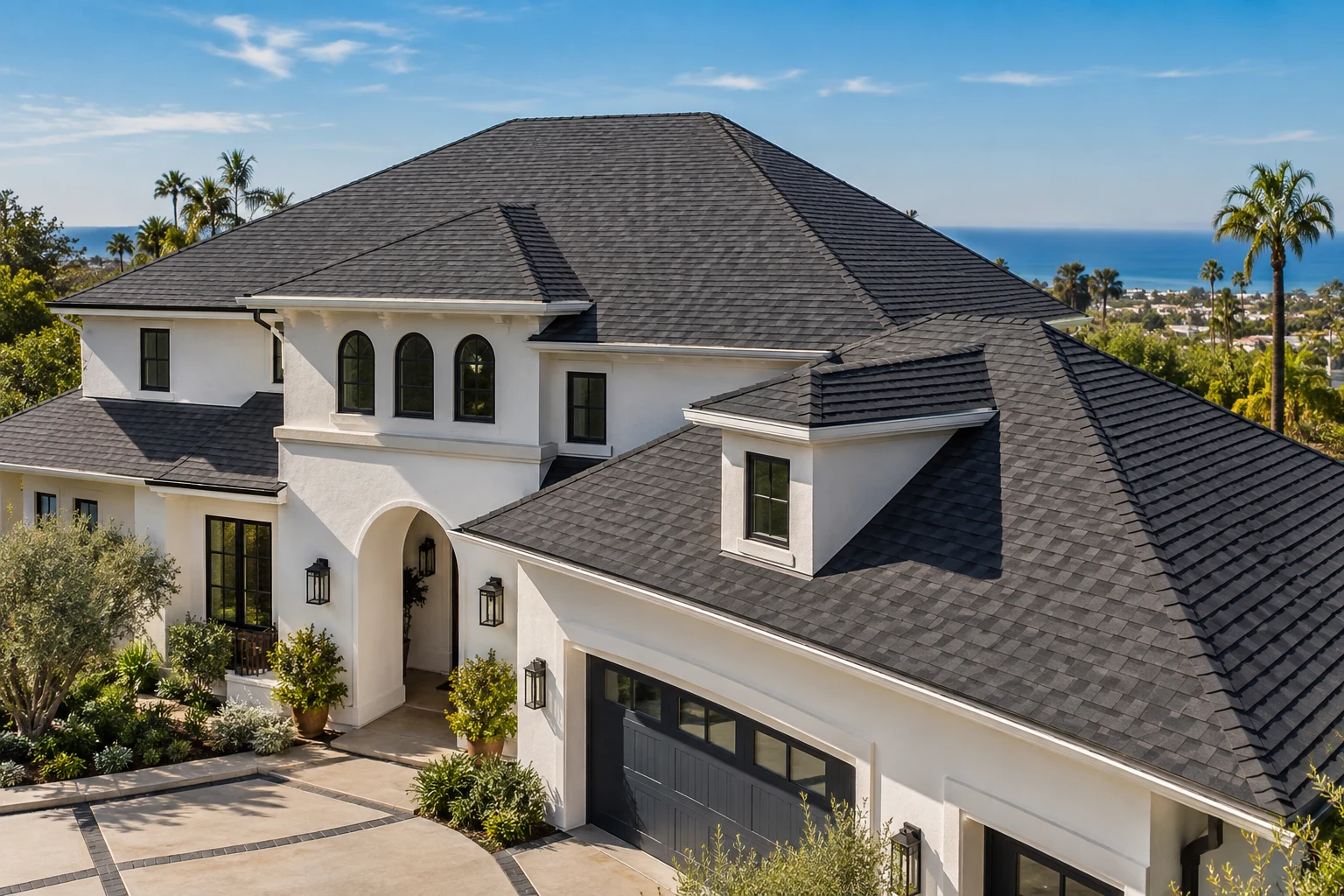
Choosing the best roofing material for your home in Jurupa Valley requires considering our hot, dry climate and the unique challenges it brings. At All Star Roof Replacement, we help homeowners select the right roofing system—considering material durability, energy efficiency, and code compliance—to ensure your roof stands strong for decades.
In Jurupa Valley, the intense sun and high temperatures accelerate roof wear, so picking a roofing material designed for these conditions is essential to avoid costly early replacements.
Why Climate and Conditions in Jurupa Valley Affect Roofing Material Performance
Jurupa Valley experiences over 300 sunny days annually, with summer highs often reaching 95°F or more. This leads to roof surface temperatures soaring between 160–180°F, which accelerates aging, especially in traditional asphalt shingles. A direct result homeowners often face is early granule loss and cracking in their shingles.
Many homes also face strong Santa Ana winds that can gust between 40 and 60 mph. These winds increase the risk of roof damage from uplift and debris impact, so materials with secure fastening systems perform better here. While rainfall is low—around 11 inches per year—fire risk due to seasonal wildfire smoke and hot ash remains high. This puts a premium on fire-resistant roofing like tile or metal, which also cope well with the thermal stresses in our area.
Many Jurupa Valley homeowners don’t realize that these conditions directly affect the longevity and performance of their roof. Choosing a material that withstands both heat and wind, while also meeting California’s cool roof requirements, is key for a lasting roof replacement. For greater local context, see our Jurupa Valley roofing page.
Common Consequences of Selecting the Wrong Roofing Material for Jurupa Valley Homes
Using conventional dark asphalt shingles without cool roof features leads to rapid deterioration in our climate. We’ve seen many homes where shingles crack and lose granules well before their typical 20-year lifespan, often requiring a full replacement sooner.
A common issue during inspections is excessive attic heat caused by less reflective roofing. This heat traps moisture, causing premature deck rot and underlayment failure. It also drives up homeowner energy bills because the HVAC system has to work overtime to keep the house comfortable.
Another pitfall is selecting heavy roofing materials like clay or concrete tile without upgrading the roof decking. Improper framing can cause sagging, structural damage, and lead to expensive rework to meet current building codes. Understanding these risks is critical when planning your roof replacement; for more info on when to opt for a full replacement, visit our roof repair or replacement guide.
Evaluating Roofing Materials: Asphalt Shingle, Tile, Metal, and Flat Roof Systems in Jurupa Valley
Asphalt Shingles – Cost-Effective but Sensitive to Heat
Asphalt shingles are the most budget-friendly option for many families, typically covering a 2,000 square foot roof for roughly $8,000–12,000. However, southern California’s intense sun shortens their lifespan to about 20–25 years instead of the usual 30+ years seen in cooler climates.
Fortunately, cool roof-compliant asphalt shingles with reflective granules help offset this by reducing attic temperatures, lowering cooling costs by 10–20%. Still, proper underlayment and attic ventilation upgrades during installation are critical to prevent premature roof decking issues and keep warranties valid.
Clay and Concrete Tile – Longevity and Thermal Mass for Long-Term Value
Tile roofing is a popular choice in Jurupa Valley due to its excellent fire resistance and high thermal mass, which keeps homes cooler during heat waves. Tiles often last 40–60 years or more when properly installed, making them a smart investment for long-term homeowners.
That said, tile roofs require a stronger roof deck and framing to support their weight, which can add $2,000–5,000 to your project. Tiles also handle Santa Ana winds well if installed with proper fasteners and flashing, though they remain susceptible to breakage from foot traffic and debris.
Light-colored or reflective tiles further improve energy efficiency and help meet California’s Title 24 cool roof standards. For a detailed comparison, see our Tile vs. Shingle Roof overview.
Metal Roofing – Highly Reflective, Durable, and Longer Lasting
Metal roofing, especially standing seam panels, offers durability with a lifespan of 40 to 70 years and reflects 20–25% more solar heat than asphalt shingles. This reflective quality significantly reduces attic temperatures and lowers cooling costs, making metal an appealing choice for the hot Inland Empire.
Though a metal roof installation can cost around $20,000–32,000 for an average home, its lightweight design limits the need for deck reinforcement. Metal roofs also provide excellent fire resistance and perform well in our windy conditions if installed correctly with high-quality underlayment and ventilation.
Metal roofs meet and often exceed California’s Title 24 energy codes when coated with reflective finishes. Learn more about cool roofs on our cool roof benefits page.
Flat or Low-Slope Roofs – Membranes and Coatings
For homes with flat or low-slope roofs in Jurupa Valley, membrane systems like TPO, EPDM, or BUR are used. These materials cost about $6–12 per square foot and can be treated with reflective coatings that reduce roof surface temperatures by 50–60°F.
Proper ventilation and drainage are crucial to prevent moisture buildup, which can cause membrane failure. Elastomeric or silicone coatings also help improve resistance to wildfire ash and solar heat.
If you’re considering flat roofing options, our team can explain benefits and installation steps—see our roof replacement process for details.
Material | Typical Lifespan | Heat Resistance | Fire Resistance | Approximate Cost Range | Notes
--- | --- | --- | --- | --- | ---
Asphalt Shingles | 20–25 years | Moderate (cool roof options available) | Moderate | $8,000–12,000 | Needs ventilation & underlayment upgrades
Clay/Concrete Tile | 40–60+ years | High (thermal mass benefits) | High | $18,000–28,000+ (deck upgrades extra) | Heavier; may require framing reinforcement
Metal Roofing | 40–70 years | High (reflective coatings) | High | $20,000–32,000 | Lightweight; excellent for energy savings
Flat Roof Membranes | 20–30 years | High with reflective coatings | Moderate | $12,000–24,000* | Requires proper drainage and ventilation
Understanding Roofing as a Full System: Why Installation Quality Matters
Choosing the right roofing material is just one part of the equation. In homes across Jurupa Valley, we often see roofing failures tied to poor installation practices rather than material defects themselves.
A quality roof system includes sound decking, high-grade synthetic underlayment, correctly installed flashing, and adequate attic ventilation. These components work together to prevent leaks, protect structural integrity, and extend the roof’s life.
Many homeowners don’t realize that soffit and ridge vents, properly sized and placed, reduce heat and moisture buildup in the attic—critical in our hot, dry climate. All Star Roof Replacement is experienced in ensuring all these factors are addressed during your roof replacement. For more on how all parts work together, visit our roof replacement process page.
How to Decide the Best Material for Your Jurupa Valley Home
Your decision should start with your budget, desired roof lifespan, and your home’s architectural style. Older homes with a Spanish or Mediterranean design often suit tile roofs that uphold the aesthetic and longevity with proper framing.
If you plan to stay long-term, some homeowners find tile or metal roofs deliver better return on investment due to their durability and energy efficiency. Asphalt shingles remain a solid choice for those seeking lower upfront costs, knowing they may replace the roof sooner.
Upgrading attic ventilation and insulation alongside your roofing material choice enhances performance and energy savings. Keep in mind that local building codes, including California’s Title 24, require most new roofs to have cool roof features to reduce heat gain.
We recommend starting with a thorough roof inspection to assess your home’s deck condition and ventilation needs. Learn more about making the right choice in our energy-efficient roofing guide.
Frequently Asked Questions About Roofing Materials in Jurupa Valley
What roofing material lasts longest in Jurupa Valley?
Tile roofing typically outlasts other materials, with a lifespan of 40–60+ years supported by excellent heat and fire resistance. Metal roofs also provide long-lasting protection, often 40–70 years, whereas asphalt and flat membranes generally last 20–30 years in our climate.
How much does a tile roof replacement cost compared to asphalt?
Tile roofs generally cost 2–3 times more than asphalt. For a 2,000-square-foot home, tile replacement runs roughly $18,000–28,000, factoring in material, labor, and necessary deck upgrades. Asphalt typically costs $8,000–12,000 but may require replacement sooner.
What is a cool roof and why is it important in Jurupa Valley?
A cool roof is designed to reflect over 63% of solar radiation and emit heat efficiently, reducing attic temperatures by 20–30°F. This leads to 10–25% lower energy bills and meets California’s Title 24 requirements. Cool roofs are especially beneficial here due to intense sun and heat.
Can metal roofs help reduce my energy bills?
Yes. Metal roofs reflect significantly more solar heat—about 20–25% more—than asphalt shingles. This reduces attic temperatures and lowers cooling costs, making metal a smart choice for energy-conscious homeowners in Jurupa Valley.
Do I need to replace the roof deck when putting on a new tile roof?
Often, yes. Tile roofs are heavier than shingles and usually require reinforcement of rafters or decking. This extra work ensures structural integrity and compliance with current building codes, adding $2,000–5,000 to the project cost in many cases.
Is attic ventilation important no matter what roofing material I choose?
Absolutely. Proper ventilation helps remove heat and moisture from your attic, preventing damage to underlayment, decking, and shingles. It also maintains insulation efficiency and is essential to keep roof warranties valid.
How long does a typical roof replacement take in Jurupa Valley?
For a 2,000-square-foot pitched roof, the replacement generally takes 1 to 3 days. This includes tear-off, deck repair if needed, underlayment installation, and new roofing. Permitting and scheduling may extend the overall timeline slightly.
Contact All Star Roof Replacement for Expert Guidance on Your Jurupa Valley Roof Replacement
At All Star Roof Replacement, we provide comprehensive roof inspections that evaluate decking condition, ventilation, and material options tailored specifically to the challenges of the Jurupa Valley climate. Our no-pressure consultations help you understand the pros and cons of each roofing system, including lifespan, energy impact, and compliance with local codes.
Ready to explore the best roofing material for your home? Verify the current CSLB record for license #1009760 and confirm the appropriately licensed contractor responsible for your roofing scope in the written agreement.
Learn more about our full roofing services and local expertise on the Jurupa Valley roofing page and see how we ensure every roof is a full system ready for years of protection.