
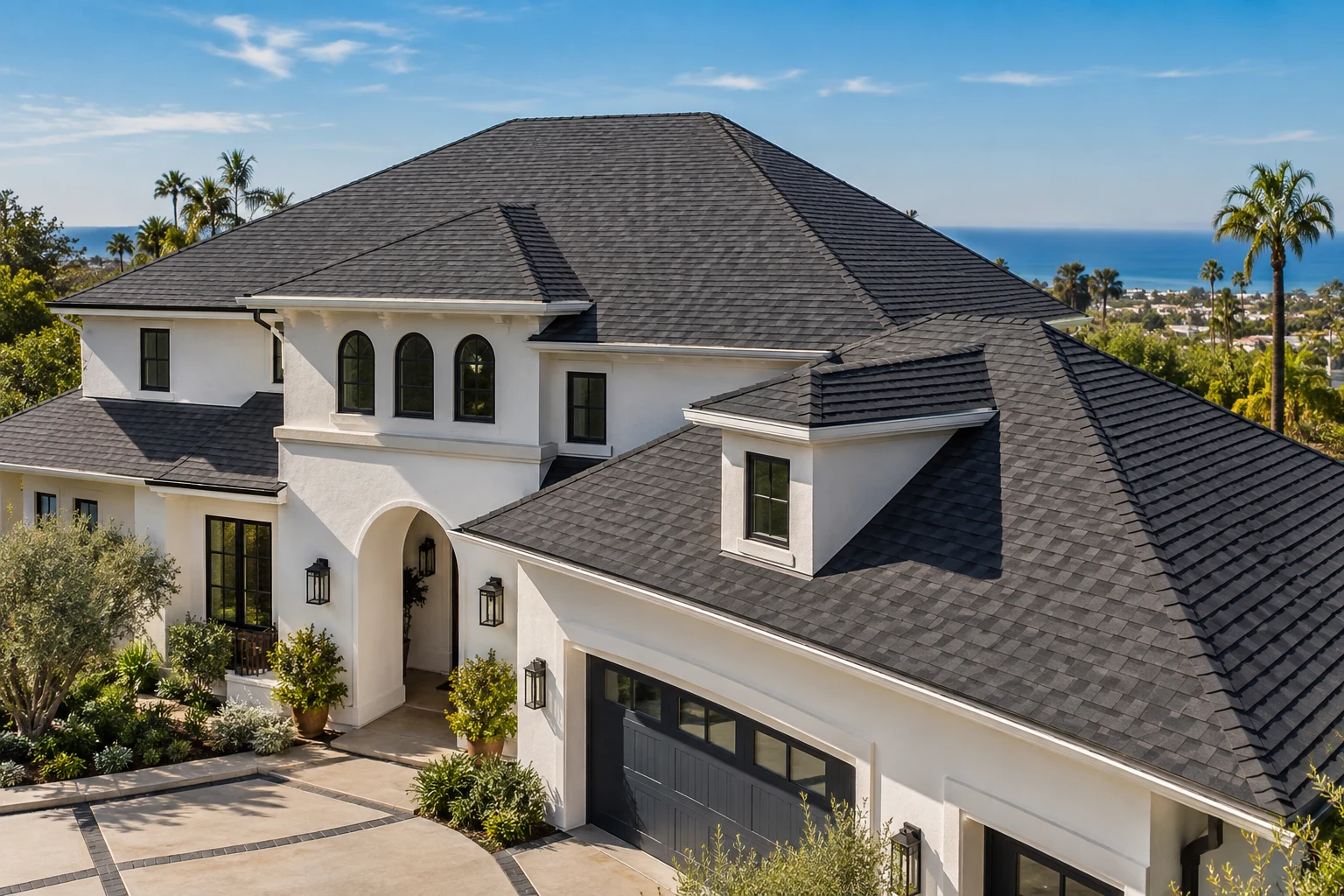
In Jurupa Valley, residential roofs tend to have shorter lifespans than the national average because of intense heat, strong UV exposure, and dry inland conditions. Asphalt shingle roofs typically last around 20 to 25 years here, while clay or concrete tile roofs often reach 40 to 60 years or more when properly maintained.
At All Star Roof Replacement, we emphasize that a roof’s durability depends on the entire roofing system — including decking, underlayment, flashing, and ventilation — not just the shingles.
Serving homeowners across Jurupa Valley, All Star Roof Replacement provides expert inspections to assess your roof’s condition and clearly explain how long you can expect your roof to perform under our demanding Southern California climate. If you’re wondering how long your roof can last or if it’s time to consider a full roof replacement, this page will help you understand what to expect and why proper installation matters.
Why Do Roofs Age Faster in Jurupa Valley?
Impact of Heat and UV Exposure on Roofing Materials
Jurupa Valley regularly experiences summer temperatures that push roof surfaces above 160 to 180°F. This extreme heat accelerates the breakdown of asphalt shingles by causing oxidation of the asphalt binder. We often find granule loss on shingles is a common early sign of aging during inspections here. The granules protect shingles from UV rays, so losing them makes shingles more vulnerable to cracking and brittleness.
Besides heat, the area’s strong UV radiation also breaks down roofing materials faster than in cooler or coastal regions. Many homeowners don’t realize that dry conditions, combined with about 11 inches of annual rainfall, make underlayment and roof decking materials more prone to becoming brittle and deteriorating prematurely. Add in seasonal Santa Ana winds that can lift flashing and loosen shingles, and you have a recipe for accelerated wear on your roof system.
Because of this, roofs in Jurupa Valley usually don’t reach the longer lifespans seen elsewhere without particular attention to heat-resistant materials and proper system installation.
Ventilation and Underlayment’s Role in Roof Longevity
Proper attic ventilation is critical to extending your roof’s life in Jurupa Valley. Without enough soffit and ridge vents, the attic traps heat and moisture, driving up the temperature on decking and underlayment beyond the ambient outside heat. We frequently see poor ventilation during inspections, which leads to warping or premature rot of the wood decking — a major factor that shortens roof lifespan.
Underlayment acts as a waterproof barrier beneath shingles but degrades faster if exposed to high heat over time. Using high-quality underlayment suited for extreme temperatures is key. Flashing must also be properly installed and maintained since failures in flashing cause leaks that can damage the roof deck and support structures quickly.
For more details on how ventilation and efficient roofing choices improve longevity, you can visit our energy-efficient roofing page and learn about our comprehensive roof replacement process.
What Happens If You Ignore Roof Aging Signs?
Structural and Interior Damage Risks
Ignoring roof aging signs like shingle granule loss, curling, and small leaks can quickly lead to serious issues hidden beneath the surface. In homes across Jurupa Valley, we often see wood decking sag and rot before homeowners realize the severity of damage. Water intrusion from unnoticed leaks damages attic insulation and can cause mold growth, compromising indoor air quality and increasing your cooling bills.
Flashings that have failed are a frequent culprit behind leaks. When left unrepaired, they worsen, causing damage to structural rafters and exterior walls, which significantly raises repair complexity and costs.
Understanding these risks early and deciding on replacement rather than patching is important to avoid costly surprises. For guidance on identifying problems, check out our page on signs you need a new roof.
Energy Efficiency and Comfort Impact
Aging roofs with damaged underlayment and inadequate ventilation allow excess heat to build up in the attic, causing your home to overheat during Jurupa Valley’s long hot seasons. This can raise air conditioning costs by up to 25%. Many homeowners don’t realize how much roofing condition affects energy bills until after replacement.
Additionally, roofs that lack cool roofing materials or reflective coatings absorb more solar heat, transferring it inside and creating uncomfortable living spaces. Upgrading to reflective shingles or coatings can help reduce indoor temperatures and extend roof life by slowing material degradation.
Learn more about energy-saving options and their benefits on our energy-efficient roofing page.
What Determines Roof Lifespan in Jurupa Valley?
Roofing as a Full System (Not Just the Shingles)
Many homeowners think replacing just the shingles is enough, but the roof is a full system made up of decking, underlayment, flashing, and ventilation working together. Skimping on any of these components can significantly reduce how long your roof lasts.
Subpar installation, poor underlayment selection, or inadequate flashing can void manufacturer warranties and cause premature failure, even with high-quality shingles. We recommend always upgrading attic ventilation during roof replacement to help maintain temperature balance and reduce thermal shock.
For a detailed overview of the entire roofing process and how each element affects lifespan, see our roof replacement process page.
Material Types and Their Lifespans in Local Conditions
Roof Type | Typical Lifespan in Jurupa Valley | Pros | Cons
--- | --- | --- | ---
Asphalt Shingles | 20–25 years | Affordable, widely available, variety of styles | Shorter lifespan due to heat, frequent replacements
Clay or Concrete Tile | 40–60+ years | Excellent heat & fire resistance, iconic Southern California look | Higher upfront cost, may require deck reinforcement
Flat Roof Membranes (TPO, BUR) | 20–30 years | Good for low slope, various coatings available | Requires regular maintenance, coating renewal
We often see older Spanish-style homes in Jurupa Valley equipped with tile roofs because of their longevity and ability to handle the local heat. Asphalt shingles remain the most common choice but require more frequent replacement due to UV damage. For more on material options, visit our best roofing materials page.
Installation Quality and Warranty Considerations
Experience and workmanship matter greatly in a climate as demanding as Jurupa Valley’s. Incorrect nailing, poor flashing detail, or lack of ventilation installation can cause roofs to fail prematurely, regardless of the materials chosen.
Professional installation backed by warranties of 5 to 10 years on workmanship provides peace of mind. Permits and inspections are essential to ensure compliance with California’s Title 24 energy codes, which include requirements for cool roofs and ventilation to improve energy efficiency.
Learn how warranties protect your investment on our roof warranty explained page.
FAQs About Roof Lifespan in Jurupa Valley
How long do asphalt shingle roofs typically last in Jurupa Valley?
In Jurupa Valley’s hot climate, asphalt shingles generally last 20–25 years. This lifespan is shorter than the national average of around 30 years because of the more intense UV radiation and heat. Proper ventilation and using reflective “cool” shingles can help extend their lifespan.
Do tile roofs last longer here than asphalt?
Yes. Clay and concrete tile roofs typically last 40 to 60 years or more in Jurupa Valley due to their superior resistance to heat, fire, and UV exposure. However, they come with higher upfront costs and may require structural reinforcement of the deck.
What are the main causes of roof aging in Jurupa Valley?
The primary drivers of roof aging here include summer temperatures pushing roof surfaces to 160–180°F, intense UV radiation, dry air conditions, seasonal Santa Ana winds, and inadequate attic ventilation. These factors accelerate material breakdown faster than in many other regions.
Can poor ventilation shorten my roof’s life?
Absolutely. Without sufficient ridge and soffit vents or attic fans, heat and moisture build up under the roof deck, speeding up decking rot, flashing failures, and shingle deterioration.
When should I choose replacement over repair?
Replacement becomes the best option if your roof shows repeated leaks, widespread shingle damage, granule loss covering 10–20% or more of the surface, or if it’s approaching 20+ years old in the Jurupa Valley climate. Repairs may only postpone inevitable failure and can end up costing more over time.
How does a cool roof affect roof lifespan here?
Cool roofs reflect solar heat and reduce attic temperatures by 20–30°F. This slows the degradation of roofing materials, lowers your energy bills, and improves overall roof longevity in Jurupa Valley’s hot environment.
How long does the roof replacement process typically take?
From the initial inspection to final approval, a typical residential roof replacement in Jurupa Valley takes about 1–3 days of installation work. Permit processing and scheduling usually mean the total timeline spans 1–2 weeks depending on scope and repairs needed.
Contact All Star Roof Replacement for a Roof Lifespan Assessment in Jurupa Valley
Every roof we inspect in Jurupa Valley is unique, especially given how intensely the Southern California sun and heat impact materials and structure. If your roof is showing age or you’re uncertain whether replacement is the next step, contact All Star Roof Replacement. Our licensed team evaluates your full roofing system — decking, underlayment, flashing, and ventilation — providing clear, no-pressure assessments tailored to your home.
- We break down what’s necessary and what isn’t, so you understand all options.
- Our expert inspections catch issues early before damaging leaks start.
- We work with homeowners to protect their homes efficiently and cost-effectively.
Schedule your inspection or get an estimate today:
Phone: (310) 729-3013
Email: teamallstarconstruction@gmail.com
Learn more about deciding whether to repair or replace your roof, and find trusted local experts by visiting our roofing contractor near me page.