
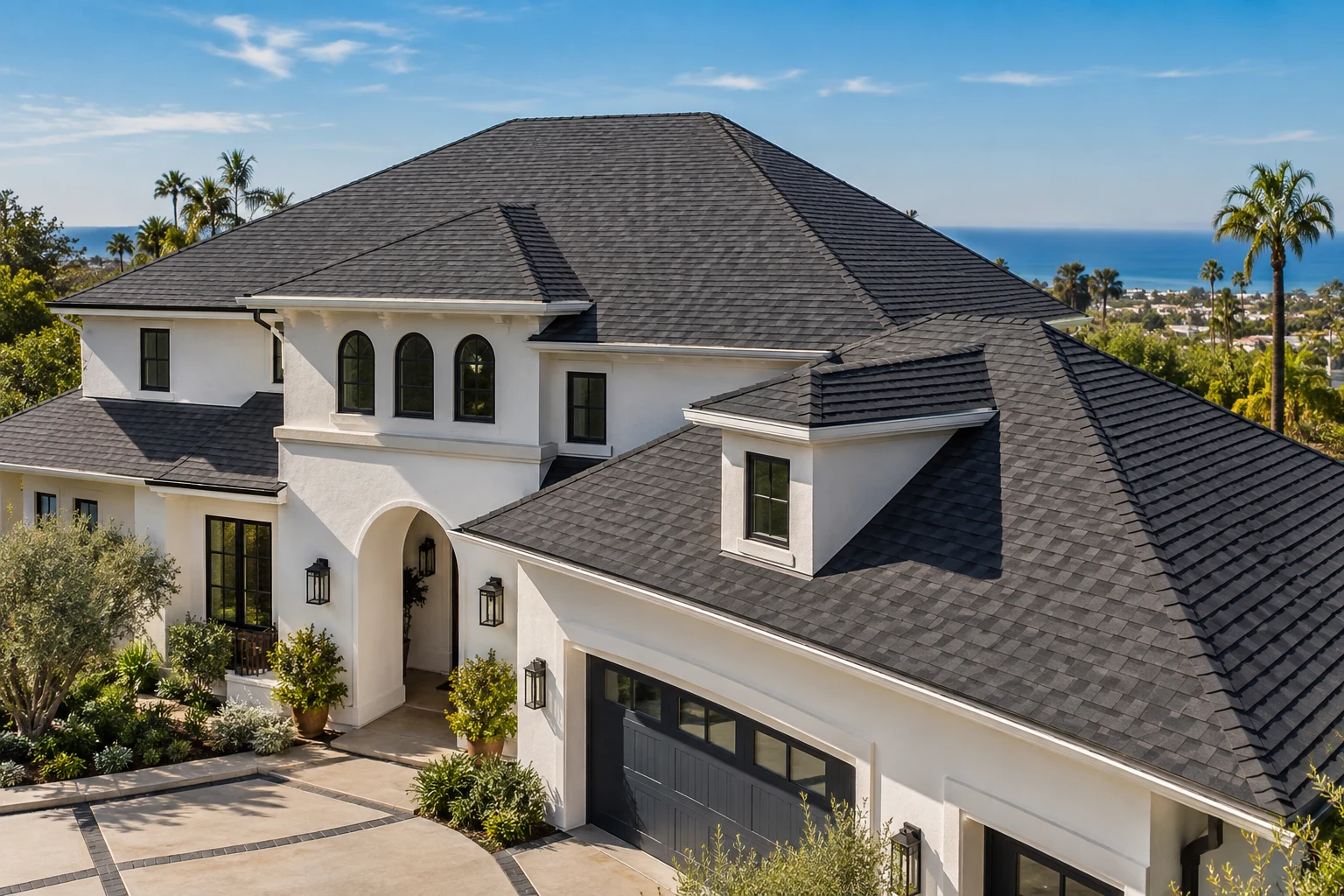
At All Star Roof Replacement, we specialize in residential roof replacement with a focus on energy efficiency tailored to Moreno Valley’s unique climate. Our experienced team ensures your new roof meets California’s Title 24 standards, improving home comfort and reducing energy costs through a complete roofing system upgrade—materials, underlayment, ventilation, and flashing.
Moreno Valley’s intense sun and seasonal heat cycles create challenges that aging roofs often cannot withstand. We provide thorough inspections, clear evaluations, and practical solutions designed specifically for local homeowners facing energy loss, leaks, and roof degradation.
Why Energy Efficiency Matters for Roofs in Moreno Valley
Homes across Moreno Valley endure high UV exposure and hot summer days that accelerate the breakdown of traditional roofing materials. Asphalt shingles, common in many local houses, degrade faster as their oils evaporate under strong sunlight, often leading to brittle, cracked shingles and underlayment failures.
Many older properties have inadequate attic ventilation, which traps heat and forces air conditioning systems to work harder. A common issue during inspections is unbalanced or insufficient ridge and soffit vents, allowing hot air to accumulate under the roof deck. This worsens comfort inside the home and drives up energy usage.
Tile roofs offer thermal mass benefits by absorbing and slowly releasing heat, but aging or compromised underlayment beneath tiles often allows moisture intrusion and reduces these energy savings. That’s why a full system replacement—including decking, underlayment, and ventilation—is essential.
For homeowners looking to enhance durability and energy performance, understanding the effects of Moreno Valley’s climate on roofing materials is key. We recommend exploring our roof replacement in Moreno Valley page for broader context on local roofing needs.
Common Consequences of Inefficient Roofing Systems
When roofing systems fail to manage heat effectively, attic temperatures rise rapidly, sometimes by 30 to 40 degrees above outdoor temperatures. This warmth transfers into living spaces causing HVAC systems to run longer, increasing energy bills by as much as 20%. Many homeowners don’t realize that their roof significantly impacts monthly cooling costs.
Poor roof efficiency also accelerates material aging. Heat trapped under damaged shingles and multiple layers causes thermal stress cracking and blistering, which can lead to premature roof failures. Additionally, moisture issues from faulty ventilation and flashing allow water intrusion, resulting in wood rot, mold growth, and indoor air quality problems.
Recognizing signs early can prevent costly repairs. For example, checking our signs you need a new roof guide can help differentiate between minor fixable problems and full replacement requirements.
What Makes a Roofing System Energy-Efficient in Moreno Valley
True energy-efficient roofing requires a holistic system approach. California’s Title 24 in Climate Zone 10 mandates use of cool roofing materials with a solar reflectance index that significantly reduces heat absorption. We install materials meeting or exceeding reflectance of 0.20 and thermal emittance of 0.75 for optimal performance.
We replace traditional asphalt felt underlayments with synthetic alternatives that resist heat brittleness and moisture intrusion, extending the roof’s life under severe thermal cycling. Proper attic ventilation is critical, so we install balanced ridge and soffit vents that promote airflow, expelling hot attic air and supporting the roofing system’s cool properties.
Every flashing and decking component undergoes inspection during replacement to ensure moisture resistance and airtight barriers that prevent thermal bridging and water leaks. This comprehensive approach maximizes comfort and long-term energy savings.
Learn more about efficient materials on our cool roof in Moreno Valley page, or review our best roofing materials for local conditions.
Decision Factors: Repair vs. Replacement for Energy Efficiency
Many homeowners face the question: should I repair or replace? In Moreno Valley, roofs with extensive granule loss, persistent leaks, or damaged decking cannot achieve meaningful energy savings through patchwork repairs. Repairs often fail to address underlying ventilation or insulation issues.
Replacing the roof allows installation of advanced ventilation systems and cool roofing materials fully compliant with Title 24. Overlaying old roofs traps heat and often voids manufacturer warranties, reducing lifespan and energy benefits. Full tear-offs enable a complete system upgrade necessary to withstand Moreno Valley’s heat.
To help weigh your options, see our detailed explanations at roof repair or replacement and our insights on is reroofing worth it.
Roof Replacement Process Focused on Energy Efficiency
Our process for energy-efficient roof replacement is designed to meet all local codes and maximize thermal performance:
- Step 1: We begin by obtaining necessary permits from Moreno Valley and documenting Title 24 compliance.
- Step 2: Next, we completely tear off old roofing layers down to the decking, replacing any damaged boards that could cause heat bridges or moisture issues.
- Step 3: We install synthetic, heat-resistant underlayment and carefully integrate flashing to maintain waterproofing and reflect heat.
- Step 4: Cool roof materials with verified solar reflectance are installed according to manufacturer specifications and local building codes.
- Step 5: We upgrade attic ventilation, installing balanced ridge and soffit vents to ensure continuous airflow and heat dissipation.
- Step 6: Finally, the project concludes with a city inspection verifying energy efficiency and code adherence.
Curious about the timeframe or inspection costs? Visit our roof replacement timeline and roof inspection cost pages for details.
How Energy-Efficient Roofing Reduces Cooling Costs in Moreno Valley
Installing a cool roof can lower attic temperatures by 30-40°F on hot days. This reduction translates directly to cooler indoor temperatures and less strain on air conditioning equipment, lowering your energy bills.
The combination of reflective roofing materials and improved ventilation helps manage the thermal exhaustion typical of Inland Empire homes. This means your roof itself contributes positively to your home’s overall energy profile.
Additionally, reflective and ventilated systems slow down heat-related asphalt breakdown. This extends your roof’s lifespan and reduces the frequency of costly replacements over time. Learn practical steps on how to reduce heat through roofing on our dedicated reduce heat with roofing page.
FAQ About Energy-Efficient Roof Replacement in Moreno Valley
How much does energy-efficient roof replacement cost in Moreno Valley?
Costs vary based on your choice of materials, roof size, decking condition, and the extent of ventilation upgrades. Asphalt cool shingles typically range from mid to higher-tier pricing, while tile roofs represent a larger investment. Synthetic underlayments and ventilation enhancements add upfront cost but deliver substantial savings over time. For a personalized estimate, contact All Star Roof Replacement for an inspection.
How long does an energy-efficient roof last in Moreno Valley’s climate?
Architectural cool shingles generally last 20-30 years, while concrete or clay tile roofs can exceed 50 years with proper maintenance. However, tile roof underlayments often need replacement every 20 years due to heat-related degradation. Proper installation and quality materials are essential to maximize lifespan in Moreno Valley’s harsh sun.
Can I just repair my old roof to improve energy efficiency?
Minor repairs rarely produce meaningful energy savings here. Moreno Valley’s intense heat accelerates material degradation, making a full-system replacement necessary to install compliant cool roofs and ventilation that effectively improve efficiency.
What is a cool roof, and why does Moreno Valley require one?
A cool roof reflects more sunlight and emits absorbed heat better than a standard roof, lowering temperatures. Moreno Valley falls within Climate Zone 10, where California’s Title 24 mandates cool roofing for replacements covering more than half the roof area to reduce urban heat and energy consumption.
How does ventilation contribute to roof energy efficiency?
Balanced ridge and soffit vents allow hot air to escape the attic, preventing heat buildup that damages roof materials and increases cooling costs. Proper ventilation is essential in Moreno Valley to support reflective roofing and extend roof lifespan.
How long does a cool roof replacement project take?
The process typically lasts 2–3 weeks including permits and inspections. Actual roofing work on shingle homes can often be completed within 1–3 days, while tile roofs may require additional time. Work generally starts early to avoid afternoon heat stress on materials.
Are there financing options available for energy-efficient roof replacement?
Yes, financing options like PACE/HERO programs enable payment through property tax assessments. We also help homeowners access traditional monthly payment plans with low or zero down payments, making high-quality energy-efficient roofing more affordable.
Contact All Star Roof Replacement for Energy-Efficient Roof Replacement in Moreno Valley
All Star Roof Replacement is your trusted partner for full-system, energy-efficient roof replacements designed for Moreno Valley’s climate challenges. We provide detailed inspections, transparent estimates, and expert guidance tailored to your home’s specific needs.
Our no-pressure consultations help you understand how energy-efficient roofing can reduce cooling costs and extend your roof’s service life. Schedule your inspection or request a free estimate by calling (310) 729-3013 or emailing teamallstarconstruction@gmail.com.
Discover more about our services and financing options on our roof replacement in Moreno Valley hub page, including free inspection details at roof inspection cost and financing information at finance roof replacement.