
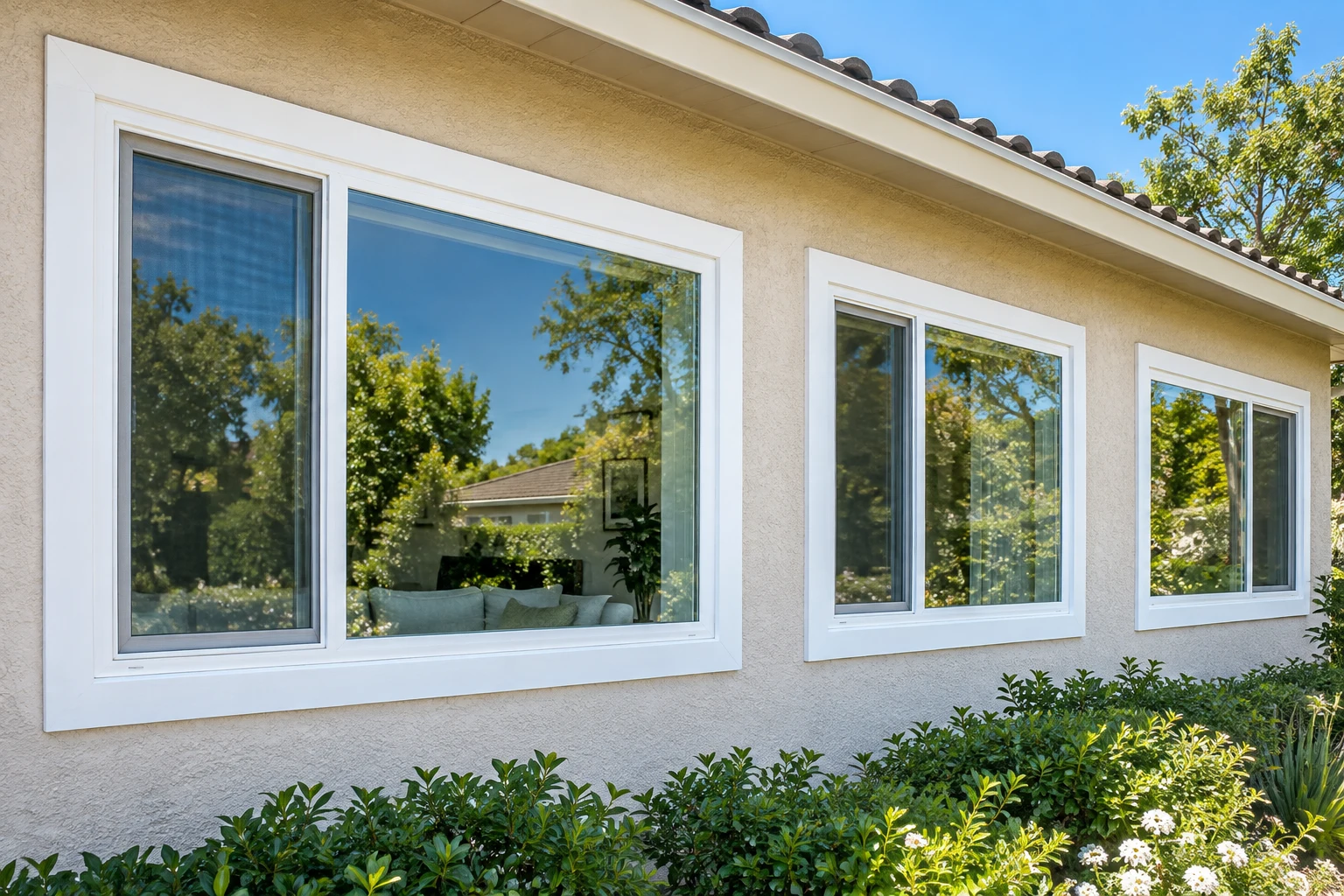
The windows that block heat best in Moreno Valley are those with low Solar Heat Gain Coefficient (SHGC), advanced Low-E glass coatings, and properly sealed dual-pane construction. In this climate, the glass package—not the brand name—is what determines how much heat actually enters your home.
At Total Home Windows, we see this every day in Moreno Valley homes. If your house feels hot even with the AC running, the problem is often not your HVAC system—it’s your windows allowing heat to pour in all afternoon. That’s why we measure heat at the window level and show you exactly where the problem is before recommending a solution.
If you’re just starting, you can explore the full Moreno Valley window replacement guide to understand how heat control fits into the bigger picture of your home.
Why Heat Control Matters More in Moreno Valley
Moreno Valley is not a mild climate. Summer temperatures regularly exceed 100°F, and the sun exposure—especially on west-facing homes—creates a greenhouse effect inside.
That heat doesn’t just disappear when the sun goes down. It gets absorbed into floors, walls, and furniture, then radiates back into your home well into the evening.
Answer: The best heat-blocking windows are designed to stop solar heat before it enters the home, not after your AC tries to remove it.
A common issue we find in Moreno Valley is homes built in the 1980s and 1990s still using original aluminum or early dual-pane windows. These were never designed for today’s energy demands—or today’s electricity costs.
With Time-of-Use energy pricing in Southern California, running your AC during peak hours (4 PM–9 PM) is the most expensive time to cool your home. If your windows are letting in heat all day, your AC is constantly trying to catch up.
Answer: If your home heats up in the afternoon and stays hot at night, your windows are likely the main source of the problem.
If that sounds familiar, this breakdown of why your house feels hot even with AC explains exactly what’s happening.
What Actually Blocks Heat in a Window
Heat doesn’t come through windows the way most homeowners think. It’s not just “hot air leaking in.” The biggest issue is solar radiation passing through the glass.
To stop that, a window must control solar heat gain.
The key components that make a difference are:
- Low-E glass coatings that reflect infrared heat
- Low SHGC ratings to limit solar heat entry
- Dual-pane construction with insulating gas
- Warm-edge spacers to reduce edge heat transfer
- Air-tight installation to prevent heat leakage
Answer: The best windows for blocking heat are engineered to reflect and reject solar energy—not just insulate against outdoor temperature.
In homes across Moreno Valley, we often see large windows facing west or southwest. These are the biggest heat contributors, especially in the afternoon.
That’s why replacing the right windows—rather than all windows at once—can immediately improve comfort.
If you’re considering options, start with window replacement in Moreno Valley to see how this applies to your home.
Low-E Glass: The #1 Feature for Heat Blocking
If there’s one feature that makes the biggest difference in Moreno Valley, it’s Low-E glass.
Low-E (low emissivity) coatings are microscopic layers applied to the glass that reflect heat while still allowing natural light to pass through.
In a hot Inland Empire climate, the right Low-E configuration can:
- Reject a large percentage of solar heat
- Reduce indoor temperature spikes in the afternoon
- Lower strain on your AC system
- Improve comfort near windows and sliding doors
Answer: Windows with advanced Low-E coatings are the most effective way to block heat in Moreno Valley homes.
Not all Low-E coatings are the same. Some are designed for colder climates and actually allow more heat in—making them the wrong choice here.
For Moreno Valley, high-performance coatings (like multi-layer or “triple-silver” Low-E) are specifically designed to handle extreme sun exposure.
You can learn more about how this works on our Low-E windows in Moreno Valley page.
SHGC: The Number That Determines Heat Blocking
Most homeowners have never heard of SHGC—but in Moreno Valley, it’s one of the most important numbers on your window.
SHGC stands for Solar Heat Gain Coefficient. It measures how much solar radiation passes through the glass.
Lower numbers mean better heat blocking.
Under California’s 2026 Title 24 requirements, replacement windows must meet strict SHGC standards (typically ≤ 0.23). That’s because solar heat gain is the primary driver of indoor temperature in hot regions like the Inland Empire.
Answer: The lower the SHGC, the less heat enters your home—making it the most important rating for Moreno Valley homeowners.
This matters most for:
- West-facing windows
- Large living room windows
- Sliding glass doors
- Rooms that feel hotter than the rest of the house
If those areas are uncomfortable, the issue is not airflow—it’s solar heat coming through the glass.
Dual-Pane vs. Older Windows: What Actually Changes
Many homes in Moreno Valley still have single-pane aluminum windows or early dual-pane units with failed seals.
These windows provide almost no resistance to heat.
Modern dual-pane windows are built differently. They include:
- Two layers of glass
- Insulating gas (like argon) between panes
- Advanced Low-E coatings
- Improved sealing systems
Answer: Upgrading from old windows to modern dual-pane Low-E windows can significantly reduce heat entering your home.
We often see homes where the glass looks “foggy” or feels hot to the touch. That’s a sign the seal has failed and the insulating properties are gone.
Replacing those windows doesn’t just improve appearance—it directly reduces heat gain.
If you’re comparing options, this guide on dual-pane vs triple-pane windows explains what actually matters in this climate.
Do You Need Triple-Pane Windows in Moreno Valley?
Triple-pane windows are often marketed as the “best,” but that’s not always true for Southern California.
In Moreno Valley, the main problem is solar heat gain—not insulation against extreme cold.
Answer: In most cases, a high-performance dual-pane window with the right Low-E coating will block heat just as effectively as triple-pane.
Triple-pane windows can make sense if you also have noise issues—like living near the 60 freeway, I-215, or March Air Reserve Base—but for heat alone, they often provide diminishing returns.
What matters more is choosing the right glass package for this specific climate—not just adding more layers of glass.
Frame Material Still Matters (But Less Than Glass)
While the glass does most of the work, the frame still affects overall performance.
Older Moreno Valley homes commonly have aluminum frames, which conduct heat easily. That means even if the glass is upgraded, heat can still transfer through the frame.
Modern materials perform much better:
- Vinyl: Strong insulation, cost-effective, handles heat well
- Fiberglass: Durable and stable in extreme temperatures
- Aluminum (old): Poor insulation unless thermally broken
Answer: Vinyl and fiberglass frames reduce heat transfer far better than older aluminum frames commonly found in Moreno Valley homes.
For most homeowners, vinyl offers the best balance of performance and cost—especially when paired with the right glass.
If you want a deeper breakdown, visit are vinyl windows good for Moreno Valley homes.
Installation Determines Whether Windows Actually Block Heat
You can choose the best glass and still have a hot house if the installation is poor.
Gaps, poor sealing, or improper retrofit methods allow heat to leak around the window frame—undoing the benefits of the glass itself.
In Moreno Valley, most homes use stucco construction, which requires a specific retrofit approach to maintain waterproofing and performance.
Answer: Even the best heat-blocking window will fail if it is not installed and sealed correctly.
At Total Home Windows, we focus on proper fit, sealing, and maintaining the integrity of the existing structure—especially important in stucco homes.
This is also where many lower-cost installations cut corners, leading to long-term issues with both heat and durability.
Which Windows Work Best for Different Heat Problems in Moreno Valley?
Not every home in Moreno Valley overheats for the same reason. At Total Home Windows, we regularly find that the type of heat problem determines the type of window solution—not the other way around.
Answer: The best window for your home depends on where the heat is entering and how your home is exposed to the sun.
For example, a west-facing living room with large glass panels behaves very differently than a shaded bedroom with older aluminum windows.
Here is how we typically match window performance to real problems we see inside Moreno Valley homes:
- Afternoon overheating (west-facing rooms): Low SHGC glass with advanced solar-control Low-E coatings
- Sliding doors or large openings: Dual-pane glass with strong heat rejection and airtight sealing
- Older 1980s aluminum windows: Full replacement with insulated vinyl frames and modern glass
- Rooms that never cool down at night: Glass designed to reduce solar heat buildup during the day
- Uneven temperatures between rooms: Targeted replacement of the highest heat-gain windows
In Moreno Valley, west and southwest exposures are almost always the biggest contributors. We’ve measured windows in these areas running significantly hotter than surrounding walls during peak sun hours.
If you’re comparing options, this page on best windows to block heat in Moreno Valley breaks down the configurations that perform best in this climate.
Do Heat-Blocking Windows Actually Lower Energy Bills?
They can—but the result depends on how much heat your current windows are letting in.
Answer: Yes, windows that block solar heat can reduce AC usage, especially during Moreno Valley’s peak afternoon hours.
When your windows allow less heat inside, your air conditioning system doesn’t have to work as hard—or run as long—to maintain a comfortable temperature.
In Moreno Valley, where Time-of-Use electricity rates are highest from 4 PM to 9 PM, this matters even more. That’s exactly when solar heat buildup is at its peak.
However, most homeowners notice something first before they ever look at a utility bill: the house simply feels more stable.
Rooms that used to spike in temperature during the afternoon stay usable. Areas near windows stop feeling like heat sources. The AC cycles normally instead of constantly running.
If you want a deeper breakdown of how this translates into real savings, visit how new windows reduce energy bills in Moreno Valley.
What Most Homeowners Get Wrong About “Heat Blocking” Windows
There’s a lot of confusion around what actually makes a window effective in hot climates.
At Total Home Windows, we often walk into homes where windows were replaced—but the heat problem never improved.
Answer: The biggest mistake is choosing windows based on brand or price instead of heat performance metrics like SHGC and Low-E design.
Here are the most common issues we see:
- Wrong glass package for the climate (designed for colder regions)
- SHGC too high, allowing too much solar heat inside
- Assuming all dual-pane windows perform the same
- Focusing on frame material instead of glass performance
- Poor installation allowing heat leakage around the frame
One real example: a Moreno Valley homeowner replaced all their windows with standard dual-pane units but kept a higher SHGC rating. The result? The home still overheated every afternoon—because the glass was still letting in solar radiation.
This is why we measure heat directly at the glass before making recommendations. It removes guesswork and shows exactly what needs to change.
Should You Replace All Windows or Just the Problem Areas?
Not every project needs to be done all at once.
In fact, many Moreno Valley homeowners get immediate relief by focusing on the worst-performing windows first.
Answer: You can often reduce heat significantly by replacing only the highest sun-exposed windows—especially west-facing ones.
This approach is common in homes where:
- The living room or main space overheats daily
- Sliding doors face direct afternoon sun
- Budget doesn’t allow for full-home replacement yet
We frequently recommend a “phase-in” strategy—starting with the areas that contribute the most heat, then expanding later if needed.
If you’re weighing that decision, this guide on whether to replace all windows or not can help you plan the right approach.
What to Expect After Installing Heat-Blocking Windows
Homeowners often expect dramatic energy savings right away, but the first change you’ll notice is comfort.
Based on what we see in Moreno Valley homes:
- Rooms feel cooler in the afternoon
- Temperature differences between rooms shrink
- AC systems cycle more normally instead of constantly running
- Hot spots near windows disappear
One consistent observation: homeowners stop avoiding certain rooms during the day. Spaces that used to be unusable in the afternoon become comfortable again.
Another common change is how long the home stays cool into the evening. Because less heat enters during the day, there’s less stored heat radiating back into the home at night.
That’s a direct result of reducing solar heat gain—not just improving insulation.
How to Know If Your Windows Are the Problem
Before replacing anything, the most important step is confirming where the heat is actually coming from.
At Total Home Windows, we measure temperature differences at the window level inside your home. This shows whether the glass is the source—or if something else is contributing.
Signs your windows are likely the issue include:
- Rooms that heat up quickly in the afternoon
- Glass that feels hot to the touch
- AC running but comfort not improving
- Older aluminum frames or foggy dual-pane glass
If your situation matches these symptoms, it’s worth reviewing signs you need new windows to confirm whether replacement makes sense.
And if your home still feels hot even with the AC running, that usually points directly to solar heat gain through the windows—not an HVAC issue.
Frequently Asked Questions About What Windows Block Heat Best in Moreno Valley
What type of window blocks the most heat?
Windows with low SHGC ratings and advanced Low-E coatings block the most heat. In Moreno Valley, high-performance dual-pane windows with the right glass package are typically the most effective solution.
How much do heat-blocking windows cost in Moreno Valley?
Costs vary depending on size, materials, and installation complexity. Most projects range from moderate to significant investment depending on scope. For a full breakdown, visit window replacement cost in Moreno Valley.
Will new windows fix a house that’s hot even with AC?
In many cases, yes—especially if solar heat is entering through the glass. If your AC runs constantly but your home still feels hot, windows are often the main cause.
How long does installation take?
Most window replacement projects in Moreno Valley are completed within a few days, depending on the number of windows and home layout. Proper installation is critical for performance.
Is triple-pane worth it for heat blocking?
Usually not for Moreno Valley. A properly designed dual-pane window with the right Low-E coating will block heat effectively without the added cost and weight of triple-pane.
Get Your Free Window Replacement Estimate In Moreno Valley
If your home is overheating in the afternoon or your AC can’t keep up, the issue is often your windows—not your HVAC system.
Total Home Windows will show you exactly where heat is entering your home using real measurements, not guesses. From there, we recommend the right solution based on your specific layout, sun exposure, and performance needs.
If you’re ready to explore your options, start with window replacement in Moreno Valley and take the first step toward a cooler, more comfortable home.
Request Free Estimate
Related Content
Best Windows for Homes in Moreno Valley
Should I Replace All Windows At Once in Moreno Valley
What Type Of Windows Are Best For Hot Climates in Moreno Valley
Milgard Vs Andersen Windows in Moreno Valley
Vinyl vs Fiberglass Windows in Moreno Valley
Best Window Brands in Moreno Valley
Helpful Resources for Homeowners
Whether you’re researching energy-efficient windows, looking for ways to reduce heat and noise, or comparing replacement options for an older home, these resources cover some of the most common questions homeowners ask. Browse the articles below for practical guidance and expert insights on choosing the right windows for your home.