
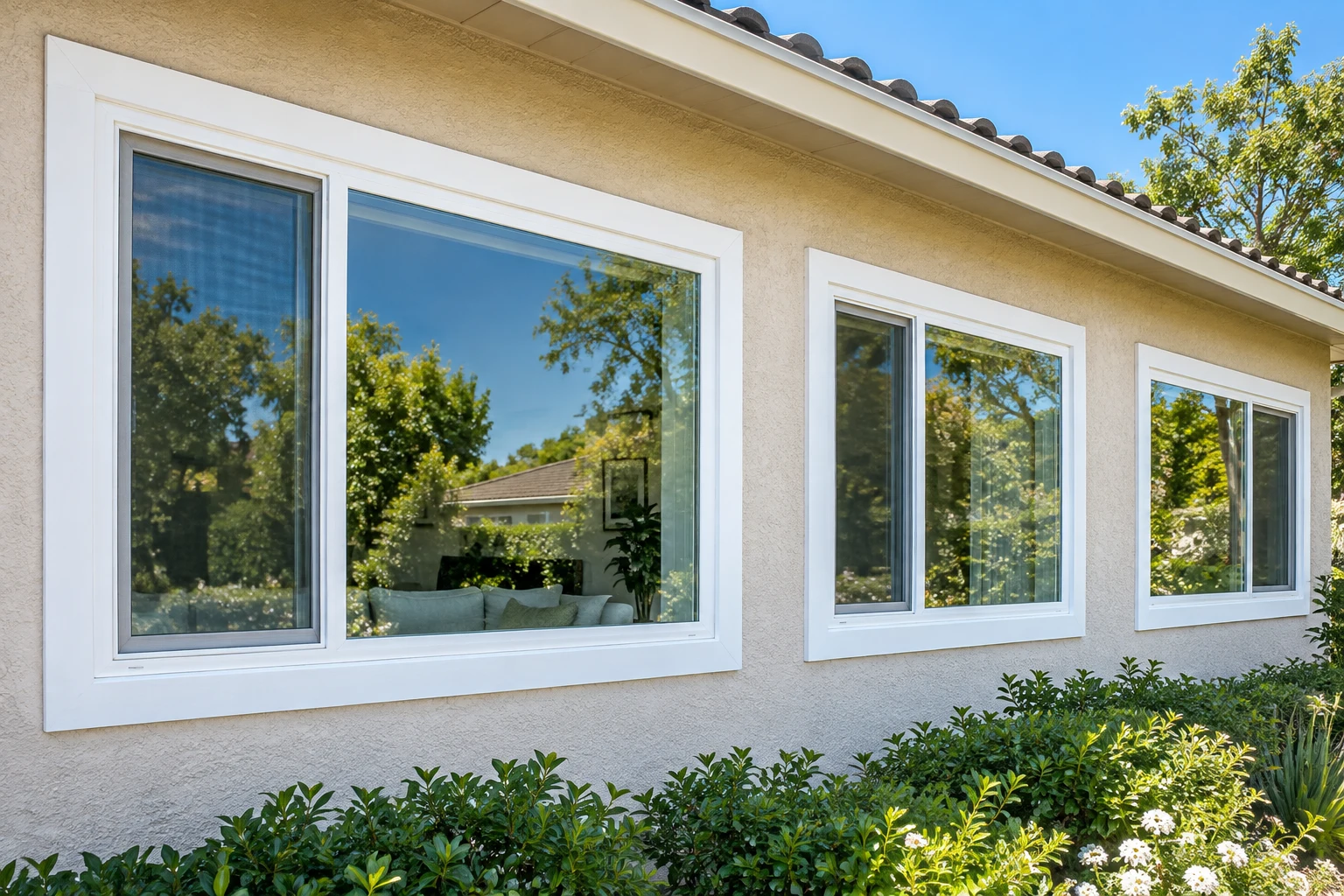
Low-E windows are windows with a thin, invisible coating that reflects heat while still letting light pass through. In Moreno Valley, that matters because most homes are overheating from solar heat entering through the glass—not because the AC isn’t working. At Total Home Windows, we measure that heat at the window level so homeowners can see exactly where the problem starts.
If your house feels hot even with the AC running, the issue is often your windows. This is especially true in older Moreno Valley homes built in the 70s through 90s, where original or early dual-pane windows allow heat to pass through easily.
If you’re just starting to research solutions, the Moreno Valley window replacement guide explains how Low-E windows fit into the bigger picture of fixing indoor heat problems.
What Low-E Windows Actually Do
Low-E windows control how heat moves through your glass. Instead of letting solar heat pour into your home, the coating reflects a large portion of that heat back outside.
In Moreno Valley, where summer temperatures regularly push past 100°F, this makes a noticeable difference. Sunlight still comes in—but the heat that normally builds up in your floors, walls, and furniture is significantly reduced.
In homes across Moreno Valley, we often see rooms that are 10–15 degrees hotter simply because of direct sun exposure through standard glass.
Low-E coatings are designed to solve that exact problem.
- Reduce solar heat entering the home
- Keep indoor temperatures more stable
- Lower AC runtime during peak heat hours
- Improve comfort near windows and sliding doors
Simple answer: Low-E windows reflect heat away before it enters your home, which helps keep your house cooler without blocking natural light.
Why Low-E Windows Matter in Moreno Valley
Moreno Valley is not a mild climate. It’s an inland heat zone with intense sun exposure, especially in the afternoon.
Homes with west-facing windows—common in neighborhoods like Sunnymead Ranch and Hidden Springs—take direct sun late in the day. That heat doesn’t just come in and leave. It gets absorbed into the home and continues radiating into the evening.
This is why many homeowners say their house feels hottest at night, even after the sun goes down.
Low-E windows are designed specifically to reduce that solar heat gain.
That’s also why modern building standards require it. California’s 2026 energy code limits how much heat windows can allow inside, and Low-E coatings are one of the main ways to meet those requirements.
A common issue we find is homeowners replacing windows without paying attention to the type of glass. Not all Low-E coatings are built for high-heat climates like Moreno Valley.
If heat is your main concern, you can explore which options perform best on our best windows to block heat in Moreno Valley page.
The Real Problem: Heat Is Entering Through Your Windows
Windows are one of the largest sources of heat gain in Moreno Valley homes. When sunlight hits standard glass, it passes through and turns into trapped heat inside your home.
This creates what’s known as the “greenhouse effect.”
Once that heat is inside, your AC has to work harder—and longer—to remove it.
This is why many homeowners experience:
- Rooms that never cool down
- Hot spots near windows
- High energy bills during summer
- AC running constantly with little improvement
Low-E windows reduce this heat gain at the source. Instead of trying to cool down overheated air, you prevent that heat from entering in the first place.
If your home feels like it’s constantly fighting the AC, this page explains the root cause: why your house is hot even with AC.
How Low-E Coatings Work (Without Getting Technical)
Low-E stands for “low emissivity,” which refers to how much heat the glass allows to pass through.
The coating itself is microscopic. You can’t see it, and it doesn’t darken your windows. But it changes how the glass behaves.
Here’s what it does:
- Reflects infrared heat (the heat you feel from sunlight)
- Allows visible light to pass through
- Reduces UV exposure that can fade flooring and furniture
In Moreno Valley’s climate, the most important factor is how well the window blocks solar heat—not just insulation.
Short answer: Low-E glass filters out heat while still letting in daylight, which keeps your home bright but cooler.
Why Older Moreno Valley Windows Struggle With Heat
Most homes in Moreno Valley were built between the 1970s and late 1990s. The windows installed during that time were not designed for today’s energy demands.
We typically see three types of older windows:
- Single-pane aluminum windows (common in 70s–80s homes)
- Early dual-pane units with failed seals (foggy glass)
- Basic vinyl windows without modern Low-E coatings
All of these allow significantly more heat into the home compared to modern systems.
Aluminum frames also transfer heat easily, meaning the frame itself becomes hot and radiates that heat indoors.
Low-E windows solve both problems: they reduce heat through the glass and are typically paired with insulated frames that limit heat transfer.
If you’re seeing foggy glass, drafts, or rising energy bills, those are clear signs you may need new windows.
Not All Low-E Windows Perform the Same
“Low-E” is not a single product—it’s a category. The performance depends on how the glass is built.
In Moreno Valley, the goal is to minimize solar heat gain. That means using the right combination of:
- Advanced Low-E coatings (multi-layer coatings perform better)
- Dual-pane glass with insulating gas (like argon)
- Warm-edge spacers to reduce heat transfer at the edges
Some Low-E windows are designed for colder climates and actually allow more heat in—which is the opposite of what you want here.
Clear answer: The wrong Low-E window can still let your house overheat. The right one is specifically designed for hot climates like Moreno Valley.
If you want a deeper comparison of full systems, visit energy-efficient windows in Moreno Valley.
How Low-E Windows Impact Energy Bills
Electricity costs in Moreno Valley are among the highest in the region, especially during peak hours.
When your windows allow heat inside, your AC system runs longer during the most expensive times of the day—typically between 4 PM and 9 PM.
Low-E windows reduce the amount of heat your AC has to remove.
That translates directly into:
- Lower cooling costs
- Less strain on your HVAC system
- More consistent indoor temperatures
For many homeowners, the savings are not just noticeable—they are necessary to keep energy bills manageable during summer.
You can see how this connects to long-term savings on our page about how new windows reduce energy bills.
What Makes Total Home Windows Different
Most companies will tell you Low-E windows are “energy efficient.” That doesn’t help you understand why your home is still hot.
Total Home Windows approaches this differently.
We measure the heat at your windows first.
That means:
- Identifying which windows are causing the most heat gain
- Showing you real temperature differences inside your home
- Recommending the right glass based on actual conditions—not guesswork
In Moreno Valley homes, this often reveals that not every window needs the same solution. West-facing glass, large sliders, and older aluminum frames are usually the biggest contributors.
Simple answer: We don’t guess which windows are the problem—we show you exactly where the heat is coming from and fix that.
Can Low-E Windows Actually Fix a Hot House?
Yes—if the heat is coming through your glass, Low-E windows directly reduce the source of the problem.
In Moreno Valley, that’s usually the case. Homes here deal with intense sun exposure, especially from the west in the late afternoon. When standard glass lets that heat in, your AC is forced to chase it all day.
Low-E windows change that dynamic.
Instead of constantly cooling overheated air, your home stays more stable because less heat enters in the first place.
Direct answer: Low-E windows don’t “boost” your AC—they reduce the workload your AC is struggling to keep up with.
At Total Home Windows, we see this clearly during in-home measurements. The hottest rooms are almost always tied to specific windows—not the HVAC system.
Low-E vs Standard Glass: What’s the Real Difference?
From the outside, most windows look the same. The difference is in how they handle heat.
Standard glass:
- Allows solar heat to pass through easily
- Turns sunlight into trapped indoor heat
- Creates hot spots near windows
Low-E glass:
- Reflects a significant portion of solar heat
- Reduces how much heat enters the home
- Keeps indoor temperatures more consistent
In a Moreno Valley summer, this difference is not subtle. It’s the difference between a room heating up by mid-afternoon—or staying usable throughout the day.
If you want to compare full systems designed for this climate, this guide on the best windows for hot climates in Moreno Valley breaks down what actually performs here.
Dual-Pane vs Triple-Pane Low-E Windows
This is one of the most common questions homeowners ask.
Short answer: In Moreno Valley, high-performance dual-pane Low-E windows are usually the right choice.
Here’s why:
- Heat control is more important than insulation thickness
- Advanced Low-E coatings handle solar heat effectively
- Triple-pane adds weight and cost without major cooling benefits
Triple-pane can make sense in specific cases—mainly for noise reduction near freeways or flight paths—but for heat alone, it’s often unnecessary.
If you want a detailed comparison, visit dual-pane vs triple-pane windows in Moreno Valley.
What Kind of Results Should You Expect?
Low-E windows don’t make your home “cold.” That’s not their job.
They make your home easier to keep cool.
Here’s what homeowners typically notice after upgrading:
- Rooms heat up slower during the day
- Less temperature difference between rooms
- Reduced AC runtime in the evening
- More comfortable spaces near windows and sliders
In Moreno Valley homes with heavy sun exposure, we commonly measure significant temperature differences at the glass before replacement.
Experience insight: It’s not unusual for us to find interior glass surfaces 20–30°F hotter than surrounding walls in older windows. That heat radiates directly into the room.
Once that source is reduced, the entire space behaves differently.
How Low-E Windows Affect Your Energy Costs
Electric rates in Moreno Valley are highest when your home is working the hardest to stay cool—late afternoon and early evening.
Low-E windows reduce how much heat your system has to remove during those peak hours.
That leads to:
- Lower peak energy usage
- Reduced strain on your AC system
- More predictable monthly bills
Direct answer: Low-E windows lower energy costs by reducing heat gain—not by changing your HVAC system.
For a full breakdown of how this translates into savings, visit how new windows reduce energy bills in Moreno Valley.
What Impacts the Cost of Low-E Window Replacement?
The cost of upgrading to Low-E windows depends on more than just the glass.
In Moreno Valley, the biggest factors include:
- Number and size of windows
- Glass performance level (basic vs advanced Low-E)
- Frame material and build quality
- Installation type (retrofit vs full-frame)
- Second-story access or specialty shapes
Most homes in Moreno Valley use retrofit installation due to stucco construction. This keeps costs lower and avoids disturbing the exterior.
Direct answer: You’re not paying for “Low-E glass”—you’re investing in a full system that controls heat, airflow, and insulation.
If you want real pricing ranges based on local projects, review window replacement cost in Moreno Valley.
Why Installation Matters More Than Most Homeowners Realize
Even the best Low-E glass will underperform if the window is installed incorrectly.
Gaps, poor sealing, or misalignment allow heat and air to bypass the glass entirely.
That means:
- Hot air leaks into the home
- Cool air escapes
- Energy performance drops significantly
Experience insight: We’ve evaluated homes where new windows were installed, but comfort didn’t improve—because the installation allowed air leakage around the frame.
At Total Home Windows, installation is treated as part of the performance—not a separate step.
If you’re comparing providers, this page explains what to expect from a window replacement installer in Moreno Valley.
Should You Replace All Windows or Just the Problem Areas?
Not every home needs a full replacement right away.
In Moreno Valley, heat problems are often concentrated in specific areas:
- West-facing windows
- Large sliding glass doors
- Older aluminum frames
Direct answer: Replacing the worst-performing windows first can deliver immediate comfort improvement.
This is especially useful if you’re trying to control budget while still solving the biggest issues.
To explore this approach, see whether you should replace all windows or not.
How Total Home Windows Helps You Choose the Right Low-E Solution
Most homeowners are told “you need Low-E windows.” That’s only part of the answer.
Total Home Windows focuses on identifying which windows are causing the problem and how much heat they’re letting in.
We do this by:
- Measuring heat directly at the glass
- Comparing room-to-room temperature differences
- Identifying high-impact areas like west-facing exposures
From there, we recommend the right Low-E configuration based on real data—not assumptions.
Clear answer: The goal isn’t just to install new windows—it’s to stop the heat where it’s entering your home.
Frequently Asked Questions About Low-E Windows in Moreno Valley
Are Low-E windows required in Moreno Valley?
Yes. California’s energy code requires modern replacement windows to meet strict performance standards, and Low-E coatings are typically necessary to comply.
How much cooler will my home feel with Low-E windows?
It depends on sun exposure and existing windows, but most homeowners notice more consistent temperatures and less heat buildup in problem rooms.
Do Low-E windows make rooms darker?
No. The coating is designed to reflect heat, not block visible light. Your home will still feel bright.
How long does installation take?
Most projects are completed in one to two days depending on the number of windows. You can learn more about timing on our window installation timeline pages.
Are Low-E windows worth it in Moreno Valley?
Yes—especially in homes with direct sun exposure. They address the main cause of indoor heat rather than trying to compensate for it.
Get Your Free Window Replacement Estimate In Moreno Valley
If your home feels hot even with the AC running, the problem may be coming through your windows—not your system.
Total Home Windows will show you exactly where heat is entering your home and what’s causing it.
No guessing. No generic recommendations. Just real measurements and clear answers.
If you’re still researching, you can also explore the full window replacement services in Moreno Valley to understand your options.
Request Free Estimate
Related Content
Best Windows for Homes in Moreno Valley
Should I Replace All Windows At Once in Moreno Valley
What Type Of Windows Are Best For Hot Climates in Moreno Valley
Milgard Vs Andersen Windows in Moreno Valley
Vinyl vs Fiberglass Windows in Moreno Valley
Best Window Brands in Moreno Valley
Helpful Resources for Homeowners
Whether you’re researching energy-efficient windows, looking for ways to reduce heat and noise, or comparing replacement options for an older home, these resources cover some of the most common questions homeowners ask. Browse the articles below for practical guidance and expert insights on choosing the right windows for your home.