
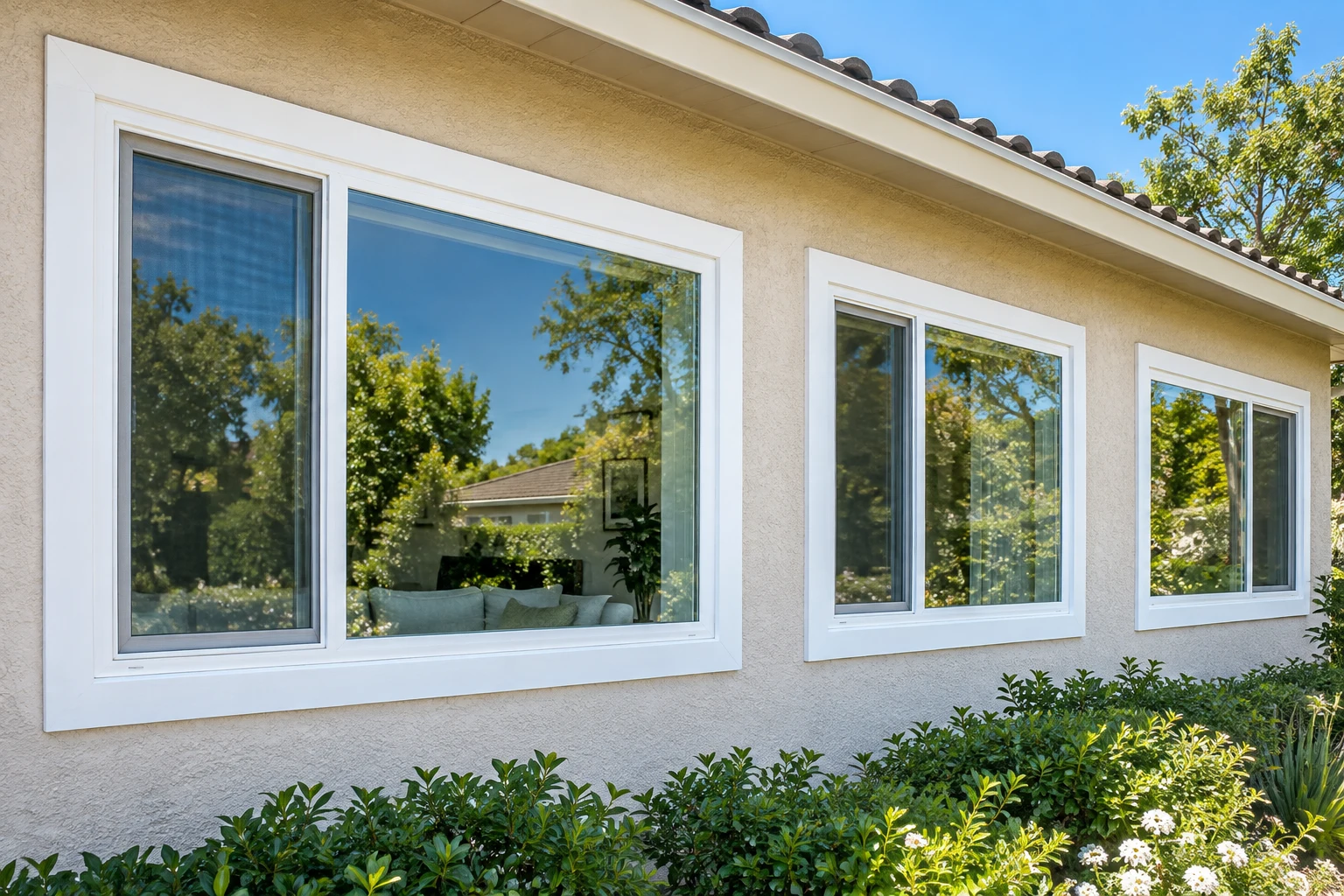
The best windows for blocking heat in Riverside are those designed to reduce solar heat gain—typically dual-pane windows with the right Low-E glass and a low SHGC rating, installed and sealed correctly. The goal is not just new windows, but windows that actively stop heat from entering your home.
At Total Home Windows, this is where most homeowners in Riverside get it wrong. If your house feels hot even with the AC running, the issue is often not your HVAC system—it’s heat pouring in through your windows all day. We focus on measuring and proving where that heat is entering before recommending a solution, so you’re not guessing.
If you’re starting your research, you can explore the full Riverside window replacement guide to understand how heat control fits into your home as a whole.
Why Heat Through Windows Is a Major Problem in Riverside
Riverside homes deal with long, intense sun exposure—especially during summer when temperatures regularly push into the 90s and beyond. That heat doesn’t just sit outside. It radiates through your glass and builds up inside your home throughout the day.
A common issue we find is that rooms with direct sun exposure—especially west-facing windows—become significantly hotter than the rest of the house. Homeowners often think their AC is failing, but the system is actually working overtime to fight constant heat gain.
The direct answer: windows are one of the largest sources of heat gain in Riverside homes, often contributing to uneven temperatures and high energy bills.
Older homes across Riverside are especially vulnerable. Many still have single-pane glass or early dual-pane units that were never designed for today’s energy demands.
If this sounds familiar, it’s worth understanding why your house feels hot even with the AC running—because the root cause is often right in front of you.
What Actually Blocks Heat in a Window
Not all windows block heat the same way. The key factor is how well a window controls solar heat gain—the amount of heat from sunlight that passes through the glass into your home.
The short answer: the best heat-blocking windows reduce solar heat gain while still letting in natural light.
Several components work together to make that happen:
- Low-E glass coatings that reflect heat away
- Low SHGC ratings to limit solar heat entry
- Dual-pane construction to slow heat transfer
- Insulated frames to reduce thermal movement
- Proper installation to prevent air leaks
In homes across Riverside, we often see windows that look fine visually but perform poorly because they lack one or more of these features.
The clear answer: heat-blocking performance comes from the combination of glass technology and installation—not just the window brand.
Low-E Glass: The Most Important Upgrade for Heat Control
If your goal is to reduce heat, Low-E glass is one of the most important features to focus on.
Low-E (low emissivity) coatings are microscopically thin layers applied to the glass. They reflect infrared heat while still allowing visible light to pass through.
That means your home stays brighter without absorbing as much heat.
In Riverside’s climate, the right Low-E configuration can:
- Reduce the amount of heat entering your home during peak sun hours
- Keep indoor temperatures more stable
- Lower the workload on your AC system
- Reduce glare and UV exposure on floors and furniture
But here’s where it matters: not all Low-E glass is the same. Some are designed for colder climates and can actually allow more heat in—exactly the opposite of what Riverside homeowners need.
The direct answer: the best windows for Riverside use Low-E coatings specifically designed for hot, sunny climates to minimize heat gain.
To understand how this works in more detail, you can review Low-E window options in Riverside.
Why SHGC Is One of the Most Important Ratings
When it comes to blocking heat, one number matters more than most: the Solar Heat Gain Coefficient (SHGC).
SHGC measures how much solar radiation passes through a window. The lower the number, the less heat enters your home.
The simple answer: lower SHGC = better heat blocking.
This becomes especially important in Riverside because of:
- Strong afternoon sun exposure
- Long cooling seasons
- High energy usage during summer months
Windows with high SHGC values allow more heat to pass through, which increases indoor temperatures and forces your AC to run longer.
A common issue we find is homeowners upgrading windows but still choosing the wrong glass package—resulting in minimal improvement in comfort.
The takeaway: if your goal is to block heat, choosing the right SHGC rating is just as important as choosing the window itself.
Dual-Pane Windows vs Older Windows
If your home still has single-pane windows or outdated aluminum frames, upgrading to modern dual-pane windows can make a noticeable difference.
Dual-pane windows use two layers of glass with an insulating space between them. This slows down heat transfer and improves overall efficiency.
The direct answer: dual-pane windows with the right glass configuration are typically the best balance of performance and cost for Riverside homes.
Compared to older windows, they can:
- Reduce heat entering through the glass
- Improve indoor comfort near windows
- Stabilize room temperatures
- Lower energy usage over time
In homes across Riverside, we often see immediate comfort improvements in rooms that previously felt unusable during the afternoon.
For most homeowners, triple-pane windows are not necessary in this climate. What matters more is choosing the right dual-pane system with proper heat-blocking features.
If you’re considering an upgrade, learn more about window replacement in Riverside and how it directly impacts heat control.
Frame Materials Also Affect Heat Performance
While glass does most of the work, the window frame still plays a role in how much heat enters your home.
The short answer: better-insulated frame materials help reduce overall heat transfer, especially around the edges of the window.
Common frame options include:
- Vinyl – strong insulation, low maintenance, cost-effective
- Fiberglass – durable, stable, and energy-efficient
- Aluminum – conducts heat more easily unless specially designed
Many older Riverside homes still have aluminum frames without thermal breaks, which allows heat to transfer directly into the home.
A common issue we find is homeowners focusing only on glass while ignoring the frame—leading to partial improvements instead of full performance.
The bottom line: the best heat-blocking windows combine high-performance glass with insulated frame materials and proper installation.
Installation Quality Is What Makes or Breaks Performance
Even the best window will not block heat if it is installed incorrectly.
Gaps, poor sealing, or improper fitting allow hot air to leak into your home, reducing the effectiveness of any upgrade.
The direct answer: installation quality is just as important as the window itself when it comes to blocking heat.
At Total Home Windows, we don’t rely on assumptions. We measure how much heat is entering at the window level, show you the problem areas, and explain exactly what needs to change.
That’s how you get real results—not just new windows, but a cooler, more comfortable home.
Which Windows Work Best for Different Heat Problems?
Not every heat issue in a Riverside home comes from the same place, and this is where many homeowners make the wrong decision. The “best” window depends on how heat is entering your home—not just the product itself.
At Total Home Windows, we regularly find that two homes on the same street can need completely different solutions based on sun exposure, window size, and layout.
The direct answer: the right window is determined by your specific heat problem, not a one-size-fits-all upgrade.
Here’s how different situations typically break down:
- West-facing rooms that overheat in the afternoon: Low SHGC glass with stronger solar control coatings
- Large living room windows or sliding doors: Dual-pane Low-E systems designed to reduce radiant heat
- Older aluminum frame windows: Replacement with insulated vinyl or fiberglass frames to stop heat transfer
- Rooms with glare and fading floors: Low-E coatings that reduce UV while maintaining natural light
- Whole-home heat buildup: A combination of glass upgrades and proper sealing across multiple windows
In real homes across Riverside, we often walk into a situation where one or two rooms are nearly unusable in the afternoon. After measuring, it becomes clear those specific windows are responsible for most of the heat—not the entire house.
This is why testing and measurement matter. Guessing leads to partial results. Identifying the exact source leads to real improvement.
Do Heat-Blocking Windows Actually Lower Energy Bills?
Yes—but not in the way most homeowners expect.
The direct answer: heat-blocking windows reduce how hard your AC has to work, which can lower energy usage over time.
In Riverside, air conditioning systems often run longer than necessary because they are constantly fighting incoming heat. When you reduce that heat at the window level, the system cycles less aggressively.
What we typically see in real homes:
- More stable indoor temperatures during peak heat hours
- Reduced “hot spots” near windows
- Less frequent AC cycling in the afternoon
- Gradual reduction in energy usage over time
However, most homeowners notice comfort first—not savings. The house simply feels easier to cool.
If your home currently struggles to maintain temperature, upgrading to windows designed to block heat in Riverside can directly address the root cause instead of overworking your HVAC system.
Common Mistakes Homeowners Make When Trying to Block Heat
Choosing the wrong windows—or choosing the right windows incorrectly—can lead to little or no improvement.
At Total Home Windows, we see the same issues repeatedly in Riverside homes.
- Focusing on brand instead of performance specs
- Ignoring SHGC ratings in a hot climate
- Choosing the wrong Low-E coating for the region
- Assuming all dual-pane windows perform the same
- Overlooking installation quality
One of the most common situations: a homeowner replaces windows but still has a hot house. When we measure the glass, it turns out the SHGC is too high for Riverside conditions.
The direct answer: if the window is not designed for heat rejection, it will not solve a heat problem—no matter how new it is.
What to Expect After Replacing Heat-Problem Windows
When the correct window system is installed properly, the changes are usually noticeable right away.
But it’s important to set realistic expectations.
The direct answer: you should expect improved comfort, more consistent temperatures, and reduced heat buildup—not instant dramatic drops in your energy bill overnight.
Here’s what most Riverside homeowners experience:
- Rooms that were previously hot become usable again
- Less temperature difference between rooms
- Reduced glare and sun intensity
- AC system doesn’t need to run as aggressively
In many homes, the biggest change is in the late afternoon—when heat used to peak. That’s when the right glass makes the most noticeable difference.
We’ve had homeowners tell us their second floor went from “unbearable after 3 PM” to comfortable enough to use daily. That’s not from thicker glass alone—it’s from the right combination of Low-E coating, SHGC rating, and proper installation.
Should You Replace All Windows or Just the Problem Areas?
This depends entirely on how heat is affecting your home.
The direct answer: you don’t always need to replace every window—only the ones contributing the most heat gain.
At Total Home Windows, we measure each window individually. In many cases, a small number of windows are responsible for the majority of the problem.
You may only need to focus on:
- West-facing windows
- Large glass openings
- Rooms with the most sun exposure
However, if your home has older windows throughout, a full replacement may provide more consistent results across the entire house.
This is where homeowners often save money by making informed decisions instead of replacing everything blindly.
Are Heat-Blocking Windows Worth It in Riverside?
In a hot inland climate like Riverside, heat-blocking windows are one of the most practical upgrades you can make.
Summer heat is not occasional—it’s constant and prolonged. That means your windows are exposed to hours of direct sunlight every day.
The direct answer: yes, when properly selected and installed, heat-blocking windows deliver measurable improvements in comfort and efficiency.
What makes the biggest difference is not just the product—but the process.
Total Home Windows approaches this differently. We don’t recommend windows based on assumptions. We measure heat at the window level, show you where it’s entering, and explain exactly what needs to change.
That’s how you avoid wasted upgrades and get results you can actually feel.
Related Window Answers in Riverside
- Are energy-efficient windows worth it in Riverside?
- How much does window replacement cost in Riverside?
- Dual-pane vs triple-pane windows in Riverside
- Signs you need new windows in Riverside
Frequently Asked Questions About What Windows Block Heat Best in Riverside
What type of window blocks the most heat?
Windows with Low-E coatings and low SHGC ratings block the most heat. In Riverside, dual-pane windows with the right solar control glass are typically the most effective option.
Are expensive windows always better at blocking heat?
No. Performance depends on specifications like SHGC and Low-E coatings—not just price. A properly configured mid-range window can outperform a more expensive one with the wrong glass.
How much difference will I actually feel?
Most homeowners notice a clear improvement in comfort, especially in rooms that get direct sunlight. The biggest difference is usually during the hottest parts of the day.
How long does installation take?
Most window replacement projects are completed in one to two days, depending on the number of windows and complexity. Proper installation is critical to achieving heat-blocking performance.
Will new windows fix a house that feels hot even with AC?
If heat is entering through your windows, yes. Windows are often the primary source of heat gain, and upgrading them addresses the problem directly instead of overworking your AC system.
Get Your Free Window Replacement Estimate In Riverside
If your home still feels hot even with the AC running, the issue may not be your system—it may be your windows.
Total Home Windows will show you exactly where heat is entering your home, measure performance at the window level, and recommend solutions based on real data—not guesswork.
If you’re ready to fix the root cause of the problem, Total Home Windows is here to help you create a cooler, more comfortable home in Riverside.
Request Free Estimate
Related Content
Best Windows for Homes in Riverside
Should I Replace All Windows At Once in Riverside
What Type Of Windows Are Best For Hot Climates in Riverside
Milgard Vs Andersen Windows in Riverside
Vinyl vs Fiberglass Windows in Riverside
Best Window Brands in Riverside
Helpful Resources for Homeowners
Whether you’re researching energy-efficient windows, looking for ways to reduce heat and noise, or comparing replacement options for an older home, these resources cover some of the most common questions homeowners ask. Browse the articles below for practical guidance and expert insights on choosing the right windows for your home.