
Prices and performance figures in this guide are planning examples, not a project quote or a promise of savings. Your estimate and results depend on the products, installation scope, existing home, climate, and energy use.
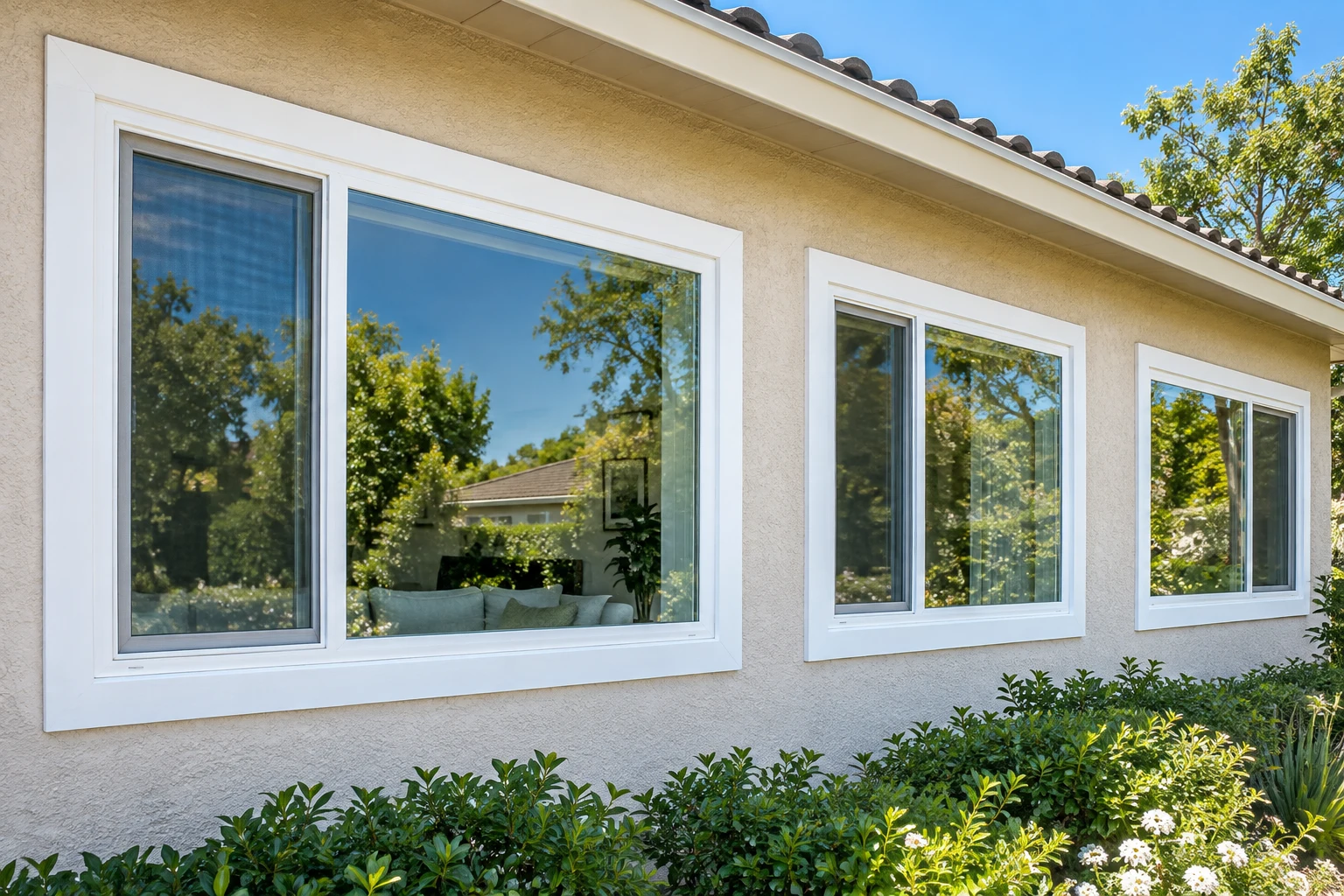
The windows that block heat best in Fontana are dual-pane windows with advanced Low-E glass coatings and low solar heat gain (SHGC) ratings. These windows are specifically designed to reflect heat away from your home while still allowing natural light in.
For many homeowners, the real issue isn’t the AC—it’s the windows. At Total Home Windows, we work with homeowners across Fontana who are dealing with rooms that stay hot all afternoon, rising energy bills, and uneven temperatures. In most cases, the heat is entering directly through the glass.
If you’re starting your research, you can explore the full Fontana window replacement overview to see how window performance impacts comfort throughout your home.
Why Windows Are the Main Source of Heat in Fontana Homes
Fontana’s climate is one of the biggest reasons window performance matters. Summer temperatures regularly push past 100°F, and the sun—especially on west-facing windows—hits your home at the hottest part of the day.
A common issue we find in homes across Fontana is that certain rooms feel 10 to 15 degrees hotter than the rest of the house. This isn’t random—it’s almost always tied to direct sun exposure through inefficient windows.
Simple answer: If your home is hot even with the AC running, heat is likely coming through your windows faster than your AC can remove it.
Older homes in Central and South Fontana often still have single-pane aluminum windows, which transfer heat directly inside. Newer homes in North Fontana may have dual-pane windows, but many are builder-grade and not designed to block intense Inland Empire heat.
If this sounds familiar, see why this happens on our house hot even with AC in Fontana page.
What Actually Makes a Window Block Heat
Not all windows block heat equally. The ability to keep your home cool comes down to how well the window controls solar heat gain—the amount of heat that passes through the glass.
Direct answer: The best heat-blocking windows reduce solar heat gain using specialized glass coatings, insulation between panes, and airtight installation.
The key components include:
- Low-E glass coatings that reflect infrared heat
- Low SHGC ratings to limit how much heat enters
- Dual-pane construction with insulating gas
- Tight seals to stop hot air infiltration
In homes across Fontana, we often measure significant temperature differences at the glass itself. When sunlight hits older windows, the interior surface can heat up dramatically—radiating heat into the room long after the sun moves.
Bottom line: The glass—not the frame—is where most of the heat transfer happens.
Low-E Glass: The Most Important Feature for Heat Control
If there’s one feature that makes the biggest difference in Fontana, it’s Low-E glass.
Low-E (low emissivity) coatings are microscopic layers applied to the glass that reflect heat energy away from your home while still letting in visible light.
Direct answer: Low-E glass can block a large percentage of solar heat, making it the most effective upgrade for hot climates like Fontana.
This is especially important for:
- West-facing windows that get intense afternoon sun
- South-facing windows with all-day exposure
- Upstairs rooms that trap heat
A common issue we find is homeowners upgrading windows without the right Low-E configuration. Not all Low-E glass is designed for hot climates—some are built for colder regions and won’t perform the same way in Southern California.
To understand how this works in more detail, visit our Low-E windows in Fontana page.
Why SHGC Matters More Than Most Homeowners Realize
Solar Heat Gain Coefficient (SHGC) is one of the most important numbers when choosing windows in Fontana.
SHGC measures how much heat from sunlight passes through the window. The lower the number, the better the window is at blocking heat.
Direct answer: In Fontana, lower SHGC windows perform better because they reduce how much solar heat enters your home.
This becomes critical in real-world situations:
- Afternoon sun heating up living rooms and bedrooms
- Rooms that feel hot even when the thermostat reads normal
- AC systems running constantly but not keeping up
In many cases, homeowners assume their HVAC system is undersized. But what’s actually happening is that solar heat is overwhelming the room before the thermostat can respond.
Key takeaway: Lower SHGC = less heat entering your home = less strain on your AC.
Dual-Pane vs Older Windows in Fontana
If your home still has single-pane or older aluminum windows, upgrading to dual-pane windows will make a noticeable difference.
Dual-pane windows use two layers of glass with an insulating space between them, slowing down heat transfer.
Direct answer: Dual-pane windows with Low-E glass are the best balance of performance and cost for blocking heat in Fontana.
Compared to older windows, they help:
- Reduce heat entering through the glass
- Stabilize indoor temperatures
- Lower energy usage
- Improve comfort near windows
In homes across Fontana, we often see 1970s–1990s windows that have already failed—either through broken seals or outdated materials. Even if they are technically “dual-pane,” they no longer insulate effectively.
If you’re comparing options, see our breakdown of dual-pane vs triple-pane windows in Fontana.
Are Triple-Pane Windows Worth It in Fontana?
This comes up a lot, especially for homeowners dealing with extreme heat.
Direct answer: Triple-pane windows are usually not necessary for heat control in Fontana and often don’t justify the added cost.
While triple-pane windows provide more insulation, the difference in heat blocking compared to high-quality dual-pane Low-E windows is relatively small in Southern California’s climate.
Where triple-pane can make sense is in very specific situations:
- Homes near freeways (I-10, I-15, 210) needing noise reduction
- Properties exposed to constant low-frequency noise
For heat alone, a properly selected dual-pane window will already meet and exceed what most homes need.
Bottom line: It’s not about adding more glass—it’s about using the right glass.
Frame Material Matters—But Less Than You Think
While glass does most of the work, the frame still plays a role in overall performance.
Direct answer: Vinyl frames are the most common and effective choice for heat control in Fontana.
Here’s how materials compare:
- Vinyl: Excellent insulation, low maintenance, handles heat well
- Fiberglass: Stronger and more stable, but higher cost
- Aluminum: Conducts heat easily unless thermally broken
In many older Fontana homes, aluminum frames are one of the biggest contributors to indoor heat. They transfer exterior temperatures directly inside, making rooms feel hotter even without direct sunlight.
If you’re comparing materials, see our guide on vinyl vs fiberglass windows in Fontana.
Installation Is What Makes or Breaks Heat Blocking
Even the best window won’t perform if it’s not installed correctly.
Direct answer: Poor installation allows heat and air to leak around the window, reducing its effectiveness.
In Fontana, this becomes even more important because of Santa Ana winds. These high-pressure winds can force hot air and dust through even small gaps around poorly installed windows.
A common issue we find is air infiltration—not through the glass, but around the frame. This creates a constant cycle where your AC is cooling air that immediately escapes.
Proper installation ensures:
- Airtight sealing against heat and wind
- No gaps around the frame
- Long-term performance in extreme conditions
If you’re planning a project, learn what to expect from window replacement in Fontana and how proper installation impacts performance.
How We Identify Heat Problems in Your Windows
At Total Home Windows, we don’t guess which windows are causing the problem—we show you.
In homes across Fontana, we often find that not every window needs to be replaced right away. The biggest heat problems usually come from specific areas, like west-facing bedrooms or large living room windows.
Direct answer: The best way to choose heat-blocking windows is to first measure where heat is actually entering your home.
Our process includes:
- Measuring heat at the window level
- Identifying high solar gain areas
- Showing you which windows are underperforming
- Recommending solutions based on actual data
This is how you avoid overspending—and focus on what actually improves comfort.
Which Windows Work Best for Different Heat Problems in Fontana?
Not all heat problems in Fontana homes are the same. The best window depends on where the heat is coming from and how your home is exposed.
At Total Home Windows, we regularly see patterns. West-facing rooms overheat in the afternoon. Upstairs bedrooms trap heat. Large living room windows turn into radiators by 3 PM.
Direct answer: The best heat-blocking window is the one matched to your home’s specific exposure—not just the highest-rated product on paper.
Here’s how that breaks down in real homes:
- West-facing rooms: Low SHGC Low-E glass designed for aggressive solar control
- Large glass openings: Dual-pane with upgraded coatings to reduce radiant heat
- Older aluminum windows: Full replacement with insulated vinyl frames and modern glass
- Upstairs heat buildup: Heat-rejecting glass combined with airtight installation
- Whole-home overheating: Strategic replacement, not always every window at once
This is why we measure heat at each window. In many Fontana homes, only a handful of windows are responsible for most of the discomfort.
Do Heat-Blocking Windows Actually Lower Energy Bills?
Yes—but not always in the way homeowners expect.
Direct answer: Heat-blocking windows reduce the workload on your AC, which can lower energy usage—but the biggest immediate impact is comfort.
In Fontana’s 100°F+ summers, your AC is often fighting constant solar heat gain. When windows allow that heat inside, your system runs longer and struggles to keep up.
Once that heat is reduced:
- Your AC cycles normally instead of running nonstop
- Rooms cool down faster
- Temperature differences between rooms shrink
Many homeowners notice their system finally “catching up” in the late afternoon—something it couldn’t do before.
If you want a deeper breakdown, see how new windows reduce energy bills in Fontana.
What Most Homeowners Get Wrong About Heat-Blocking Windows
There’s a lot of confusion around what actually blocks heat.
We see the same mistakes across Fontana homes:
- Focusing on brand instead of glass performance
- Assuming all dual-pane windows are equal
- Choosing glass designed for colder climates
- Ignoring SHGC ratings completely
- Overlooking installation quality
Direct answer: The wrong glass package can make a new window perform almost like an old one in Fontana heat.
We’ve inspected homes where windows were recently replaced—but the house still felt hot. The issue wasn’t the installation—it was the wrong Low-E configuration for this climate.
If you’re comparing options, it helps to understand what actually works in this region. You can review the best configurations on our best windows for hot climates in Fontana page.
Real-World Experience: What We See Inside Fontana Homes
In Central Fontana, older homes with original aluminum windows often feel hot within minutes of direct sunlight. You can stand near the glass and feel the heat radiating inward.
In North Fontana, the issue is different. Homes built in the 1990s–2000s usually have dual-pane windows—but they’re builder-grade. The seals degrade, or the glass simply wasn’t designed for extreme solar exposure.
One of the most common situations we see:
- Downstairs feels manageable
- Upstairs west-facing rooms are 10–15 degrees hotter
- AC runs constantly but never quite solves it
That’s not an HVAC problem. It’s solar heat gain through glass.
You can see how this connects on our house hot even with AC in Fontana page.
How Heat-Blocking Windows Fit Into a Smart Replacement Plan
Not every home needs a full replacement right away.
Direct answer: The most effective approach is often replacing the windows that receive the most sun first.
This is especially true in Fontana, where sun exposure is directional and predictable.
A smart plan looks like this:
- Identify high-heat areas (usually west and south sides)
- Measure actual heat at the glass
- Prioritize those windows first
- Expand later if needed
This avoids overspending and solves the real problem faster.
If you’re deciding how to approach your project, see whether it makes sense to replace all windows or not in Fontana.
Are Heat-Blocking Windows Worth It in Fontana?
In this climate, yes—when they’re selected and installed correctly.
Fontana’s combination of extreme sun, high temperatures, and seasonal winds creates constant pressure on your home. Windows are one of the biggest entry points for that heat.
When properly upgraded, homeowners typically notice:
- Rooms that stay usable in the afternoon
- Less reliance on constant AC use
- More even temperatures throughout the house
- Reduced glare and interior fading
At Total Home Windows, the goal isn’t just replacing windows—it’s fixing the specific heat problem inside your home using measurable data.
Related Window Answers in Fontana
- How much does window replacement cost in Fontana?
- What are Low-E windows and how do they work?
- Do new windows reduce freeway and traffic noise?
- What are the signs you need new windows?
Frequently Asked Questions About What Windows Block Heat Best in Fontana
What is the best type of window to block heat in Fontana?
Dual-pane windows with advanced Low-E coatings and low SHGC ratings perform best. These are specifically designed to reflect solar heat while maintaining natural light.
How much do heat-blocking windows cost?
Most homeowners in Fontana spend between $800 and $1,200 per window depending on size, materials, and glass upgrades. Higher-performance glass packages can increase cost but improve results.
Will new windows fix a hot room?
If the heat is coming through the glass, yes. In many Fontana homes, replacing the right windows can significantly reduce room temperatures—especially on west-facing sides.
Do I need to replace all my windows?
No. Many homes benefit from a phased approach, focusing first on the windows causing the most heat gain.
How long does installation take?
Most projects are completed in 1–2 days after the windows are manufactured. You can learn more about timing on our window replacement pages.
Get Your Free Window Replacement Estimate In Fontana
If your home still feels hot even with the AC running, the issue is likely your windows—not your system.
Total Home Windows will show you exactly where heat is entering your home and which windows are causing the problem. No guessing. No pressure.
If you’re ready to explore your options, start with window replacement in Fontana and take the first step toward a cooler, more comfortable home.
Request Free Estimate
Related Content
Best Windows for Homes in Fontana
Should I Replace All Windows At Once in Fontana
What Type Of Windows Are Best For Hot Climates in Fontana
Milgard Vs Andersen Windows in Fontana
Vinyl vs Fiberglass Windows in Fontana
Best Window Brands in Fontana
Helpful Resources for Homeowners
Whether you’re researching energy-efficient windows, looking for ways to reduce heat and noise, or comparing replacement options for an older home, these resources cover some of the most common questions homeowners ask. Browse the articles below for practical guidance and expert insights on choosing the right windows for your home.