
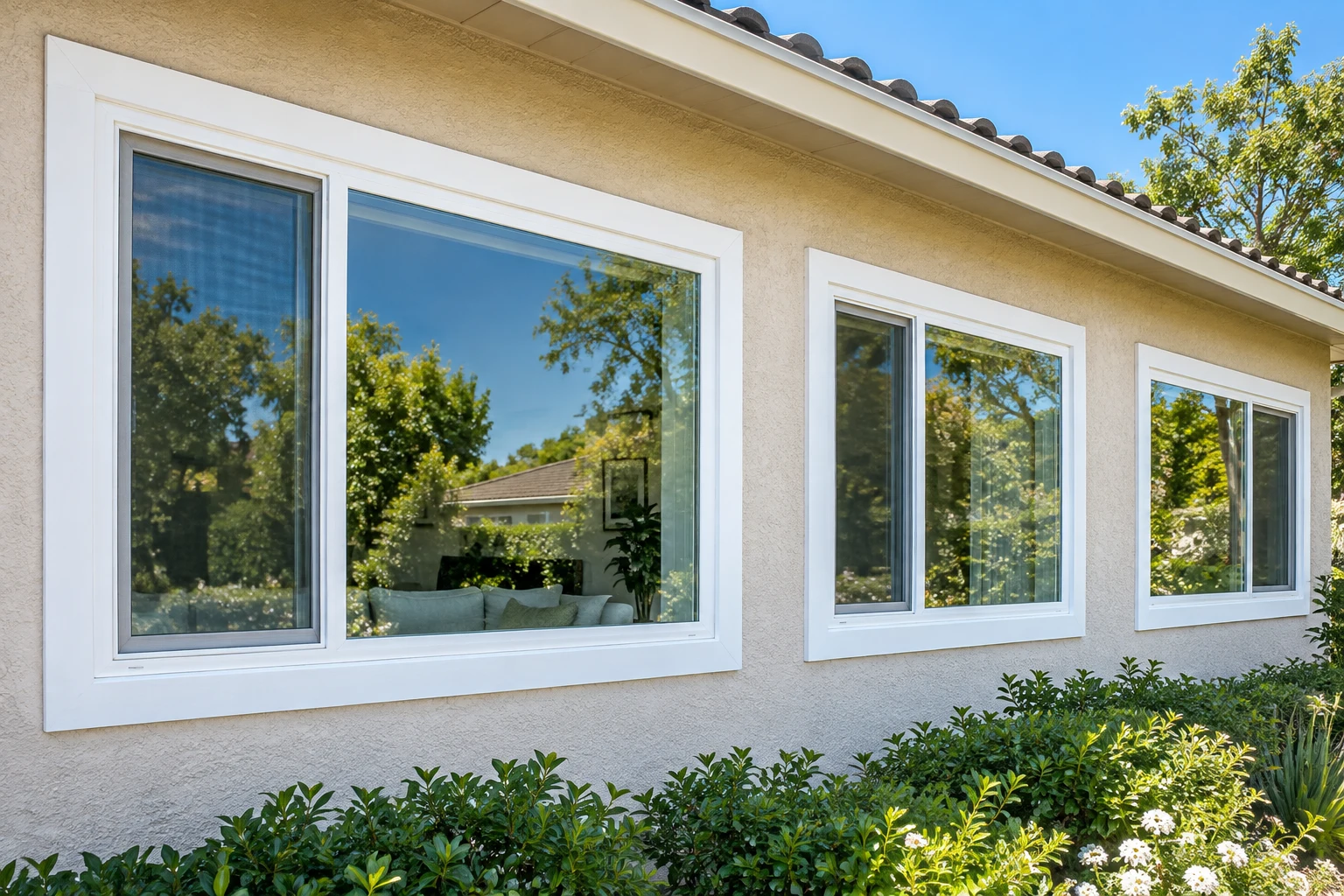
The signs you need new windows in Fontana are usually clear once you know what to look for: rooms that stay hot even with the AC running, rising energy bills, drafts, foggy glass, and windows that no longer seal properly. In this climate, those issues almost always point to heat entering through failing or outdated windows.
At Total Home Windows, we focus on identifying exactly where that heat is coming from inside your home—not guessing. Many homeowners assume their AC is the problem, but in Fontana, windows are often the real cause of discomfort and high cooling costs.
If you’re trying to figure out whether your windows are the issue, this guide breaks down what to look for and what it actually means for your home. You can also explore the full local overview on our Fontana window replacement service area page for broader context.
What Are the Most Common Signs You Need New Windows?
The most common signs include heat buildup in certain rooms, noticeable drafts, fog between panes, difficulty opening or locking windows, and increasing energy bills. In Fontana specifically, heat and sun exposure accelerate window failure faster than in milder climates.
In homes across Fontana, we often see windows that look fine visually but perform poorly. The issue is not appearance—it is heat transfer, air leakage, and outdated glass that no longer blocks solar gain.
Short answer: If your home feels uncomfortable despite running AC, your windows are likely allowing heat inside.
Your House Feels Hot Even With the AC Running
This is the most common and most important sign.
If your AC is running but certain rooms—especially upstairs or west-facing rooms—still feel hot, the issue is usually solar heat entering through the glass. In Fontana, afternoon sun is intense, and older windows act like a greenhouse, trapping heat inside.
A common issue we find is homeowners replacing or servicing their HVAC system without solving the real problem. The AC is working—it is just being overwhelmed by constant heat entering through inefficient windows.
Short answer: If heat is strongest near your windows, the windows are the source—not the AC.
For a deeper explanation, see why homes stay hot even with AC in Fontana.
Your Energy Bills Keep Climbing
When your windows allow heat inside, your AC has to run longer to maintain temperature. That directly increases your energy usage.
In Fontana, where summer temperatures regularly exceed 100 degrees, inefficient windows can significantly increase cooling costs. This is especially true in homes with older aluminum frames or early-generation dual-pane glass.
Even small inefficiencies add up over time. If your bills keep rising without a clear reason, your windows may be part of the problem.
Short answer: Inefficient windows force your AC to work harder, increasing energy costs month after month.
Learn how new windows reduce energy bills in Fontana and what to expect.
Rooms Feel Uneven or Hard to Cool
If one part of your home is comfortable but another feels significantly hotter, that is usually a window performance issue—not an HVAC issue.
This is extremely common in North Fontana two-story homes, where upstairs bedrooms facing west become unusable in the afternoon. The thermostat may not detect the heat spike because it is located elsewhere in the house.
In homes across Fontana, we often see temperature differences of 10–15 degrees between rooms caused by direct sun hitting inefficient glass.
Short answer: Uneven temperatures usually mean certain windows are allowing too much heat into specific areas.
You Feel Drafts or Air Leaks
Windows should seal tightly. If you feel air movement around a closed window, something is failing.
In Fontana, this becomes more noticeable during Santa Ana wind events. These winds push hot, dry air into the home through small gaps, while pulling conditioned air out. This creates what is known as the “dryer effect.”
A common issue we find is worn weatherstripping, warped frames, or poor original installation—especially in homes built in the 1990s and early 2000s.
Short answer: If air is getting in or out, your windows are no longer sealed properly.
Fog or Moisture Between the Glass
If you see fog, haze, or condensation trapped between panes, the seal has failed.
This is very common in Fontana due to constant expansion and contraction from heat. Once the seal breaks, the insulating gas escapes and moisture gets inside, permanently affecting performance.
This is not just a cosmetic issue. A failed seal means the window is no longer insulating properly.
Short answer: Foggy windows mean the glass unit has failed and is no longer energy efficient.
At that point, replacement is typically more effective than repair, especially if multiple windows are affected. You can explore your options for window replacement in Fontana to address the issue correctly.
Your Windows Are Hard to Open, Close, or Lock
Windows should operate smoothly. If they stick, jam, or won’t lock properly, the frame or hardware is likely worn or warped.
This is especially common in older aluminum windows or lower-quality vinyl units exposed to years of heat and UV.
Beyond inconvenience, this creates safety and security concerns. It also usually means the window is not sealing correctly, which affects both comfort and efficiency.
Short answer: If your windows don’t function properly, they are likely failing structurally and thermally.
You Still Have Single-Pane or Old Aluminum Windows
If your home still has single-pane glass or original aluminum frames, replacement is no longer a question of “if”—it is “when.”
These windows offer almost no resistance to heat transfer. Aluminum, in particular, conducts heat directly into the home.
This is common in Central and South Fontana homes built between the 1940s and 1970s. These properties often experience extreme indoor temperature swings because the windows provide no insulation.
Short answer: Single-pane and aluminum windows are one of the biggest sources of heat gain in Fontana homes.
Modern solutions like Low-E windows in Fontana are specifically designed to reflect heat away before it enters your home.
Outside Noise Is Getting Worse
If you live near the 10, 15, or 210 freeways—or near warehouse traffic in South Fontana—you may notice increasing noise inside your home.
Older windows allow low-frequency sounds like truck engines and tire noise to pass through easily. Even standard dual-pane windows may not be enough if they are outdated or poorly sealed.
Short answer: If outside noise is clearly noticeable indoors, your windows are not insulating sound effectively.
Upgraded glass systems can reduce noise significantly, especially when designed for local conditions. Learn more about whether windows reduce noise in Fontana homes.
Why These Signs Matter More in Fontana
Not all window problems are equal—and in Fontana, they escalate faster because of the environment.
Between extreme summer heat, strong UV exposure, and seasonal Santa Ana winds, windows in this area face constant stress. Materials expand, seals break down, and air infiltration becomes more severe over time.
That is why symptoms like heat, drafts, and rising bills tend to show up earlier and feel more intense compared to coastal areas.
Short answer: Fontana’s climate accelerates window failure and makes performance issues more noticeable.
How Total Home Windows Identifies the Problem
At Total Home Windows, we do not start with products—we start with measurement.
We show you exactly where heat is entering your home by measuring window-level performance. This allows you to see the difference between rooms, exposures, and glass types before making any decisions.
A common issue we find is homeowners replacing all windows when only specific elevations—like west-facing or street-facing—are causing the majority of the problem.
Short answer: The right solution starts with identifying which windows are actually causing the heat problem.
From there, we recommend solutions based on real data, not assumptions—whether that means full replacement or a phased approach.
9. Your Window Frames Are Warping, Cracking, or Breaking Down
In Fontana, window damage is not always obvious at first. The heat, UV exposure, and dry air slowly wear down materials over time.
If you are seeing warped frames, cracked corners, chalky vinyl, or separation at the joints, the window is no longer sealing the way it should. Even small distortions can create gaps that allow heat and air to move freely in and out of your home.
Short answer: If the frame is failing, the window cannot block heat effectively—no matter how the glass looks.
We often see this in older aluminum windows and lower-quality vinyl from the 1990s and early 2000s. The frame expands and contracts daily in Fontana’s heat, and eventually it loses its shape.
At Total Home Windows, this is one of the first things we check during an in-home evaluation. If the frame is compromised, it affects everything—comfort, energy use, and long-term durability.
10. You Notice Dust, Allergens, or Air Getting Inside
Fontana homeowners deal with more than just heat. Between Santa Ana winds and nearby freeway or warehouse activity, air quality becomes a real issue.
If you constantly notice dust building up near your windows, or you feel like outside air is getting in even when everything is closed, your windows are not sealing properly.
This is especially common in:
- Homes near the 10, 15, or 210 freeways
- South Fontana neighborhoods near distribution centers
- Older homes with worn weatherstripping
Short answer: If outside air and dust are getting in, your windows are leaking—even if you cannot see the gap.
This is part of what we call the “pressure problem.” Wind pushes hot air into the home while pulling cool air out. Your AC ends up working harder just to keep up.
11. Your Windows Are Making Certain Rooms Unusable
This is where window problems move from “annoying” to “disruptive.”
In many Fontana homes, especially two-story properties in North Fontana, we see entire rooms that cannot be used during parts of the day.
Common example:
- Upstairs bedroom is 10–15 degrees hotter than the rest of the house
- Living room becomes too hot in the afternoon due to west-facing windows
- Home office is uncomfortable even with AC running
This is not an HVAC issue. It is direct solar heat gain through the glass.
Short answer: If a room becomes unusable during the day, the windows in that room are likely the cause.
We have measured this in real homes. One side of the house can feel comfortable, while another side—same AC, same thermostat—is significantly hotter simply because of window exposure.
What Actually Fixes the Problem (And What Doesn’t)
Many homeowners try temporary fixes before considering window replacement.
Here is what we typically see:
- Replacing the AC unit
- Adding blackout curtains
- Using portable AC or fans
- Applying store-bought window film
These can help slightly, but they do not solve the root issue.
The real problem is heat entering through the glass.
The most effective solution is upgrading to windows designed for heat rejection. That means proper glass coatings, sealed units, and tight installation.
For example, modern options like heat-blocking windows in Fontana are built specifically to reflect solar heat before it enters your home.
That is a completely different result compared to trying to manage heat after it is already inside.
Dual-Pane vs Older Windows: What Changes?
Not all windows perform the same—even if they look similar.
Here is the real difference in performance:
- Single-pane windows: Almost no insulation, direct heat transfer
- Old dual-pane (failed seals): Reduced performance, heat still enters
- Modern dual-pane with Low-E: Reflects heat, stabilizes indoor temperature
Direct answer: A properly built dual-pane Low-E window can block a significant portion of solar heat before it enters the home.
In Fontana’s climate, this is critical. You are not just insulating—you are actively rejecting heat.
That is why simply “having dual-pane” is not enough. The type of glass and the condition of the seal matter just as much.
Repair vs Replacement: How to Decide
Some window issues can be repaired. Others cannot.
Repair may make sense if:
- The window is relatively new
- The issue is isolated (hardware, lock, minor seal)
- The frame is still in good condition
Replacement makes more sense if:
- You have multiple issues (heat, drafts, fogging, operation problems)
- The windows are older or original to the home
- Comfort problems are ongoing
Direct answer: If the window is causing heat and comfort issues, repair usually does not fix the core problem.
This is where many homeowners get stuck—spending money on small fixes without solving the bigger issue.
Should You Replace All Windows or Just Some?
You do not always need to replace every window at once.
In Fontana, a smarter approach is often to prioritize based on exposure.
We regularly recommend starting with:
- West-facing windows (strongest afternoon heat)
- Upstairs windows (heat rises and builds)
- Street-facing windows (noise + heat)
Direct answer: Replacing the worst-performing windows first can solve most of the comfort problem.
This phased approach is practical and cost-effective, especially if only certain areas of the home are affected.
At Total Home Windows, we show you exactly which windows are causing the problem so you can make that decision with real data—not guesswork.
Why Installation Matters More Than Most Homeowners Think
A high-performance window can still fail if it is installed incorrectly.
In Fontana homes—especially stucco exteriors—installation determines whether the window actually seals against heat and air.
Common installation problems include:
- Gaps between frame and opening
- Improper sealing or insulation
- Poor alignment causing air leaks
We have seen brand-new windows that still allow heat in because the installation was rushed or done incorrectly.
Experience insight: In many homes we evaluate, the issue is not just the window—it is how it was installed.
That is why we focus on measurement first. We identify where heat is entering before recommending any solution.
How Many Signs Are Enough to Take Action?
One issue alone does not always mean you need replacement.
But when multiple signs show up together, it becomes clear.
Pay attention if you notice three or more:
- Rooms stay hot even with AC
- Energy bills keep rising
- Drafts or air leaks
- Foggy or failed glass
- Hard-to-use windows
- Noise coming inside
- Visible frame damage
Short answer: Multiple symptoms usually mean the window is no longer performing and should be replaced.
At that point, the best next step is not guessing—it is measuring.
What Happens During a Window Evaluation
At Total Home Windows, the process is straightforward and based on proof.
We:
- Measure heat at the window level
- Compare different rooms and exposures
- Show where heat is entering
- Explain why your home feels the way it does
This gives you clear answers before you make any decisions.
Experience insight: Many homeowners are surprised to see how much hotter one window is compared to another just a few feet away.
That is the difference between guessing and actually understanding the problem.
Related Window Answers in Fontana
- How much window replacement costs in Fontana
- Energy-efficient window options for Fontana homes
- How long window installation takes in Fontana
- Should you replace all windows at once in Fontana
Frequently Asked Questions About Signs You Need New Windows in Fontana
How do I know if my windows are causing heat in my home?
If the heat is strongest near your windows or certain rooms get significantly hotter during the day, your windows are likely allowing solar heat inside. This is one of the most common issues we measure in Fontana homes.
Is window replacement worth it for energy savings?
Yes. Energy-efficient windows reduce how hard your AC has to work. In Fontana’s climate, that can lead to noticeable reductions in cooling costs and improved comfort.
How much does it cost to replace windows in Fontana?
Costs vary based on size, materials, and installation type, but most homeowners invest several thousand dollars for a full-home project. The best way to get accurate pricing is through an in-home evaluation.
Can I replace just a few windows instead of all of them?
Yes. Many homeowners start with the hottest or most problematic areas first. This can solve the main comfort issues without replacing every window at once.
How long does installation take?
Most window installations take one to two days for a typical home. The full timeline, including ordering, is usually a few weeks depending on customization.
Get Your Free Window Replacement Estimate In Fontana
If your home feels hot, uneven, or uncomfortable, there is a reason—and in many Fontana homes, the windows are the source.
Total Home Windows will show you exactly where heat is entering and what is causing the problem. No guessing. No pressure. Just clear answers you can use to make the right decision.
If you are ready to fix the problem, not just manage it, Total Home Windows is here to help.
Request Free Estimate
Related Content
Do Windows Help With Noise in Fontana
Should I Replace All Windows At Once in Fontana
What Type Of Windows Are Best For Hot Climates in Fontana
Milgard Vs Andersen Windows in Fontana
Vinyl vs Fiberglass Windows in Fontana
Best Window Brands in Fontana
Helpful Resources for Homeowners
Whether you’re researching energy-efficient windows, looking for ways to reduce heat and noise, or comparing replacement options for an older home, these resources cover some of the most common questions homeowners ask. Browse the articles below for practical guidance and expert insights on choosing the right windows for your home.