
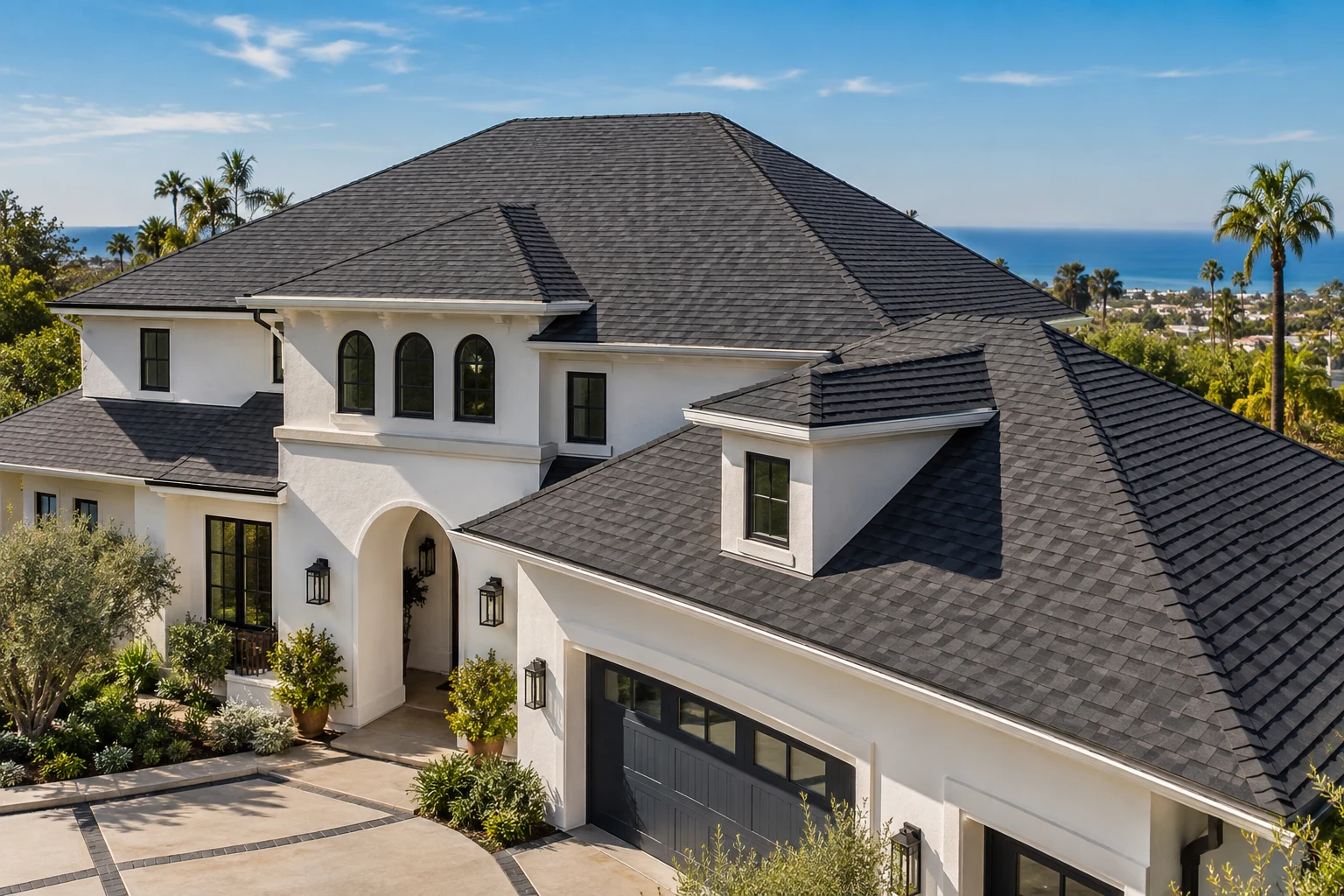
In Grand Terrace, choosing the right roofing material means balancing durability, energy efficiency, and system performance under extreme heat and strong winds. At All Star Roof Replacement, we specialize in residential roof replacements that go beyond the surface, evaluating decking, underlayment, flashing, and ventilation to recommend the best roofing system tailored to your home’s unique needs.
Many homeowners don’t realize that the material on top is only one part of the roofing system. For homes across Grand Terrace, the extreme summer heat routinely pushing temperatures above 100°F—and roof surfaces reaching up to 180°F—means roofing materials degrade faster without proper support from quality underlayment and ventilation.
Understanding Roofing System Challenges in Grand Terrace’s Climate
Grand Terrace is known for intense sunshine with high UV exposure combined with thermal shock caused by rapid temperature swings. This constant expansion and contraction stress shingles, underlayment, and decking. Over time, this can lead to cracks, granule loss, and weakening of the roof’s structure.
Additionally, the Inland Empire’s signature Santa Ana winds apply strong uplift forces. These winds test the strength of fasteners, flashings, and roofing materials. Improper installation or weaker systems often fail under these stresses, leading to leaks and damage inside the home—sometimes even when the surface shingles or tiles look intact.
A common issue during inspections is discovering roofing underlayment and ventilation inadequacies, especially in homes built before 2000. These hidden components play a crucial role in protecting your home from leaks and reducing heat buildup in the attic. Understanding these local challenges is key when selecting the right roofing material.
How Roofing Materials Perform in Grand Terrace’s Environment
Different roofing materials respond uniquely to Grand Terrace’s heat, UV exposure, and high winds. Asphalt shingles remain popular due to their affordability but typically last 15-25 years in this environment. For them to perform adequately, cool roof-rated shingles meeting California’s Title 24 standards are a must to reduce heat absorption and extend lifespan.
Concrete and clay tiles offer a far superior lifespan, often between 40 to 100 years, thanks to their excellent thermal mass and natural air gaps that help moderate attic temperatures. However, tile roofs require modern synthetic underlayment materials to withstand the thermal degradation that traditional felt underlayment cannot handle in Grand Terrace’s hot climate.
Metal roofs, such as standing seam panels, stand out for their durability and high resistance to wind uplift. Though they have a higher upfront cost, their longevity and minimal maintenance make them an excellent choice for homeowners prioritizing long-term performance.
Material | Lifespan | Heat Resistance | Wind Resistance | Upfront Cost | Energy Efficiency
--- | --- | --- | --- | --- | ---
Asphalt Shingles (Cool Roof Rated) | 15-25 Years | Moderate | Moderate | Low | Good
Concrete & Clay Tiles | 40-100 Years | Excellent | Good | High | Excellent
Standing Seam Metal | 40-60 Years | Excellent | Excellent | High | Good
For more on how different materials stack up, see our detailed comparison here. It’s important to also consider cool roof options to reduce your summer energy bills by lowering attic heat, a critical factor in Southern California’s Inland Empire summers.
Key Considerations Beyond Material – Roofing System Components Matter
In homes across Grand Terrace, we often see that replacement roofs focusing only on surface material miss critical system weaknesses. The decking, underlayment, flashing, and ventilation are equally vital. For example, synthetic underlayment has become the standard under tile roofs to prevent rapid heat degradation common in traditional felt products.
Another key factor is well-installed flashing designed to withstand the Santa Ana winds and keep wind-driven rain from penetrating vulnerable seams and edges. Proper installation ensures your roof maintains its integrity under pressure.
Ventilation also plays a leading role. A balanced system with soffit vents and ridge vents helps regulate attic temperature and moisture, reducing the thermal cycling damage that accelerates roof aging. Without proper ventilation, even the best roofing materials may suffer premature wear.
These components also affect your warranty coverage. Poor nailing or flashing installation can void manufacturer warranties, leaving you exposed to costly repairs. At All Star Roof Replacement, we emphasize thorough inspections and quality installation to protect your investment and your home.
Decision Support: Choosing the Right Material for Your Grand Terrace Home
Deciding on the right roofing material requires considering your home’s architecture, age, style, and your budget. Ranch-style homes often utilize asphalt shingles for cost-effectiveness, while Mediterranean or Spanish-style architecture better suits concrete or clay tiles.
For homeowners on a modest budget, cool roof-rated asphalt shingles provide compliance with California energy codes and a reasonable lifespan. However, for those seeking a long-term solution with superior fire resistance and neighborhood appeal, investing in tile roofs makes sense despite the higher upfront cost and the necessity of modern underlayment systems for longevity.
If longevity and wind resistance are paramount, metal roofs can be cost-effective over time despite their initial price. Always factor in the lifespan of underlayment replacements, which typically occur every 20-30 years, especially under tiles, to avoid surprises down the road.
Also consider if you plan to install solar panels, as certain roofing materials coordinate better with solar mounting systems, potentially impacting costs and installation complexity.
For detailed cost breakdowns and the replacement process, visit our pages on roof replacement cost and choosing a roof replacement installer.
FAQs About Roofing Materials in Grand Terrace
What roofing material lasts longest in Grand Terrace?
Clay tile roofs provide the longest lifespan, often lasting 75-100 years, with concrete tiles close behind at 40-50 years. However, underlayment typically needs replacement every 20-30 years due to heat stress, so overall system maintenance is essential.
Are asphalt shingles a good option in extreme heat?
Yes, but only with cool roof-rated shingles designed to meet Title 24 standards. These shingles reflect more sunlight, reducing heat absorption and extending shingle life in harsh Southern California summers.
Why is underlayment important with tile roofs?
Underlayment acts as the primary waterproof barrier beneath tiles. Old asphalt felt underlayment deteriorates quickly under Grand Terrace’s heat, so modern synthetic underlayment is required to maintain roof integrity over time.
How does ventilation affect roofing material performance?
Proper attic ventilation reduces excessive heat buildup and moisture accumulation, limiting thermal cycling damage and mold issues, thus extending the life of your roofing materials.
Can I install a tile roof on my older home?
Yes, but expect that aging decking may need replacement and synthetic underlayment installation will be required to prevent dry rot and ensure long-term waterproofing.
How do Santa Ana winds impact material choice?
Materials and installation methods must resist strong wind uplift forces. This includes high-wind nailing patterns, reinforced flashings, and durable roofing materials to maintain roof integrity during storms.
Are cool roofs mandatory in Grand Terrace?
Yes, California Title 24 mandates reflective roofing materials for steep-slope roof replacements to meet energy efficiency requirements in Climate Zone 10, which includes Grand Terrace.
For more on signs of roof issues, visit our Signs You Need a New Roof page. If you’re dealing with leaks, see Roof Leak: What to Do.
Call to Action: Get a Clear, No-Pressure Roof Material Assessment for Your Grand Terrace Home
Whether you suspect leaks, face aging roof issues, or want to improve energy efficiency, All Star Roof Replacement is ready to provide a comprehensive, no-obligation inspection of your entire roofing system. We assess decking, underlayment, flashing, ventilation, and material condition to give you a clear picture of your roof’s health and the best replacement options.
Our team is licensed, insured, and experienced in meeting all Grand Terrace and California building codes. We explain every step and help you choose a solution that fits your home style, budget, and long-term goals.
Contact All Star Roof Replacement today at (310) 729-3013 or teamallstarconstruction@gmail.com to schedule your free roof material assessment. Learn about your replacement timeline, financing options, and trusted local installers by visiting our dedicated pages on Roofing Contractor Near Me, Roof Replacement Timeline, and Finance Roof Replacement.