
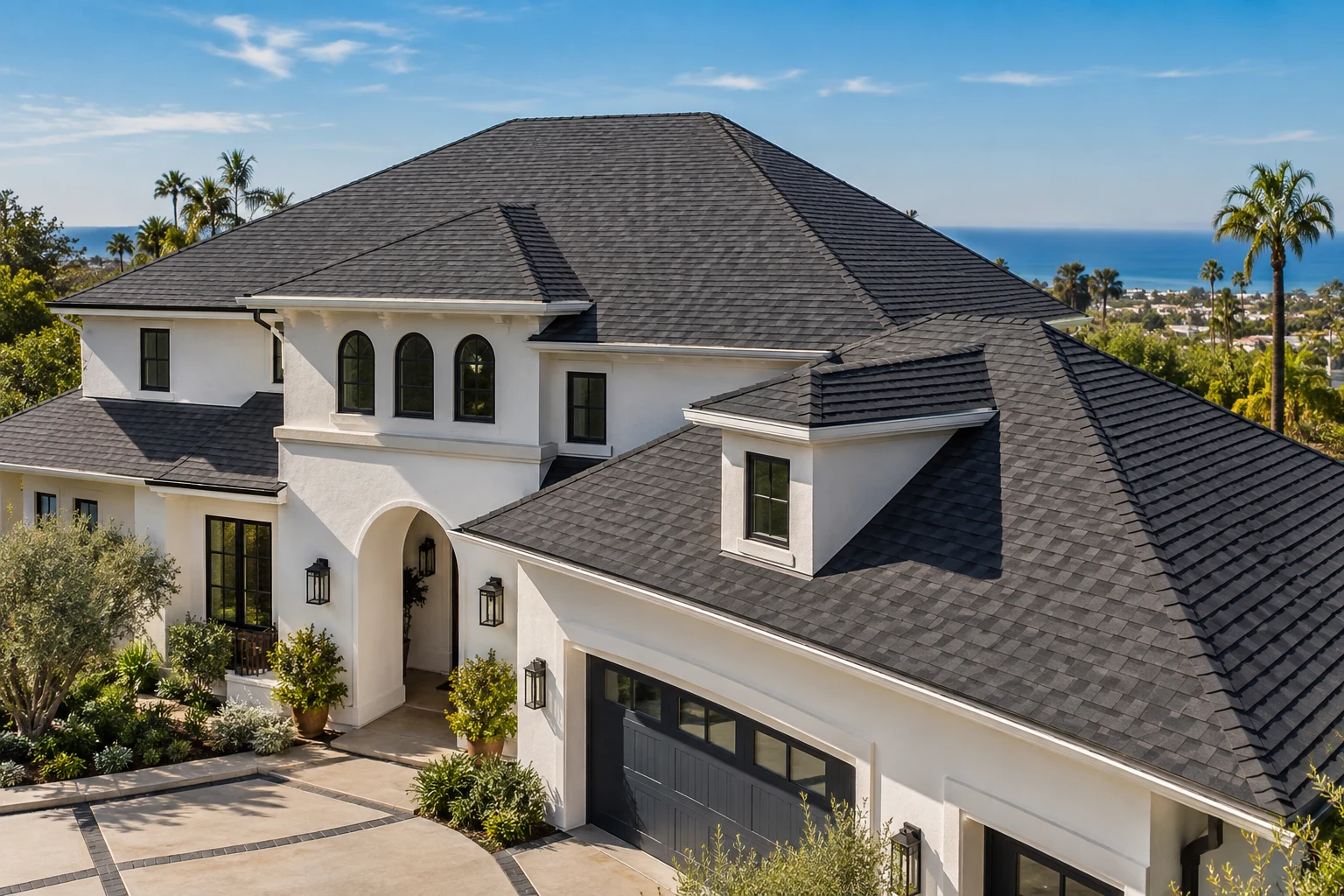
In Grand Terrace, energy-efficient roofing means more than just picking reflective shingles—it requires a full-system replacement designed to withstand the intense Inland Empire sun, extreme heat, and frequent UV exposure. At All Star Roof Replacement, we specialize in detailed inspections and complete roof replacements that include cool roof materials, balanced attic ventilation, and the structural integrity needed to meet California’s Title 24 energy standards.
Homeowners across Grand Terrace face roofing challenges that stem from our unique climate. By understanding these challenges and addressing roofing as a comprehensive system, you can protect your home and lower cooling costs season after season.
Why Energy Efficiency Matters for Grand Terrace Roofs
Grand Terrace experiences high summer temperatures often exceeding 100°F, with roofing surfaces heating up to 160-180°F under direct sun. This intense heat, combined with harsh UV radiation, breaks down roofing materials over time, causing brittleness, cracking, and leaks. In homes across Grand Terrace, we often see roofs deteriorate faster than expected when reflective materials and ventilation are missing or inadequate.
Another significant issue is Santa Ana winds, which increase debris accumulation and cause stress on roofing materials through repeated heat and cold cycles. Without proper ventilation, hot air traps in the attic, pushing up energy bills and speeding up material wear.
Proper energy-efficient roofing addresses these climate-specific challenges to ensure your replacement lasts longer and saves you money. To learn more about the complete approach, visit our roof replacement in Grand Terrace page.
Energy-Efficient Roofing: What It Entails
Cool Roof Materials Compliant with California Title 24
To comply with California’s Title 24 standards, roofing materials in Grand Terrace must have an aged Solar Reflectance Index (SRI) of 16 or higher. This includes options like reflective architectural asphalt shingles, standing seam metal roofs, and bright concrete or clay tiles known for their thermal mass properties.
Many homeowners don’t realize that the roofing material alone doesn’t determine energy efficiency; underlayment quality matters just as much. Synthetic underlayments, especially under tile roofs, protect against thermal degradation and moisture intrusion, which are common in Southern California’s climate.
Balanced Attic Ventilation Systems
A common issue during inspections is insufficient ventilation, which traps hot air inside attics and overturns energy efficiency efforts. Balanced ventilation—combining intake vents at the soffits and exhaust vents at the ridge or using O’Hagin vents—helps hot air escape, lowers attic temperatures, and reduces the load on your air conditioning.
Upgrading ventilation during roof replacement also prolongs the life of roofing materials. Poor ventilation can cause roofing materials to fail prematurely, even if cool roof shingles are installed.
Roofing as a Full System
Energy efficiency in roofing must be approached as a full system. The decking, underlayment, flashing, ventilation, and drainage all play critical roles in resistance to heat and moisture. We frequently find dry rot in decking boards on older Grand Terrace homes, which compromises durability and energy benefits.
With a complete roof replacement, All Star Roof Replacement inspects and upgrades every component, ensuring the system meets energy codes and withstands local climate stresses effectively. Considering the entire roofing system rather than just the surface material is vital for long-term performance and savings. For more on material choices, see our best roofing materials in Grand Terrace guide.
Consequences of Ignoring Energy Efficiency in Roofing
Ignoring energy efficiency in roofs often results in higher cooling costs due to hot attics and inadequate airflow. We see many homeowners surprised by rising utility bills before understanding the connection to their aging roofs.
Premature material failure is another major consequence. When underlayments crack and flashing fails under thermal stress, leaks develop, leading to interior water damage and costly repairs. Combined with the persistent wind exposure in Grand Terrace, these issues can cause shingles and tiles to become brittle and detach.
Addressing these problems early with a full replacement ensures your new roof performs properly. Learn about the warning signs of failure on our signs you need new roof in Grand Terrace page.
Assessing Your Roof for Energy Efficiency Upgrades in Grand Terrace
Signs Your Roof Is Losing Energy Efficiency
Many homeowners don’t realize widespread granule loss on shingles or brittle underlayment beneath tiles signals serious thermal degradation. Attic overheating, musty odors, and moisture stains on ceilings or walls also indicate ventilation and moisture control problems.
If you’ve had repeated leaks or repairs, it’s likely your roofing system’s energy efficiency and integrity are compromised. A full roof replacement is often the only way to restore performance and energy savings.
Repair vs Replacement for Energy Efficiency
Repairs may address visible damage but don’t improve your roof’s systemic ability to combat heat and moisture issues. Overlaying new shingles on an old roof worsens heat retention and voids most warranties. In homes across Grand Terrace, we recommend full tear-off replacements with synthetic underlayment and cool materials paired with ventilation upgrades to get the best energy performance.
We explain these options carefully during our inspections. For detailed guidance, visit our roof repair or replacement in Grand Terrace page.
Practical Steps for an Energy-Efficient Roof Replacement in Grand Terrace
Inspection and Permit Process
Roof replacements begin with a thorough inspection and a permit process that includes decking evaluation for dry rot or structural damage caused by heat and moisture. This step ensures your new roof will meet California’s energy codes and withstand the Inland Empire climate.
Material Selection and Installation
We install only certified cool roofing materials paired with synthetic underlayments specifically designed to endure Grand Terrace’s intense heat and solar cycling. To combat Santa Ana winds, we apply high-wind nailing patterns, increasing the roof’s ability to resist uplift and damage.
Ventilation and Flashing Upgrades
Proper attic ventilation with continuous ridge and soffit vents is essential for lowering interior attic temperatures, a key factor in energy efficiency gains.
Flashings receive an upgrade too, using heavy-gauge metals that hold up under continuous heat and wind exposure. These elements help maintain waterproofing and prolong roof lifespan in Southern California’s demanding environment.
Project Timeline and Practical Considerations
An asphalt roof replacement generally takes 2-3 days, while tile roofs can take from 4 to 7 days due to their complex removal and installation. If your home has solar panels, time for removal and reinstallation is added.
Work typically starts early in the day to avoid peak heat, minimizing thermal damage during installation. After completion, we ensure the site is cleaned and a municipal final inspection confirms everything meets safety and energy codes.
For details on timing and the process, see our roof replacement process in Grand Terrace and roof replacement timeline in Grand Terrace pages.
Frequently Asked Questions About Energy-Efficient Roofing in Grand Terrace
What makes a roof energy efficient in Grand Terrace?
Energy-efficient roofs here use certified reflective materials meeting Title 24 standards, synthetic underlayments designed for heat resistance, and balanced attic ventilation to reduce heat buildup and cooling costs.
How does the Southern California climate affect energy-efficient roofing?
Intense heat and UV radiation rapidly degrade roofing materials, making it essential to use durable, reflective materials and proper ventilation that protects your roof and maintains energy savings.
Can I replace just my shingles to improve energy efficiency?
No. Roofing functions as a system. Underlayment, decking, flashing, and ventilation all affect energy efficiency and performance, making full replacement necessary for lasting results.
How long does an energy-efficient roof last in Grand Terrace?
Architectural cool asphalt shingles generally last 15-25 years. Tile roofs can exceed 50 years but require synthetic underlayment replacements every 25-30 years due to heat stress.
Is reroofing (overlay) a good option for energy-efficient upgrades?
No. Overlay traps heat, accelerates shingle failure, and voids warranties. A full tear-off roof replacement is the only code-compliant and effective method, particularly in hot climates like Grand Terrace.
Will an energy-efficient roof reduce my energy bills?
Yes. Reflective materials and proper ventilation noticeably lower attic and home temperatures, reducing air conditioning use and monthly energy costs in the Inland Empire.
Are there financing options for energy-efficient roof replacement in Grand Terrace?
Yes. We work with financing options including PACE programs, home equity lines, and contractor-arranged unsecured loans to help make energy upgrades affordable.
Contact All Star Roof Replacement for Energy-Efficient Roof Replacements in Grand Terrace
At All Star Roof Replacement, we provide practical, no-pressure inspections and clear explanations tailored to your home’s roofing system and Southern California climate challenges.
Call us at (310) 729-3013 or email teamallstarconstruction@gmail.com to schedule your roof evaluation and estimate. Learn more about costs on our roof inspection cost in Grand Terrace page or discuss financing options through our finance roof replacement in Grand Terrace resource.