
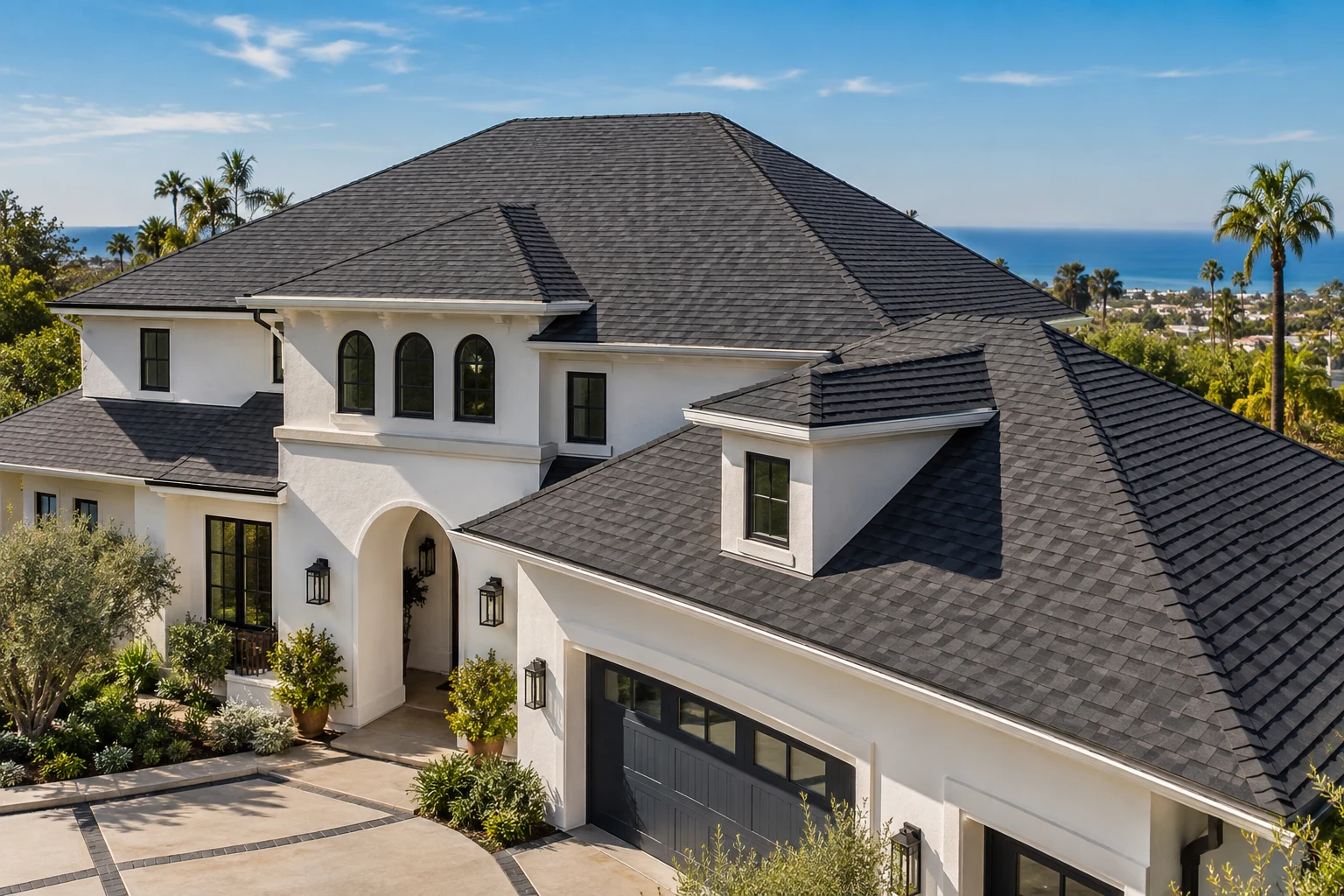
In Grand Terrace, most asphalt shingle roofs generally last between 15 and 25 years, while tile roofs can remain structurally sound for 40 to 75 years or more. However, even tile roofs typically require full replacement of the underlayment after 20 to 30 years due to Southern California’s intense heat and UV exposure.
At All Star Roof Replacement, we understand these local conditions and provide thorough roof evaluations to help homeowners in Grand Terrace make informed decisions about their roof replacement needs.
Why Roofs Age Faster in Grand Terrace: Climate and Construction Factors
Grand Terrace’s climate plays a major role in accelerating roof wear. Daily temperatures on roof surfaces often reach 160° to 180°F, causing shingles and underlayment to expand and contract. This thermal cycling weakens nails, causes shingles to crack, and breaks down adhesive membranes. A common issue during inspections is observing loose nails and brittle shingles that signal this damaging process.
UV radiation is relentless year-round, stripping away protective ceramic granules from asphalt shingles. Without these granules, shingles become vulnerable to cracking and water penetration. Many homes in Grand Terrace also feature tile roofs installed over older asphalt felt underlayment that deteriorates faster than synthetic alternatives under this intense solar exposure.
Santa Ana winds bring another concern by exerting strong uplift forces on roofing materials. Improperly nailed shingles or tiles can be lifted or ripped loose, exposing the underlayment to rain and debris. This combination of heat, UV light, and high winds means roofs age more quickly here than in cooler or less exposed regions.
For a comprehensive overview of local roofing challenges and solutions, homeowners can visit our roof replacement in Grand Terrace page.
What Happens When You Ignore Roof Aging? Structural and Financial Consequences
Many homeowners don’t realize the hidden damage that happens when roof aging is left unaddressed. When underlayment fails, water can seep beneath shingles or tiles and cause dry rot in the wood decking—often out of sight until serious repairs are needed. In several Grand Terrace homes, we’ve observed attic mold growth, which not only damages the structure but also poses health risks.
As shingles lose granules and become brittle, leaks start small but quickly worsen. Temporary patch repairs may feel like a quick fix but often lead to repeated leaks and escalating damage. Without addressing the root cause—the deteriorated full roofing system—these band-aid fixes become more costly in the long run.
Poor ventilation worsens the problem by trapping heat and moisture in the attic, accelerating aging of the roofing components and raising energy bills. For homeowners uncertain about whether to repair or replace a roof, our detailed roof repair or replacement guide offers valuable clarity.
Understanding Roof Lifespan as a Full System — Not Just Shingles or Tiles
In homes across Grand Terrace, we often see the misconception that a roof is just the visible shingles or tiles on top. The truth is that the roof system includes the decking, underlayment, flashing, ventilation, and drainage components—all of which significantly affect longevity and performance.
Traditional asphalt felt underlayment commonly used beneath tiles can degrade after 20 to 30 years under Southern California heat, even if the tiles themselves remain intact. Synthetic underlayments, which we recommend in our replacements, provide enhanced durability in this environment. Proper installation, including high-wind nailing methods and well-balanced attic ventilation, is critical to prevent premature failures caused by thermal stresses and Santa Ana winds.
For homeowners exploring the details of roof materials and installation, our best roofing materials and roof replacement process pages break down these factors further.
Decision Guide: Repair or Replace Your Roof in Grand Terrace?
Repair can be a practical option only if your roof is less than 12 to 15 years old, damage is concentrated in a small area, and the roof system components are still flexible. Beyond that point, when damage affects 25 to 30% or more of the roof surface or the underlayment is failing and causing leaks, replacement becomes the smarter choice.
Repeated repairs on an aging roof often cost more over time and fail to address underlying issues like thermal degradation and ventilation failures. We advise against overlays or “reroofing” approaches that trap heat and void manufacturer warranties. Instead, a full tear-off and replacement ensures longevity and compliance with Grand Terrace building codes.
Our roof repair vs replacement article and is reroofing worth it page provide detailed guidance for homeowners facing this decision.
Frequently Asked Questions (FAQs) About Roof Lifespan in Grand Terrace
How long does an asphalt shingle roof typically last in Grand Terrace?
Asphalt shingle roofs usually last 15 to 25 years here, depending on material quality, installation, and exposure to intense heat and UV rays.
Why do tile roofs sometimes need replacement before 50 years?
The underlayment beneath tile roofs, often old asphalt felt, typically fails after 20 to 30 years due to Southern California’s high heat, requiring complete re-underlayment or roof replacement.
Does the Southern California climate shorten roof lifespan?
Yes. Heat, UV exposure, daily thermal cycling, and Santa Ana winds accelerate degradation of roofing materials and system components compared to cooler, less sunny regions.
Can a roof be safely repaired instead of replaced?
Repairs work only for localized minor damage on roofs within the first half of their designed lifespan. Extensive wear or underlayment failure necessitates replacement.
What parts of the roof system affect its longevity besides shingles?
Decking integrity, type and condition of underlayment, metal flashing, and proper attic ventilation are all critical factors in roof lifespan.
How important is professional installation for roof lifespan?
Very important. Poor nailing, missed flashing seals, or inadequate ventilation can cause early roof failure even with high-quality materials.
Can a new roof help reduce energy bills?
Yes. Modern cool roofing materials combined with proper ventilation reduce attic heat buildup and lower air conditioning costs during hot Grand Terrace summers.
Contact All Star Roof Replacement for a Professional Roof Lifespan Evaluation in Grand Terrace
If you suspect your roof is aging or if you want a clear, no-pressure assessment of your roof’s full system condition—including decking, underlayment, flashing, and ventilation—contact All Star Roof Replacement. Many older Grand Terrace homes face hidden issues that only a comprehensive inspection reveals.
Our roof inspections include transparent explanations of system failures common in this climate and personalized recommendations for replacement options that best fit your home’s needs. We also ensure compliance with California Title 24 cool roof standards and local building codes.
Call us at (310) 729-3013 or email teamallstarconstruction@gmail.com to schedule your no-obligation roof evaluation.
Learn more about our services and scheduling on our roof replacement in Grand Terrace page, or explore financing options through our finance roof replacement program.