
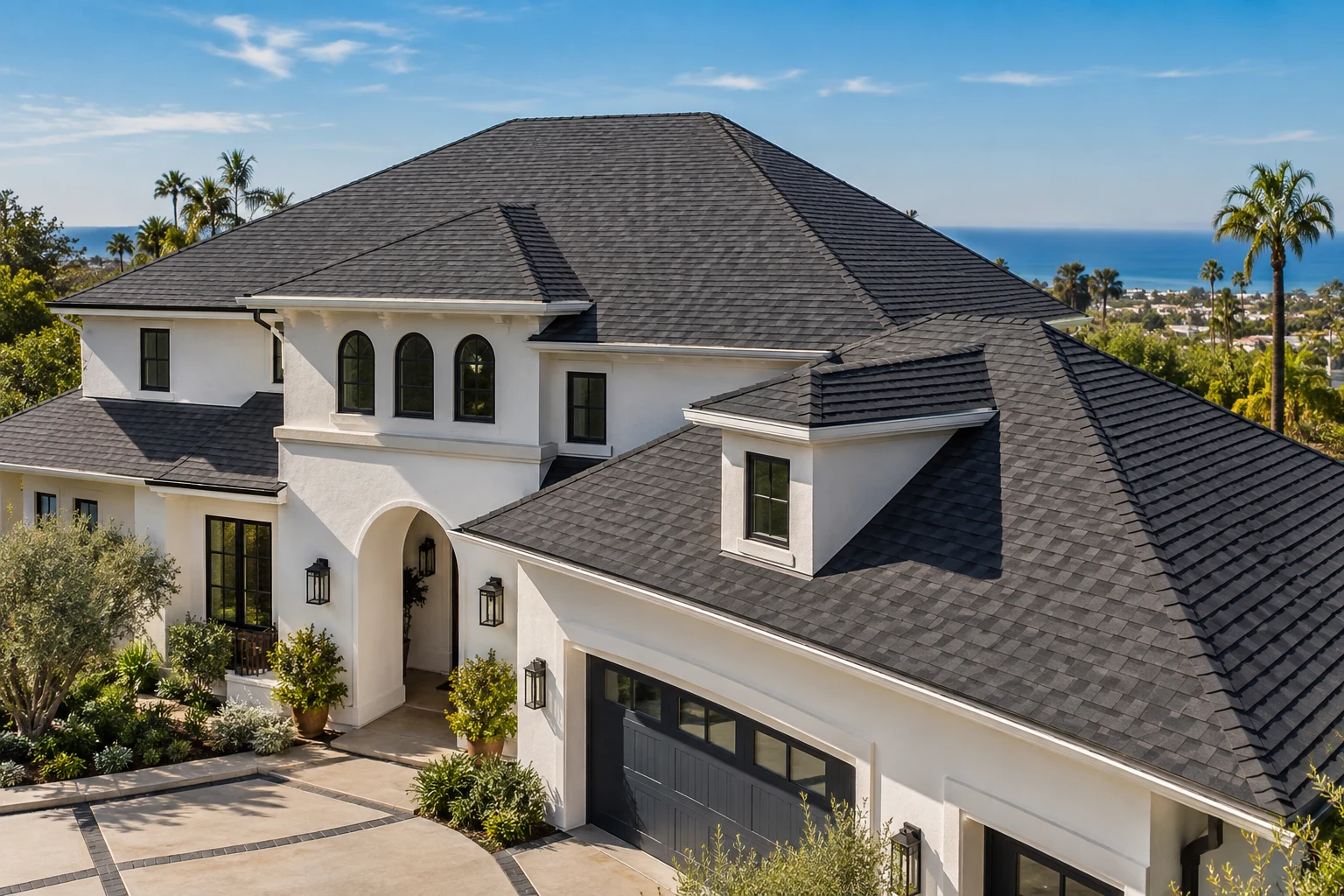
When considering a roof replacement in Highland, California, the best roofing material balances durability, energy efficiency, and adaptation to local climate challenges. At All Star Roof Replacement, we specialize in evaluating Highland homes and recommending roofing systems built to withstand intense heat, strong Santa Ana winds, and municipal energy codes.
In Highland, architectural asphalt shingles with cool roof technology often provide the best value for many homeowners. However, concrete or clay tiles offer superior longevity and thermal benefits if your home’s structure and local HOA rules allow. Selecting the right roofing material starts with understanding how Highland’s weather and regulations influence your options.
Which Roofing Material Performs Best for Highland Homes?
For most homes in Highland, architectural asphalt shingles reinforced for 130+ mph wind resistance and embedded with cool granules deliver a solid balance of strength, energy savings, and cost-effectiveness. These shingles meet Title 24 requirements and hold up well against Santa Ana winds, making them a reliable choice.
Concrete and clay tile roofs excel at reducing interior heat thanks to their thermal mass, making them popular in Highland’s hot summers. However, tile roofs require high-performance synthetic underlayment to prevent fast waterproofing failures due to heat and UV exposure.
The ideal roofing material depends on your roof’s design, HOA or historic district restrictions, and your willingness to invest in long-term maintenance. Our team at All Star Roof Replacement can guide you through the specifics based on your unique home and neighborhood conditions.
Why Highland’s Climate Shapes Material Choices
Highland experiences extreme summer temperatures often exceeding 100°F, combined with intense UV radiation that quickly degrades roofing materials. We frequently see asphalt shingle granules wearing away faster here than in cooler areas, and underlayments turning brittle within two decades.
Santa Ana winds generate uplift forces over 130 mph, especially along roof edges, making it crucial to use wind-rated materials with strong flashings. During inspections, we often find older roofs lacking the proper nailing or flashing necessary to resist these stresses.
Additionally, Highland’s pattern of prolonged dry periods followed by concentrated winter rains creates moisture infiltration risks if the deck or membrane has been compromised. This weather cycle underscores the need for a carefully designed roofing system, not just surface materials.
What Happens When Roofing Materials Fail in Highland?
A common problem that Highland homeowners face is underlayment failure. Even if shingles or tiles look intact, an aged or brittle underlayment can let moisture seep in, accelerating wood deck rot and corroding metal flashings.
Many don’t realize that roof system failure also impacts energy costs. When thermal barriers degrade, attic temperatures rise, forcing air conditioners to work harder. Left unchecked, roof leaks and structural damage can lead to mold and expensive interior repairs, making full roof replacement a wiser investment than patching.
Roofing Materials Suitable for Highland Homes
Architectural Asphalt Shingles
Architectural asphalt shingles designed for Highland use often include reinforced woven nailing strips, which help them resist uplift forces from Santa Ana winds exceeding 130 mph. Premium versions contain cool roof granules that reflect sunlight, reducing surface temperatures and helping lower cooling bills by up to 25%.
These shingles typically last 15 to 30 years, but underlayment quality is a critical factor in overall system lifespan. We emphasize the importance of upgrading to synthetic underlayment during replacements for improved durability.
Concrete and Clay Tile Roofing
Tile roofs offer significant advantages in Highland’s heat by leveraging their thermal mass to keep indoor temperatures cooler. Their lifespan can stretch 50 to 100 years, but they demand proper structural support due to their weight.
High-performance synthetic underlayment beneath tile is essential to prevent water infiltration and heat damage; traditional felt underlayments degrade too quickly here. Although tiles themselves are long-lasting, underlayment replacement every 15 to 30 years is advisable to maintain waterproofing.
The Importance of Synthetic Underlayment
For Highland’s climate, synthetic underlayment is a game-changer. It resists thermal breakdown and moisture infiltration better than traditional felt, dramatically extending roof system life and protecting structural elements.
Current municipal code requires synthetic underlayment for replacements covering more than 50% of your roof, ensuring your new system meets modern energy efficiency and durability standards. At All Star Roof Replacement, we install synthetic underlayments on every residential replacement we perform.
How to Choose the Best Material for Your Highland Home
Choosing the right roofing material starts with assessing your home’s age, existing roof deck condition, HOA or historic district restrictions, and your budget. For homeowners seeking cost-effective, quick installations, architectural shingles are usually the best fit.
If you prefer a long-lasting, thermally efficient roof and your neighborhood guidelines permit, concrete or clay tile is a strong choice. Installation quality—including full deck inspections and professional tear-offs—is crucial to maximizing your roof’s longevity and warranty.
We recommend upgrading to synthetic underlayment and selecting shingles or tiles that comply with Title 24 cool roof mandates. This approach ensures better durability, energy savings, and comfort for Highland homes.
Frequently Asked Questions about Roofing Materials in Highland, CA
What roofing material lasts longest in Highland’s heat?
Concrete and clay tile roofs can last 50 to 100 years in Highland, provided they use durable synthetic underlayment that protects against heat and UV damage.
Are asphalt shingles good for Highland’s high winds?
High-quality architectural asphalt shingles with reinforced nailing zones offer excellent wind resistance suitable for Santa Ana winds up to 130 mph.
Why is underlayment important in Highland roofing?
Underlayment acts as the primary waterproof barrier beneath shingles or tiles. In Highland’s intense heat and occasional heavy rains, a durable underlayment prevents moisture from damaging the roof deck.
What is a cool roof, and why does it matter here?
A cool roof reflects more solar radiation, reducing attic heat build-up. California’s Title 24 requires cool roofs for major replacements to lower energy use and improve indoor comfort.
Can I use synthetic underlayments with tile roofs in Highland?
Yes, synthetic underlayments are essential under tile roofs because they resist heat and UV exposure much better than traditional felt, extending the roof’s lifespan.
How do HOA or historic rules affect material choices?
Some neighborhoods require authentic tile roofs or restrict synthetic materials, which limits options and requires approval before replacement. We help homeowners navigate these rules.
How much does material choice impact cost?
Architectural asphalt shingles generally cost less upfront than tile—typically $6.50 to $10.50 per square foot versus $10 to $25 or more for tile. However, underlayment quality, decking repairs, and labor also significantly affect your total investment.
Planning Your Roof Replacement Material in Highland
At All Star Roof Replacement, we provide thorough, no-pressure roof inspections focused on evaluating your current system’s condition and explaining your best material options considering Highland’s heat, winds, and energy codes.
We clarify warranty coverages, energy benefits, HOA restrictions, and the importance of expert installation, helping you make an informed decision. Contact us at (310) 729-3013 or teamallstarconstruction@gmail.com for a detailed consultation and estimate tailored to your Highland home’s roofing needs.