
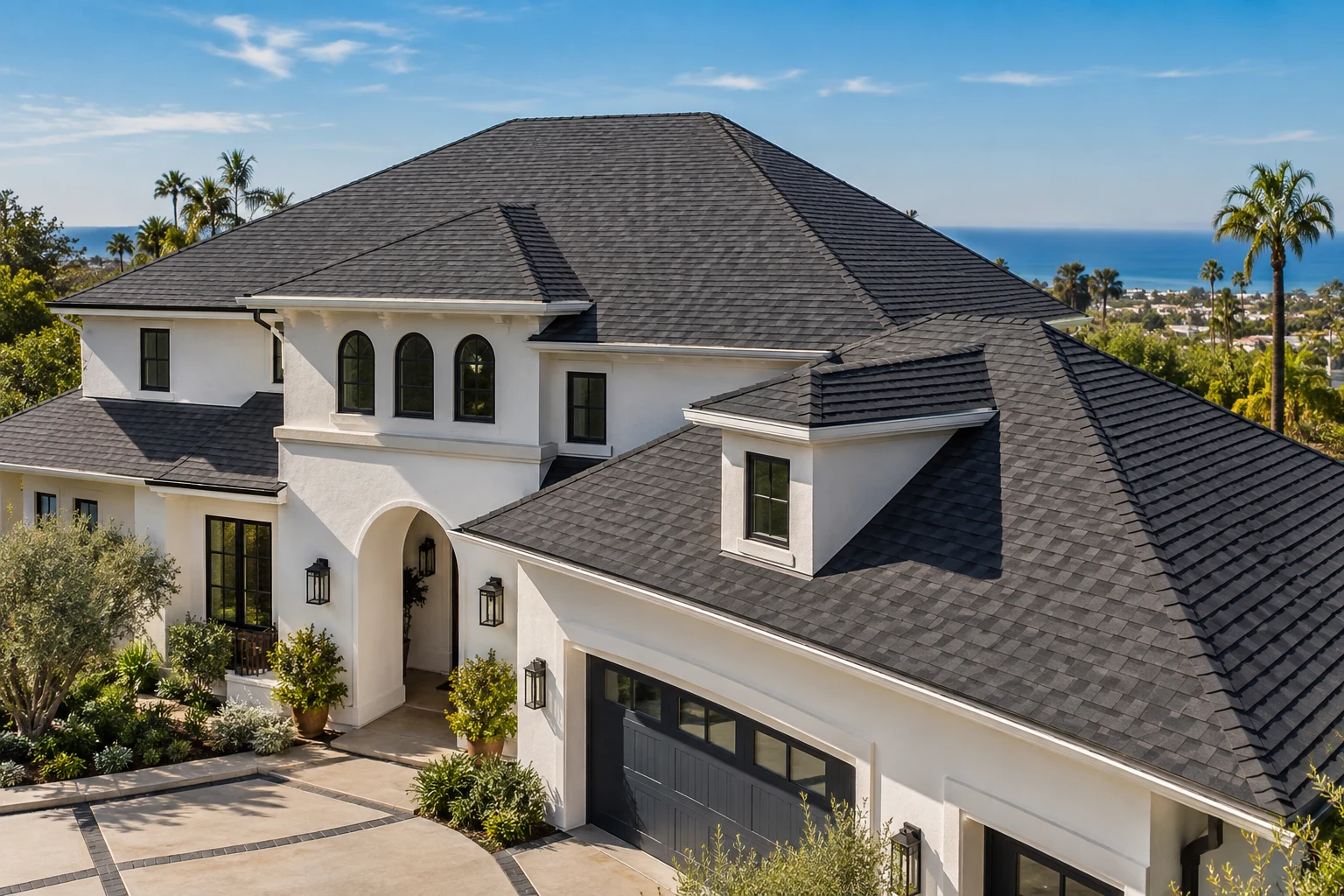
When Highland homeowners consider a full roof replacement, the question often arises: tile or shingle? At All Star Roof Replacement, we guide you through practical choices based on your home’s style, HOA rules, budget, and especially Highland’s tough heat and wind conditions. Choosing the right material and a quality roofing system goes beyond surface appearance — it impacts your roof’s longevity, energy efficiency, and resistance to local climate challenges.
Choosing Between Tile and Shingle Roofs in Highland – The Core Question
Selecting between tile and shingle roofing depends largely on your home’s architectural style, HOA requirements, and the demands of Highland’s intense summer heat and seasonal Santa Ana winds. For homes here, the relentless sun causes asphalt shingle granules to degrade faster and makes many homeowners consider tile for its heat resistance. Meanwhile, tile roofs need a structurally sound decking system due to their weight and require upgraded underlayment to protect against moisture and heat damage.
In homes across Highland, we often see roofs with improper material choices suffering accelerated failure, leaks, and significant energy loss. Whether a roof is tile or shingle, it’s critical to consider the full roofing system — from decking and underlayment to flashing and ventilation — to ensure durability under our local conditions. Ignoring these factors can lead to costly repairs and reduced comfort in your home.
For more details on lifespan expectations and material performance, see our page on roof lifespan in Highland and explore the best roofing materials for Highland homes.
How Highland’s Climate Affects Tile and Shingle Roofs
Highland’s climate is unforgiving on roofing materials. We regularly observe shingles losing granules and becoming brittle from prolonged UV exposure and thermal cycling caused by fluctuating day-to-night temperatures. These effects accelerate heat stress and shorten shingle lifespan. Conversely, tile roofing benefits from its thermal mass, which moderates attic temperatures, but the underlayment below must be synthetic to avoid heat and UV degradation typical of asphalt felt.
The Santa Ana winds, a seasonal hallmark here, can pull at flashing and fasteners. Tile’s heavier weight offers better wind resistance, yet this demands a structurally reinforced deck to prevent sagging or failure. Meanwhile, newer architectural shingles with enhanced wind resistance features like SureNail technology help shingle roofs hold up better in these winds but still require top-quality flashing and underlayment to prevent leaks and uplift.
Proper attic ventilation, including ridge vents and soffit intakes, is essential to reduce heat buildup beneath both roof types and extend their effective lifespan. Learn how to reduce attic heat with roofing strategies and review why ventilation should be part of your roof replacement plan.
Tile Roofs in Highland – Benefits, Challenges, and Considerations
Tile roofs in Highland come with significant benefits. They can last 50 to 100 years, resist fire, and their thermal mass helps keep homes cooler under our blazing sun. Many Highland HOAs, especially in neighborhoods like East Highland Ranch, either mandate tile roofs or strongly prefer them for aesthetic and safety reasons. This makes tile a practical choice for compliance and long-term investment.
However, tile roofing presents challenges. The upfront cost is higher, often exceeding $20 per square foot installed. The heavy weight means older homes may need deck reinforcement, which we frequently uncover during inspections. Waterproofing relies on advanced synthetic underlayment and precise flashing installation — essential to avoid leaks over the decades. Because tile roofs require removal during underlayment replacement or flashing upgrades, installation is more labor-intensive and time-consuming.
If your home’s deck structure is solid or can be reinforced and your HOA supports tile, it often makes long-term sense to choose tile. To understand the replacement process and what to expect, check out our tile roof replacement steps in Highland and explore our tile roof warranties and workmanship.
Shingle Roofs in Highland – Profile, Limitations, and When They Fit
Shingle roofs remain a common and cost-effective option in Highland. They offer a faster install and lower upfront price, generally between $6.50 and $10.50 per square foot. Shingles suit a range of architectural styles and are often ideal for homes without tile mandates or for budget-conscious homeowners wanting efficient replacement.
Yet shingles face natural limitations in Highland’s climate. UV rays and thermal cycling cause brittleness, granule loss, and eventually worn-out shingles after 15 to 25 years. We often spot these signs during inspections along with flashing or underlayment issues leading to leaks. New architectural shingles with features like SureNail technology improve wind resistance against seasonal Santa Ana gusts, but proper ventilation and maintenance remain crucial to extending service life.
For those interested in energy savings, cool roof shingles that meet California Title 24 requirements can lower attic temperatures and reduce cooling costs. You can learn more about these options on our asphalt cool roof options for Highland page. When considering repairs versus full replacement, our page on shingle roof repair vs replacement offers guidance to help you decide.
The Roofing System Matters: More Than Tiles or Shingles
At All Star Roof Replacement, we stress that a roof is a complete system, not just its surface. The condition of your decking, quality of flashing, underlayment choice, and attic ventilation all influence your roof’s performance and service life as much as tile or shingle materials. In Highland, where regulations and climate are demanding, these factors are particularly critical.
Tile roofs require advanced synthetic underlayment to withstand heat and UV damage for decades, while shingle roofs need high-quality flashing and underlayment to prevent leaks and wind uplift. We often find during inspections that homes with multiple old roofing layers or hidden water damage require a full tear-off, which is mandated by local code to avoid dry rot and warranty issues.
Proper attic ventilation through ridge vents and soffit intakes also plays a pivotal role in reducing heat stress on your roof system, directly protecting both underlying decking and your energy bills. Learn more about the full roofing system installation in Highland and discover why overlays might not be worth the risk on our risks of overlays in Highland page.
Decision Support – Tile or Shingle for Your Highland Roof Replacement?
Choosing between tile and shingle roofing involves balancing upfront costs, lifespan, maintenance needs, and HOA compliance. Tile roofs come with higher initial investment but offer considerable longevity and heat resistance. Shingles can fit tighter budgets and quicker timelines but require replacement sooner and may incur more maintenance costs over time.
During inspections in Highland, we emphasize evaluating the decking condition, flashing integrity, and ventilation status because these factors heavily affect material choice and system durability. For example, older homes may need decking upgrades to support tile weight or may favor shingles if structural reinforcement is not feasible.
We recommend a professional inspection to get a clear picture of your roof’s current state and discuss the best options tailored to your home, budget, and HOA requirements. Find more about costs and financing on our pages about cost of tile vs shingle roof in Highland and financing a Highland roof replacement.
Feature | Tile Roof | Shingle Roof
--- | --- | ---
Typical Lifespan | 50–100 years | 15–25 years
Upfront Cost (per sq. ft. installed) | $20–$25+ | $6.50–$10.50
Weight | Heavy – may require deck reinforcement | Light – no structural upgrade usually needed
Climate Resistance | Excellent against heat and UV | Moderate; prone to UV damage
Wind Resistance | Good, aided by weight | Improved with modern tech like SureNail
HOA Considerations | Often mandated/preferred | Allowed in some neighborhoods
Installation Complexity | More complex, longer timeline | Faster, simpler install
FAQs about Tile and Shingle Roofs in Highland
How much does a tile roof replacement cost compared to shingles in Highland?
Tile roofs generally cost between $10 and $25+ per square foot installed, depending on slope and decking condition. Shingle roofs run between $6.50 and $10.50 per square foot. Deck repairs or steep slopes can increase costs for both.
What is the typical lifespan difference between tile and shingle roofs in Highland?
With proper underlayment and installation, tile roofs last 50 to 100 years. Shingle roofs typically last 15 to 25 years in Highland due to intense UV and heat-related wear.
Can I install a tile roof if my house is in an HOA in Highland?
Many HOAs in Highland, such as East Highland Ranch, require or strongly prefer tile roofs for fire safety and aesthetics. Check HOA guidelines before making a decision to ensure compliance.
Do tile roofs require more structural reinforcement than shingles?
Yes, tile roofs are much heavier and often require deck upgrades, especially in older homes where wood may have weakened. This is a common finding during our roof inspections.
How important is attic ventilation for both roof types?
Proper attic ventilation is critical. It helps reduce heat build-up, extends the life of roofing materials, lowers attic temperatures, and prevents premature damage to underlayment and decking.
Why can’t I just install shingles over my old tile or shingle roof in Highland?
California building codes limit overlays to two existing layers and prohibit them where water damage exists. Full tear-off is required to prevent hidden dry rot and to preserve warranty eligibility.
How do synthetic underlayments affect the longevity of tile and shingle roofs?
Synthetic underlayments resist heat and UV damage far better than traditional felt. Under tile roofs, this extends waterproof protection to 40–50 years, matching tile lifespan. For shingles, it improves durability significantly.
Next Steps – Schedule Your Highland Roof Inspection
If your roof is aging, showing leaks, or you want to explore replacement options, contact All Star Roof Replacement for a no-pressure inspection. We evaluate deck condition, ventilation, flashing, and underlayment needs, then clearly explain which roofing systems suit your home, HOA, and budget in Highland.
Verify the current CSLB record for license #1009760 and confirm the appropriately licensed contractor responsible for your roofing scope in the written agreement. Roof replacements here typically take 3–7 days depending on complexity and inspections required. Early scheduling helps avoid delays due to seasonal weather and HOA approvals.
Call us today at (310) 729-3013 or email teamallstarconstruction@gmail.com to discuss your roofing options and get started.
For more information on hiring a contractor and understanding timeline expectations, visit our pages on licensed Highland roof replacement professionals and what to expect during Highland roof replacement.