
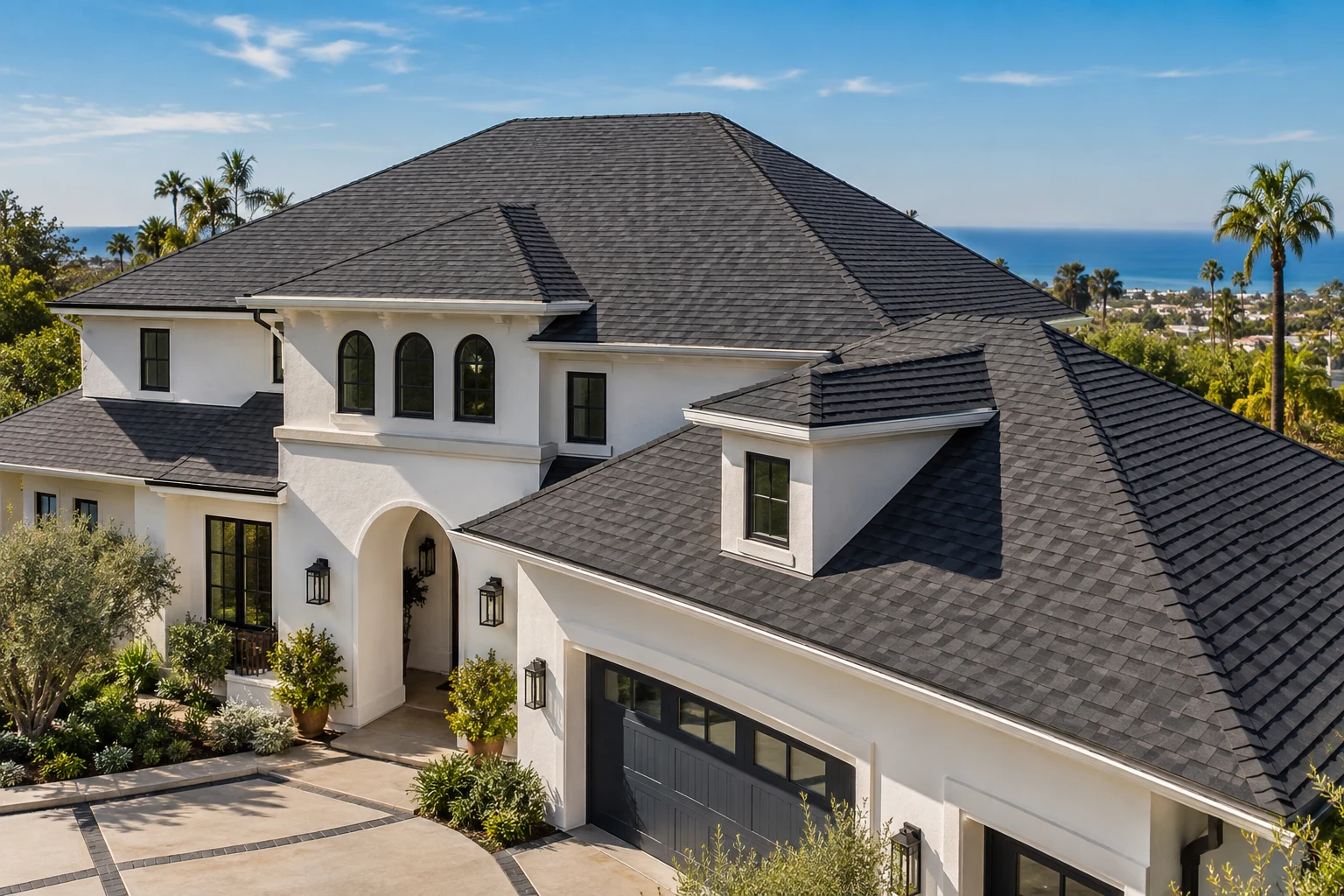
Energy-efficient roofing in Ontario usually means replacing an aging roof system that is no longer handling heat the way it should. All Star Roof Replacement helps homeowners figure out when high attic heat, rising cooling bills, uneven indoor temperatures, and recurring leaks are signs of full system failure rather than a simple surface problem.
Ontario’s inland climate is hard on residential roofs. Long sun exposure, strong UV, and repeated heat cycling wear down more than just the top layer, which is why homeowners often start with symptoms like a hot second floor or a recurring leak and end up learning the real issue is deeper in the roofing assembly. For a broader look at how local roof replacement works in this area, see our Ontario roof replacement service area page.
Why Energy Efficiency Becomes a Roofing Problem in Ontario
Ontario is not dealing with the same roof conditions as cooler coastal cities. This is inland Southern California, where roofs spend long stretches under direct sun and absorb repeated daily expansion and contraction. That constant heat movement wears out sealants, flashings, underlayment, and ventilation performance over time.
The direct answer is this: in Ontario, energy loss through the roof usually happens because the roofing system is aging as a whole. It is rarely just one shingle, one tile, or one visible trouble spot.
Many homeowners don’t realize how much heat stress changes the life of a roof in this part of Southern California. A roof that might age more slowly in a milder climate can break down faster here because UV exposure dries materials out and extreme surface temperatures push the system harder year after year.
In homes across Ontario, we often see roofs that still look acceptable from the street but are already losing performance underneath. The visible material may still be in place, but the underlayment may be brittle, flashing points may be weakening, and ventilation may no longer be doing enough to move trapped heat out of the attic.
That matters because the roof is not only your weather barrier. It also affects how hard your home has to work to stay comfortable. When the roofing system holds heat or stops managing airflow correctly, the indoor impact usually shows up before homeowners understand the source.
Older Ontario Roofs Often Lose Efficiency Before They Fully Fail
Ontario has many neighborhoods with homes built in the late 1980s, 1990s, and early 2000s. A lot of those roofs are now at the age where energy performance starts dropping, even if there has not been a major visible failure yet. In this market, age matters because heat accelerates wear.
The short answer is simple: a roof in the 15-to-30-year range in Ontario may already be costing you in comfort and cooling before it clearly announces itself as a replacement project.
A common issue during inspections is finding a roof that has had one repair after another while the actual roofing system underneath keeps deteriorating. That can mean worn underlayment, weak flashing transitions, poor vent balance, or hidden deck issues that never get solved by replacing a few surface pieces.
That is why energy-efficient roofing should not be reduced to picking a reflective product. If the system under the material is failing, the home still runs hotter and the roof still remains vulnerable. Good energy performance depends on the full assembly working together.
Many homeowners don’t realize that tile roofs can have this problem too. The tile itself may still look serviceable, but the waterproofing layer underneath often tells a different story. In Ontario, that is a common reason an older tile roof starts showing leak patterns, heat buildup, or both at the same time.
Ontario Heat Damages More Than the Surface Layer
When homeowners think about heat damage, they usually picture faded shingles or cracked tiles. Those are real signs, but they are only part of the story. The deeper issue is system fatigue caused by years of thermal stress.
The direct answer here is that surface wear is often just the visible evidence of hidden failure below. If you only focus on what is seen from the ground, you can miss the parts of the roof that are actually driving leaks and energy loss.
In Ontario, summer heat and UV exposure dry out asphalt components, weaken sealants, and shorten the useful life of older underlayments. Then when seasonal rain does arrive, water finds the weak points that the sun has already been opening up for years. That is why a roof can seem fine during dry weather and then suddenly show problems when conditions change.
In homes across Ontario, we often see this pattern on both shingle and tile systems. On shingle roofs, granule loss and brittleness are common signs that UV protection is fading. On tile roofs, slipped tiles or repeated leaks around valleys and penetrations often point to underlayment fatigue rather than tile failure alone.
Many homeowners don’t realize that poor previous installation can make this worse. If flashing details were rushed, ventilation was not balanced, or an older roof was patched without addressing the broader system, heat and moisture issues usually build on each other over time.
That is one reason All Star Roof Replacement evaluates the entire roofing system instead of guessing from one symptom. We use satellite measurements and visual inspection to understand the roof layout, identify hidden trouble areas, and explain what the roof is actually doing before recommending replacement.
What an Inefficient Roof Leads To If It Is Ignored
When a roof starts losing energy performance, the first signs are often easy to dismiss. A warmer bedroom upstairs. Higher cooling bills. An attic that feels much hotter than it used to. Then a leak appears in one area, gets patched, and the cycle repeats.
The short answer is that delays usually increase both operating cost and replacement cost. The longer a failing roof system stays in place, the more chance there is for heat and moisture to affect the layers below.
If the roof keeps deteriorating, the problem tends to spread beyond comfort. Decking can soften. Insulation can be affected. Flashing failures can turn into interior staining or ceiling damage. Ventilation issues can shorten the life of the replacement materials that are already there. What started as “the house feels hotter” can turn into a larger project because the failure was allowed to keep moving.
A common issue during inspections is a homeowner focusing on one isolated symptom when several symptoms are really connected. The hot room, the leak over the garage, the stains near a vent pipe, and the rising summer power bill may all trace back to the same thing: the roof assembly is no longer performing like a complete system.
That is why delays tend to cost more in Ontario. Inland heat does not pause the aging process. Every hot season pushes the roof further, even when there is no dramatic storm event.
Energy-Efficient Roofing Is a System Decision, Not Just a Material Choice
Homeowners often ask what the most energy-efficient roofing material is. That is a fair question, but the right answer depends on the roof design, the age of the home, the condition of the deck, the attic ventilation setup, and whether the existing system has already failed below the surface.
The direct answer is this: an energy-efficient roof in Ontario is not just a cool roof product. It is a properly planned and properly installed roof system designed for local heat, code requirements, and the actual condition of the home.
That can include reflective shingles, tile systems with proper underlayment, updated ventilation, and deck repairs where needed. In many Ontario homes, especially those in the main replacement age range, the real improvement comes from correcting what is hidden underneath the old roof, not just swapping visible materials.
Installation quality matters just as much as product selection. A good material installed over failing decking, old underlayment, or poor venting will not deliver the result homeowners expect. This is also why low numbers that only account for the visible roof surface do not always reflect the true scope of the work. If you are trying to compare what influences price, our page on roof replacement cost in Ontario explains why estimates vary from one home to another.
Every roof is different. A simple roofline behaves differently than one with multiple valleys, transitions, and penetrations. A tile reset over updated underlayment is different from a full tear-off and replacement with new shingles. And a home with poor existing ventilation may need a different plan than a similar home down the street.
Why Ontario Homeowners Often Feel Uncertain About Repair vs. Replacement
Most homeowners are not trying to avoid the right solution. They are trying to avoid paying for the wrong one. That uncertainty is common, especially when the roof still looks decent from the ground or when a past repair temporarily stopped a leak.
The short answer is that recurring symptoms usually mean it is time to evaluate the roof as a full system, not keep treating each issue separately.
In homes across Ontario, we often see homeowners caught between two ideas: “Maybe it just needs one more repair,” and “Maybe the whole roof is worn out.” The right answer depends on the age of the roof, the condition of the underlayment and deck, the amount of prior repair history, and whether the signs point to isolated damage or system-wide wear.
Many homeowners don’t realize that repeated repairs on an older roof can actually make the decision more expensive later. Not because repairs are always wrong, but because they can delay the point where the underlying failure is clearly addressed. By then, there may be more damaged wood, more insulation impact, or a larger scope needed to restore the roof correctly.
That is why All Star Roof Replacement starts with what the roof actually needs. We look at the full system, identify hidden issues that may not be obvious from the surface, and explain whether the signs point to isolated damage or a replacement decision. If you are weighing that question now, our page on roof repair or replacement in Ontario breaks down when repairs stop making long-term sense.
What We Look At When Evaluating Energy-Efficient Roof Replacement
Energy-efficient roofing is not just about reducing heat gain. It is about making sure the roof can protect the home, manage water, and perform consistently in Ontario’s climate. That means looking past the top layer.
The direct answer is that a proper evaluation has to include the whole roofing system: visible materials, underlayment, flashing, decking condition, roof geometry, and ventilation performance.
At All Star Roof Replacement, we do not guess. We use satellite measurements and visual inspection to assess the roof’s size, layout, age-related wear, and possible hidden failure points. Then we explain what we are seeing in plain terms so the homeowner understands why a roof is running hot, leaking, or nearing the end of its useful life.
A common issue during inspections is finding roofs where the visible problem and the real problem are not the same. The stain on the ceiling may not be directly below the source. The cracked tile may not be the main reason for water intrusion. The high cooling bill may have less to do with HVAC equipment than with attic heat created by an aging, poorly ventilated roof system.
That is why replacement recommendations need to be evidence-based. The goal is not to push a roof replacement where it is not needed. The goal is to show when the roof has reached the point where replacement is the cleanest path to restore both protection and energy performance.
Early Signs Your Roof May Be Hurting Efficiency
Roof-related energy loss usually builds gradually. Most homeowners notice the symptoms before they connect them back to the roof.
The short answer is that if several of these signs are happening together, the roof should be evaluated as a system rather than treated as a single isolated issue.
- Your roof is roughly 15 to 30 or more years old
- Cooling bills feel higher even when HVAC service is current
- Upper rooms stay hotter than the rest of the house
- You have had multiple leak repairs over time
- Shingles look worn, brittle, or are losing granules
- Tiles are slipping, rattling, or showing repeated problem areas
- The attic feels excessively hot
- You notice water stains, ceiling marks, or moisture near roof transitions
- Indoor temperatures feel uneven through the afternoon and evening
In Ontario, these signs often show up together because the same roof system is handling both weather protection and heat management. When that system starts breaking down, the comfort issues and the moisture issues usually are not separate stories.
If your roof is showing several of these signs, the next step is understanding the condition of the full assembly. That is where the decision starts becoming clearer: whether the roof still has useful life left, or whether replacement is the more efficient long-term solution for the home.
How Energy-Efficient Roofing Actually Works on an Ontario Home
The direct answer is that energy-efficient roofing works when the full roof system reduces heat gain, manages attic airflow, and keeps moisture out at the same time. In Ontario, that usually means looking beyond the surface material and focusing on how the roof assembly performs as a whole.
Homeowners often hear terms like cool roof, reflective shingles, tile, ventilation, and insulation all in the same conversation. That can make the topic sound more complicated than it needs to be. In practical terms, an energy-efficient roof is one that helps your home resist excessive solar heat while still protecting the structure underneath.
That starts with the outer roofing material, but it does not end there. Underlayment matters because it helps protect the deck and maintain system integrity when the top layer ages. Flashing matters because weak transitions around penetrations, valleys, and walls can let moisture in where heat has already been stressing the system. Ventilation matters because trapped attic heat can make the entire roof run hotter and force your cooling system to work harder.
In homes across Ontario, we often see homeowners focus first on the visible product and only later learn that the bigger performance issue was hidden below. A roof can have a material that looks acceptable from the street and still perform poorly if the underlayment is worn out or the venting is not balanced correctly.
That is why All Star Roof Replacement evaluates the complete system before recommending replacement. We use satellite measurements and visual inspection to understand the layout, identify hidden wear patterns, and explain what is affecting both roof life and indoor comfort.
If you are comparing system options, our page on cool roof systems in Ontario explains how reflective roofing fits into a larger replacement plan.
Why Ventilation Matters Just as Much as Reflectivity
The short answer is that a reflective roof helps reduce heat absorption, but ventilation helps remove the heat that still builds up inside the attic. In Ontario’s inland climate, both are important.
Some homeowners expect a new energy-efficient roof to solve every comfort issue through material choice alone. That is not usually how it works. If attic air is trapped, if intake and exhaust are unbalanced, or if the roof design has areas where heat builds up heavily, the home can still feel hotter than it should.
Ventilation is one of the most overlooked parts of roof replacement because it is not as visible as shingles or tile. But when it is wrong, you usually feel it. Upper rooms stay warmer. HVAC run times feel longer. Attic spaces become excessively hot during the afternoon. Over time, those conditions can also shorten the useful life of roofing components.
A common issue during inspections is finding an older roof where previous work changed the surface material but left the ventilation setup basically untouched. The homeowner ends up with a newer-looking roof that still does not solve the heat problem they were hoping to fix.
That is one reason All Star Roof Replacement looks at venting as part of the replacement decision, not as an afterthought. If the roof is being replaced, it makes sense to evaluate whether the airflow strategy supports the new system. Energy efficiency is not just about what reflects heat. It is also about what allows the roof and attic to release it.
Tile and Shingle Roofs Handle Ontario Heat Differently
The direct answer is that both tile and shingle systems can be energy-efficient in Ontario, but they perform differently and need to be matched to the home, roof design, and condition of the structure. The best choice depends on the full system, not just material preference.
Tile roofs are common in Ontario, especially in neighborhoods built during the city’s later growth years. One reason is that tile performs well in Southern California heat. It can help reduce heat transfer, and many tile systems create a natural air space that supports thermal performance. But tile roofs also have a reality homeowners need to understand: the tile itself may still look fine while the underlayment beneath it is nearing failure.
Shingle systems can also perform well when the right product is installed over a properly prepared roof deck with sound underlayment and ventilation. Reflective shingle options can improve energy performance, but their results still depend on installation quality and the condition of the layers below.
In homes across Ontario, we often see tile roofs where the replacement decision is really about the waterproofing system under the tile, not the tile appearance itself. We also see shingle roofs where granule loss and brittleness are obvious from the surface, but the bigger concern is how much heat stress has already affected the assembly below.
Every roof is different. A low-complexity home with a straightforward roofline may support one option more efficiently than a home with multiple elevations, valleys, and penetrations. If you want a practical side-by-side breakdown, our page on tile vs shingle roofing in Ontario explains the tradeoffs in a local context.
What Replacement Can Improve Beyond Just Leaks
The short answer is that a full roof replacement can improve comfort, reduce heat buildup, correct weak waterproofing layers, and address ventilation problems that repairs do not fix. It is often the point where the home starts performing more consistently again.
Homeowners usually reach out because of one main symptom. Maybe it is a leak. Maybe it is a hot upstairs room. Maybe it is a roof that has already been repaired several times. But once the roof is evaluated as a system, the scope often makes more sense. The issue is not one broken area. It is that the roof is no longer performing reliably as a complete assembly.
When replacement is done correctly, the improvement can show up in several ways:
- Better resistance to Ontario’s long sun exposure and UV stress
- Improved attic heat management when ventilation is corrected
- Reduced chance of recurring leak patterns tied to old underlayment or flashing failure
- Clearer understanding of deck condition after tear-off
- A more dependable roofing system built to current requirements
This does not mean every home will experience the exact same result. Some homes are dealing mainly with age-related wear. Others have poor previous installation, hidden wood damage, or layout-specific ventilation issues. That is why All Star Roof Replacement does not reduce roof replacement to simply removing old materials and putting new ones back on.
For homeowners trying to understand which roofing types make sense for this climate, our guide to best roofing materials for Ontario homes can help frame the decision.
What the Replacement Process Looks Like When Efficiency Is Part of the Goal
The direct answer is that an energy-focused roof replacement starts with inspection, moves through tear-off and deck evaluation, and ends with a properly installed system that addresses ventilation, waterproofing, and material performance together. The process is straightforward when it is explained clearly.
First, the roof has to be assessed for age, layout, visible wear, and likely hidden issues. That is where satellite measurements and visual inspection help establish scope before work begins. Then the old roofing system is removed so the deck and underlying condition can be checked directly.
Once the old roof is off, that is when hidden conditions become clearer. If there is damaged decking, failed underlayment, weak flashing areas, or signs of poor previous work, those issues can be addressed before the new roofing system goes on. After that, the system is rebuilt with the proper components for the home and local code requirements.
Many Ontario homeowners are surprised that the tear-off phase is one of the most important parts of an energy-efficient roof replacement. Without removing the old roof, there is no reliable way to confirm what condition the system underneath is really in. That is also one reason overlay approaches are usually a bad fit in this climate. They do not solve the deeper problem, and they can trap more heat.
If you want a step-by-step overview of what happens from inspection to final cleanup, our page on the roof replacement process in Ontario walks through it in more detail.
Decision Clarity: When Replacement Makes More Sense Than More Repairs
The short answer is that replacement usually makes more sense when the roof is older, repairs keep repeating, energy performance has dropped, or inspection points to system-wide wear rather than isolated damage. A good decision is one based on the roof’s condition, not just the latest symptom.
Many homeowners are not deciding between a cheap option and an expensive option. They are deciding between continuing to spend money on a roof that is wearing out and investing in a replacement that addresses the real cause. That is a very different question.
Replacement tends to make more sense when:
- The roof is in the 15-to-30-plus-year range and showing multiple signs of wear
- Leaks have happened more than once, especially in different areas
- Cooling bills and indoor comfort problems are happening alongside roof aging
- There is evidence of brittle underlayment, worn flashings, or deck concerns
- Previous repairs helped temporarily but the problems returned
- The roof was poorly installed in the past and the defects are spread through the system
Delaying often increases cost, not because every roof fails dramatically overnight, but because damage may already be worse than visible. Once moisture reaches decking or insulation, or once repeated heat stress continues weakening the system, the scope can grow. What could have been a more contained replacement can become a larger restoration project.
A good decision usually looks like this: the homeowner understands the age and condition of the roof, sees whether the problem is isolated or systemic, and makes a choice based on long-term function rather than short-term appearance. If you are still weighing that question, our page on signs you need a new roof in Ontario helps connect the common warning signs to the replacement decision.
FAQ: Energy-Efficient Roofing in Ontario
Does an energy-efficient roof really help in Ontario?
Yes, but the benefit usually comes from the full roofing system, not just the surface product. In Ontario’s heat, a roof that reflects more heat, vents properly, and has sound underlayment can help the home stay more consistent and reduce stress on the cooling system.
If the roof is already aging beneath the surface, replacing only visible materials may not deliver the result you expect. That is why system condition matters so much here.
How much does an energy-efficient roof replacement cost in Ontario?
The direct answer is that pricing depends on roof size, material type, tear-off scope, deck condition, ventilation needs, and complexity of the roofline. There is no honest fixed number that fits every home.
In practical terms, reflective shingles, tile reset work, new tile systems, and homes needing wood replacement all price differently. If you want a fuller breakdown of what affects pricing, see our page on roof cost per square in Ontario.
How long does an energy-efficient roof replacement take?
Most residential replacements take a few days of on-site work once construction begins, but the total timeline also includes inspection, scheduling, permits, and material coordination. Simpler roofs usually move faster than roofs with complex geometry or added repair scope.
Weather is less of a delay factor in Southern California than in some other regions, but hidden deck repairs can still affect timing after tear-off. For a closer look, our Ontario roof replacement timeline page explains what homeowners can expect.
How do I know if I need replacement instead of another repair?
If the roof is older, has recurring leaks, feels tied to rising heat or cooling issues, or has already had several repairs, replacement is often the better long-term answer. Repairs make the most sense when damage is clearly isolated on a roof that still has good remaining life.
Once the system itself is wearing out, another repair usually treats the latest symptom without solving the main problem. That is where a full inspection becomes more useful than another patch.
What roofing material is usually best for energy efficiency in Ontario?
There is no single answer for every house. Tile performs well in Ontario heat and remains a strong fit for many homes, while reflective shingle systems can also be a good option when installed as part of a well-built assembly.
The better question is which material fits your home’s structure, roof design, budget range, and replacement goals. Installation quality matters as much as the product itself.
How long should a roof last in Ontario’s climate?
Roof lifespan depends on material, sun exposure, ventilation, and installation quality. In Ontario, inland heat tends to shorten useful life compared with milder climates, especially when the roof has poor venting or older underlayment.
Tile may last a long time visually, but the underlayment beneath it often reaches replacement age much sooner. If you want a local overview, our page on roof lifespan in Ontario breaks that down.
What should I do if I have a leak but I am also worried about energy loss?
The short answer is to treat both concerns as connected until proven otherwise. A leak on an older Ontario roof often points to system wear that may also be affecting heat performance, ventilation, or underlayment condition.
Contain interior water if needed, avoid climbing the roof yourself, and have the system evaluated. Our page on what to do about a roof leak in Ontario covers the immediate homeowner steps.
Talk to All Star Roof Replacement About Your Ontario Roof
If your home is running hot, the roof is aging, or repairs keep coming back, All Star Roof Replacement can help you understand whether the issue is surface-level or whether the roofing system is reaching replacement time. We inspect the full roof system, identify hidden issues where they exist, and explain what the roof actually needs without guesswork.
You can call (310) 729-3013, email teamallstarconstruction@gmail.com, or use the All Star Roof Replacement contact page to request an estimate or ask questions about energy-efficient roof replacement in Ontario.
Licensed • Insured • Owens Corning Preferred Contractor • CA License #1009760