
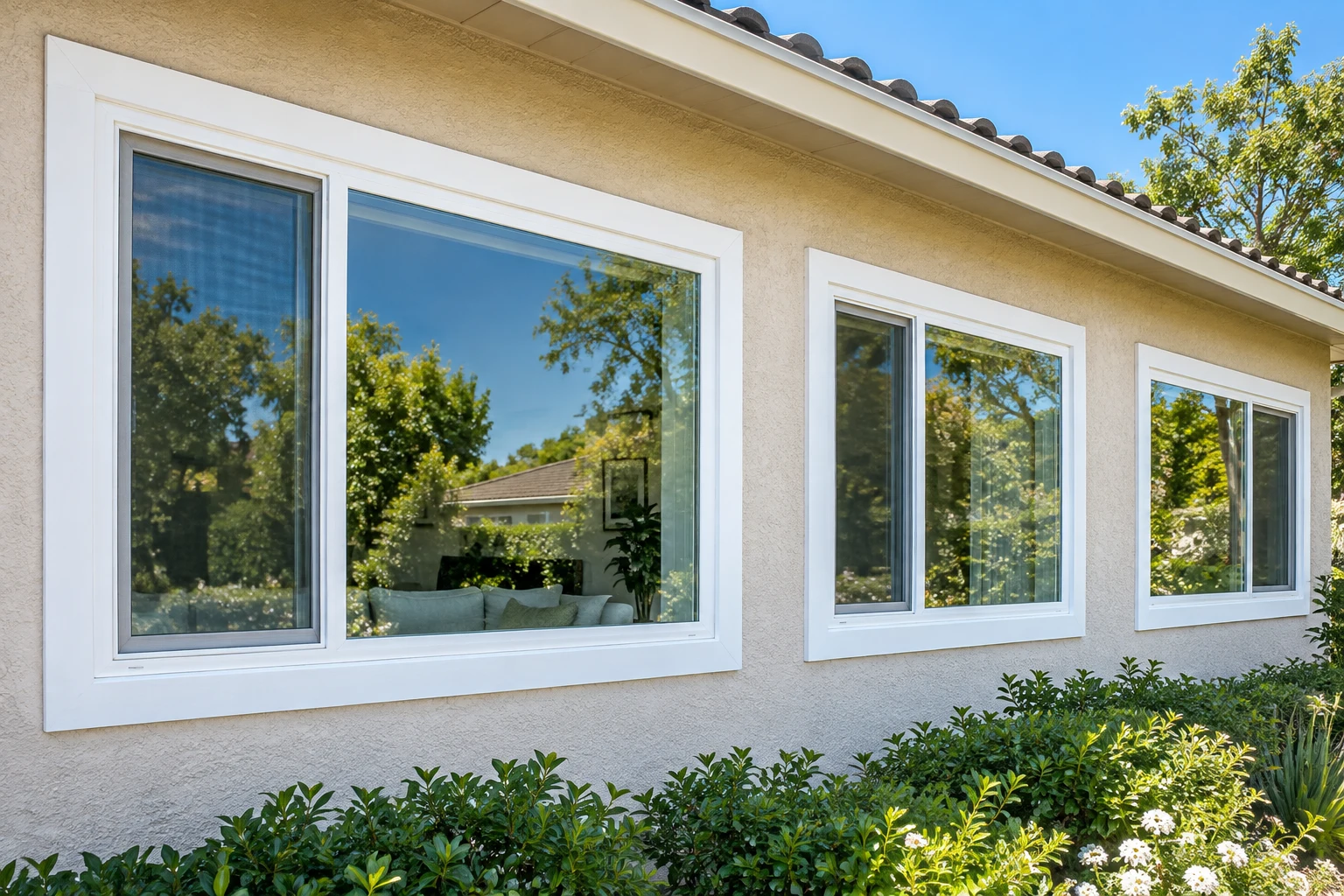
The best windows for homes in Ontario are the ones that block heat, improve indoor comfort, and reduce the strain on your AC system. In this climate, window performance matters more than appearance.
At Total Home Windows, we help homeowners identify exactly how much heat is entering through their current windows and why their home still feels hot. In many cases, the issue is not the AC system—it is the windows allowing heat to pass through all day.
If you are still exploring your options, start with the full Ontario window replacement guide to understand how window performance impacts your home.
Why Window Choice Matters in Ontario Homes
Ontario is known for long, hot summers and strong sun exposure, especially in inland neighborhoods. Temperatures regularly climb into the 90s and above, and direct sunlight hits windows for hours at a time.
The wrong windows allow that heat to enter freely.
In homes across Ontario, we often see rooms that heat up quickly in the afternoon, even when the AC is running constantly. This is especially common in homes built before the 1990s with older dual-pane or original single-pane windows.
Simple answer: If your home feels hot during the day, your windows are likely transferring heat inside faster than your AC can remove it.
Older aluminum frames, worn seals, and outdated glass technology all contribute to this problem. Once heat gets through the glass, it becomes trapped inside your home.
This is why many homeowners end up searching for why their house is hot even with AC in Ontario—the system is working, but the windows are working against it.
What Actually Makes a Window “Best” for Your Home
The best window is not defined by brand or style. It is defined by how well it solves your specific problem.
For most Ontario homeowners, that problem is heat.
Simple answer: The best windows are the ones that reduce heat transfer, seal properly, and improve comfort in the rooms you use most.
That means focusing on performance factors like:
- How much solar heat the glass allows inside
- How well the window seals against air leaks
- How the frame material handles temperature changes
- How the window performs in direct sunlight
At Total Home Windows, we do not recommend windows based on guesswork. We measure where heat is entering your home and show you the problem before recommending any solution.
A common issue we find is that homeowners replace windows based on appearance or price, without understanding how much heat those windows are actually letting in.
The result is a home that still feels hot, even after replacement.
Low-E Glass Is Critical for Heat Control
If you are choosing windows for an Ontario home, Low-E glass is one of the most important features to consider.
Simple answer: Low-E glass reduces the amount of heat that passes through your windows without blocking natural light.
This coating reflects infrared heat away from your home while still allowing visible light inside. That means brighter rooms without the temperature increase.
In a city like Ontario, where sunlight is intense and consistent, this makes a noticeable difference in indoor comfort.
Low-E glass can help:
- Reduce heat buildup during peak afternoon hours
- Lower AC usage
- Protect flooring and furniture from UV damage
- Improve room-to-room temperature consistency
Not all Low-E coatings are the same. Some are designed for colder climates and may not perform as well in Southern California heat.
To understand what works best locally, visit our page on Low-E windows in Ontario.
Dual-Pane Windows Are the Standard for Ontario Homes
For most homes in Ontario, dual-pane windows provide the best balance of performance and cost.
Simple answer: Dual-pane windows with the right glass package are usually enough to significantly reduce heat and improve comfort.
They work by creating an insulating barrier between two panes of glass, slowing down heat transfer compared to older single-pane windows.
When combined with Low-E coatings, dual-pane windows become much more effective at controlling indoor temperature.
In homes across Ontario, we often see a major comfort improvement when homeowners upgrade from older single-pane or early-generation dual-pane windows to modern systems.
Triple-pane windows exist, but they are not always necessary in this climate. In many cases, the added cost does not translate into meaningful additional comfort compared to a properly selected dual-pane window.
Frame Material Impacts Performance More Than You Think
The frame of your window plays a major role in how well it performs under heat.
Simple answer: Vinyl and fiberglass frames perform better than older aluminum frames because they reduce heat transfer and improve insulation.
Many older homes in Ontario still have aluminum frames, which conduct heat easily. That means the frame itself becomes a pathway for outdoor heat to enter your home.
Modern materials perform differently:
- Vinyl: Good insulation, cost-effective, low maintenance
- Fiberglass: Stronger, more stable under temperature changes, longer lifespan
Choosing between them depends on your home, your goals, and your budget. The key is making sure the entire window system—not just the glass—is designed for heat control.
Installation Quality Is Just as Important as the Window
Even the best window will not perform correctly if it is installed poorly.
Simple answer: A properly installed window seals out heat and air leaks, while a poor installation allows heat to enter around the frame.
This is one of the most overlooked factors in window replacement.
Gaps, improper sealing, or rushed installations can lead to:
- Air leaks
- Hot spots near windows
- Reduced energy efficiency
- Shortened window lifespan
At Total Home Windows, we focus on both product performance and installation accuracy. Before any work begins, we identify where your current windows are failing and why.
If you are planning a full upgrade, you can learn more about the process of window replacement in Ontario and what to expect from start to finish.
How to Know Which Windows Are Right for Your Home
Every home in Ontario is different. Sun exposure, window direction, home age, and existing construction all affect what will work best.
Simple answer: The right windows are determined by where heat is entering your home—not by a one-size-fits-all recommendation.
For example:
- West-facing windows often need stronger heat-blocking performance
- Older homes may require full-frame replacement
- Larger windows may benefit from stronger frame materials
A common issue we find is that homeowners replace all windows with the same product, even though different sides of the home experience different heat conditions.
This leads to uneven comfort and missed opportunities to improve efficiency.
That is why we measure heat at the window level and show you exactly what is happening inside your home. Instead of guessing, you see the problem clearly—and the solution becomes straightforward.
How Window Style Affects Heat and Airflow
Window style is not just about appearance. It directly affects how tightly the window seals and how much heat and air can pass through.
Simple answer: Tighter-sealing window styles reduce heat transfer and improve comfort more effectively than loosely sealed designs.
In Ontario homes, this becomes noticeable in the afternoon when sun exposure is at its peak.
Here is how common styles perform:
- Casement windows – Close tightly against the frame, often providing one of the best seals against heat and air
- Picture windows – Fixed and sealed, making them highly efficient for blocking heat
- Sliding windows – Convenient but may allow more air leakage depending on track quality
- Single or double-hung – Functional, but typically less airtight than hinged options
In homes we evaluate across Ontario, rooms with large fixed or casement windows tend to stay more stable in temperature compared to rooms with older sliding or aluminum-framed units.
This does not mean you need one style everywhere. It means choosing the right style for each part of the home based on exposure and usage.
Retrofit vs Full-Frame Replacement
Choosing the right window is only part of the decision. How the window is installed can completely change the result.
Simple answer: Full-frame replacement provides better long-term performance, while retrofit installation is faster but depends on existing frame condition.
Retrofit installation places a new window into your existing frame. This works if the frame is still structurally sound and properly sealed.
Full-frame replacement removes everything down to the rough opening and rebuilds the window system from scratch.
In many Ontario homes—especially those built decades ago—we often find:
- Warped or heat-damaged frames
- Gaps behind trim that are not visible
- Improper insulation around the original window
In those cases, retrofit installation can leave existing problems in place.
Full-frame replacement takes more time and planning, but it allows for complete sealing and better heat control.
This is one of the areas where we physically show homeowners what is happening behind their existing windows before making a recommendation.
What to Expect After Replacing Your Windows
Most homeowners are not just looking for new windows—they are trying to fix a problem.
Simple answer: Properly selected and installed windows should make your home feel more consistent, reduce hot spots, and lower AC usage.
Here is what changes you can realistically expect:
- Rooms that heat up slower during the day
- Less temperature difference between rooms
- Reduced need to constantly adjust the thermostat
- Improved comfort near windows and glass doors
One pattern we consistently see in Ontario homes is that west-facing rooms become usable again in the afternoon after window replacement. Before, those rooms are often avoided because they trap heat.
Another common improvement is nighttime comfort. Homes cool down faster because heat is no longer constantly entering through the glass.
For homeowners specifically dealing with sun exposure, understanding the best windows to block heat in Ontario can make a significant difference in results.
Cost vs Performance: What Actually Matters
Window pricing varies widely, but focusing only on cost often leads to poor outcomes.
Simple answer: The lowest-cost window is rarely the one that solves your heat problem.
What actually affects value:
- Glass performance (especially heat rejection)
- Frame insulation quality
- Installation accuracy
- Fit to your home’s specific conditions
We often meet homeowners who replaced windows recently but still have the same comfort issues. In most cases, the wrong glass package or poor installation is the reason.
Spending less upfront can lead to:
- Continued high energy bills
- Minimal comfort improvement
- Needing replacement again sooner than expected
The better approach is to match the window system to the actual problem inside your home.
Common Mistakes Homeowners Make
Choosing windows without understanding heat performance leads to frustration.
Here are the most common mistakes we see in Ontario:
- Replacing windows based only on appearance
- Ignoring how much heat is entering specific rooms
- Choosing the same window for every side of the home
- Not evaluating installation quality
- Assuming all “energy-efficient” windows perform the same
One of the biggest issues is assuming the AC system is the problem. In reality, the AC is often working correctly—it just cannot keep up with constant heat entering through inefficient windows.
This is why we focus on measurement first. When you can see exactly where heat is entering, the right decision becomes much clearer.
Making the Right Decision for Your Home
There is no universal “best window” for every house.
Simple answer: The best window for your home is the one that directly addresses where and how heat is entering your space.
That depends on:
- Sun exposure by direction
- Size and placement of windows
- Condition of existing frames
- Your comfort goals and budget
At Total Home Windows, we walk through this with you step by step. We measure heat at the glass, identify problem areas, and explain what is actually happening inside your home.
No guessing. No generic recommendations.
Just clear answers based on real conditions.
Related Window Answers in Ontario
- Dual-pane vs triple-pane windows in Ontario
- Vinyl vs fiberglass windows in Ontario
- Window replacement cost in Ontario
- How long window installation takes in Ontario
Frequently Asked Questions About Best Windows for Homes in Ontario
What type of windows work best in hot climates like Ontario?
Windows with Low-E glass, dual-pane construction, and insulated frames perform best. These features reduce heat transfer and help maintain consistent indoor temperatures.
Will new windows actually lower my energy bills?
Yes, if your current windows are allowing significant heat inside. Reducing heat gain means your AC runs less often, which can lower monthly energy costs.
Is it better to replace all windows at once?
Not always. It depends on where the biggest problems are. In some homes, targeting high-exposure areas first can deliver noticeable improvements.
How long does window replacement take?
Most installations are completed in one to two days depending on the number of windows and installation type. Larger or full-frame projects may take longer.
How do I know if my windows are the problem?
If your home feels hot even with the AC running, or certain rooms heat up faster than others, your windows are likely contributing. Measuring heat at the window level provides a clear answer.
Get Your Free Window Replacement Estimate In Ontario
If your home still feels hot, your windows may be working against your AC system.
At Total Home Windows, we show you exactly where heat is entering your home and why. You will see the problem firsthand before making any decisions.
Call us at (310) 729-3013, email teamallstarconstruction@gmail.com, or visit our contact page to schedule your free estimate.
If you are ready to fix the problem and improve your home’s comfort, Total Home Windows will guide you with real data—not guesswork.
Request Free Estimate
Related Content
Do Windows Help With Noise in Ontario
Should I Replace All Windows At Once in Ontario
What Type Of Windows Are Best For Hot Climates in Ontario
Milgard Vs Andersen Windows in Ontario
Vinyl vs Fiberglass Windows in Ontario
Best Window Brands in Ontario
Helpful Resources for Homeowners
Whether you’re researching energy-efficient windows, looking for ways to reduce heat and noise, or comparing replacement options for an older home, these resources cover some of the most common questions homeowners ask. Browse the articles below for practical guidance and expert insights on choosing the right windows for your home.