
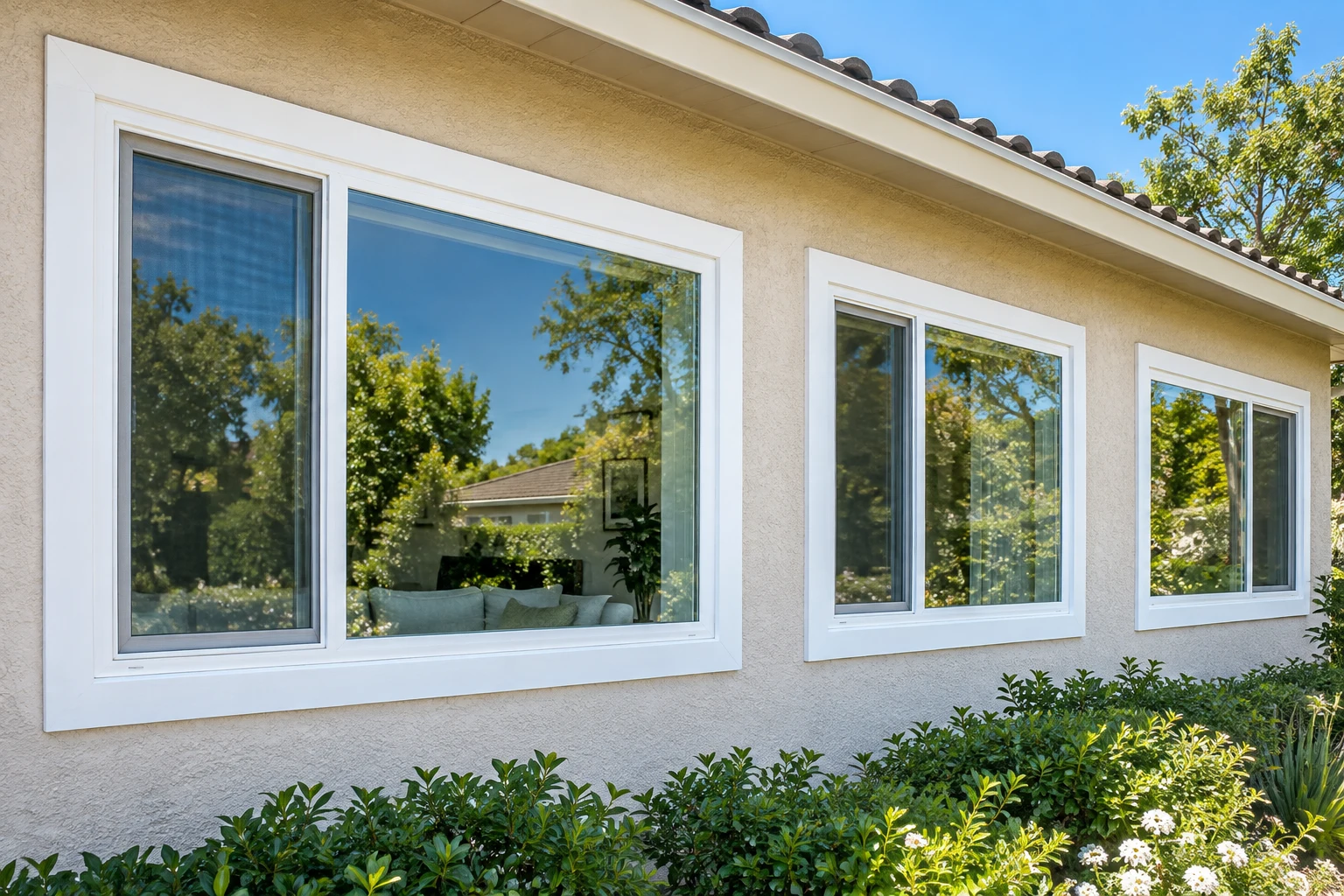
The best windows for homes in Ontario, CA are dual-pane windows with Low-E glass designed to block solar heat, combined with properly sealed, energy-efficient frames. In this inland climate, the goal is simple: reduce how much heat enters your home through the glass.
If your house feels hot even when the AC is running, there is a strong chance your windows are part of the problem. At Total Home Windows, we help Ontario homeowners identify exactly where heat is entering, measure how much is coming through each window, and show you what is actually causing the discomfort before recommending any solution.
If you are starting to research options, it helps to understand how climate impacts performance. You can explore how this applies locally on our Ontario window replacement page, where we break down how heat, installation, and window selection all connect.
Ontario’s Climate Requires Heat-Blocking Windows
Ontario is not a mild coastal city. Summers are long, dry, and consistently hot, with temperatures regularly climbing into the 90s and beyond. That heat does not just stay outside—it pushes directly through your windows.
The best windows for this climate are windows that reduce solar heat gain, not just improve insulation. In simple terms, you want windows that stop the sun’s heat before it enters your home.
In homes across Ontario, we often see rooms that heat up rapidly in the afternoon due to direct sun exposure on older glass. West-facing windows are usually the biggest problem, followed closely by large south-facing openings.
Clear answer: In Ontario, the right window is one that blocks solar heat effectively, not just one that looks good or has more panes.
A common issue we find is homeowners upgrading their AC system without addressing the real cause. If heat is constantly entering through inefficient windows, your AC will keep running longer without solving the discomfort.
If that sounds familiar, this usually connects directly to the issue explained here: why homes stay hot even with AC in Ontario.
What Actually Makes a Window “Good” for Hot Climates
Not all windows perform the same, even if they look similar. In Ontario’s climate, performance comes down to how well the window controls heat transfer and prevents air leakage.
The most important factors include:
- Low solar heat gain coefficient (SHGC): Lower values mean less heat enters your home
- Low-E glass coatings: Reflect heat while allowing natural light
- Dual-pane construction: Improves insulation compared to single-pane windows
- Proper installation: Prevents air leaks that reduce performance
Clear answer: The best-performing windows in Ontario combine Low-E glass, dual-pane construction, and proper sealing to control both heat and airflow.
Many older homes in Ontario were built with aluminum frames and single-pane glass. These windows transfer heat quickly and often have failing seals, allowing hot air to enter throughout the day.
A common issue we find is that homeowners focus on frame material or brand name, when the real performance difference comes from the glass package and installation quality.
Low-E Glass Is Essential in Ontario Homes
Low-E glass is one of the most important features for homes in hot climates like Ontario. It uses a microscopic coating that reflects heat away from your home while still letting in visible light.
Without this coating, sunlight passes through the glass and turns into trapped heat inside your home. That is why rooms with direct sun exposure feel significantly hotter, even with the AC running.
Clear answer: Low-E glass is essential in Ontario because it reduces solar heat gain, making your home easier to cool and more comfortable.
In homes across Ontario, we often see dramatic temperature differences between rooms with direct sun exposure and shaded areas. The difference is not the AC—it is how much heat the windows are allowing inside.
If you want a deeper breakdown of how this works, review our guide on Low-E windows in Ontario.
Dual-Pane Windows Are the Practical Standard
For most homes in Ontario, dual-pane windows are the practical and effective standard. They provide a solid balance between performance, cost, and energy efficiency when paired with the right glass.
Single-pane windows, which are still common in older Ontario homes, do very little to stop heat transfer. They allow outdoor temperatures to influence indoor comfort almost immediately.
Clear answer: Dual-pane windows with the right glass package are typically the best choice for Ontario homes, offering strong heat control without unnecessary cost.
Triple-pane windows are sometimes considered, but in Southern California’s climate, they are not always necessary. The priority here is reducing solar heat gain, not maximizing insulation for cold weather.
A common issue we find is homeowners assuming “more panes equals better performance.” In reality, the type of glass and coating matters more than simply adding another layer.
The Role of Window Material in Hot Weather
Frame material does play a role, but it is not the main driver of performance. In Ontario, both vinyl and fiberglass can work well when paired with the right glass and installed correctly.
Vinyl windows are a common choice because they are cost-effective, energy-efficient, and low maintenance. Fiberglass windows offer more structural strength and stability, especially for larger openings.
Clear answer: Both vinyl and fiberglass can perform well in Ontario—the key difference comes down to budget, durability needs, and installation quality.
In homes across Ontario, we often see poorly installed windows outperforming higher-end products simply because the sealing and fit were done correctly. Installation has a direct impact on how well your windows block heat and air.
Why Older Ontario Homes Struggle With Heat
Ontario has many homes built decades ago, often with original windows still in place. These windows were not designed for today’s energy standards or prolonged heat exposure.
Over time, seals break down, frames shift, and glass becomes less effective at controlling heat. Even if the windows look fine, they may be allowing significant heat into your home.
Clear answer: Older windows in Ontario homes often fail at heat control due to outdated glass, worn seals, and inefficient materials.
A common issue we find is homeowners noticing rising energy bills and uneven temperatures but not realizing the windows are the source. The AC compensates, but it does not fix the root problem.
If you are considering a full upgrade, understanding the scope of window replacement in Ontario can help you see how the right solution improves comfort across the entire home.
Windows Should Be Selected Based on Your Home, Not Just the Climate
While Ontario’s climate sets the baseline, the best window for your home depends on how your house is positioned and how sunlight hits it throughout the day.
For example:
- West-facing windows usually need the strongest heat-blocking performance
- Large living room windows often contribute the most to indoor heat
- Bedrooms may need different solutions depending on sun exposure
Clear answer: The best windows are chosen based on both climate and how heat enters your specific home—not just general recommendations.
At Total Home Windows, this is where our process is different. We do not guess or recommend a standard package. We measure heat at the window level and show you exactly which areas are causing the problem.
That way, you are not just replacing windows—you are solving the actual reason your home feels hot.
Installation Quality Impacts Heat Control More Than Most Homeowners Expect
Choosing the right glass package matters, but installation determines whether that performance actually shows up inside your home. At Total Home Windows, we regularly see situations where good windows underperform simply because they were not sealed or fitted correctly.
Even small gaps around a window frame can allow hot air to enter continuously throughout the day. In a climate like Ontario, that steady heat gain adds up quickly, especially in the afternoon.
Clear answer: A properly installed window can significantly reduce heat entry, while a poorly installed one can make even high-performance glass feel ineffective.
In homes across Ontario, we often find that rooms with the most discomfort are not just dealing with older glass—they also have installation issues that were never addressed.
If you are comparing options, understanding the role of the installer is just as important as the product itself. You can learn more about what to look for on our window replacement installer in Ontario page.
Retrofit vs Full-Frame: Which One Actually Solves Heat Problems?
Not every window replacement is the same. The method used can directly impact how much heat your new windows block.
Retrofit installation keeps the existing frame and replaces only the window components. This works when the original frame is still structurally sound and properly sealed.
Full-frame installation removes everything down to the opening, allowing for a completely new system with updated insulation and sealing.
Clear answer: If your current windows have air leaks, worn frames, or poor insulation, full-frame replacement is often the better option for reducing heat.
A common issue we find in older Ontario homes is that original frames have shifted or deteriorated over time. In those cases, a retrofit may not fully solve the problem because the underlying issue remains.
This is why Total Home Windows measures and evaluates each opening before recommending the right approach. The goal is not just replacement—it is stopping heat at the source.
What Real Performance Improvements Look Like
When the right windows are selected and installed correctly, the difference is noticeable—especially during peak heat hours.
Most homeowners experience:
- Reduced heat buildup in the afternoon
- More consistent temperatures from room to room
- Less reliance on the AC system to maintain comfort
- Lower strain on cooling equipment
Clear answer: The right window system reduces how much heat enters your home, which makes your AC more effective rather than forcing it to work harder.
In homes across Ontario, we often see the biggest improvements in west-facing rooms that used to become unusable in the late afternoon. Once the heat gain is reduced, those spaces become comfortable again without constant thermostat adjustments.
If your home still struggles with temperature imbalance, it is worth understanding how heat-blocking windows in Ontario are designed to address that exact issue.
How Window Choices Affect Energy Costs Over Time
Energy savings are not just about efficiency ratings—they come from reducing how often your AC has to run.
When windows allow less heat into your home, your cooling system cycles less frequently and maintains temperature more easily. Over time, this reduces energy consumption and wear on your HVAC system.
However, not all upgrades deliver the same results.
Clear answer: The biggest impact on energy savings comes from reducing solar heat gain, not just upgrading to a newer window.
A common mistake we see is homeowners replacing windows without addressing the actual heat load. If the glass does not block enough solar energy, the improvement in energy bills may be minimal.
If you are evaluating the financial side, reviewing window replacement cost in Ontario alongside expected performance can help you make a more informed decision.
Common Mistakes Homeowners Make When Choosing Windows
Many window decisions are based on assumptions that do not hold up in Ontario’s climate.
Here are some of the most common issues we see:
- Choosing based on price alone without considering heat-blocking performance
- Assuming triple-pane is always better when solar control matters more
- Focusing on frame material over glass performance
- Overlooking installation quality, which directly impacts results
- Replacing only a few windows without addressing the main heat sources
At Total Home Windows, we approach this differently by showing you where heat is entering first. That way, the decision is based on actual conditions inside your home—not guesswork.
Do You Need to Replace All Your Windows?
Not every home requires full replacement, but partial upgrades only work when they target the real problem areas.
Clear answer: You only need to replace all windows if heat is entering throughout the home—otherwise, focus on the highest-impact areas first.
In Ontario homes, the biggest contributors are typically large, sun-exposed windows. Addressing those first can provide noticeable improvements even before a full upgrade.
This is another area where measurement matters. Without seeing which windows are responsible for the most heat gain, it is easy to invest in the wrong areas.
What Makes Total Home Windows Different
Most companies recommend windows based on general specifications. Total Home Windows takes a different approach by focusing on what is actually happening inside your home.
We:
- Measure heat at the window level
- Show you where the biggest problems are
- Explain why certain rooms feel hotter than others
- Recommend solutions based on real data
We do not guess. We demonstrate.
This process helps you make a decision with clarity, knowing exactly what will improve comfort and why.
Related Window Answers in Ontario
- Are energy-efficient windows worth it in Ontario?
- Do new windows reduce energy bills in Ontario?
- Dual-pane vs triple-pane windows in Ontario
- Signs you need new windows in Ontario
Frequently Asked Questions About What Type Of Windows Are Best For Hot Climates in Ontario
What is the most important feature for windows in hot climates?
The most important feature is low solar heat gain. Windows with Low-E coatings and low SHGC ratings are designed to block heat before it enters your home.
Are triple-pane windows better for Ontario homes?
Not necessarily. Triple-pane windows are designed more for cold climates. In Ontario, dual-pane windows with the right Low-E glass typically provide better value and effective heat control.
How much difference can new windows make in comfort?
When properly selected and installed, new windows can significantly reduce hot spots, improve temperature consistency, and make your AC system more effective.
How long does window replacement take?
Most installations are completed within one to two days depending on the size of the project. Custom orders and preparation can add time before installation.
Is it worth replacing windows if my AC is still struggling?
Yes. If heat is entering through your windows, your AC is working against a constant load. Fixing the windows addresses the root cause, not just the symptom.
Get Your Free Window Replacement Estimate In Ontario
If your home still feels hot even with the AC running, the issue may not be your system—it may be your windows.
Total Home Windows will show you exactly where heat is entering, measure how your current windows are performing, and walk you through the best options for your home.
Get clear answers, real measurements, and a solution designed to make your home more comfortable—starting with your windows.
Request Free Estimate
Related Content
Do Windows Help With Noise in Ontario
Should I Replace All Windows At Once in Ontario
Milgard Vs Andersen Windows in Ontario
Vinyl vs Fiberglass Windows in Ontario
Best Window Brands in Ontario
Window Upgrade ROI in Ontario
Helpful Resources for Homeowners
Whether you’re researching energy-efficient windows, looking for ways to reduce heat and noise, or comparing replacement options for an older home, these resources cover some of the most common questions homeowners ask. Browse the articles below for practical guidance and expert insights on choosing the right windows for your home.