
Prices and performance figures in this guide are planning examples, not a project quote or a promise of savings. Your estimate and results depend on the products, installation scope, existing home, climate, and energy use.
Energy Star windows in Ontario are designed to reduce heat transfer, which helps keep your home cooler and more energy efficient. But the real benefit comes down to one thing: how well your windows block heat from entering your home in the first place.
At Total Home Windows, most homeowners we talk to are not just looking for a label—they are trying to fix a house that stays hot even with the AC running. In Ontario’s inland climate, that problem is often caused by older or inefficient windows allowing constant solar heat gain throughout the day.
If you are comparing options locally, start with our Ontario window replacement page to understand how window performance connects directly to comfort, energy use, and installation quality in your area.
What Energy Star Windows Actually Mean
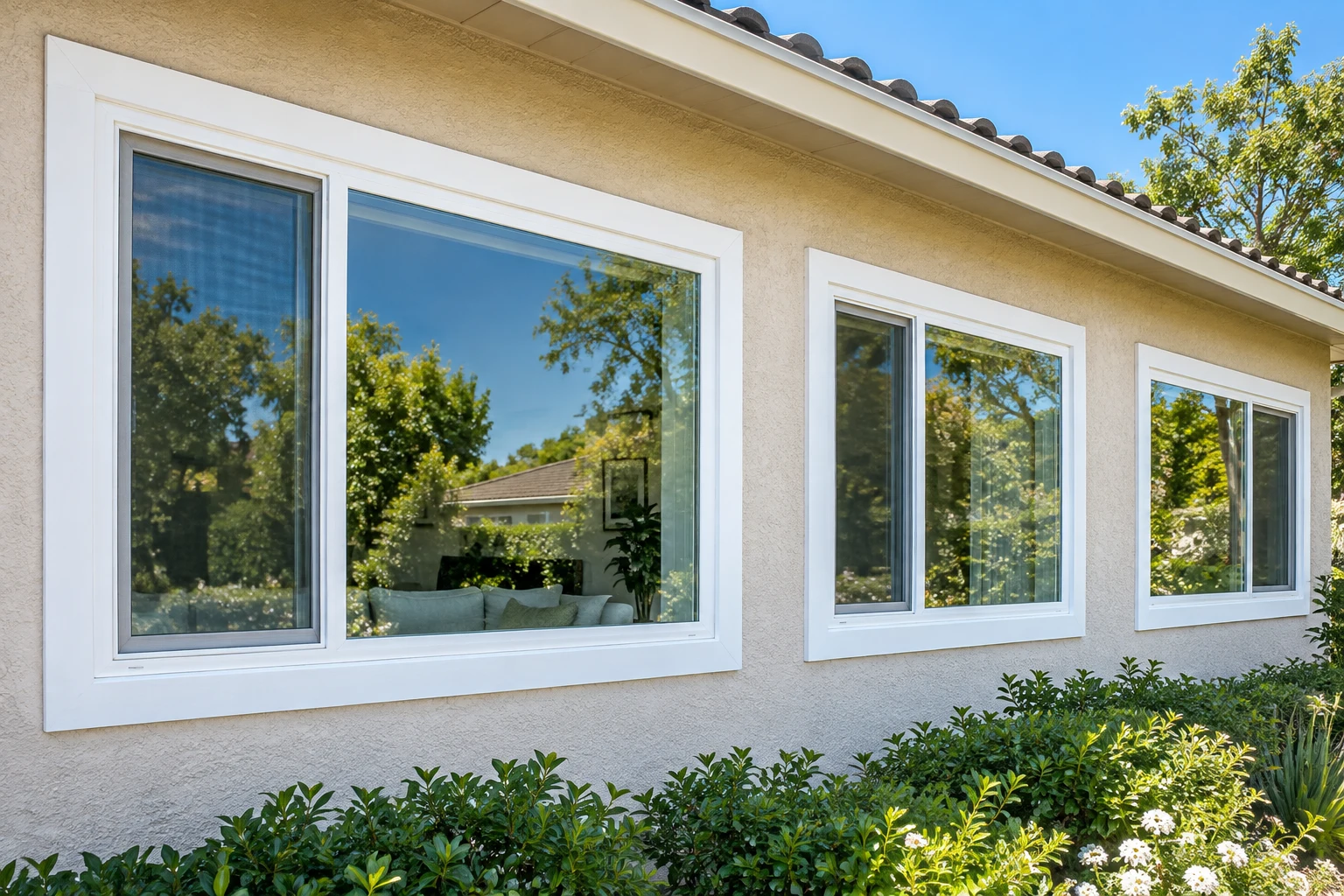
Energy Star windows are certified to meet specific energy performance standards. These standards are based on how well a window controls heat transfer, blocks solar heat, and insulates your home.
In simple terms, Energy Star windows are built to reduce how much heat comes in and how much cooled air escapes.
That includes features like:
- Low-E glass coatings that reflect heat
- Dual-pane or multi-pane glass systems
- Gas-filled spaces between panes for insulation
- Frames designed to reduce thermal transfer
- Performance ratings matched to climate zones
But here is the key: not all Energy Star windows perform the same in Ontario’s climate.
Ontario falls into a hot, inland Southern California zone where solar heat is a major issue. That means the window’s ability to block heat—especially through glass—is more important than general insulation alone.
A window can be Energy Star certified and still allow too much heat in if it is not designed for this type of environment.
Why Energy Star Windows Matter in Ontario Homes
Ontario gets long hours of direct sun, especially in the summer, with high temperatures that regularly push into the 90s and above. Unlike coastal areas, there is less natural cooling, which puts more pressure on your home’s windows.
In homes across Ontario, we often see rooms that heat up dramatically in the afternoon, even when the AC is working properly.
The reason is simple: windows are letting heat in faster than your AC can remove it.
Energy Star windows are meant to slow that process down by reducing solar heat gain and improving insulation. When chosen correctly, they help stabilize indoor temperatures and reduce the workload on your cooling system.
That said, the label alone does not solve the problem. The window still needs to match your home’s sun exposure, layout, and existing conditions.
If your home still feels uncomfortable, you may want to review why a house stays hot even with AC in Ontario—because windows are often the main cause.
The Most Important Energy Star Ratings for Ontario
Energy Star windows come with performance ratings. These numbers are what actually determine how the window will perform in your home.
For Ontario homeowners, two ratings matter more than anything else: U-factor and solar heat gain coefficient (SHGC).
Solar Heat Gain Coefficient (SHGC)
SHGC measures how much heat from the sun passes through the window.
Lower SHGC means less heat enters your home.
In Ontario, this is one of the most important numbers to pay attention to because solar heat is the main reason homes overheat.
A common issue we find is homeowners choosing windows without understanding SHGC, then still dealing with hot rooms because the glass allows too much solar energy inside.
If your goal is to reduce indoor heat, lower SHGC should be a priority.
To understand what works best locally, review the best windows to block heat in Ontario.
U-Factor
U-factor measures how well a window prevents heat from transferring through it.
Lower U-factor means better insulation.
This matters more during cooler months, but it still plays a role in overall efficiency year-round.
In Ontario, U-factor supports comfort—but SHGC is usually the bigger factor when it comes to solving overheating issues.
Air Leakage
Air leakage measures how much air passes through the window assembly.
Lower air leakage means fewer drafts and more consistent indoor temperatures.
Even a high-performance Energy Star window can fail here if it is not installed properly.
That is why installation matters just as much as the window itself.
Energy Star Windows vs “Energy-Efficient” Windows
Not every window marketed as “energy-efficient” meets Energy Star standards.
The difference is testing and certification.
Energy Star windows are verified to meet specific performance criteria. Energy-efficient windows may include similar features, but they are not always held to the same standard.
However, the bigger issue we see is homeowners focusing only on labels instead of actual performance inside their home.
An Energy Star sticker does not tell you how much heat is entering your specific windows today.
At Total Home Windows, we focus on measuring that directly. We show you where heat is entering and how your current windows are performing before recommending any replacement.
Because without that step, you are guessing—and that is how homeowners end up replacing windows without solving the real problem.
Do Energy Star Windows Actually Reduce Heat and Energy Bills?
Yes—Energy Star windows can reduce heat gain and improve efficiency, especially if you are replacing older or failing windows.
But the results depend on what you are replacing and how the new windows are selected and installed.
If your current windows are single-pane, poorly sealed, or outdated, the improvement can be significant.
In many Ontario homes, homeowners notice:
- Rooms staying cooler in the afternoon
- Less strain on the AC system
- More consistent temperatures throughout the house
- Reduced glare and sun exposure
But energy savings are not automatic.
The actual impact depends on:
- Your current window condition
- Sun exposure (especially west-facing windows)
- Glass type and coatings
- Installation quality
If you want a deeper breakdown, see how new windows reduce energy bills in Ontario.
The short answer: Energy Star windows help, but only when they are the right windows for your home.
Why Installation Matters More Than Most Homeowners Expect
Energy Star certification applies to the window itself—not the installation.
This is where many problems happen.
A high-performance window installed incorrectly can still allow heat, air, and even moisture into your home.
A common issue we find in Ontario homes is gaps, poor sealing, or misalignment from previous installations. These issues cancel out much of the benefit of upgrading the glass.
Proper installation ensures:
- A tight seal that prevents heat infiltration
- Correct fit within the existing opening
- No air gaps around the frame
- Long-term performance of the window system
This is why Total Home Windows does not start with product recommendations.
We start by evaluating your current windows, measuring heat at the glass level, and identifying where the real problems are coming from.
Only after that do we recommend solutions.
If you are planning a full upgrade, learn more about our window replacement in Ontario and how the process works from evaluation to installation.
Are Energy Star Windows Enough to Fix a Hot House?
Energy Star windows are part of the solution—but they are not a guarantee on their own.
If your home is hot, the real question is not “Do I need Energy Star windows?”
It is: “Where is heat entering my home, and how much of it is coming through my windows?”
In many cases, windows are the largest source of heat gain—but not all windows contribute equally.
South- and west-facing windows usually bring in the most heat. Older glass, failed seals, and outdated coatings make the problem worse.
That is why a proper evaluation matters.
At Total Home Windows, we do not assume. We measure, demonstrate, and show you exactly what is happening inside your home so you can make a clear, informed decision.
How to Choose the Right Energy Star Windows for Your Ontario Home
Energy Star certification is a baseline. Choosing the right window is about matching performance to your home’s actual heat problem.
At Total Home Windows, we see this all the time in Ontario homes—two houses on the same street can have completely different comfort issues depending on sun exposure, window size, and glass condition.
The right setup depends on what your home is dealing with day to day.
Here are the factors that actually make a difference:
- Sun exposure by direction – West- and south-facing windows usually need stronger heat-blocking performance
- Glass size – Larger windows allow more solar heat gain, even if they are Energy Star rated
- Existing frame condition – Older frames may allow heat and air infiltration around the glass
- Current comfort issues – Hot rooms, glare, and uneven temperatures point to specific problem areas
- Installation method – Retrofit vs full-frame affects long-term sealing and performance
Direct answer: The best Energy Star window for your home is the one that reduces heat where your home actually overheats—not just the one with the best general rating.
This is why we measure heat at the window level first. It removes the guesswork and shows you exactly which windows are causing the problem.
Energy Star Windows vs Low-E Glass: What Actually Blocks Heat?
Many homeowners think Energy Star windows and Low-E windows are two different options. In reality, most Energy Star windows already include Low-E coatings.
The difference is how that glass is designed.
Low-E glass is what actively reflects heat away from your home. Energy Star certification simply confirms that the window meets a certain level of efficiency.
Direct answer: Low-E glass is the component that actually blocks heat—Energy Star is the certification that confirms overall performance.
In Ontario’s climate, this distinction matters. A standard Low-E coating may not be enough for west-facing rooms that take direct afternoon sun.
We often recommend reviewing options like Low-E windows in Ontario to understand how different coatings affect heat reduction.
In homes with severe heat issues, upgrading the glass package—not just the window—makes the biggest difference.
What Energy Star Windows Cost in Ontario
Energy Star windows are not a separate product line—they are a performance level. That means pricing varies based on materials, glass type, and installation.
In Ontario, typical costs fall into these ranges:
- $800–$1,200 per window for standard Energy Star vinyl options
- $1,200–$2,000+ per window for upgraded glass or fiberglass frames
- $10,000–$25,000+ for full home replacement depending on size and scope
What actually affects the cost:
- Size and number of windows
- Frame material (vinyl vs fiberglass)
- Glass performance (SHGC, coatings, pane configuration)
- Installation complexity
- Condition of existing frames
Direct answer: Most homeowners in Ontario invest between $10,000 and $25,000+ for a full Energy Star window replacement project.
But cost alone does not determine results. A lower-cost window with poor heat-blocking performance can leave you with the same comfort issues.
For a detailed breakdown, visit window replacement cost in Ontario.
Real-World Performance: What Homeowners Actually Notice
When Energy Star windows are properly selected and installed, the changes are noticeable—but they are also specific.
In our experience working in Ontario homes, the biggest improvements show up in the afternoon.
Rooms that used to heat up quickly stay more stable. The “hot zone” near windows becomes usable again. AC systems cycle more normally instead of running constantly.
One thing homeowners often don’t expect: the difference is not just temperature—it is how the heat feels. Direct radiant heat from the sun is reduced, which changes how comfortable a room feels even at the same thermostat setting.
Another common observation is uneven improvement. Rooms with the worst sun exposure improve the most, while shaded areas may feel similar.
This is normal—and it is why targeted recommendations matter.
Should You Replace All Windows or Just Problem Areas?
Not every home needs a full replacement right away.
In many Ontario homes, the biggest heat issues come from a specific set of windows—usually large, sun-facing ones.
Direct answer: If your budget is limited, replacing the windows that receive the most direct sunlight will deliver the biggest immediate impact.
However, partial replacement has trade-offs. You may still have efficiency gaps in other parts of the home, and visual consistency can vary.
At Total Home Windows, we help you prioritize based on measured heat impact, not guesswork. That way, you can decide whether to phase the project or complete it all at once.
Common Misconceptions About Energy Star Windows
There are a few patterns we consistently see when homeowners research Energy Star windows on their own.
- “Energy Star means all windows perform the same” – Performance varies significantly based on SHGC and glass design
- “Any new window will fix the problem” – Without proper heat control, the issue can remain
- “Installation is secondary” – Poor installation can completely undermine window performance
- “Energy savings will be immediate and uniform” – Results depend on exposure and current conditions
The biggest issue is assuming the label solves the problem automatically.
It does not.
The real solution is identifying how much heat is entering your home today and selecting windows that directly address that.
How Energy Star Windows Fit Into a Full Comfort Solution
Windows are one of the largest sources of heat gain in Ontario homes—but they are part of a system.
Energy Star windows reduce heat at the glass level. That helps your AC work more efficiently and keeps indoor temperatures more stable.
But the key is targeting the source of the problem.
At Total Home Windows, we focus on:
- Measuring heat at each window
- Identifying the highest-impact areas
- Recommending the right glass and installation approach
- Showing you proof before any decisions are made
This approach is what separates a general upgrade from a real solution.
Related Window Answers in Ontario
- Dual-pane vs triple-pane windows in Ontario
- Vinyl vs fiberglass windows in Ontario
- How long window installation takes in Ontario
- Should you replace all windows or not
Frequently Asked Questions About Energy Star Windows in Ontario
Are Energy Star windows worth it in Ontario’s climate?
Yes—when properly selected. In Ontario’s hot climate, Energy Star windows with low SHGC ratings can significantly reduce heat gain and improve comfort.
How much heat can Energy Star windows actually block?
It depends on the glass. High-performance windows can block a substantial portion of solar heat, but results vary based on coatings, exposure, and installation quality.
Do Energy Star windows lower energy bills?
They can, especially if you are replacing older or single-pane windows. The biggest savings come from reducing how hard your AC has to work.
How long does installation take?
Most installations are completed in one to two days, depending on the number of windows and project complexity.
Can I replace just a few windows first?
Yes. Many homeowners start with the hottest rooms or most sun-exposed windows and expand later if needed.
Get Your Free Window Replacement Estimate In Ontario
If your home still feels hot even with the AC running, the problem is likely coming through your windows.
Total Home Windows will show you exactly where that heat is entering. We measure performance at the glass level, explain what is happening inside your home, and recommend solutions based on real data—not assumptions.
No pressure. Just clear answers.
If you are ready to improve comfort, reduce heat, and make your home more efficient, Total Home Windows is here to help.
Request Free Estimate
Related Content
Do Windows Help With Noise in Ontario
Should I Replace All Windows At Once in Ontario
What Type Of Windows Are Best For Hot Climates in Ontario
Milgard Vs Andersen Windows in Ontario
Vinyl vs Fiberglass Windows in Ontario
Best Window Brands in Ontario
Helpful Resources for Homeowners
Whether you’re researching energy-efficient windows, looking for ways to reduce heat and noise, or comparing replacement options for an older home, these resources cover some of the most common questions homeowners ask. Browse the articles below for practical guidance and expert insights on choosing the right windows for your home.