
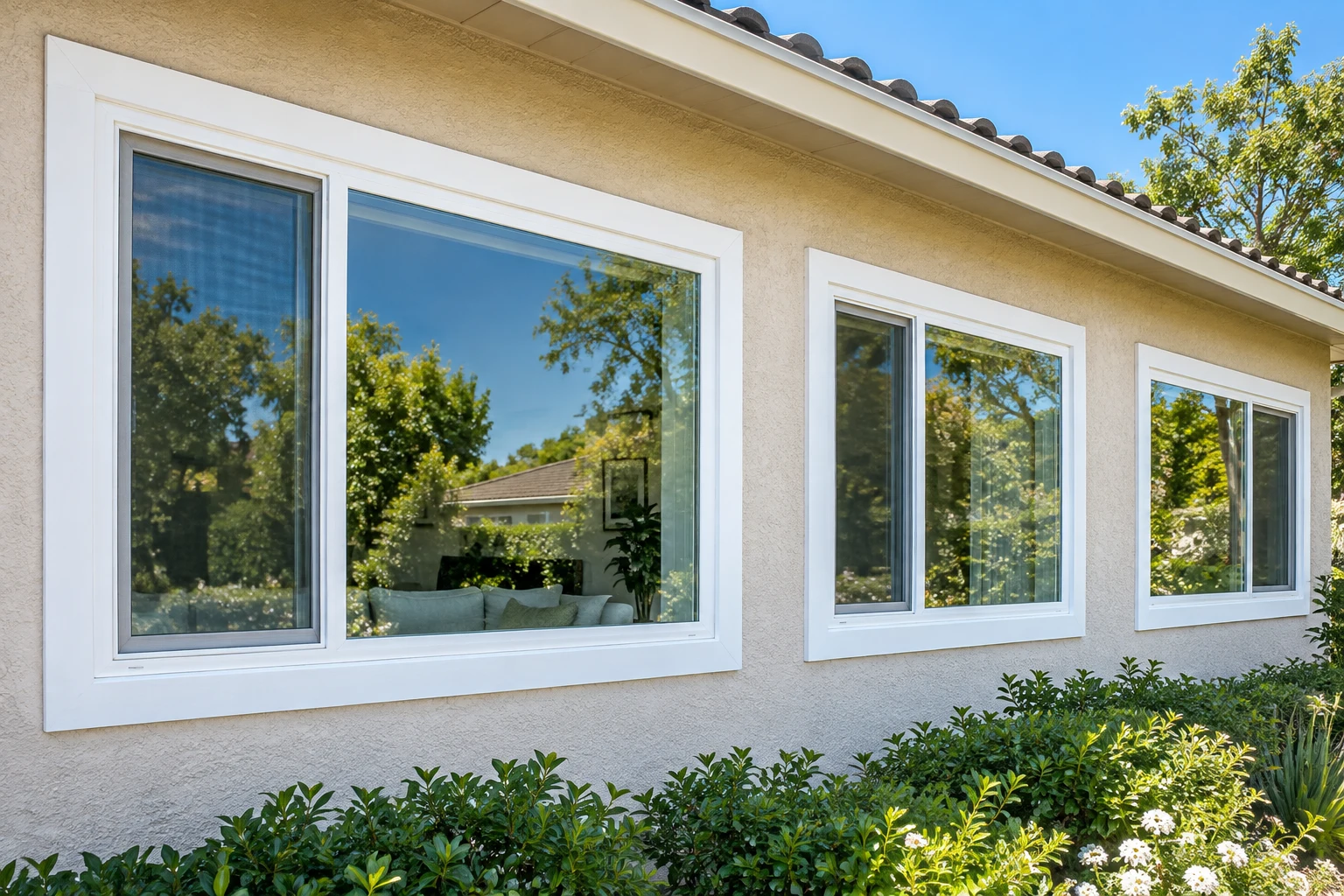
If your house in Ontario still feels hot even while the AC is running, the problem is usually not the air conditioner—it is heat entering faster than your system can remove it. In many cases, that heat is coming directly through your windows.
At Total Home Windows, we work with homeowners across Ontario who are dealing with this exact issue. The AC runs all day, energy bills climb, and certain rooms still feel warm or uneven. What we consistently find is that inefficient or aging windows are allowing heat into the home, making it difficult to stay comfortable.
In a hot inland city like Ontario, this becomes a daily problem. Strong sun exposure, long summers, and older housing all contribute to indoor heat buildup. If you want a full breakdown of how window performance affects your home, start with the Ontario window replacement service page.
Why Your House Still Feels Hot With the AC On
When your home stays hot even with air conditioning, it means your AC is losing the battle against incoming heat. The system is working, but heat is constantly entering the home and replacing the cool air.
Short answer: Your house feels hot because heat is entering faster than your AC can remove it.
In homes across Ontario, we often see this happen due to a combination of factors:
- Older windows that allow heat to pass through the glass
- Direct sunlight hitting large window areas
- Poor sealing around window frames
- Outdated materials like single-pane glass or aluminum frames
- Rooms with heavy afternoon sun exposure
While insulation and ductwork can play a role, windows are often the largest and most overlooked source of heat gain.
Clear answer: Even a properly working AC cannot keep up if your windows are constantly bringing heat inside.
Ontario’s Climate Makes Window Heat Worse
Ontario’s inland location means higher temperatures and more intense sun exposure compared to coastal areas. Summer temperatures regularly climb into the 90s and above, and the sun hits homes directly for long periods throughout the day.
This creates a consistent heat load on your home—especially through glass.
A common issue we find is that west-facing and south-facing windows become major heat entry points in the afternoon. These areas can make living rooms, bedrooms, and upstairs spaces noticeably warmer than the rest of the house.
Simple answer: The stronger the sun exposure, the more heat your windows allow inside.
Older neighborhoods in Ontario make this worse. Many homes were built decades ago with materials that were not designed for modern energy efficiency. That includes single-pane glass, weak seals, and frames that transfer heat directly indoors.
If your home has never had a window upgrade, there is a high likelihood your windows are contributing to the problem.
How Windows Actually Make Your House Hot
Most homeowners assume heat comes through walls or attics, but windows are one of the biggest sources of heat gain in any home.
There are three main ways heat enters through windows:
- Solar heat gain: Sunlight passes through the glass and turns into heat inside your home
- Conduction: Heat transfers directly through the glass and frame materials
- Air leakage: Hot air enters through gaps, cracks, or worn seals
In homes across Ontario, we often see all three happening at once—especially in older window systems.
Direct answer: If your windows are inefficient, they act like heat collectors, bringing warmth into your home all day long.
This is why rooms near windows often feel hotter than the rest of the house. It is not random—it is localized heat entering through specific openings.
Signs Your Windows Are Causing the Heat Problem
If you are not sure whether your windows are the issue, there are clear signs to look for.
- Rooms feel hotter near windows than elsewhere
- The glass feels warm or hot during the day
- Your AC runs constantly but does not reach the set temperature
- You notice drafts or air movement near window edges
- Energy bills increase during summer months
A common issue we find is that homeowners focus on the AC unit itself, replacing or repairing it, only to see little improvement. The real issue remains—the home is not holding cool air because heat keeps entering.
Simple answer: If your AC runs all day and the house still feels warm, your windows are likely part of the problem.
For a deeper breakdown of this issue, visit our page on why homes stay hot even with AC in Ontario.
Why Older Windows Perform So Poorly
Not all windows are built to handle Southern California heat. Older systems, especially those installed 20–40 years ago, were not designed with today’s energy standards in mind.
Common problems with older windows include:
- Single-pane glass with no insulation
- Aluminum frames that transfer heat easily
- Worn seals that allow air leaks
- No coatings to block solar heat
In Ontario, where sunlight is strong and consistent, these issues compound quickly. Heat enters early in the day and continues building into the afternoon and evening.
Clear answer: Older windows do little to stop heat, so your AC has to work harder to compensate.
Even if your windows “look fine,” they may still be underperforming. Window efficiency is not about appearance—it is about how well the system blocks heat and seals the home.
The Role of Low-E Glass in Blocking Heat
Modern windows are designed to reduce heat transfer, and one of the most important features is Low-E glass. This technology reflects heat away from your home while still allowing natural light inside.
In practical terms, that means:
- Less heat entering through the glass
- More stable indoor temperatures
- Reduced strain on your AC system
Direct answer: Low-E glass helps keep your home cooler by blocking a significant portion of solar heat before it enters.
This is especially important in Ontario homes with large windows or direct sun exposure. Without heat-blocking glass, those areas will continue to generate indoor heat no matter how long your AC runs.
If you want to understand how this works in detail, explore Low-E windows in Ontario.
Why Your AC Feels Like It Can’t Keep Up
Many homeowners assume their AC system is undersized or failing. While that can happen, it is often not the root issue.
Your AC is designed to maintain temperature—not fight constant heat intrusion.
When windows allow heat in all day:
- The AC runs longer cycles
- Rooms cool unevenly
- The system struggles during peak afternoon hours
In homes across Ontario, we often see AC systems that are technically working correctly but are overwhelmed by poor window performance.
Simple answer: Your AC is not failing—your home is not holding the cool air.
This is why replacing or upgrading the AC alone often does not solve the problem. Unless you reduce the heat entering the home, the issue continues.
Why Measuring Heat Matters Before Replacing Anything
At Total Home Windows, we approach this differently. We do not guess which windows are the problem—we measure and show you exactly where heat is entering your home.
This step matters because not every window performs the same. Some areas of your home may be responsible for most of the heat gain, while others are less significant.
A common issue we find is that homeowners are ready to replace everything without knowing what is actually causing the discomfort.
Clear answer: The right solution starts with identifying where heat is coming from—not making assumptions.
By measuring heat at the window level, we can explain:
- Which windows are underperforming
- How much heat is entering through specific areas
- What changes will have the biggest impact
This gives you real clarity before making any decisions about window replacement in Ontario.
Why Your AC Alone May Not Fix the Problem
Air conditioning is designed to cool the air inside your home, but it cannot stop heat from entering. If your windows are allowing constant heat gain, your AC is forced into a cycle it was never designed to handle.
Direct answer: Your AC cannot keep your home comfortable if heat is continuously entering through inefficient windows.
In Ontario homes, we regularly see systems running for hours without reaching the set temperature. The equipment is working—but it is being overpowered by heat coming through glass, frames, and gaps.
At Total Home Windows, this is one of the most common situations we diagnose. Homeowners assume they need a bigger or newer AC unit, but when we measure the windows, the source of the problem becomes clear.
How to Tell if Windows Are the Main Issue
Not every hot home is caused by windows, but there are clear patterns when they are the main contributor.
Pay attention to where the discomfort is happening. Heat problems caused by windows are usually localized and repeatable.
- Afternoon heat spikes in specific rooms
- Hot zones near large windows or sliding doors
- Second floors staying warmer than downstairs
- Rooms cooling down only after sunset
Direct answer: If certain rooms heat up at the same time every day, your windows are likely driving the problem.
One thing we often observe in Ontario homes is that west-facing rooms become nearly unusable in the late afternoon. Even with the AC running, those areas hold heat well into the evening because the glass has been absorbing and transferring heat for hours.
Performance Differences: Old vs Modern Windows
The difference between older windows and modern systems is not subtle—it directly affects how your home feels every day.
Older windows:
- Allow high levels of solar heat gain
- Transfer outdoor heat through glass and frames
- Leak air through worn seals
- Provide little insulation value
Modern energy-efficient windows:
- Reduce solar heat entering the home
- Use insulated dual-pane systems
- Include coatings that reflect heat
- Create a tighter seal to prevent air leaks
Clear answer: The right window system reduces how much heat enters your home in the first place, instead of relying on your AC to remove it later.
This is especially important in Ontario’s climate, where the sun is intense and consistent. Without heat control at the window level, indoor temperatures will continue to rise no matter how long your AC runs.
What Actually Helps Reduce Heat in Your Home
When the issue is window-related, the solution is not just “new windows”—it is choosing the right configuration designed for heat control.
The most effective upgrades focus on reducing solar heat gain and improving insulation.
- Low-E glass coatings to reflect heat
- Dual-pane insulated glass to slow heat transfer
- Proper sealing and installation to eliminate air leaks
- Frame materials that resist heat conduction
If you are comparing options, the best place to start is understanding which windows block heat most effectively in Ontario.
Not all windows perform the same. Two homes can install “new windows” and get completely different results depending on the glass type and installation quality.
Real-World Expectations After Window Replacement
Replacing windows will not turn your home into a refrigerator—but it will significantly reduce the heat load your AC has to fight.
Here is what homeowners in Ontario typically notice after upgrading:
- Rooms stay more consistent throughout the day
- Less temperature difference between rooms
- Reduced “hot spots” near windows
- AC cycles become shorter and more stable
Direct answer: You should expect improved comfort and reduced heat buildup, not instant cold air without AC.
One common observation we hear after installations is that homeowners no longer avoid certain rooms during the afternoon. Spaces that were previously too hot become usable again.
Another pattern we see is that thermostats reach the set temperature faster, and the system does not feel like it is constantly running.
Cost vs Comfort: What You Are Really Paying For
Window replacement is often viewed purely as a cost, but in this situation, it is solving a daily comfort problem.
The price depends on several factors:
- Number of windows
- Window sizes and configurations
- Material choice (vinyl vs fiberglass)
- Glass performance (standard vs Low-E upgrades)
- Installation complexity
In Ontario, most homeowners fall within a typical range for full-home replacement, but the real value comes from reducing long-term energy strain and improving livability.
Clear answer: You are not just paying for windows—you are reducing the amount of heat your home has to deal with every day.
When windows are the root cause, no amount of AC adjustment will deliver the same level of improvement.
Should You Replace All Windows or Just Problem Areas?
This depends on how widespread the issue is.
If only a few windows are causing problems—such as large west-facing openings—you may see improvement by targeting those areas first.
However, in many Ontario homes, especially older ones, multiple windows contribute to the overall heat load.
- Partial replacement: Good for isolated heat խնդիր areas
- Full replacement: Better for consistent comfort throughout the home
At Total Home Windows, we measure each area so you can make that decision based on actual performance, not guesswork.
Why Installation Quality Matters More Than Most People Think
Even the best window will underperform if it is not installed correctly.
Poor installation can lead to:
- Air leaks around the frame
- Gaps that allow heat intrusion
- Reduced insulation performance
This is another area where we see issues in Ontario homes—windows that were replaced before, but still allow heat in due to improper sealing.
Direct answer: A high-performance window only works if it is properly installed and sealed.
That is why we focus on both the product and the installation process, ensuring the system performs as intended.
When It Makes Sense to Take Action
If your home is consistently uncomfortable during warm months, and your AC is running longer without results, it is time to look at the source of the heat.
You should consider taking the next step if:
- Your AC runs constantly but struggles to keep up
- Multiple rooms feel hot or uneven
- Your windows are older or original to the home
- Your energy bills continue to rise each summer
Ignoring the issue usually leads to higher energy costs and ongoing discomfort.
At Total Home Windows, we help you understand exactly what is happening inside your home before recommending any solution. No guessing—just measurable proof.
Related Window Answers in Ontario
- How much does window replacement cost in Ontario?
- What are the most energy-efficient windows for Ontario homes?
- Dual pane vs triple pane windows: what works best in Southern California?
- How long does window installation take?
Frequently Asked Questions About Why Is My House Hot Even With AC in Ontario
Will replacing windows really make my house cooler?
Yes—if your current windows are allowing heat in. Replacing them with heat-blocking, properly sealed systems reduces how much heat enters your home, making it easier for your AC to maintain a comfortable temperature.
How do I know if my windows are the main problem?
If rooms feel hotter near windows, heat builds in the afternoon, and your AC runs constantly, your windows are likely contributing. The most accurate way to confirm is to measure heat at the window level.
Is it cheaper to upgrade my AC instead?
Upgrading your AC without fixing heat entry often leads to the same problem. A larger system may run less frequently, but it still cannot stop heat from entering through inefficient windows.
How long does window replacement take?
Most installations are completed in one to two days depending on the number of windows. The process is straightforward when properly planned and measured in advance.
Do I need to replace every window in my home?
Not always. Some homes benefit from replacing only the most affected areas, while others need a full upgrade for consistent results. This depends on how widespread the heat issue is.
Get Your Free Window Replacement Estimate In Ontario
If your house in Ontario still feels hot even with the AC running, the next step is to find out exactly where that heat is coming from.
Total Home Windows will measure your windows, show you how much heat is entering, and explain what is actually causing the discomfort in your home.
No pressure. No guesswork. Just clear answers.
If you are ready to fix the problem at the source, Total Home Windows is here to help you make your home comfortable again.
Request Free Estimate
Related Content
Best Windows for Homes in Ontario
Should I Replace All Windows At Once in Ontario
What Type Of Windows Are Best For Hot Climates in Ontario
Milgard Vs Andersen Windows in Ontario
Vinyl vs Fiberglass Windows in Ontario
Best Window Brands in Ontario
Helpful Resources for Homeowners
Whether you’re researching energy-efficient windows, looking for ways to reduce heat and noise, or comparing replacement options for an older home, these resources cover some of the most common questions homeowners ask. Browse the articles below for practical guidance and expert insights on choosing the right windows for your home.