
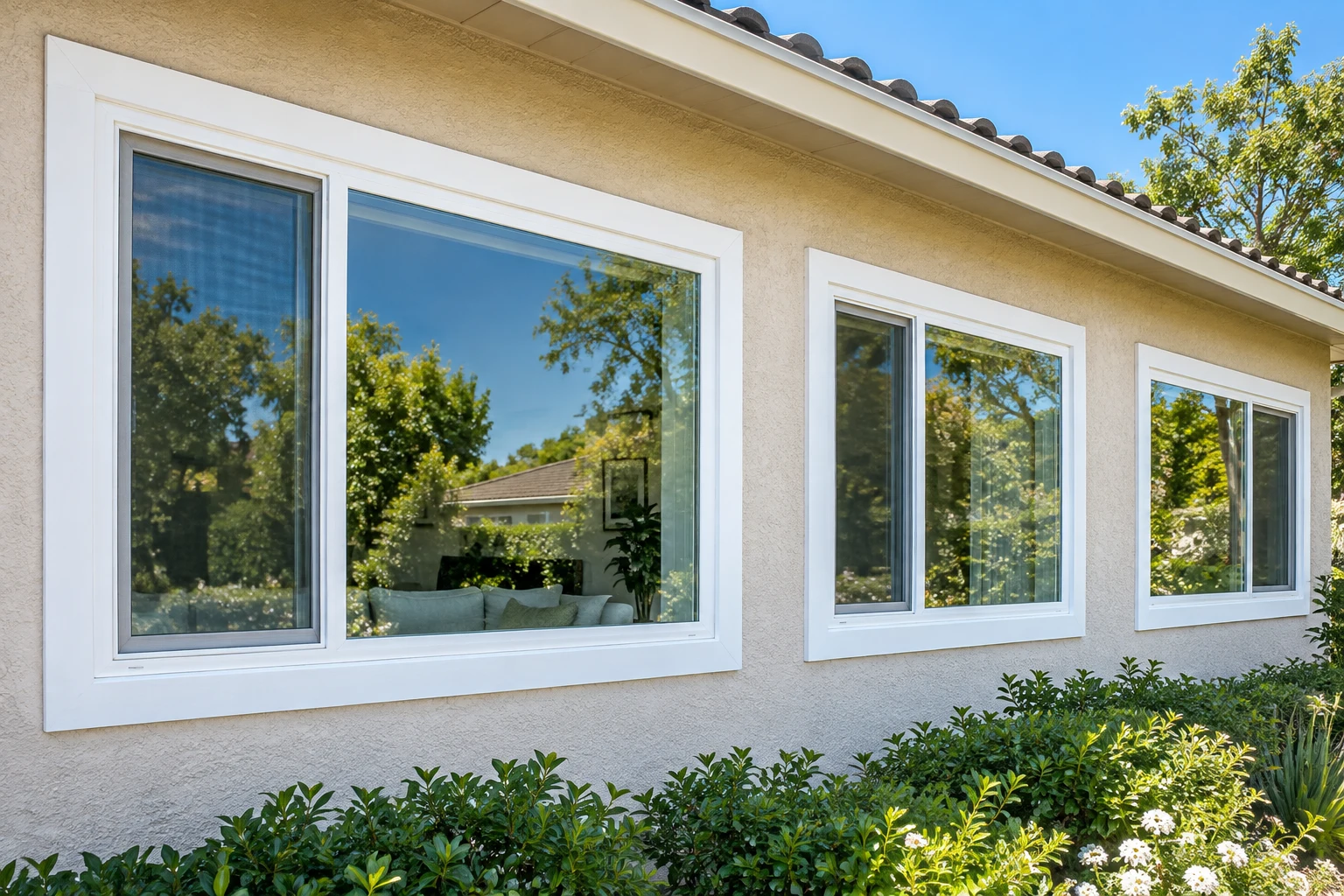
Low-E windows are windows with a thin, invisible coating that reflects heat while still letting natural light pass through. In Ontario homes, that means less heat entering through the glass and more consistent indoor temperatures.
At Total Home Windows, we use Low-E glass as a core solution because most homeowners dealing with hot rooms and high energy bills are actually experiencing heat transfer through their windows—not an AC problem.
If your house feels hot even when the air conditioning is running, the issue is often right at the glass. In many homes across Ontario, especially those with older windows, heat builds up quickly in rooms with direct sun exposure.
If you’re starting to evaluate your options, it helps to understand how this fits into the full picture of window replacement in Ontario and why glass performance matters more than most people realize.
What “Low-E” Actually Means
Low-E stands for low emissivity. It refers to a microscopic coating applied to the window glass that controls how heat moves in and out of your home.
In simple terms, Low-E glass reflects heat instead of allowing it to pass through freely.
That reflection is what makes the difference in a hot climate like Ontario. Instead of the sun heating up your interior spaces, a portion of that heat is redirected away before it enters your home.
Direct answer: Low-E windows reduce heat gain by reflecting solar energy at the glass level, helping keep indoor temperatures cooler.
Why Low-E Windows Matter in Ontario Homes
Ontario experiences long periods of intense sun and high summer temperatures. Combined with suburban layouts and large window openings, that creates a consistent heat load throughout the day.
A common issue we find in homes across Ontario is that certain rooms—especially those facing west or south—heat up dramatically by the afternoon. The AC runs longer, but the temperature still feels uneven.
This happens because standard glass allows solar heat to pass directly into the home.
Direct answer: In Ontario, Low-E windows matter because they reduce the amount of solar heat entering your home, which directly impacts comfort and energy use.
Many homes in the area were built with older dual-pane or even single-pane windows that lack modern coatings. These windows may look fine but perform poorly when it comes to heat control.
How Low-E Windows Reduce Heat
Low-E coatings work by targeting solar heat gain—the primary source of indoor overheating in Southern California homes.
When sunlight hits standard glass, much of that energy passes through and becomes trapped inside as heat. Low-E glass interrupts that process.
- Reflects a portion of incoming solar heat
- Reduces heat buildup near windows
- Helps maintain more stable indoor temperatures
- Decreases the workload on your AC system
In homes across Ontario, we often measure significant temperature differences between windows with and without Low-E coatings—especially during peak afternoon hours.
Direct answer: Low-E windows reduce heat by reflecting solar radiation before it enters your home, instead of trying to cool it after the fact.
This is why upgrading windows often has a bigger impact than upgrading HVAC equipment.
Low-E Windows vs Standard Glass
The difference between Low-E glass and standard clear glass becomes obvious during hot weather.
Standard glass allows heat to pass through with minimal resistance. That leads to:
- Hot spots near windows
- Uneven temperatures from room to room
- Increased AC runtime
- Higher energy bills
Low-E glass changes that behavior by actively controlling heat transfer.
Direct answer: Compared to standard glass, Low-E windows significantly reduce heat gain, improving comfort and lowering cooling demand.
If your home feels uncomfortable despite constant AC use, it’s worth understanding why homes stay hot even with AC in Ontario, because windows are often the root cause.
Not All Low-E Windows Perform the Same
One of the biggest misconceptions is that all Low-E windows are equal. They are not.
Different coatings are designed for different climates. Some are built to retain heat (for colder regions), while others are designed to block heat (for hot climates like Ontario).
A common issue we find is homeowners replacing windows but still experiencing heat problems because the wrong type of Low-E glass was used.
Direct answer: The effectiveness of Low-E windows depends on the type of coating and how well it is matched to Ontario’s hot climate.
Other factors that impact performance include:
- Solar Heat Gain Coefficient (SHGC)
- Number of panes (dual vs triple)
- Gas fills like argon
- Frame material and installation quality
This is why simply choosing “Low-E” is not enough. The full window system has to be designed for heat control.
If you want to go deeper into heat-blocking performance, see which options are considered the best windows to block heat in Ontario.
How Low-E Windows Improve Energy Efficiency
Energy efficiency isn’t just about insulation—it’s about controlling how heat enters your home in the first place.
Low-E windows directly reduce the amount of heat your AC system has to remove.
In homes across Ontario, we often see air conditioning systems running longer simply because heat is constantly entering through the glass.
Direct answer: Low-E windows improve energy efficiency by reducing heat gain, which lowers cooling demand and energy usage.
This leads to:
- Lower monthly energy bills
- Less strain on HVAC systems
- More consistent indoor temperatures
For a broader look at performance improvements, you can explore energy-efficient window options in Ontario and how they work together as a system.
How We Evaluate Low-E Performance in Your Home
At Total Home Windows, we don’t recommend Low-E windows based on assumptions. We measure what’s actually happening inside your home.
That includes identifying where heat is entering and how your current windows are performing under real conditions.
A common issue we find is that homeowners are told they “need new windows” without ever seeing proof of the problem.
We take a different approach:
- Measure heat at the window level
- Identify which windows are causing the most heat gain
- Show you the difference in real time
- Recommend solutions based on actual data
Direct answer: The right Low-E window solution depends on measured heat gain—not guesswork.
This is especially important in Ontario, where sun exposure varies by home orientation, window size, and surrounding structures.
Without measurement, it’s easy to choose the wrong solution and still deal with the same comfort issues.
Can Low-E Windows Reduce Energy Bills in Ontario?
Low-E windows can reduce energy usage, but the impact depends on how much heat your current windows are letting in.
In Ontario, the biggest issue is not heat escaping—it’s heat entering. That means the main benefit of Low-E glass is reducing how hard your AC has to work throughout the day.
Direct answer: Low-E windows lower energy bills by reducing solar heat gain, which decreases how often and how long your AC system runs.
In homes we evaluate across Ontario, it’s common to see AC systems running continuously in the afternoon, especially in rooms with large windows. After upgrading to properly selected Low-E glass, those same rooms maintain more stable temperatures with less cooling demand.
This is why the focus should not be on a specific percentage of savings, but on solving the root problem—heat entering through the glass.
Do Low-E Windows Fix Rooms That Are Always Hot?
Yes—if the heat is coming through the windows, which it usually is.
Some rooms in Ontario homes consistently feel hotter than others. This is especially true for:
- West-facing living rooms
- Upstairs bedrooms
- Rooms with large or older windows
We regularly measure these spaces and find a clear pattern: the temperature spike happens near the glass first, then spreads into the room.
Direct answer: Low-E windows reduce hot spots by blocking a significant portion of solar heat before it enters the room.
One thing we often see during in-home evaluations is a 10–15 degree difference between the surface temperature of standard glass and upgraded Low-E glass under the same sunlight. That difference directly affects how the room feels.
If the heat source isn’t addressed at the window, no amount of airflow or thermostat adjustment will fully fix the problem.
What to Expect After Installing Low-E Windows
Most homeowners expect instant energy savings. What they actually notice first is comfort.
After installation, the changes are usually very clear:
- Rooms heat up more slowly during the day
- Temperatures feel more even throughout the home
- The AC cycles more normally instead of running constantly
- Less glare and reduced UV exposure on floors and furniture
Direct answer: The primary result of Low-E windows is improved indoor comfort, with energy savings following as a secondary benefit.
In many Ontario homes, the biggest improvement happens in the late afternoon—when the sun is strongest and older windows perform the worst.
It’s also important to understand what Low-E windows do not do. They will not make your home cold on their own. They simply reduce how much heat enters, allowing your existing AC system to work more effectively.
Cost vs Performance: What You’re Really Paying For
Low-E glass is typically included in modern energy-efficient window systems, but not all options are built for the same level of performance.
The cost difference usually comes down to:
- The type of Low-E coating used
- Glass configuration (dual-pane vs upgraded systems)
- Frame material and sealing performance
- Installation quality
In Ontario, choosing the cheapest option often leads to the same heat problems continuing after installation.
We’ve seen cases where homeowners replaced windows but still experienced overheating because the glass had a higher solar heat gain coefficient (SHGC) than what the home actually needed.
Direct answer: The value of Low-E windows comes from selecting the right performance specifications for heat control—not just choosing a lower price point.
If you’re comparing options, it helps to understand how performance and pricing connect. You can review what impacts window replacement cost in Ontario before making a decision.
Are Low-E Windows Enough on Their Own?
Low-E glass is a major improvement, but it works best as part of a complete window system.
That includes:
- A properly sealed frame
- Correct sizing and fit
- Quality installation
- Glass designed for your home’s sun exposure
At Total Home Windows, we regularly find that poor installation or air gaps cancel out the benefits of even high-end glass.
This is why we focus on measuring and verifying performance before making recommendations.
In real-world conditions, a properly installed mid-range Low-E window often outperforms a high-end product that was installed incorrectly.
When Low-E Windows Make the Biggest Difference
Not every home sees the same level of improvement, but certain conditions make the impact much more noticeable.
Low-E windows tend to deliver the strongest results in:
- Homes with large window openings
- Older homes with aluminum or single-pane windows
- Rooms with direct afternoon sun
- Homes where the AC runs constantly but comfort is still inconsistent
In Ontario, these conditions are extremely common.
One pattern we consistently see is homeowners assuming their AC system is undersized, when the real issue is excessive heat entering through the windows.
Once that heat is reduced, the existing system often performs much better without any upgrades.
Making the Right Decision for Your Home
Choosing Low-E windows should not be based on general recommendations. It should be based on what is actually happening in your home.
At Total Home Windows, the process starts with identifying where heat is entering and how your current windows are performing.
From there, we match the right glass type, configuration, and installation method to your specific conditions.
This approach eliminates guesswork and helps avoid the common issue of replacing windows without solving the comfort problem.
If your home feels hot, uneven, or inefficient, the next step is not choosing a product—it’s measuring the problem.
Frequently Asked Questions About Low-E Windows in Ontario
Do Low-E windows cost more than standard windows?
Yes, but the difference is typically built into modern energy-efficient window systems. The real cost difference comes from performance level, not just the presence of a Low-E coating.
Will Low-E windows make my home noticeably cooler?
They reduce heat entering the home, which helps maintain more stable indoor temperatures. Most homeowners notice less overheating rather than a dramatic drop in temperature.
How long does it take to install Low-E windows?
Most projects are completed in one to two days depending on the number of windows and installation type. Proper installation is critical for performance.
Are Low-E windows worth it in Ontario’s climate?
Yes. Ontario’s heat and sun exposure make Low-E coatings one of the most effective ways to reduce indoor heat gain and improve comfort.
Can I just replace a few windows instead of all of them?
Yes, but results depend on which windows are causing the most heat gain. This is why measuring and identifying problem areas first is important.
Related Window Answers in Ontario
- Window replacement services in Ontario
- Dual-pane vs triple-pane windows in Ontario
- How long window installation takes in Ontario
- Window upgrade ROI in Ontario homes
Get Your Free Window Replacement Estimate In Ontario
If your home feels hot, your AC runs constantly, or certain rooms never cool down, your windows are likely the source of the problem.
Total Home Windows will show you exactly where heat is entering your home and how your current windows are performing—so you can make a decision based on real data, not assumptions.
No pressure. Just clear answers.
contact page to schedule your free in-home evaluation.
Request Free Estimate
Related Content
Best Windows for Homes in Ontario
Should I Replace All Windows At Once in Ontario
What Type Of Windows Are Best For Hot Climates in Ontario
Milgard Vs Andersen Windows in Ontario
Vinyl vs Fiberglass Windows in Ontario
Best Window Brands in Ontario
Helpful Resources for Homeowners
Whether you’re researching energy-efficient windows, looking for ways to reduce heat and noise, or comparing replacement options for an older home, these resources cover some of the most common questions homeowners ask. Browse the articles below for practical guidance and expert insights on choosing the right windows for your home.