
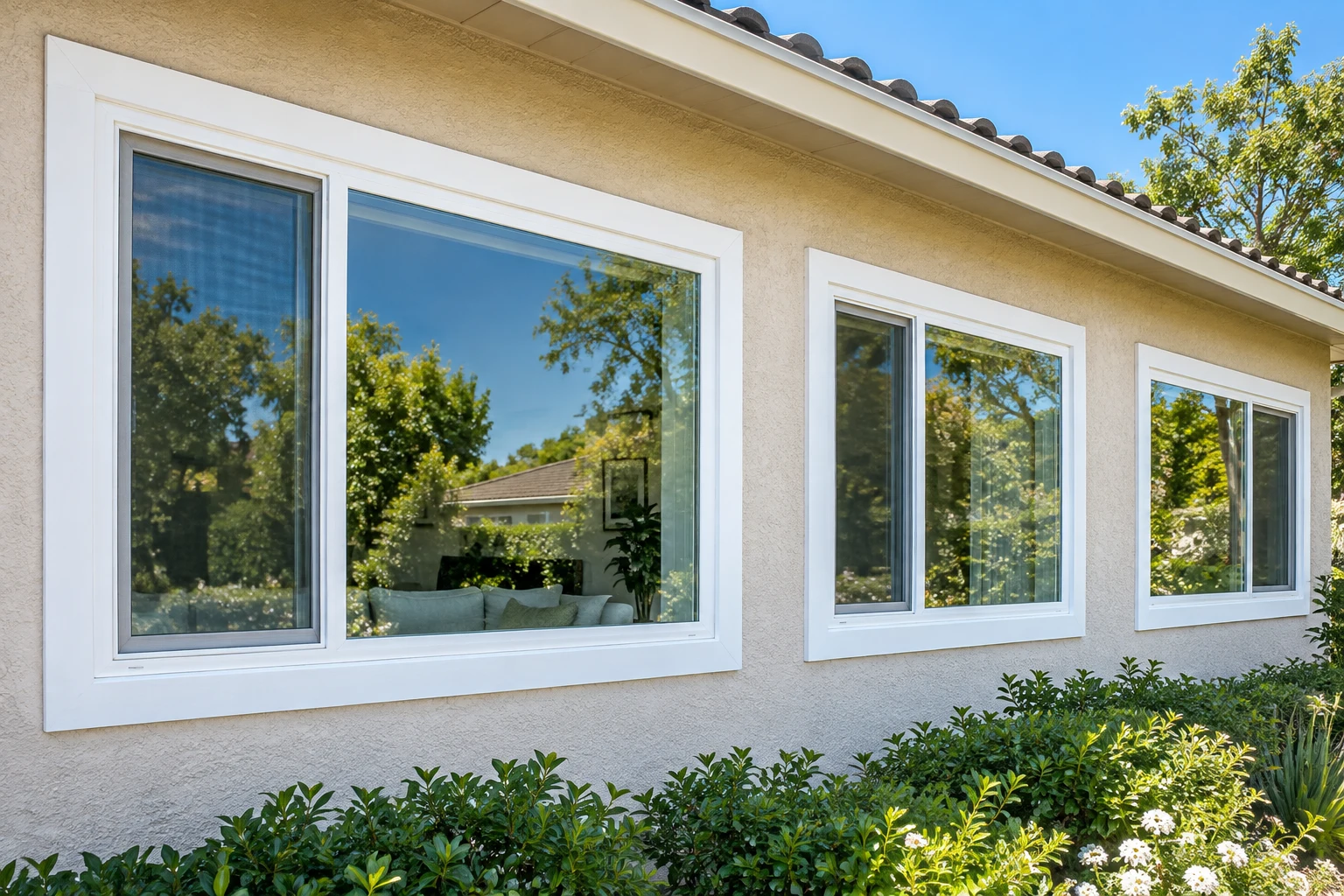
Milgard vs Andersen windows is not about which brand is “better.” In Ontario, the right choice comes down to which window actually reduces heat entering your home and improves comfort day to day. At Total Home Windows, we see this firsthand by measuring how different windows perform inside real homes—not just comparing brand names.
If your house feels hot even with the AC running, the issue is often your windows—not your HVAC system. In Ontario, strong sun exposure, inland heat, and older housing stock make window performance a major factor in indoor comfort and energy use.
For a broader look at how this applies locally, visit our main Ontario window replacement page.
Milgard vs Andersen: What Actually Matters
Both Milgard and Andersen offer quality windows. The difference is not simply brand reputation—it is how the window performs in your specific home.
Milgard is widely used across California and offers vinyl, fiberglass, and aluminum options. Andersen is a national brand known for its Fibrex composite material and multiple product lines.
Here is the straightforward answer: either brand can work well—but only if the right glass, frame, and installation match your home’s heat conditions.
A common issue we find in Ontario homes is that homeowners choose a brand first, then try to solve comfort problems after. That order is backwards. The problem to solve is heat—not the label on the window.
Why This Comparison Matters in Ontario Homes
Ontario is not a mild coastal climate. Summers regularly push into the 90s and above, and homes absorb heat throughout the day—especially those with west- and south-facing windows.
Many neighborhoods in Ontario were built decades ago, often with older aluminum or early dual-pane windows that no longer perform well. Seals degrade, frames transfer heat, and glass allows solar gain to pass straight inside.
In homes across Ontario, we often see the same pattern: rooms that heat up in the afternoon, uneven temperatures between floors, and AC systems running constantly without fixing the problem.
The clear answer is this: if heat is entering through the glass, no AC system can fully compensate for it.
If this sounds familiar, review our breakdown of why homes stay hot even with AC in Ontario.
Milgard Windows: Where They Fit
Milgard is a practical option for many Southern California homeowners because it offers multiple material types within one brand.
Milgard windows typically include:
- Vinyl: Energy-efficient, cost-effective, and low maintenance
- Fiberglass: Stronger and more stable for long-term durability
- Aluminum: Slim profiles, but less effective at blocking heat in older designs
The simple answer: Milgard works well when configured correctly for heat control, especially with vinyl or fiberglass options and the right glass package.
However, not all Milgard windows perform the same. A base model with standard glass will not solve heat problems in Ontario’s climate. The performance comes from the combination of materials, coatings, and installation—not just the brand name.
A common issue we find is homeowners replacing old windows with new ones that look better but still allow too much heat in. That happens when glass performance is not prioritized.
Andersen Windows: Where They Fit
Andersen is often considered for its brand recognition and composite material offerings, particularly its Fibrex-based 100 Series.
Andersen windows may appeal to homeowners who want:
- Composite material instead of vinyl
- A wide range of styles and configurations
- A nationally recognized brand
The direct answer: Andersen can be a strong option, especially for homeowners interested in composite frames—but it still must be matched with the right glass and installed properly to address heat.
In Ontario homes, the difference between Andersen and Milgard is often less important than whether the window blocks solar heat effectively. Without that, the brand choice alone will not fix comfort issues.
Material Differences: What Impacts Heat the Most
When comparing Milgard vs Andersen, material is one of the first things homeowners look at—but it is not the biggest factor in heat control.
Here is the clear breakdown:
- Vinyl (Milgard): Strong insulation, cost-effective, performs well in hot climates
- Fiberglass (Milgard): Durable and stable, good for long-term performance
- Composite (Andersen): Strong and low maintenance, similar performance category to fiberglass
- Aluminum (select Milgard lines): Conducts heat more easily, less ideal for inland heat unless thermally improved
The simple answer: vinyl, fiberglass, and composite can all perform well—if paired with the right glass.
That is the part most homeowners miss. Frame material plays a role, but glass determines how much solar heat enters your home.
Why Glass Performance Matters More Than Brand
If your goal is to make your home cooler, the most important feature is not Milgard or Andersen—it is the glass package.
Low-E coatings, solar heat gain coefficient (SHGC), and dual-pane configurations determine how much heat passes through the window.
In Ontario, this matters because direct sunlight can quickly raise indoor temperatures by several degrees—especially in rooms with large window openings.
The direct answer: a properly selected Low-E glass package can reduce heat gain significantly, regardless of brand.
If you want to understand this better, see how Low-E windows in Ontario are designed to block heat while still allowing natural light.
In homes across Ontario, we often measure significant temperature differences between older glass and upgraded Low-E systems. Homeowners feel that change immediately—not just on their energy bill, but in daily comfort.
Energy Efficiency in Ontario: Real-World Impact
Energy efficiency is often used as a selling point, but for Ontario homeowners, it translates into something very specific: less heat entering your home and less strain on your AC.
Both Milgard and Andersen offer energy-efficient options. The difference is how those options are configured and installed.
The clear answer: energy efficiency comes from the full system—glass, frame, and installation—not just the brand.
When windows are properly selected:
- Rooms stay more consistent in temperature
- AC cycles less frequently
- Hot spots near windows are reduced
- Energy bills become more predictable
But when windows are chosen based only on brand or appearance, those results often do not happen.
That is why many homeowners ultimately explore full window replacement in Ontario after realizing their current windows are the source of the problem—not the solution.
What Homeowners Often Get Wrong in This Comparison
Comparing Milgard vs Andersen is a good starting point—but it can lead homeowners in the wrong direction if they focus only on brand.
A common issue we find is this: homeowners spend weeks comparing brands online but never evaluate how their current windows are actually performing.
The simple answer: you cannot choose the right window without first identifying how heat is entering your home.
At Total Home Windows, we approach this differently. Instead of guessing, we measure heat at the window level and show you exactly where the problem is. Only then do we recommend whether a Milgard or Andersen product—or a specific configuration—makes sense for your home.
Because in Ontario, the goal is not to “upgrade windows.” The goal is to stop heat from entering your home in the first place.
Price Differences Between Milgard and Andersen in Ontario
One of the first things homeowners notice in this comparison is cost. Andersen windows typically come in at a higher price point, especially in composite and wood-clad lines, while Milgard offers more budget-friendly options—particularly in vinyl.
The direct answer: Milgard is usually more cost-effective upfront, while Andersen often carries a higher initial investment depending on the series.
But price alone does not determine performance. We have seen homeowners spend more on a premium brand and still deal with hot rooms because the glass package was not designed for Ontario’s heat.
What actually matters is whether the window reduces solar heat gain. A properly configured Milgard window can outperform a higher-priced Andersen unit if the glass is better suited for the home.
For a deeper breakdown of pricing factors, visit our guide to window replacement cost in Ontario.
Which Brand Performs Better in Real Ontario Conditions?
Ontario heat is direct, consistent, and intense—especially on west-facing walls. This is where window performance becomes obvious.
The clear answer: neither Milgard nor Andersen is automatically better for heat—performance depends on the glass and installation.
In homes we evaluate, the biggest temperature differences are not between brands. They are between:
- Old glass vs modern Low-E glass
- Poor installation vs properly sealed installation
- Standard configurations vs heat-reducing configurations
We regularly measure windows in the same home where one room is significantly hotter than another—simply due to sun exposure and glass performance.
An experience we see often: a homeowner replaces a few windows on the shaded side of the house and notices little improvement. The real issue remains on the sun-facing side, where heat continues to enter through older glass.
This is why brand comparison alone does not solve the problem.
Glass Packages: The Real Decision Point
If your goal is comfort, this is where the decision should be made.
The direct answer: the best window for Ontario is the one that blocks the most heat while maintaining natural light.
That means choosing:
- Low solar heat gain coefficient (SHGC)
- Low-E coatings designed for hot climates
- Dual-pane configurations optimized for insulation
Both Milgard and Andersen offer these options—but they are not always standard. You have to choose them intentionally.
If you want to see which configurations work best locally, review our guide to the best windows to block heat in Ontario.
In real homes, this is where the biggest difference is felt. Homeowners notice that rooms stay cooler longer, and the “heat spike” in the afternoon is reduced.
Installation Quality: The Overlooked Factor
Even the best window will underperform if it is not installed correctly.
The clear answer: installation has as much impact on performance as the window itself.
Gaps, poor sealing, or incorrect fitting allow heat and air to move around the window frame. That reduces efficiency and creates drafts.
In Ontario homes, especially older ones, we often find:
- Frames that are slightly out of square
- Gaps hidden behind trim
- Older installations that were never properly sealed
An experience we see regularly: homeowners assume their windows are “fine” because they are dual-pane—but once measured, we find significant heat coming through both the glass and the frame.
This is why Total Home Windows measures performance first. We show exactly where heat is entering before recommending any product.
Milgard vs Andersen: Long-Term Value
When deciding between these brands, long-term value matters more than initial cost.
Milgard often provides strong value for homeowners who want:
- Reliable performance
- Lower upfront cost
- Solid energy efficiency with the right configuration
Andersen may appeal to those who prioritize:
- Composite materials
- Specific design preferences
- Brand familiarity
The direct answer: long-term comfort and energy savings depend more on correct window selection than brand choice.
A well-configured window that reduces heat will:
- Lower cooling demand
- Improve room consistency
- Reduce wear on your HVAC system
A poorly chosen window—regardless of brand—will not.
Should You Replace All Windows or Just Some?
This is a common decision point when comparing options.
The clear answer: you do not always need to replace every window—but you do need to address the ones causing the most heat gain.
In Ontario homes, that is typically:
- West-facing windows
- Large glass openings
- Older aluminum or failing dual-pane units
However, partial replacement can create uneven performance. Some rooms improve while others remain uncomfortable.
This is why we evaluate the entire home—not just individual windows—to determine the best approach.
Milgard vs Andersen: Final Decision Guidance
If you are choosing between Milgard and Andersen, here is the most practical way to decide:
- Start with the problem: where is heat entering?
- Identify which windows are underperforming
- Select the right glass package for those areas
- Choose the brand that fits your budget and material preference
The direct answer: the right window is the one that solves your heat problem—not the one with the most recognizable name.
At Total Home Windows, we do not push one brand over another. We show you how your current windows are performing, explain your options, and recommend what actually works based on your home.
Related Window Answers in Ontario
- Dual pane vs triple pane windows in Ontario
- Vinyl vs fiberglass windows in Ontario
- How long window installation takes in Ontario
- Should you replace all windows in Ontario homes
Frequently Asked Questions About Milgard Vs Andersen Windows in Ontario
Which is more expensive: Milgard or Andersen?
Andersen is typically more expensive, especially in composite or wood-based product lines. Milgard offers more cost-effective options, particularly in vinyl. However, performance depends on configuration, not just price.
Which brand is better for blocking heat?
Both brands can block heat effectively if configured with the right Low-E glass and low SHGC ratings. The glass package matters more than the brand itself.
Do Andersen windows last longer than Milgard?
Both brands offer durable products. Lifespan depends on material choice, installation quality, and exposure conditions. Fiberglass and composite tend to last longer than basic vinyl, but all can perform well when properly installed.
Will new windows lower my energy bills?
Yes—if your current windows are allowing heat in. Properly selected windows reduce solar heat gain, which lowers the workload on your AC and improves overall efficiency.
How do I know which window is right for my home?
You need to evaluate how your current windows are performing. Measuring heat at the window level provides clear data, which helps determine the right combination of glass, frame, and installation.
Get Your Free Window Replacement Estimate In Ontario
If you are comparing Milgard vs Andersen, the next step is not choosing a brand—it is understanding what your home actually needs.
Total Home Windows will show you exactly where heat is entering, measure how your current windows are performing, and walk you through the options that will make a real difference.
No guesswork. No pressure. Just clear answers based on your home.
Call us at (310) 729-3013, email teamallstarconstruction@gmail.com, or request your estimate through our contact page.
If your home feels hot, your windows are likely the reason. Total Home Windows will show you why—and how to fix it.
Request Free Estimate
Related Content
Do Windows Help With Noise in Ontario
Should I Replace All Windows At Once in Ontario
What Type Of Windows Are Best For Hot Climates in Ontario
Vinyl vs Fiberglass Windows in Ontario
Best Window Brands in Ontario
Window Upgrade ROI in Ontario
Helpful Resources for Homeowners
Whether you’re researching energy-efficient windows, looking for ways to reduce heat and noise, or comparing replacement options for an older home, these resources cover some of the most common questions homeowners ask. Browse the articles below for practical guidance and expert insights on choosing the right windows for your home.