
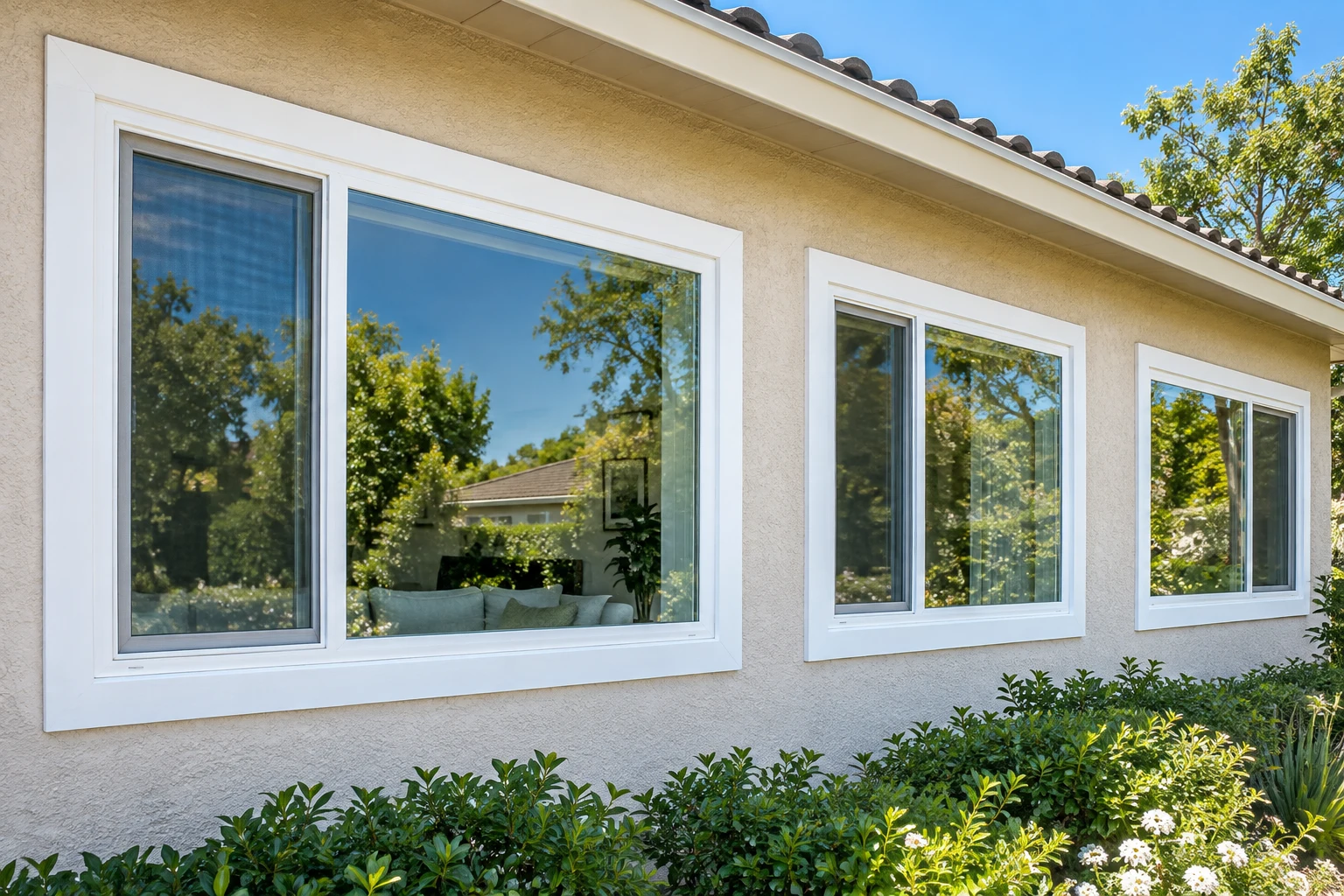
Vinyl and fiberglass windows can both improve your home—but in Ontario, the better choice comes down to how well they block heat, not just what they’re made of. At Total Home Windows, we see that most homeowners don’t actually have a “material problem”—they have a heat problem coming through the glass and frames.
If your house feels hot even with the AC running, the wrong window setup will keep that problem going no matter which material you choose. That’s why we measure heat at the window level and show you exactly where it’s entering before recommending vinyl or fiberglass.
If you’re still comparing your overall options, start with the full picture on our Ontario window replacement page to see how material choice fits into solving heat and comfort issues.
Why This Decision Matters in Ontario Homes
Ontario is not a mild climate. Inland heat, long sun exposure, and rising energy costs all put pressure on your windows to perform.
Summer temperatures regularly push into the 90s and beyond, and homes with west-facing or south-facing windows take on even more heat throughout the day. If your windows aren’t blocking that heat effectively, your AC is constantly trying to catch up.
Here’s the reality: your windows are often the largest source of heat entering your home.
In homes across Ontario, we often see rooms that are 5–10 degrees hotter than the rest of the house simply because of direct sun hitting older windows.
Quick answer: The vinyl vs fiberglass decision matters—but the bigger factor is whether your windows are actually stopping heat from entering in the first place.
What Are Vinyl Windows and How Do They Perform?
Vinyl windows are made from PVC and are one of the most common choices for residential window replacement. They’re widely used because they offer solid insulation and a lower upfront cost.
For many Ontario homeowners, vinyl windows are a practical option when the goal is improving comfort without overspending.
- Good insulation for everyday conditions
- Low maintenance (no painting or sealing)
- Resistant to moisture and corrosion
- More budget-friendly than fiberglass
But here’s where most people get it wrong.
Vinyl alone does not block heat. The glass package—especially Low-E coatings and solar control—is what determines how much heat actually enters your home.
A common issue we find is homeowners upgrading to vinyl windows but keeping the wrong glass configuration, which means the house still feels hot.
Quick answer: Vinyl windows can reduce heat—but only if they’re paired with the right glass and properly installed.
If you want a deeper breakdown of performance, visit our page on whether vinyl windows are a good fit in Ontario.
What Are Fiberglass Windows and When Do They Make Sense?
Fiberglass windows are built from reinforced materials designed for strength and stability. They are often considered a higher-end option because of their durability and structural performance.
They’re especially useful in homes with larger window openings or where long-term frame stability is a priority.
- Stronger, more rigid frames
- Handles temperature changes with less expansion
- Longer lifespan in demanding conditions
- Higher upfront cost
In Ontario’s heat, fiberglass frames hold up well—but again, the frame is not what stops most of the heat.
The key point: fiberglass may be stronger, but it does not automatically make your home cooler.
We often see homeowners invest in fiberglass expecting a major temperature difference, only to find the improvement is minimal because the glass wasn’t optimized.
Quick answer: Fiberglass windows are more durable—but they don’t significantly outperform vinyl in heat reduction without the right glass setup.
Vinyl vs Fiberglass: What Actually Affects Heat in Your Home
When comparing these two materials, most of the marketing focuses on frame differences. But in real Ontario homes, heat gain is driven by other factors.
1. Glass Package Matters More Than Frame Material
The biggest factor in window performance is the glass—not the frame.
Low-E coatings, solar heat gain coefficient (SHGC), and dual-pane construction all determine how much heat enters your home.
That’s why we guide homeowners toward solutions like Low-E windows designed for Ontario heat, regardless of whether they choose vinyl or fiberglass frames.
Quick answer: If your goal is to reduce heat, the glass package matters more than choosing vinyl vs fiberglass.
2. Installation Quality Changes Everything
You can install the best fiberglass window available—but if it’s poorly sealed or fitted into an old frame, heat will still enter your home.
On the other hand, a properly installed vinyl window with the right glass can dramatically improve comfort.
A common issue we find is retrofit installations that leave gaps, old frame issues, or air leakage points that continue to let heat in.
Quick answer: A well-installed vinyl window will outperform a poorly installed fiberglass window every time.
3. Sun Exposure in Ontario Homes
Not all windows in your home perform the same. The ones facing direct sun—especially west-facing—take on the most heat.
This is where material choice becomes secondary to heat control strategy.
In homes across Ontario, we often see that only a few key windows are responsible for most of the heat problem.
Quick answer: Targeting high-exposure windows with the right glass setup matters more than upgrading every window to fiberglass.
Cost Differences and What You’re Actually Paying For
Vinyl windows are typically more affordable, while fiberglass windows come at a higher upfront cost.
But focusing only on price misses the bigger issue.
What you’re really paying for should be performance—how much heat is reduced, how comfortable your home feels, and how much your AC workload decreases.
We walk homeowners through this step-by-step on our window replacement cost in Ontario page.
Quick answer: Vinyl usually costs less, fiberglass costs more—but the better value depends on how well the window actually solves your heat problem.
The Real Problem: Why Your Home Still Feels Hot
Most homeowners start by asking, “Should I choose vinyl or fiberglass?”
But the better question is:
“Why is my home still hot even with the AC running?”
In many cases, the answer has nothing to do with the material.
It comes down to:
- Outdated glass letting in solar heat
- Air leaks around old frames
- Poor installation from previous upgrades
- Windows not designed for Ontario’s climate
If that sounds familiar, you’re not alone. This is one of the most common issues we diagnose, which is why we break it down here: why homes in Ontario stay hot even with AC.
Quick answer: If your home is hot, the issue is usually heat entering through your windows—not the AC or the frame material.
How Total Home Windows Approaches the Decision
We don’t start by recommending vinyl or fiberglass.
We start by measuring what’s actually happening in your home.
Our process includes:
- Identifying which windows are allowing the most heat in
- Measuring temperature differences at the glass
- Pinpointing air leaks and weak spots
- Explaining what’s causing your comfort issues
From there, we recommend the right solution—sometimes vinyl, sometimes fiberglass, and often a combination depending on the home.
Quick answer: The right choice isn’t based on material alone—it’s based on measured heat performance inside your home.
When Vinyl Windows Make More Sense in Ontario Homes
Vinyl windows are often the right choice when the goal is to reduce heat and improve comfort without overcomplicating the project.
In many Ontario homes—especially those built with standard window sizes—vinyl performs well when paired with the correct glass and installed properly. The material itself insulates well, but the real benefit comes when it’s combined with a heat-blocking glass package.
Vinyl tends to make the most sense when:
- You want to lower indoor temperatures without a major increase in cost
- Your existing window frames are still structurally sound
- You’re dealing with consistent heat coming through multiple windows
- You want a clean, low-maintenance solution
Direct answer: For most Ontario homeowners dealing with heat and high energy bills, vinyl windows deliver the best balance of cost and performance—if the glass is configured correctly.
We regularly see homes where upgrading from old aluminum or single-pane windows to modern vinyl immediately reduces room temperatures—especially in sun-facing areas.
But again, the improvement comes from stopping heat at the glass level, not just changing the frame.
When Fiberglass Windows Are the Better Fit
Fiberglass windows come into play when the project demands more structural strength or long-term durability.
They’re not automatically “better” for heat—but they can be the right solution in specific situations.
Fiberglass may be worth considering if:
- You have large window openings that need stronger support
- Your home has significant sun exposure over long periods
- You’re planning a full-frame replacement
- You want maximum longevity and rigidity
In Ontario’s climate, fiberglass handles expansion and contraction well during extreme heat swings. That said, most standard residential homes won’t see a major comfort difference between fiberglass and vinyl alone.
Direct answer: Fiberglass is stronger and longer-lasting—but it does not significantly reduce more heat than vinyl without the right glass.
One thing we’ve observed in real projects: homeowners often expect fiberglass to “fix” a hot room, but the temperature barely changes because the original issue—solar heat gain through the glass—was never addressed.
Retrofit vs Full-Frame Installation: Why It Changes the Outcome
The installation method plays a bigger role than most people expect.
With retrofit installation, new windows are placed into the existing frame. This is common in Ontario and works well when the frame is still in good condition.
Full-frame installation removes everything down to the rough opening, allowing for a completely new system.
Here’s how that affects your decision:
- Vinyl is commonly used in retrofit applications and performs well when sealed properly
- Fiberglass is often used in full-frame projects where structural integrity matters more
- Either option can fail if installed into a compromised or poorly sealed opening
Direct answer: Installation quality has a bigger impact on performance than choosing vinyl vs fiberglass.
We’ve seen cases where homeowners upgraded to high-end fiberglass, but because the install didn’t address gaps or old framing issues, the house still felt hot.
On the other hand, properly installed vinyl with the right glass has completely changed how a home feels inside.
What Actually Lowers Your Home’s Temperature
If your goal is comfort, this is what matters most.
Heat enters your home primarily through the glass—not the frame.
That’s why we focus heavily on solutions like windows designed to block heat in Ontario, which are built around controlling solar gain.
The key performance factors include:
- Low-E coatings that reflect heat
- Solar Heat Gain Coefficient (SHGC) ratings
- Dual-pane insulation
- Proper sealing during installation
Material choice matters—but only after these are dialed in.
Direct answer: If your home is hot, changing the frame material alone will not fix it—controlling heat through the glass will.
Real-World Performance Expectations
Homeowners often expect dramatic results just from upgrading window material. The reality is more specific.
Here’s what typically happens in Ontario homes:
- Rooms with direct sun exposure improve the most
- Whole-home temperature balance becomes more consistent
- Your AC runs less frequently during peak heat
- Hot spots near windows are reduced significantly
In one common scenario, west-facing living rooms drop several degrees after replacing the windows with the right glass setup—regardless of whether vinyl or fiberglass is used.
Another pattern we see: homeowners who replace every window without identifying the main heat sources often spend more than necessary without solving the core issue.
This is why we measure first. It allows us to target the real problem areas instead of guessing.
Cost vs Performance: Making the Right Call
It’s easy to assume fiberglass is the “premium” choice and therefore better. But in Ontario, performance is what matters—not labels.
Vinyl windows typically cost less upfront and deliver strong results when configured properly.
Fiberglass costs more, and in the right applications, that extra investment makes sense.
But if both options use the same glass package and are installed correctly, the difference in indoor comfort is often minimal.
So the better question becomes:
Which option actually solves the heat problem in your home?
That answer comes from measurement—not assumptions.
Common Mistakes Homeowners Make
We see the same issues come up again and again in Ontario projects:
- Choosing fiberglass expecting a major temperature drop
- Focusing on frame material instead of glass performance
- Replacing all windows instead of targeting high-heat areas
- Ignoring installation quality
- Not verifying where heat is actually entering
These mistakes lead to higher costs and disappointing results.
The fix is simple: understand what’s happening in your home before making a decision.
Which Should You Choose?
For most Ontario homes:
- Vinyl is the practical, cost-effective solution that performs well when paired with the right glass
- Fiberglass is best for specific structural or long-term durability needs
But the real answer depends on your home—not a general rule.
At Total Home Windows, we don’t push one material over the other. We show you where heat is entering, explain what’s causing the issue, and recommend the setup that actually fixes it.
Sometimes that’s vinyl. Sometimes fiberglass. Sometimes a mix.
The goal is always the same: a cooler, more comfortable home.
Related Window Answers in Ontario
- Best windows for homes in Ontario
- Dual-pane vs triple-pane windows in Ontario
- How long window installation takes in Ontario
- Window upgrade ROI in Ontario
Frequently Asked Questions About Vinyl vs Fiberglass Windows in Ontario
Are fiberglass windows worth the extra cost in Ontario?
They can be, but only in specific situations like large openings or full-frame replacements. For most homes, vinyl delivers similar comfort improvements when paired with the right glass.
Do vinyl windows reduce heat as well as fiberglass?
Yes—when equipped with the correct Low-E glass and properly installed, vinyl windows can reduce heat just as effectively as fiberglass.
Which lasts longer: vinyl or fiberglass?
Fiberglass typically has a longer lifespan and is more rigid, but modern vinyl windows are still very durable and perform well for many years in Ontario conditions.
Will new windows lower my energy bill?
If your current windows are letting in heat, upgrading to properly designed windows can reduce AC usage and lower energy costs.
How do I know which material is right for my home?
The best way is to measure where heat is entering and evaluate your current windows. The decision should be based on performance needs—not just material type.
Get Your Free Window Replacement Estimate In Ontario
If your home still feels hot even with the AC running, the issue is likely coming through your windows—and choosing between vinyl and fiberglass won’t fix it unless the real problem is identified first.
Total Home Windows will show you exactly where heat is entering, measure window performance, and help you choose the right solution for your home.
No guessing. No pressure. Just clear answers.
Request Free Estimate
Related Content
Do Windows Help With Noise in Ontario
Should I Replace All Windows At Once in Ontario
What Type Of Windows Are Best For Hot Climates in Ontario
Milgard Vs Andersen Windows in Ontario
Best Window Brands in Ontario
Window Upgrade ROI in Ontario
Helpful Resources for Homeowners
Whether you’re researching energy-efficient windows, looking for ways to reduce heat and noise, or comparing replacement options for an older home, these resources cover some of the most common questions homeowners ask. Browse the articles below for practical guidance and expert insights on choosing the right windows for your home.