
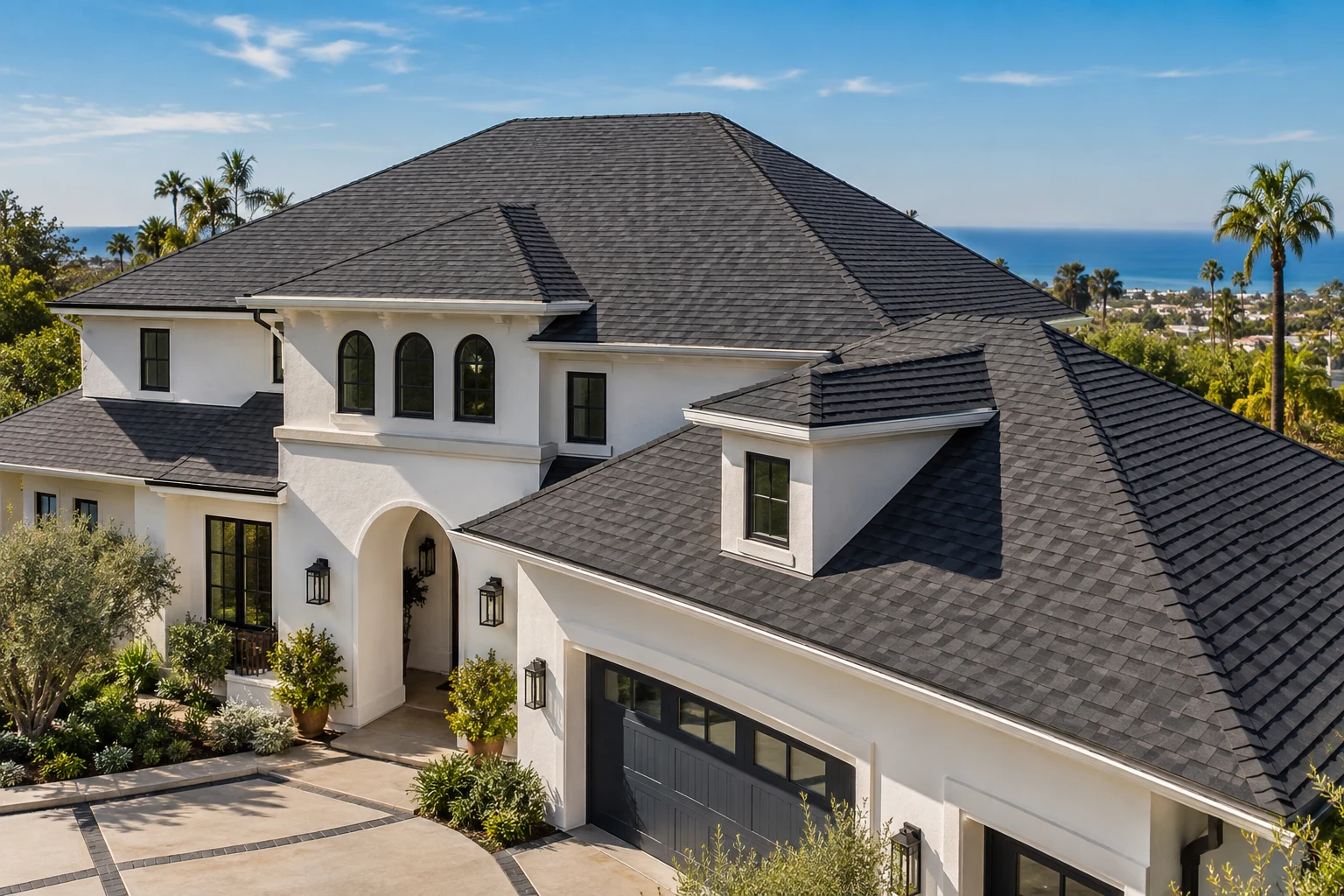
The direct answer: cost per square roof in Redlands depends on the condition of the full roofing system, not just the visible material on top. All Star Roof Replacement helps homeowners understand that a “square” is only part of the price because underlayment, decking condition, ventilation, slope, tear-off requirements, and heat-related wear all affect the real replacement cost.
In Redlands, the question is usually not just how much a roof costs per square. The better question is what your roof system actually needs. If the roof is aging, leaking, trapping heat, or showing signs of repeated failure, the final cost is shaped by what is happening underneath the surface, and All Star Roof Replacement evaluates that before recommending replacement.
For homeowners comparing roof costs in the area, it helps to start with the broader local picture on the Redlands roofing service area page, because local climate and roof age play a major role in what replacement really involves.
What “Cost Per Square” Actually Means on a Roof
In roofing, a square means 100 square feet of roof area. That measurement helps organize pricing, but it does not tell the whole story. Two roofs with the same number of squares can have very different replacement costs depending on design, access, layers, and system condition.
Simple answer: the square count gives you a measurement baseline, but not a complete replacement price. In Redlands, the same size roof can cost more or less depending on how much sun damage, underlayment deterioration, wood damage, and ventilation correction are involved.
Many homeowners don’t realize that roof pricing per square can change significantly once the old roof is removed and the actual condition of the structure is confirmed. That is especially true on older homes, where the roof may have gone through years of inland heat, UV exposure, and previous repair work that only addressed symptoms.
When someone asks for cost per square, they are usually trying to make sense of whether replacement is reasonable. That makes sense. But roofing is not like buying flooring or paint by area alone. A roof is a working protection system, and replacement cost should reflect whether the system is still doing its job.
Why Redlands Roof Costs Are Different
Redlands has conditions that push roofs harder than many homeowners expect. Inland heat, strong sun exposure, summer temperature swings, and long-term UV breakdown all shorten the life of roofing systems. Even when the top surface still looks passable from the ground, the layers below may already be drying out, shifting, or failing.
Here is the practical answer: roofs in Redlands often cost more to replace than homeowners expect because the weather does more than fade materials. It accelerates wear throughout the system, including underlayment, flashing points, sealants, and ventilation performance.
In homes across Redlands, we often see roof systems that have reached the point where repairs no longer solve the real issue. The visible problem might be a cracked tile, worn shingle edges, or a leak around a penetration. But the cause is often broader system failure after years of heat exposure.
Older neighborhoods in Redlands add another factor. Many homes have roofs that are 15 to 30 years old or more, and some have gone through multiple repair attempts over time. A common issue during inspections is finding that the roof was patched at one area while the rest of the system continued to age. That usually means the replacement scope is larger than the homeowner was originally told to expect.
Energy costs also matter here. In a hot inland environment, a roof that is no longer ventilating properly or reflecting heat well can contribute to higher cooling demand. So when homeowners ask about roof cost per square, part of the real value question is whether the replacement will improve energy efficiency along with weather protection.
What Actually Changes the Cost Per Square
The material type matters, but it is only one part of the equation. Installation complexity, roof pitch, number of penetrations, access to the property, tear-off requirements, and structural condition all influence cost.
The short answer: the more correction a roof needs beyond the surface layer, the more the cost per square can change. That is why a roof quote should be based on actual inspection findings, not just rough measurement and material assumptions.
Here are some of the biggest factors that affect cost per square in Redlands:
- Existing roof age: older roofs are more likely to have hidden damage below the surface
- Number of existing layers: more tear-off work can increase labor and disposal
- Underlayment failure: heat and age often break down the water-shedding layer below tile or shingles
- Decking condition: damaged or weakened wood must be identified and corrected
- Ventilation issues: poor airflow can trap heat and reduce roof life
- Roof design: valleys, hips, transitions, skylights, and penetrations add complexity
- Material selection: some systems cost more to install and require different components
Many homeowners don’t realize that installation quality affects long-term cost just as much as the material itself. A lower upfront number does not help if the system is installed without proper attention to flashing, ventilation, fastening, and waterproofing details.
That is why a square-based estimate should never be treated like a flat menu price. If you are trying to compare local numbers, it helps to also understand the broader factors behind roof replacement cost in Redlands, because square pricing only makes sense when it is tied to the actual roof system.
Why Surface Problems Often Mean Deeper System Failure
Homeowners usually notice the roof when there is a stain on the ceiling, a visible missing section, or a repair that keeps coming back. The problem is that those surface signs often show up late. By that point, the issue may already involve underlayment breakdown, moisture intrusion, failing flashing, or heat-damaged components across a larger section of the roof.
Clear answer: if the roof keeps showing new issues, the problem is often not isolated. It is usually a sign the system has aged past the point where surface repairs are enough.
In homes across Redlands, we often see leak symptoms blamed on one small area when the real cause is broader deterioration under the field of the roof. Tile roofs are a good example. The tile itself may still be present, but the underlayment below it can be dried out, brittle, or torn after years of heat and UV stress.
A common issue during inspections is finding previous patchwork over problem spots while the surrounding roof system is already weak. That creates confusion for homeowners because the roof may have been “fixed” before, but the leaks or heat problems return. At that point, the cost per square is no longer just about replacing material. It is about correcting the actual failed system.
This is one reason homeowners start comparing roof repair versus replacement in Redlands. Once repeated repairs begin stacking up, delaying a full replacement can increase the total cost over time.
What Happens When You Wait Too Long
Roofing problems usually do not stay in one place. Heat expands and contracts materials. Small openings widen. Underlayment dries out further. Water finds weak points. Ventilation issues continue to trap heat in the attic. What starts as a manageable replacement decision can become a more involved project if too much time passes.
The practical answer: delays usually raise total cost because the roof system has more time to deteriorate. That can mean more tear-off complications, more damaged decking, more interior risk, and more energy loss.
In Redlands, that process often moves faster than homeowners think because of the climate. Extended sun exposure and seasonal heat do not just affect comfort. They directly affect how long roofing components hold up. If the roof is already near the end of its useful life, one more summer can make a noticeable difference.
Many homeowners don’t realize that an aging roof can also affect monthly cooling costs. If the system is trapping heat or no longer helping regulate attic temperatures effectively, the home has to work harder to stay comfortable. Over time, that turns a roofing problem into both a protection issue and an efficiency issue.
This is why roof replacement should be viewed as a system correction, not just a material swap. The goal is not simply to put something new on top. The goal is to restore reliable protection and improve how the roof performs in Redlands conditions.
How All Star Roof Replacement Approaches the Problem
All Star Roof Replacement does not treat cost per square like a guessing exercise. The right approach is to evaluate the full roofing system, measure the roof accurately, inspect visible conditions, and identify the issues that affect replacement scope before making recommendations.
Simple answer: the only useful roof price is one based on what your roof actually needs. That means looking beyond shingles or tiles and checking the parts of the system that commonly fail first.
That includes the underlayment, decking condition, roof penetrations, transition details, flashing performance, and ventilation setup. Satellite measurements help establish roof size, and visual inspection helps confirm the field conditions that influence labor and materials. That way, the homeowner gets a clearer explanation of why one roof may cost more per square than another.
In homes across Redlands, we often see situations where the homeowner was focused on the top material because that is what they could see from the ground. But the roofing decision usually comes down to what is happening below that surface. All Star Roof Replacement explains those findings clearly so the replacement recommendation matches the real condition of the system.
For homeowners already seeing signs of age, heat wear, or repeated issues, it also helps to understand the common signs that a new roof may be needed before trying to judge cost by square count alone.
The Right Starting Point for a Redlands Homeowner
If you are looking up cost per square roof in Redlands, you are probably trying to answer a bigger question: is this roof still worth repairing, or has it reached replacement stage? The best starting point is not a generic number. It is understanding the age, condition, and performance of the roof system on your specific home.
Final answer for this section: cost per square is a helpful reference, but it only becomes meaningful when tied to a full-system evaluation. In Redlands, heat, UV exposure, older housing stock, and energy efficiency concerns make that evaluation especially important.
When the roof is aging, showing repeated leak symptoms, or contributing to indoor temperature problems, the issue is usually bigger than a single damaged section. The earlier that is identified, the more clearly a homeowner can plan for the right replacement scope instead of spending more on temporary fixes.
All Star Roof Replacement focuses on that full-system view because every roof is different, and every replacement decision should be based on actual conditions rather than assumptions.
What Typical Roof Replacement Price Ranges Look Like in Redlands
Direct answer: in Redlands, smaller residential roof replacements often fall somewhere around $8,000 to $15,000+, while many full roof replacement projects land closer to $15,000 to $30,000+ depending on size, slope, material, tear-off needs, and the condition of the full roofing system.
Those ranges are helpful as a starting point, but they are not menu pricing. A roof with the same square count as another home can still cost noticeably more if the decking has soft spots, the underlayment has failed, or ventilation needs to be corrected. All Star Roof Replacement explains cost in that full-system context so homeowners are not comparing numbers without understanding what those numbers actually include.
In Redlands, heat exposure is one of the biggest reasons square-based pricing can shift. Roofs here deal with strong sun, long dry periods, and repeated expansion and contraction. Over time, that affects more than the outer layer. It can shorten the useful life of underlayment, dry out sealants, and expose weak points around flashing and penetrations.
In homes across Redlands, we often see homeowners budgeting for “just the surface” and then realizing the bigger issue is underneath. That does not mean every roof has major hidden damage. It means the final cost has to reflect what the roof system actually needs, not what it looks like from the street.
If you are still comparing broad replacement budgets, it can help to review how local roof age and system condition affect roof lifespan in Redlands, because remaining life is often the real factor behind whether a square price makes sense at all.
Why Price Per Square Changes So Much From House to House
Simple answer: price per square changes because no two roofs have the same level of labor, removal work, access, or hidden system deterioration. Material matters, but installation complexity and underlying condition matter just as much.
Homeowners sometimes expect cost per square to work like a simple formula: roof area times material type. In real roof replacement, that is too limited. The square count measures size, but the scope of work is shaped by how the roof was built, how well it was installed before, and how much wear the system has taken over time.
Some of the most common reasons the cost per square increases include:
- Steeper roof pitch: more labor, more setup, and more time to work safely
- Complex roof layout: hips, valleys, dormers, skylights, and transitions create more detail work
- Multiple penetrations: vents, chimneys, solar-related transitions, and other openings require careful waterproofing
- Old roof removal: tear-off labor and disposal vary depending on material and number of layers
- Damaged wood: deteriorated decking must be identified and corrected before the new system goes on
- Ventilation correction: balancing intake and exhaust can be part of improving long-term roof performance
- Previous poor installation: shortcuts from an older job often have to be corrected during replacement
A common issue during inspections is finding that the visible top layer is only part of the problem. A homeowner may know the roof has a few leaks or some visible wear, but once the full system is evaluated, there may also be flashing failure, brittle underlayment, or areas where ventilation never worked the way it should have. That is one reason rough square pricing can be misleading when used by itself.
All Star Roof Replacement uses satellite measurements along with visual inspection to get a more accurate view of roof size and roof condition before discussing replacement. That approach helps homeowners understand why one estimate can differ from another without relying on guesswork.
Material Choice Affects Cost, but It Does Not Decide the Whole Price
Direct answer: the roofing material changes price, but the total cost still depends on how the entire system is installed and what has to be corrected underneath it. A lower-cost material does not automatically mean a lower-cost project if the roof structure and waterproofing details need more work.
In Redlands, homeowners often compare tile and shingle systems because both are common in Southern California neighborhoods. Tile can offer a different look and a different installation profile than asphalt shingles, but the better choice depends on the home, the roof design, the budget, and the condition of the existing system.
The key point is that the material sits on top of a full roofing assembly. If underlayment is worn out, flashing is failing, or decking has damage, those issues do not go away just because the new material looks good. That is why All Star Roof Replacement approaches replacement as a full system instead of treating it like a product swap.
For homeowners weighing style, performance, and budget, the local comparison between tile versus shingle roofing in Redlands can help clarify how the material choice fits into the bigger replacement decision.
In a hot inland climate, energy performance can also factor into the discussion. Some homeowners are less concerned with appearance and more concerned with keeping the house cooler and reducing strain on the home during summer. In that case, material selection should be discussed alongside ventilation and heat reflection, not separately from them.
How Heat and Ventilation Affect Long-Term Value
Clear answer: in Redlands, a roof that handles heat better can improve comfort and help reduce unnecessary stress on the home, but that only works when the full roof system is installed correctly. Good material alone cannot compensate for poor ventilation or bad detailing.
Redlands homeowners often notice roofing problems first as comfort issues rather than leaks. Some rooms get hotter than others. The attic feels extremely warm. Cooling bills rise. Those signs can point to an aging roof system that is no longer performing well under Southern California heat.
That is why the best replacement decision is not always the cheapest number per square. If the roof is trapping heat, lacking proper airflow, or installed in a way that shortens its service life, the lower upfront number may cost more over time. Poor installation leads to long-term issues, especially in a climate that regularly puts roofing systems under thermal stress.
All Star Roof Replacement looks at ventilation and related system details as part of replacement planning because homeowners need to know whether their current roof is simply old or whether it has deeper performance problems. If energy performance is part of your concern, it is worth reviewing options for energy-efficient roofing in Redlands and whether a cool roof system in Redlands fits your home.
For many homes, the goal is not a dramatic change. It is a properly installed roof system that protects the structure, sheds water correctly, handles heat better, and gives the homeowner a clearer long-term plan.
What a Good Roof Estimate Should Actually Tell You
Direct answer: a good estimate should explain what is being replaced, what conditions were observed, what factors could change final cost, and why the recommended scope fits your roof. It should give clarity, not just a number.
When homeowners search cost per square roof in Redlands, they are usually trying to avoid overpaying and avoid making the wrong decision. That is reasonable. The problem is that a low number without explanation is not necessarily helpful. If the quote ignores ventilation, underlayment condition, flashing details, or wood replacement needs, it may not reflect the actual work required.
All Star Roof Replacement focuses on evaluating visible system conditions first, measuring accurately, and then explaining the replacement scope in practical terms. That means talking through roof size, roof design, existing material, removal requirements, and the hidden issues that commonly affect price.
A useful estimate should also help you understand the difference between replacing what is worn out versus simply covering over symptoms. If a contractor only talks about top-layer material and does not discuss the rest of the system, the homeowner may not be getting the full picture.
That is one reason many homeowners spend time reviewing the local roof replacement process in Redlands before moving forward. Understanding the process makes the price easier to evaluate because you can see what the work should actually involve.
Decision Clarity: When Replacement Makes More Sense Than More Repairs
Simple answer: replacement usually makes more sense when the roof is older, repairs keep coming back, leaks are spreading, or the system is showing multiple signs of wear at once. At that point, patching individual spots often costs more in the long run without solving the core problem.
Not every roof with a problem needs immediate replacement. But many homeowners in Redlands are dealing with roofs that are already 15 to 30 years old, have had repeated repairs, and are now showing broader system fatigue. If that is the case, the decision is less about one damaged area and more about whether the roof as a whole is still dependable.
Replacement often becomes the better decision when:
- The roof has recurring leaks: especially when repairs have already been attempted
- The roof is near or past expected service life: age increases the chance of widespread component failure
- Heat-related wear is obvious: dried underlayment, brittle components, and poor attic performance
- There are multiple trouble spots: flashing issues, valleys, penetrations, or widespread surface deterioration
- Energy and comfort problems are increasing: uneven temperatures and high cooling demand can point to broader roof performance decline
Delaying increases cost in many of these cases, not because every day creates an emergency, but because deterioration keeps moving. Underlayment does not recover. Wood does not improve on its own. A roof that already needs system correction often becomes more expensive to deal with after another season of heat and exposure.
If you are weighing whether to keep repairing or move toward full replacement, the local guide on whether reroofing is worth it in Redlands can help frame that decision from a practical homeowner standpoint.
What a Good Roofing Decision Looks Like for a Redlands Homeowner
Direct answer: a good decision is one based on the roof’s actual condition, the age of the system, how often problems are returning, and whether the proposed replacement scope makes sense for the home. It is not just choosing the lowest number.
A solid replacement decision usually has a few things behind it. First, the homeowner understands what is wrong beyond the surface. Second, the roof has been measured and inspected carefully enough to explain the pricing. Third, the recommendation matches both the roof condition and the homeowner’s goals, whether that means improving reliability, addressing heat issues, or avoiding more repair spending.
In homes across Redlands, we often see people wait because they are trying to find certainty in one exact price per square. The problem is that roofing does not work that way. The better path is understanding the likely price range, understanding what conditions could move the cost, and then making a decision based on the actual roof rather than a generic internet number.
It also helps to remember that not all contractors are equal. Installation quality matters as much as material choice. Even a good roof system can underperform if flashing, ventilation, fastening, or waterproofing details are handled poorly. That is why the evaluation process matters so much before any work starts.
If you are still in the information-gathering stage, learning what to expect from a roof replacement installer in Redlands can help you ask better questions and compare proposals more clearly.
Frequently Asked Questions
How much does a new roof cost in Redlands?
Short answer: many smaller homes may fall in the $8,000 to $15,000+ range, while many full roof replacement projects fall closer to $15,000 to $30,000+ depending on size, design, material, tear-off requirements, and system condition.
The final cost depends on more than square count. All Star Roof Replacement looks at the full roofing system, including underlayment, decking, ventilation, and installation complexity, because those are often the factors that change the real replacement scope.
Is cost per square enough to compare roofing estimates?
No. Cost per square is useful as a baseline, but it is not enough by itself. Two roofs with the same area can have very different needs once tear-off, flashing, wood condition, and ventilation are taken into account.
A better comparison is whether each estimate explains the full scope of work. If one quote is much lower, make sure it is not leaving out important parts of the roofing system.
How do I know if I should repair or replace my roof?
In general, replacement makes more sense when the roof is older, has repeated leaks, has already been repaired several times, or is showing signs of system-wide wear. Repairs make more sense when the issue is limited and the rest of the roof still has solid service life left.
In Redlands, heat and age often push roofs past the point where isolated repairs are cost-effective. If problems keep returning, the roof may be failing as a system rather than at one spot.
How long does a roof replacement usually take?
Most residential roof replacements take anywhere from a few days to about a week or more, depending on roof size, weather, material, complexity, and whether hidden issues are found during tear-off.
Homes with straightforward layouts move faster than steep or highly detailed roofs. If you want a better idea of project flow, reviewing the local roof replacement timeline in Redlands can help set realistic expectations.
What roofing material works best in Redlands?
The best material depends on the home, budget, and performance goals. In Redlands, heat resistance, ventilation compatibility, installation quality, and long-term maintenance all matter.
There is no single best roof for every house. A practical starting point is to compare the best roofing materials for Redlands homes based on climate, roof design, and how long you plan to stay in the property.
Should I get the roof inspected before deciding on replacement?
Yes. A proper inspection gives context to the price and helps determine whether replacement is actually needed now. It also helps identify hidden issues that are not obvious from the ground.
All Star Roof Replacement uses satellite measurements and visual inspection to understand both roof size and visible system condition before making recommendations. If you want more background, you can read about roof inspection cost in Redlands and what an inspection is meant to clarify.
Get Clear Answers on Your Roof in Redlands
If you are trying to make sense of cost per square roof in Redlands, the most useful next step is to find out what your roof system actually needs. All Star Roof Replacement helps homeowners understand whether the issue is age, heat-related deterioration, repeated leak failure, poor prior installation, or a combination of those factors.
If you want to talk through your roof, request an estimate, or get a clearer explanation of replacement scope, contact All Star Roof Replacement by phone at (310) 729-3013, by email at teamallstarconstruction@gmail.com, or through the contact page.
Licensed • Insured • Owens Corning Preferred Contractor • CA License #1009760