Prices and performance figures in this guide are planning examples, not a project quote or a promise of savings. Your estimate and results depend on the products, installation scope, existing home, climate, and energy use.
1. Low-E Coated Glass: The Industry Standard for Heat Control
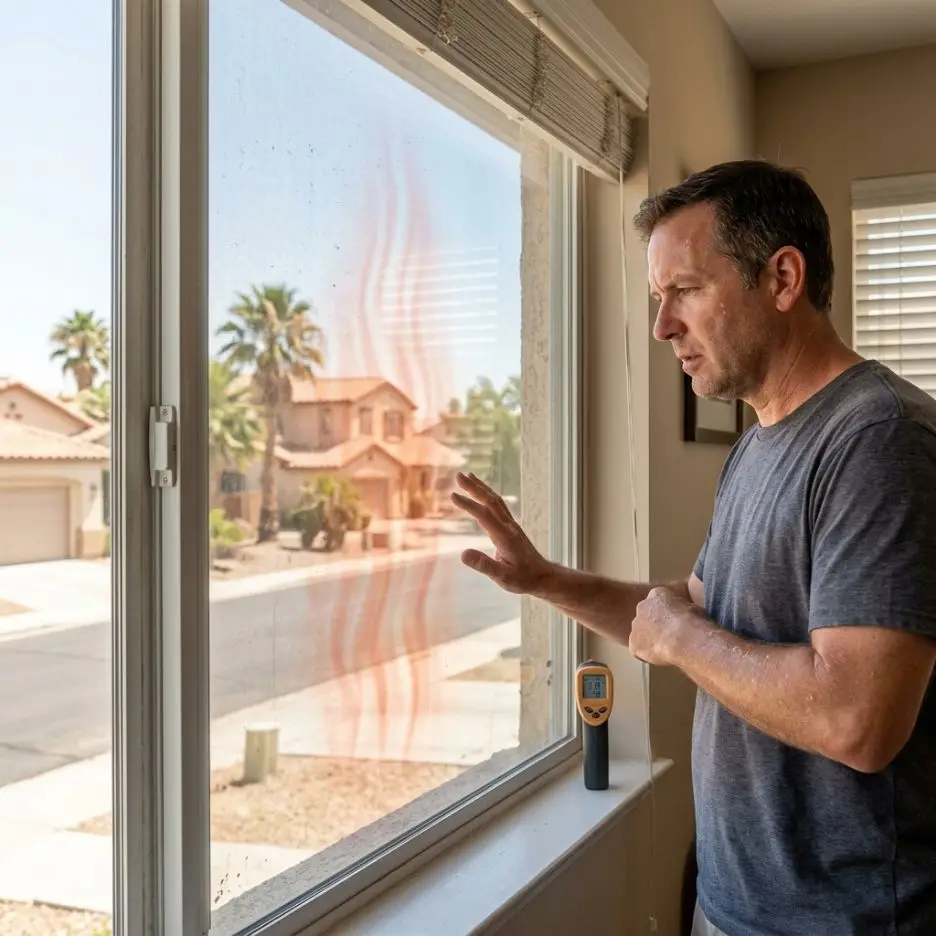
If your home stays hot even with the AC running, heat is coming through your windows. Southern California’s intense sun pushes massive amounts of thermal energy into your house every day, and standard glass does almost nothing to stop it. The good news: heat reflective glass actually works, and there are several proven options to choose from.
We’ve helped thousands of homeowners across Los Angeles, Orange County, San Bernardino, Riverside, and Ventura counties understand which glass technology solves their specific heat problem. This guide breaks down the five most common options and shows you exactly why some work better than others in our climate.
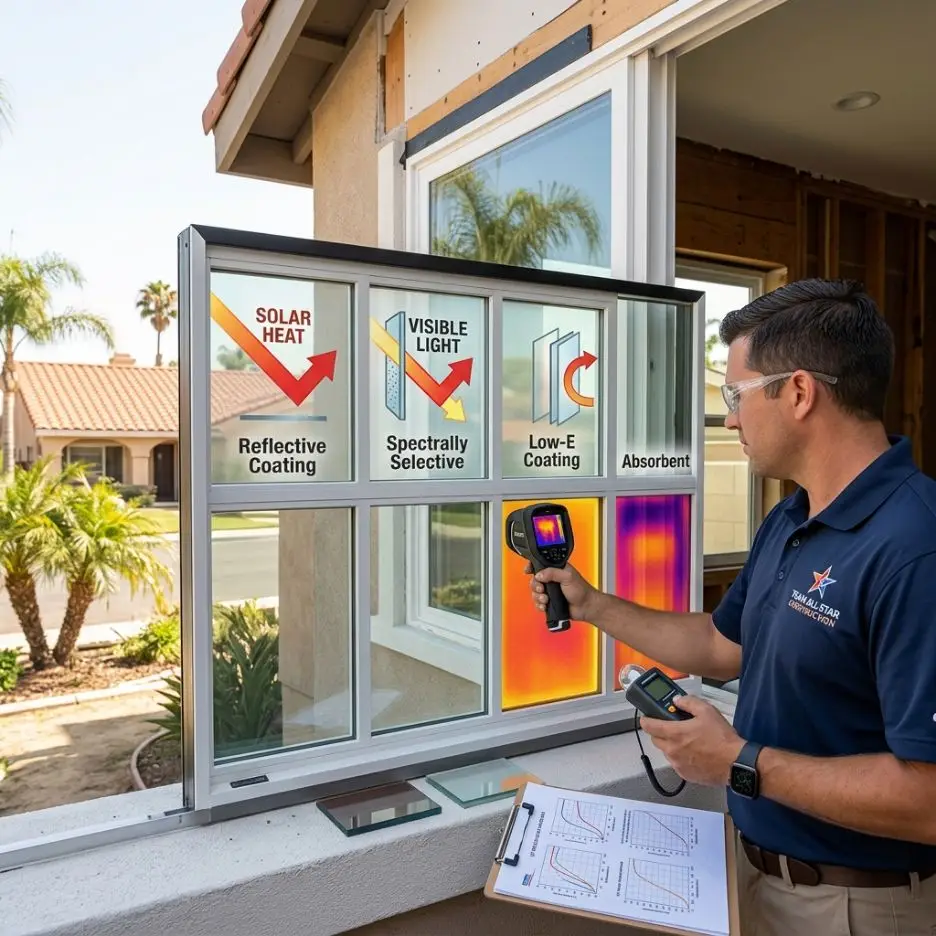
Low-emissivity (Low-E) glass has an invisible metallic coating applied to one or more surfaces inside the sealed window unit. This coating reflects infrared heat back outside while still allowing visible light through, which is why it’s become the standard across the window industry.
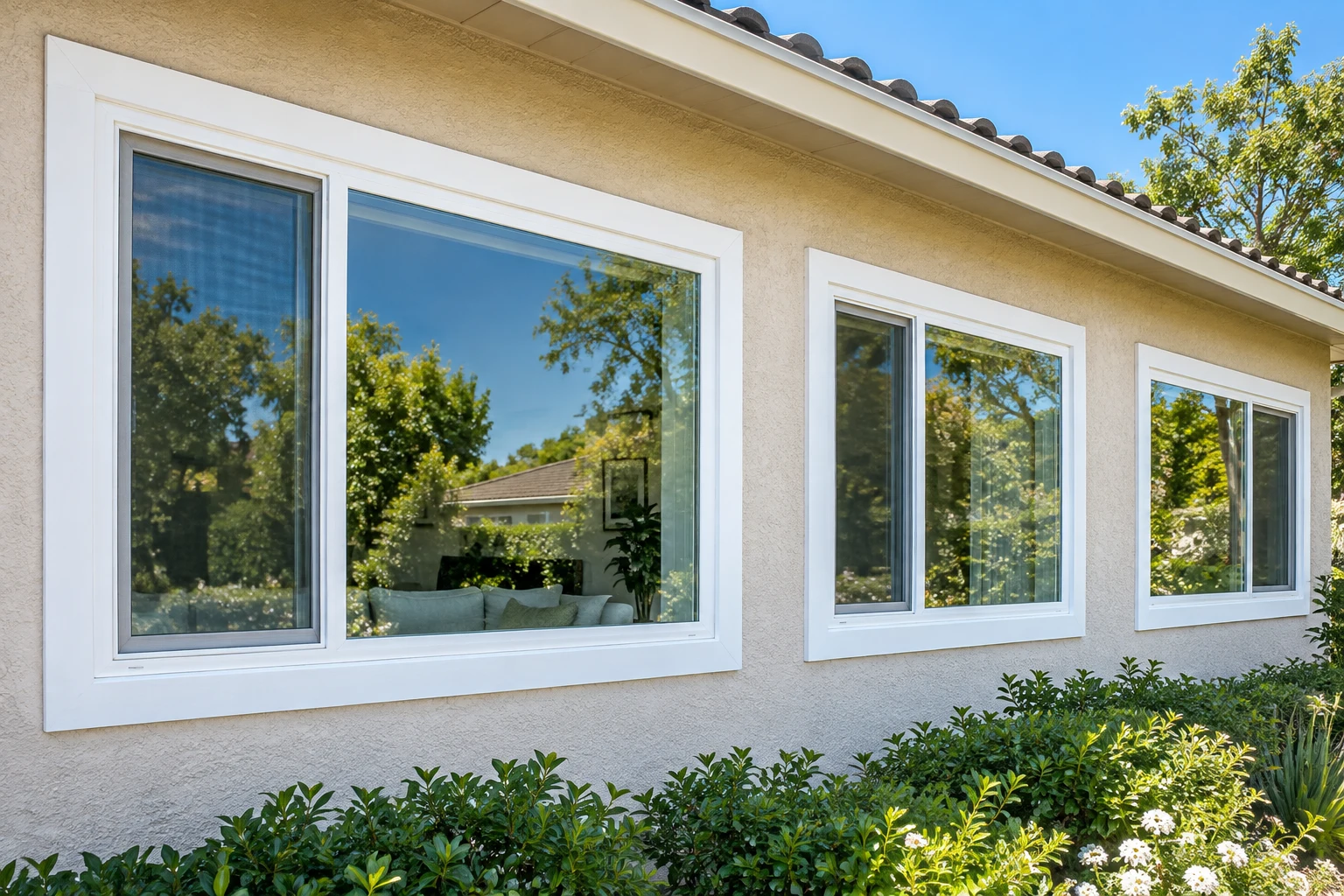
Here’s what makes it work: the coating blocks about 70-80% of solar heat from entering your home, depending on the specific formulation. You’ll notice your windows look almost normal from the outside—maybe a slight tint, but nothing dramatic. That’s the point. You get serious heat reduction without turning your home into a cave.
We typically recommend Low-E for most Southern California homes because it balances heat control with affordability and aesthetics. During an in-home consultation, we’ll show you exactly how much heat is coming through your current windows versus what Low-E glass will block. The difference is measurable and real.
Cost context: Low-E coating adds roughly 15-25% to the base window price, but energy savings typically recover that investment within 3-5 years through lower cooling costs.
Actionable step: If your current windows are older than 15 years, Low-E glass is likely a significant upgrade. Schedule a no-pressure consultation to measure your home’s heat problem first.
2. Spectrally Selective Glass: Smart Filtering Without the Tint
Spectrally selective glass uses a multi-layer coating system that’s engineered to block specific wavelengths of heat while transmitting visible light. Think of it like a filter that lets in brightness but blocks the warming rays that come with it.
The advantage over standard Low-E: spectrally selective coatings reject more infrared heat (80-90%) while maintaining better color clarity and light transmission. Your home stays brighter inside while staying cooler. In coastal areas like Santa Monica, Newport Beach, or Laguna Beach where you want natural light, this matters.
The tradeoff is cost and availability. Spectrally selective glass runs higher in price than basic Low-E, and not all window manufacturers stock it in custom sizes. We work with suppliers who specialize in these coatings, so we can source them for retrofit and replacement installations across our service areas.
This glass performs particularly well in homes with lots of south and west-facing windows where you’re getting hit hard by afternoon sun. We’ve measured temperature differences of 5-8 degrees Fahrenheit on interior surfaces when comparing standard Low-E to spectrally selective coatings in homes throughout Riverside and San Bernardino County.
Actionable step: If light and visibility matter as much as cooling costs, ask us about spectrally selective options during your consultation. We’ll show you the difference side-by-side.
3. Reflective Coatings: Maximum Heat Rejection for Desert Climates
Reflective glass coatings are applied to the outer surface and literally bounce solar energy away from your home. They can reject 80-90% of incoming heat, making them the most aggressive heat control option available.
The obvious downside: reflective coatings create a mirror-like or metallic appearance that many homeowners find unattractive. Your windows become somewhat reflective from both inside and outside. In neighborhoods with HOA guidelines or homes where aesthetics matter, this isn’t the right fit.
However, in desert and high-heat areas like Victorville, Barstow, Indio, and Palm Springs, reflective coatings deliver measurable comfort and cost savings that justify the visual tradeoff. We’ve seen homes with reflective coatings maintain interior temperatures 10-15 degrees cooler than nearby homes with standard windows.
If you’re in an area where summer temperatures regularly exceed 105 degrees and you’re willing to accept the reflective appearance, this is the strongest heat-rejection solution. It’s also worth considering for commercial or industrial portions of properties where looks matter less than function.
Actionable step: If you live in high-desert or extremely hot inland areas and heat control is your only priority, we can demonstrate reflective coating performance. Come see the difference in a neighboring home if you’re on the fence about the appearance.
4. Absorbent Glass: Why It Falls Short in Southern California Heat
Absorbent (or heat-absorbing) glass contains compounds that soak up solar radiation. The theory sounds good: the glass itself becomes a heat sink. In practice, this creates a serious problem for Southern California.
When absorbent glass absorbs heat, that energy doesn’t disappear. It gets trapped in the glass and radiates inward into your home. You’re not blocking the heat; you’re just relocating where it enters. Additionally, the outer surface of absorbent glass gets extremely hot (sometimes 40-50 degrees hotter than ambient temperature), which can cause thermal stress and potential cracking in our intense sun.
We rarely recommend absorbent glass for residential applications in our region. The performance gap between Low-E and absorbent glass is substantial, and absorbent glass can actually accelerate window failure due to thermal stress. If a window contractor suggests it, ask why they’re not recommending Low-E or spectrally selective alternatives instead.
Actionable step: If you’re comparing window quotes and anyone recommends absorbent glass for your Southern California home, it’s a red flag. Stick with Low-E or better for real heat control.
5. Our Custom-Fit Heat Reflective Systems: The Superior Solution
After years of measuring heat performance in thousands of Southern California homes, we’ve learned exactly which glass combinations deliver the best results for different situations. We don’t just install windows; we diagnose your home’s specific heat problem and match it to the right glass technology.
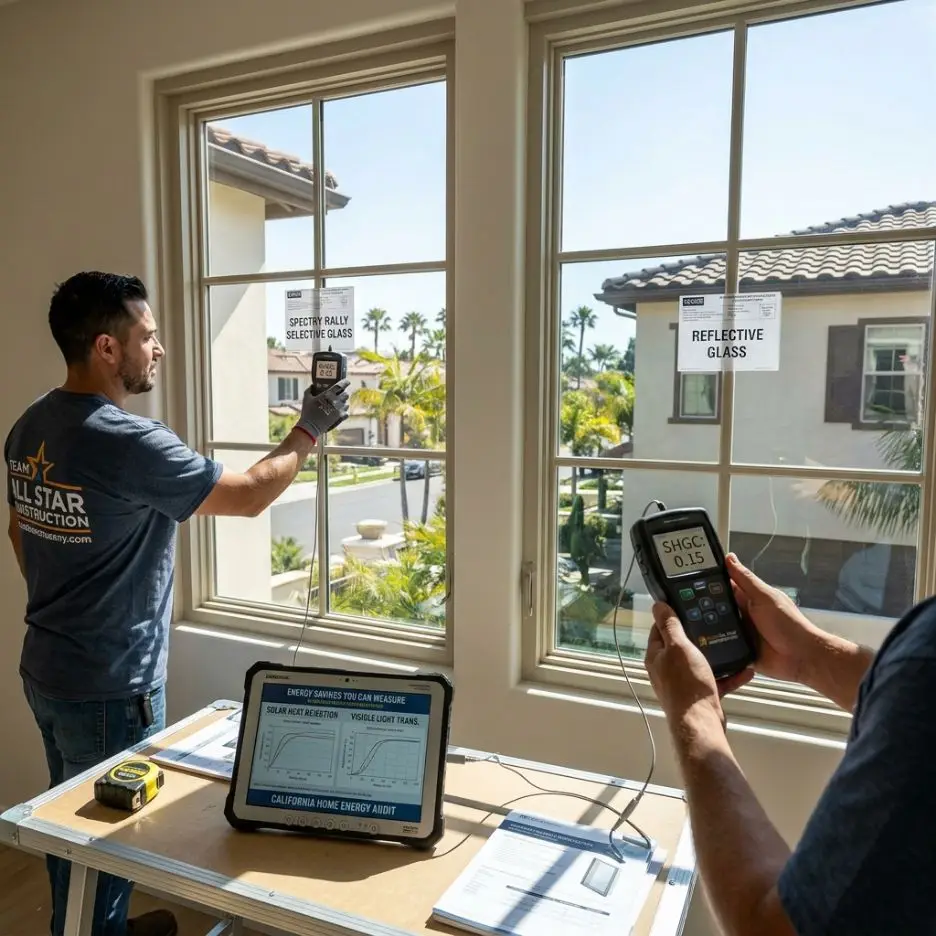
Here’s what sets our approach apart: we show you the heat problem before recommending solutions. During an in-home consultation, we’ll walk through your house, measure where heat is coming in hardest, and explain exactly how much improvement you’ll see with different glass options. You’ll have clarity, not guesses.
Our custom-fit heat reflective systems combine the right Low-E or spectrally selective coating with proper frame design, multiple-pane configurations, and professional installation that eliminates air gaps. A window is only as good as how it’s installed. We measure air leakage and heat transfer in your home before and after, so you see exactly what changed.
For homes across our service areas in Los Angeles, Orange, San Bernardino, Riverside, and Ventura counties, we typically recommend either advanced Low-E glass for balanced performance or spectrally selective systems for homes that need maximum light while controlling heat. Desert properties get the reflective option if they prioritize cooling above all else.
The real advantage: we take responsibility for measuring your results. If your home isn’t noticeably cooler after installation, we address it. That’s a promise based on actual measurement in your space, not industry claims.
Actionable step: Schedule a no-pressure in-home consultation. We’ll show you where heat is entering your windows, measure the problem, and explain which glass option solves it best for your specific home layout and location.
6. Comparing Performance: Real Energy Savings You Can Measure
The difference between window glass types isn’t theoretical. We measure it in real homes every day, and the numbers speak clearly.
Standard clear glass blocks roughly 25% of solar heat. Low-E glass blocks 70-80%. Spectrally selective glass blocks 80-90%. Reflective coatings block 80-90% as well, with the main difference being aesthetics and light quality. Absorbent glass performs similarly to clear glass and introduces the thermal stress problem we mentioned earlier.
Financing may be available through third-party lenders for qualified applicants. Availability, APR, fees, down payment, and repayment terms depend on the lender and approval. Review the complete loan terms before accepting.
Energy cost recovery depends on your local utility rates and current window condition. We’ll provide specific projections for your home based on its orientation, window area, and current glass type. The measurement happens in your actual space, not on a calculator.
One more reality: energy savings are just one benefit. The comfort difference is often more noticeable than the cost savings. A home that stays consistently cool without the AC running constantly feels dramatically different. Furniture and flooring also fade less under reflective glass, and you reduce strain on HVAC equipment that runs less frequently.
Actionable takeaway: Different glass types deliver measurably different performance. The best choice depends on your location within Southern California, your home’s window orientation, and whether you prioritize heat control or natural light. We’ll help you understand which option makes sense for your specific situation.
Ready to measure your home’s heat problem and see exactly which solution fits? We serve all of Southern California with energy efficient windows and custom installations. Contact us for a no-pressure in-home consultation where we’ll show you what’s actually happening in your home and explain your options clearly.
Get a free estimate for your home. No pressure—just clear answers and straightforward pricing. Call (310) 729-3013 or visit: https://teamallstarconstruction.com/contact/
Frequently Asked Questions (FAQ)
Which heat reflective glass option saves the most money on cooling costs?
Low-E coated glass and spectrally selective glass both deliver significant savings, but the best choice depends on your home’s current setup and Southern California climate zone. We recommend spectrally selective glass for most homeowners because it rejects solar heat without the dark tint that Low-E coatings can create.
Our customers typically see 15-25% reductions in cooling costs after upgrading to our custom-fit heat reflective systems, though your specific savings depend on your existing windows and how much direct sun exposure your home receives.
Do heat reflective windows work in all parts of Southern California?
We serve the full range of Southern California climates, from coastal areas to the desert, and we customize our glass options for each region’s specific needs. Desert communities like Palm Springs and Victorville benefit most from maximum heat rejection, while coastal areas like Santa Monica may prioritize different features.
Our in-home consultations help us evaluate your local climate, sun exposure, and current window condition so we can recommend the glass type that delivers the best performance and savings for your specific location.
What’s the difference between reflective coatings and absorbent glass?
Reflective coatings bounce solar energy away from your home before it enters, while absorbent glass absorbs that heat and then releases it inside your space. We avoid absorbent glass for Southern California homes because it actually increases interior heat rather than reducing it, making cooling costs worse on hot days. Our reflective and Low-E coating options work in the opposite way, keeping the heat outside where it belongs.
- Categories: Window Testing & Performance Guides
- Tags: cool home glass options, energy efficient glass California, heat blocking windows, heat reflective glass, low solar gain glass, reflective window coatings, solar control window glass, window heat solutions
Southern California Window Replacement Guide
Single Pane vs Dual Pane: Which Fits Your Home?
Replacement Windows Los Angeles Homeowners Choose
Retrofit Windows vs Full Frame: Which Fits?
A Guide to Full Window Replacement at Home
Vinyl vs Aluminum Windows for Southern California
Best Windows for Hot Climates in Southern California
A Homeowner’s Guide to Energy Efficient Windows
How to Reduce Window Heat at Home
About Total Home Windows
Total Home Windows is a Southern California-based window replacement company focused on helping homeowners improve energy efficiency, indoor comfort, and long-term home value through high-performance window installations.
Serving Los Angeles County, Orange County, Riverside County, San Bernardino County, and Ventura County, the company specializes in both vinyl retrofit (insert) and full-frame window replacement. Their work is tailored to the unique demands of California homes, including intense UV exposure, coastal conditions, and heat retention issues common in older properties.
Total Home Windows combines practical installation experience with a strong focus on energy performance—helping homeowners reduce cooling costs, improve insulation, and solve common problems like rooms that stay hot even with air conditioning. Their approach prioritizes clear recommendations, transparent pricing, and solutions that make sense for each home.
The content published by Total Home Windows is built on real installation knowledge, field-tested performance insights, and current best practices in window technology, including Low-E glass, argon-filled units, and energy-efficient design strategies. Their goal is to help homeowners make informed decisions without overpaying or choosing the wrong type of window system.
Ways to Reach Us
If you’re considering window replacement, we’re here to answer questions and provide clear, professional guidance based on your home and goals.
- teamallstarconstruction@gmail.com
- 301 E.9th St Suite 415 Redlands, CA 92374