Prices and performance figures in this guide are planning examples, not a project quote or a promise of savings. Your estimate and results depend on the products, installation scope, existing home, climate, and energy use.
Why Your Windows Feel Excessively Hot and What It Means for Your Home
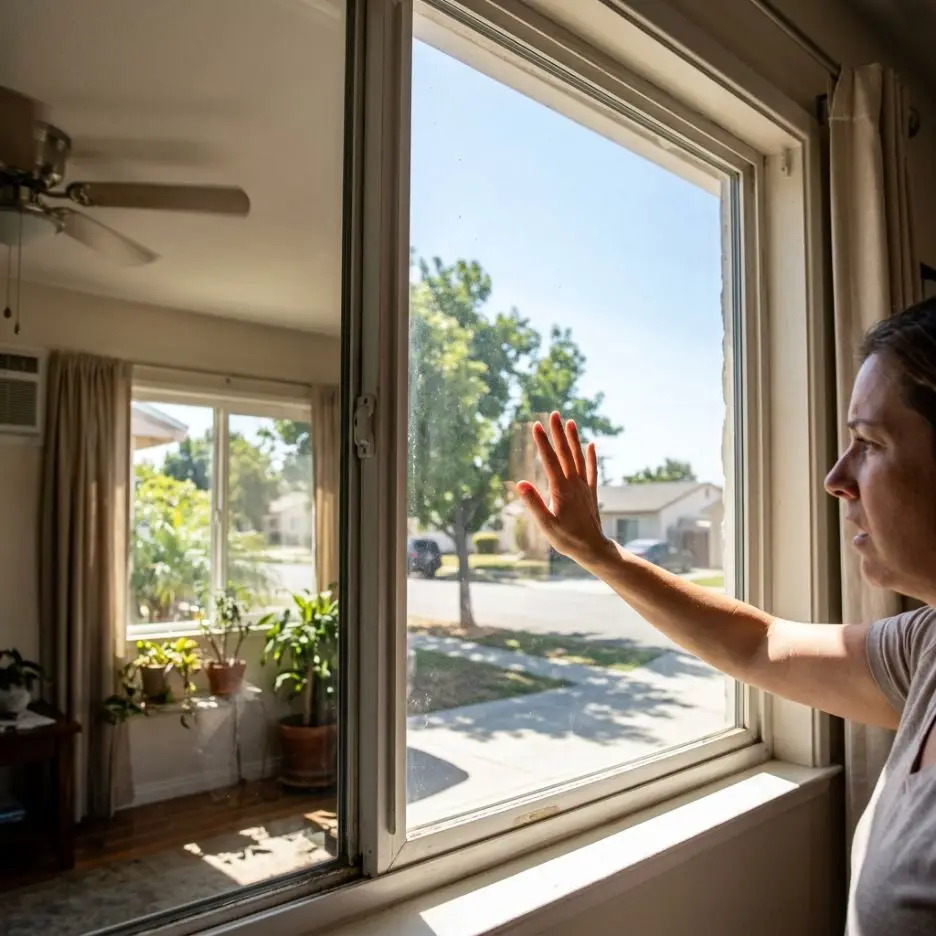
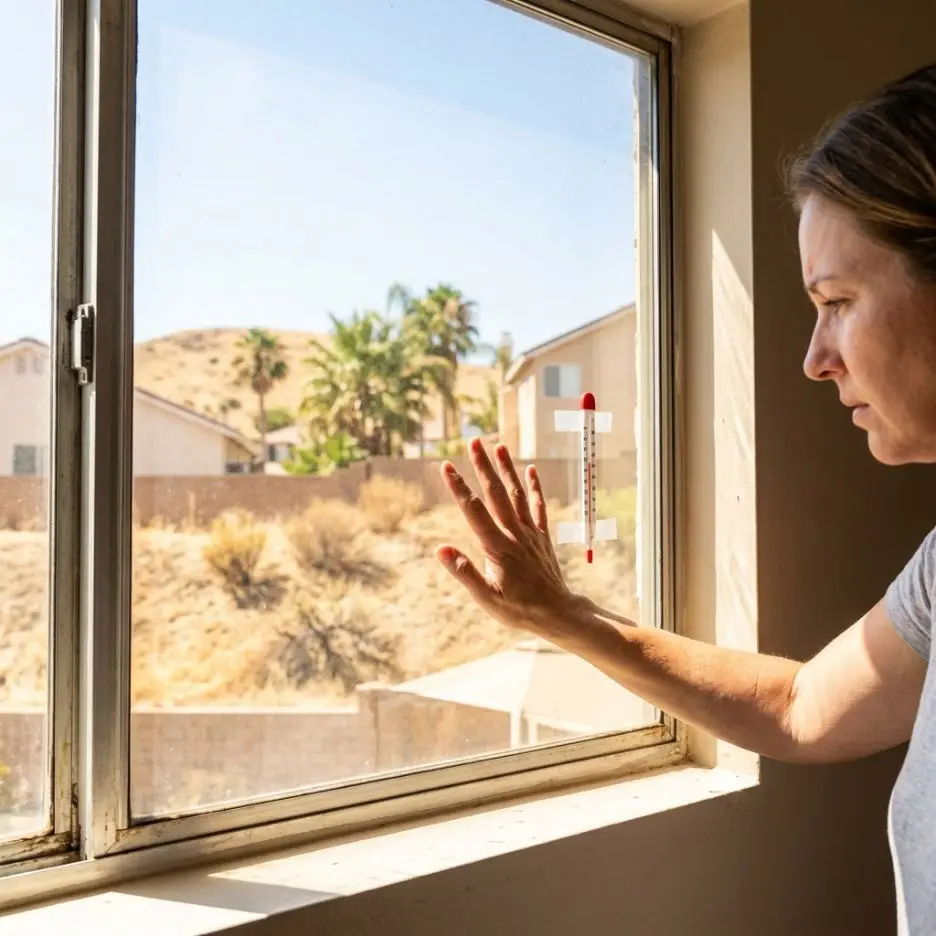
When you touch your window glass on a warm Southern California day and it feels hot enough to burn your hand, that’s not normal. It means heat is pouring through your windows instead of being blocked by them. Your air conditioner has to work overtime to cool a home where windows are acting like open doors to the heat outside.
Hot window glass tells you something important: your windows aren’t doing their job. A window’s primary purpose is to keep outside temperatures outside. When glass gets hot to the touch, you’re losing energy efficiency, your cooling costs spike, and your home stays uncomfortably warm even with the AC running.
The heat you feel is solar radiation passing directly through the glass or frame, then warming the interior surfaces. In Southern California, where we deal with intense sun exposure year-round, this problem affects energy bills, interior comfort, and even furniture fading.
Understanding why your windows feel hot is the first step toward fixing the real issue. Most homeowners assume it’s just how things are, but there are specific, identifiable causes. Once you know what’s happening in your home, the solution becomes clear.
Single-Pane Windows: The Primary Heat Culprit in Older Homes
If your home was built before 1990, you likely have single-pane windows. A single pane of glass offers almost no insulation between your air-conditioned interior and the 95-degree heat outside. It’s like having no barrier at all.
Single-pane windows work like this: heat transfers directly through the glass through pure conduction. Nothing stops it. On a hot day, the interior surface of the glass can reach 120 degrees or higher, turning your windows into heat radiators inside your home.
Many homes in Los Angeles, Pasadena, Glendale, and across Orange County still have original single-pane windows. They’re cheap to install initially, but they cost you thousands in wasted cooling energy every year.
Here’s what homeowners often notice with single-pane windows:
- Rooms on the sunny side of the house are noticeably warmer
- AC runs constantly but never reaches your target temperature
- Cooling bills spike 20-40% compared to neighbors with updated windows
- Windows are drafty even on calm days
- Interior surfaces sweat or frost in winter (if you have them)
The fix for single-pane windows isn’t adjustment or maintenance. It’s replacement. Single-pane windows have reached the end of their functional life in a modern home, especially in our climate.
Poor Window Seals and Air Leakage: When Your Windows Stop Working
Even newer windows stop working when seals fail. The seal is a rubber gasket around the perimeter where the glass meets the frame. When this seal degrades, air leaks directly into your home, carrying heat with it.
Failing seals show up as:
- Visible gaps or daylight around the window frame
- Drafts you can feel even in summer (warm drafts from outside air)
- Moisture or condensation between window panes
- Higher humidity inside the home
- Audible wind noise when doors open nearby
A broken seal means your window is no longer a barrier. Hot outside air enters constantly, and your cooled air escapes. This creates a continuous cycle where your AC fights against infiltration rather than simply maintaining temperature.
In homes across Riverside, Ventura, and San Bernardino counties where temperature swings are extreme, seal failure happens faster due to the thermal stress on frames. Seals expand and contract with daily heat cycles, eventually cracking or separating.
If you have modern double or triple-pane windows but they’re failing, replacement of the entire window (not just the seal) is usually the most cost-effective solution. Retrofit windows designed to fit existing frames preserve your walls while updating your thermal performance.
Inadequate Window Insulation: The Gap Between Old and New Technology
Modern window technology is fundamentally different from what existed 30 years ago. Today’s energy-efficient windows use multiple strategies to prevent heat transfer: multiple panes, gas fill between panes, low-emissivity coatings, and insulated frames.
Older windows use none of these features. They’re just single panes of uncoated glass in aluminum frames. Aluminum conducts heat directly, so even if the glass somehow stayed cool, the frame transfers heat into your home.
The R-value (thermal resistance) difference is dramatic:
- Single-pane aluminum frame: R-0.9 (almost no insulation)
- Double-pane with standard frame: R-3 to R-5 (better, but limited)
- Modern double-pane with low-E coating: R-5 to R-8 (significant insulation)
- Triple-pane with gas fill and vinyl frame: R-8 to R-12 (premium performance)
What this means in practical terms: if you replace a single-pane window with a modern double-pane vinyl window, you reduce heat transfer by 70-80%. That’s not a minor improvement. That’s the difference between your home staying cool and your AC running all day.
In areas like Huntington Beach, Newport Beach, and Laguna Beach where ocean breezes cool coastal properties, this matters less. But inland in Corona, Temecula, and Palm Springs, where summer temperatures exceed 110 degrees regularly, window insulation becomes critical to livability.
Direct Sun Exposure and Orientation: Understanding Your Home’s Natural Heat Load
Not all windows get equally hot. The direction your home faces and the time of day matter enormously. South and west-facing windows absorb far more solar energy than north-facing ones.
On a typical 95-degree day in Southern California:
- West-facing windows in afternoon sun can reach 150+ degrees
- South-facing windows in winter (when sun is lower) heat interior spaces
- East-facing windows experience intense morning heat
- North-facing windows rarely feel hot and lose very little conditioned air
Your natural heat load is the total solar energy your windows absorb based on orientation. If your bedroom faces west and sits in afternoon sun for 4-6 hours, you’re dealing with a serious heat problem that AC alone can’t overcome comfortably.
Homeowners in Burbank, Santa Monica, and West Hollywood often have homes designed without consideration for passive solar control. Large west-facing windows that look nice from the street make the home unbearably hot in summer.
The solution combines two approaches: window replacement with high-performance glass that rejects solar heat, and potentially strategic positioning of shading (trees, overhangs, or exterior shading systems). Modern low-E coatings specifically reject infrared radiation while still allowing visible light through, giving you daylight without the heat.
Low-Quality Window Frames: How Material Choice Affects Temperature Control
The frame is just as important as the glass. Aluminum frames, common in older homes, conduct heat at rates comparable to steel. Wood frames can absorb moisture and rot. Vinyl frames, by contrast, are engineered insulators.
Frame materials affect your home’s temperature in two ways:
1. Thermal conductivity: How easily heat passes through the material
2. Air sealing capability: How well the frame prevents infiltration
Aluminum frames are excellent conductors of heat. On a 90-degree day, the exterior aluminum can reach 120+ degrees, and that heat conducts directly into your home through the frame itself. Even if the glass were perfectly insulated, an aluminum frame would still transfer significant heat.
Vinyl frames are engineered with chambers inside that trap air and break the thermal bridge. Heat transfer through vinyl is 5-10 times slower than through aluminum.
Homeowners in San Bernardino, Rancho Cucamonga, and Fontana who’ve upgraded from aluminum-frame windows to vinyl consistently report that the frame change alone reduces room temperatures 5-8 degrees on hot days.
Vinyl windows also seal tighter. They’re manufactured with multiple compression seals that prevent air leakage, and they don’t warp or expand unpredictably like wood or aluminum. In our desert and high-heat regions, this stability is essential.
Why Energy-Efficient Vinyl Windows Solve Hot Glass Problems Permanently
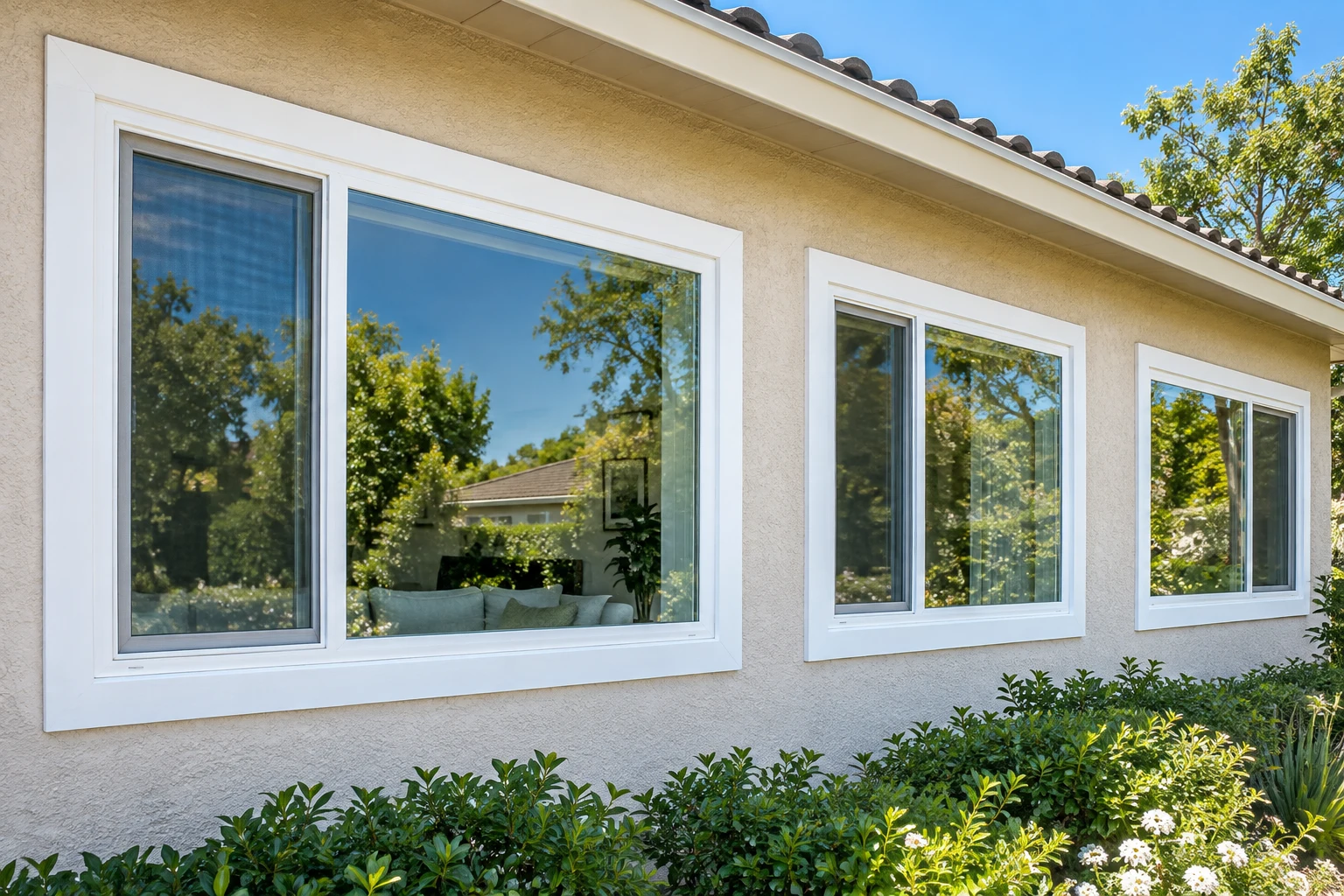
When you combine modern glass technology with insulated vinyl frames, you’re eliminating the root causes of hot window glass. You’re not patching symptoms. You’re replacing the failed component.
Energy-efficient vinyl windows work through:
- Multiple panes (usually double or triple) that create insulating air gaps
- Low-emissivity (low-E) coatings that reflect infrared radiation (heat) back outside
- Argon or krypton gas fill between panes for superior insulation
- Vinyl frames that don’t conduct heat
- Multi-seal designs that prevent air infiltration
- Proper installation that maintains the thermal integrity of the whole assembly
The result: glass that stays cool to the touch even in direct sun, interior rooms that maintain temperature without constant AC cycling, and energy bills that drop 15-30% depending on your current window condition.
This isn’t theoretical. We measure these improvements directly in homes throughout Southern California. Homeowners see lower bills within the first month of summer operation.
Vinyl windows are also durable. They don’t rot, don’t require painting, and the seals last 20+ years with proper installation. In a region where weather extremes range from 120-degree heat to occasional frost, vinyl’s stability matters.
Our Custom-Fit Window Solutions for Southern California Homes
We understand that every home is different. A 1970s ranch in Downey has different window needs than a modern home in Mission Viejo. Coastal properties in Manhattan Beach deal with salt spray. Desert homes in Victorville face extreme temperature swings.
We design window solutions specific to your home’s climate zone, sun exposure, and existing frame conditions. Our retrofit windows fit into existing frames, avoiding the extensive wall damage that full-frame replacement creates. If structural damage is present, full-frame replacement with custom manufacturing ensures your new windows perform exactly as designed.
Our process starts with a detailed in-home consultation. We measure heat coming through your windows using thermal imaging. We show you where the problem is and quantify how much conditioning energy you’re losing. You see the data in your own home.
From there, we discuss which windows drive the biggest problem, your budget priorities, and the timeline that works for your household. We provide clear pricing with no pressure. You understand exactly what you’re getting and why it solves your specific heat problem.
We serve homeowners across Los Angeles County, Orange County, Riverside County, San Bernardino County, and Ventura County. Whether you’re in Sherman Oaks, Costa Mesa, Murrieta, or Ojai, we bring the same diagnostic approach and custom manufacturing capability to your project.
What to Expect From Professional Window Installation
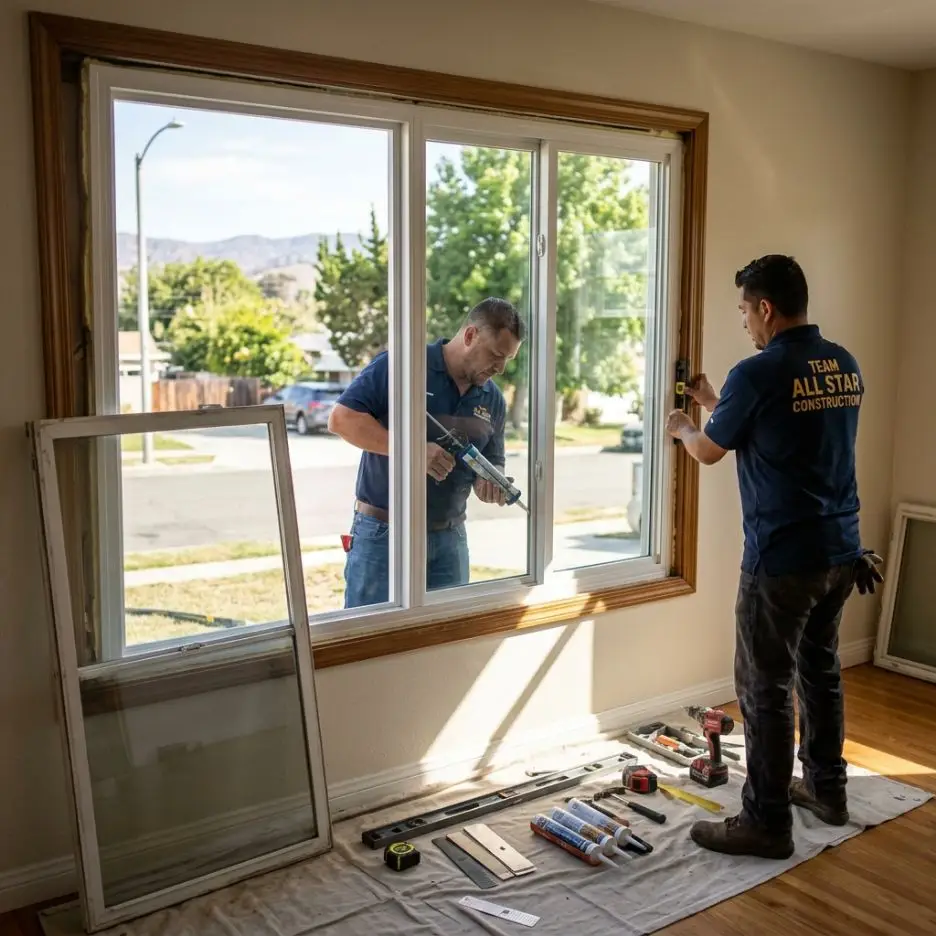
Proper installation makes or breaks window performance. A perfectly designed window installed carelessly becomes a source of air leaks and poor performance. We follow strict installation protocols to ensure every window performs as rated.
Our process includes:
- Complete removal of existing windows without damaging surrounding walls
- Proper flashing installed to prevent water infiltration
- Insulation applied around the frame perimeter
- Air sealing with approved materials
- Careful caulking that protects against moisture
- Testing and adjustment to ensure smooth operation
- Cleanup and final inspection
Professional installation adds cost compared to DIY approaches, but it’s where the actual performance of your investment is determined. A poorly installed energy-efficient window functions like a mediocre window. Properly installed, it performs exactly as designed.
The installation itself typically takes 1-3 days depending on how many windows you’re replacing. We schedule based on your availability and coordinate around your routine. There’s some noise and activity, but we manage the process to minimize disruption.
After installation, your windows require minimal maintenance. Occasional cleaning of glass and frames, and that’s it. Modern vinyl windows don’t need painting, sealing, or regular adjustments like older windows did.
Start with a no-pressure consultation where we show you what’s actually happening in your home. We’ll measure the heat problem, explain the best solution for your situation, and walk you through realistic costs and benefits. No guesses, no sales pressure. Just clear answers so you can make the right decision for your home.
Contact us today to schedule your in-home window assessment across Southern California.
For further reading: Window replacement in Southern California.
Get a free estimate for your home. No pressure—just clear answers and straightforward pricing. Call (310) 729-3013 or visit: https://teamallstarconstruction.com/contact/
Frequently Asked Questions (FAQ)
Why do my windows feel hot to the touch during the day?
Hot window glass usually means your windows aren’t insulating your home effectively. Single-pane windows, poor seals, or inadequate frame materials allow heat to transfer directly into your living space rather than reflecting it away. We’ve found that windows facing direct sun exposure make this problem especially noticeable in the afternoon and evening hours.
What’s the difference between a window retrofit and full replacement?
A retrofit installs new windows directly into your existing frame, which works well when your frames are still structurally sound. Full replacement removes the entire window system and installs new frames, giving us the ability to seal gaps, upgrade insulation, and customize the fit perfectly to your home’s opening. We recommend full replacement when frames show damage or when you want maximum energy efficiency gains.
Can new windows really reduce how hot my home gets?
Yes, our energy-efficient vinyl windows make a significant difference because they use multiple panes, insulating gases, and thermal breaks that prevent heat transfer. We design our installations to address your home’s specific sun exposure and orientation, so heat gain is minimized throughout the day. Most of our Southern California customers notice cooler interior temperatures and lower cooling costs within their first summer after installation.
- Categories: Window Heat & Home Comfort Problems, Window Testing & Performance Guides
- Tags: fix window heat issues, home heat problems, hot window glass causes, poor insulation windows, solar heat gain windows, window glass overheating, window heat problems, window heat solutions
Southern California Window Replacement Guide
Single Pane vs Dual Pane: Which Fits Your Home?
Replacement Windows Los Angeles Homeowners Choose
Retrofit Windows vs Full Frame: Which Fits?
A Guide to Full Window Replacement at Home
Vinyl vs Aluminum Windows for Southern California
Best Windows for Hot Climates in Southern California
A Homeowner’s Guide to Energy Efficient Windows
How to Reduce Window Heat at Home
About Total Home Windows
Total Home Windows is a Southern California-based window replacement company focused on helping homeowners improve energy efficiency, indoor comfort, and long-term home value through high-performance window installations.
Serving Los Angeles County, Orange County, Riverside County, San Bernardino County, and Ventura County, the company specializes in both vinyl retrofit (insert) and full-frame window replacement. Their work is tailored to the unique demands of California homes, including intense UV exposure, coastal conditions, and heat retention issues common in older properties.
Total Home Windows combines practical installation experience with a strong focus on energy performance—helping homeowners reduce cooling costs, improve insulation, and solve common problems like rooms that stay hot even with air conditioning. Their approach prioritizes clear recommendations, transparent pricing, and solutions that make sense for each home.
The content published by Total Home Windows is built on real installation knowledge, field-tested performance insights, and current best practices in window technology, including Low-E glass, argon-filled units, and energy-efficient design strategies. Their goal is to help homeowners make informed decisions without overpaying or choosing the wrong type of window system.
Ways to Reach Us
If you’re considering window replacement, we’re here to answer questions and provide clear, professional guidance based on your home and goals.
- teamallstarconstruction@gmail.com
- 301 E.9th St Suite 415 Redlands, CA 92374