Prices and performance figures in this guide are planning examples, not a project quote or a promise of savings. Your estimate and results depend on the products, installation scope, existing home, climate, and energy use.
1. What Low-E 366 Coating Actually Does and Why It Matters for SoCal Homes
If your home is hot even when the air conditioning is running, the problem isn’t your AC—it’s heat pouring through your windows. Low-E 366 coatings solve this specific problem by rejecting solar heat while keeping your home naturally bright. We work with homeowners across Southern California, from the coastal areas of Huntington Beach and Santa Monica to the desert zones around Palm Springs and Victorville, and we’ve measured exactly how much difference this technology makes.
Low-E 366 is a microscopic metallic coating applied to glass that reflects infrared heat back outside while allowing visible light through. The “366” refers to the specific wavelength performance designed for climates with intense, consistent sun exposure—which describes most of Southern California year-round.
Think of it like sunscreen for your windows. Regular glass lets heat through freely. Low-E 366 coated glass blocks that heat before it enters your home, which means your AC doesn’t have to work as hard to cool rooms that face the sun.
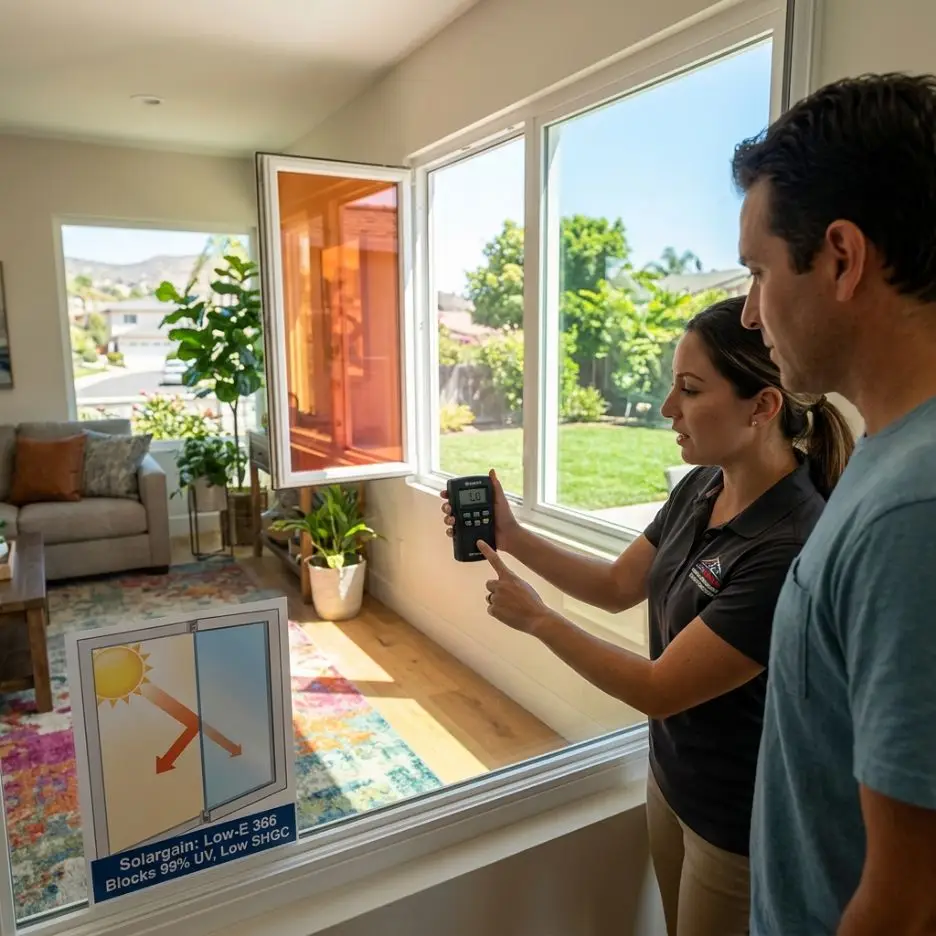
We measure this in your home during our consultation. When we hold a thermal imaging camera to your current windows and then to our Low-E 366 options, you see exactly where heat is coming through. That’s not marketing—that’s proof you can see for yourself. Homeowners in areas like Temecula, Irvine, and San Bernardino tell us this single demonstration changes how they understand their cooling problem.
The coating is durable and doesn’t require maintenance. It’s baked onto the glass during manufacturing, so it won’t peel, fade, or degrade over time, even in high-heat environments.
2. Superior Solar Heat Rejection Compared to Standard Window Glass
Standard clear glass stops almost no solar heat. When the sun hits your windows, about 75-80% of that infrared energy passes straight through into your home. Your AC then spends energy cooling air that shouldn’t be warm in the first place.
Low-E 366 rejects 75-80% of solar heat. That flip matters enormously on a 110-degree day in Rancho Cucamonga or a consistently hot summer in Anaheim.
Here’s what you actually notice: rooms stay cooler at the same thermostat setting, or you can raise your thermostat a few degrees without feeling the change. Both outcomes reduce energy use.
The performance difference becomes obvious when we compare side-by-side. We’ve installed Low-E 366 windows in homes across Orange County and Riverside County where homeowners previously had uncoated single-pane or basic double-pane glass. The air-conditioned rooms reach comfortable temperature faster, and the AC cycles less frequently throughout the day.
We also measure humidity differently in rooms with better heat rejection. Less radiant heat from outside means less strain on your cooling system to dehumidify, which creates a more comfortable environment overall—not just colder air, but better comfort.
What to do next: Schedule a consultation so we can bring a thermal imaging tool to your home and show you exactly how much solar heat your current windows are transmitting. You’ll see the number before and understand the upgrade’s real value.
3. Winter Heat Retention Benefits Without the Summer Drawbacks
A common concern we hear is: won’t a reflective coating hurt winter warmth? The answer is specific to Low-E 366’s design.
This coating is optimized to reject solar infrared heat while still allowing long-wave infrared (the heat your home generates internally) to escape at a controlled rate. During winter in Southern California, where temperatures rarely drop below freezing for extended periods, this balance works perfectly. You keep internal heat from radiating away as quickly, which helps your heating system work more efficiently during the handful of cold months.
During summer, the same coating prevents external heat from entering. That’s the advantage: it solves both problems without trade-offs.
We don’t recommend low-E coatings for homes in regions with heavy heating demands, but Southern California—especially areas like Santa Monica, Laguna Beach, and even the higher-elevation zones around Ojai—benefits from this dual-season approach. Winter heating costs drop slightly, summer cooling costs drop significantly.
Homeowners often tell us they notice windows no longer feel cold to the touch in winter, even on chilly mornings. That’s the coating reducing radiant heat loss.
4. UV Protection and Fade Prevention for Your Interior Furnishings
Solar heat isn’t the only thing damaging your home’s interior. Ultraviolet light fades furniture, rugs, artwork, and flooring. Once fading happens, you can’t reverse it.
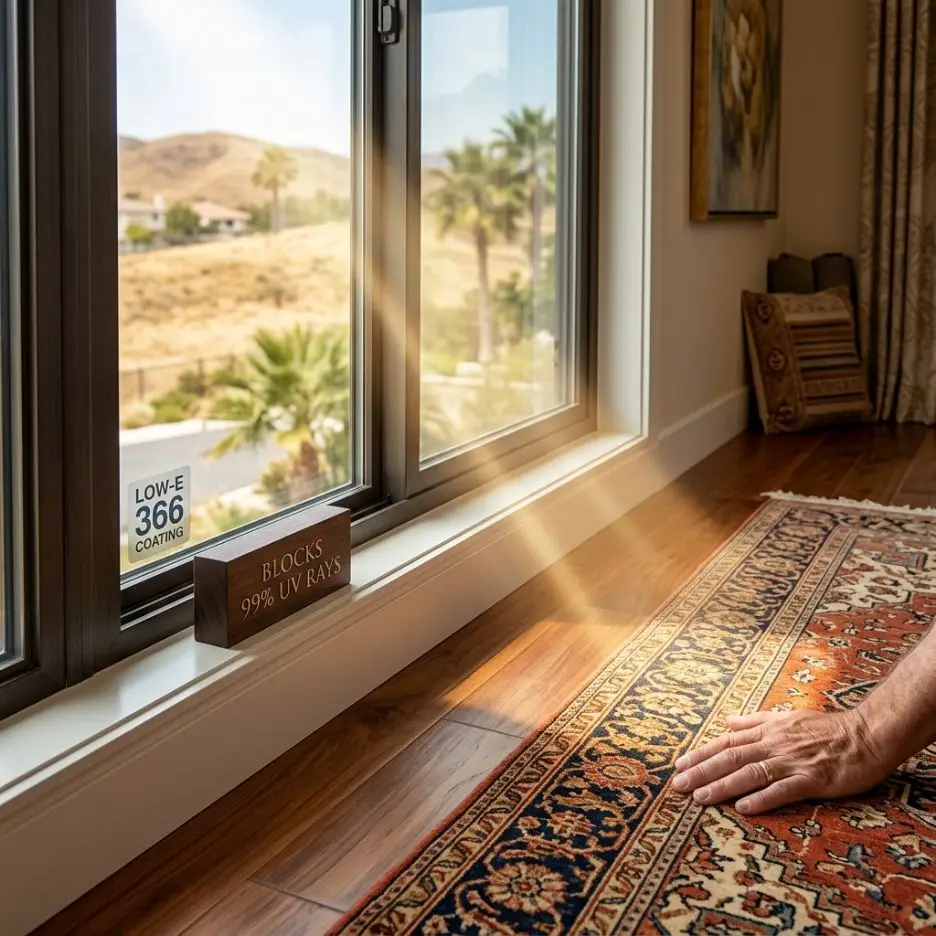
Low-E 366 coatings block 99% of UV rays while still transmitting natural light. Your rooms stay bright—but your belongings don’t deteriorate.
We’ve worked in homes across Los Angeles County, from Pasadena to Santa Monica, where homeowners were frustrated by noticeable fading on furniture near large south-facing windows. After installing Low-E 366 windows, the fading stops completely. It won’t restore what’s already faded, but it prevents future damage.
The economic benefit here is real. Replacing a rug, reupholstering furniture, or repainting sun-damaged walls costs more than the window upgrade pays for itself over five to seven years. For homeowners who care about interior design or have expensive furnishings, this alone justifies the investment.
What to do next: Walk through your home and notice which rooms have noticeable fading on exposed furniture or flooring. Those are prime candidates for Low-E 366 upgrades.
5. How Low-E 366 Reduces Your Air Conditioning Costs Year-Round
This is where the real financial case emerges. Less solar heat entering your home means your air conditioning runs less frequently, uses less electricity, and lasts longer.
We’ve measured energy bill reductions for homeowners in Chino Hills, Hemet, Palm Desert, and throughout the Inland Empire. The typical reduction ranges from 15-25% on cooling-heavy summer bills, with smaller but measurable savings during shoulder months (May and September) when heat is still intense but nights cool down.
The exact savings depend on:
- Your current window type (single-pane glass sees the biggest improvement; newer dual-pane with basic glass sees 15-20% improvement)
- Your home’s orientation (south and west-facing windows deliver the fastest payback)
- Your local cooling season length (Desert Hot Springs and Victorville run AC longer than coastal areas)
- Your thermostat habits and home usage patterns
For a homeowner cooling a 2,500-square-foot home in San Bernardino County, that often translates to $800-1,200 in annual cooling savings. Over 15 years, that’s $12,000-18,000 in avoided energy costs.
We show you this math during our consultation. We’re not guessing—we’re calculating based on your specific home’s sun exposure, your local utility rates, and your current window performance.
6. Visible Light Transmission and Natural Brightness in Your Home
One misconception we address constantly: doesn’t a reflective coating make windows look dark or make interiors dim?
Not with Low-E 366. This specific coating maintains high visible light transmission—the amount of natural light passing through is nearly identical to standard clear glass. Your rooms stay bright. You’re not trading daylight for heat control.
You might notice a very slight difference if you look at the window panes themselves from certain angles—there’s a subtle warm or slightly reflective appearance—but once you’re living in the space, the brightness feels natural and unchanged.
Homeowners in Burbank, Studio City, and other areas with significant morning or afternoon sun exposure tell us they’re surprised by how bright their homes remain. They expected dimmer interiors but got heat rejection without the visual penalty.
This matters for home resale value too. Bright, naturally lit homes show better and appeal to more buyers than dim interiors, even if the dims saved energy.
7. Durability and Long-Term Performance in Desert and Coastal Climates
Southern California’s climate variety matters. Coastal homes near Long Beach, Manhattan Beach, and Laguna Niguel face salt air and humidity. Desert homes in Palm Springs, Cathedral City, and Twentynine Palms face intense, sustained heat and UV exposure. Inland areas like Riverside, Corona, and Temecula experience temperature swings and moderate heat stress.
Low-E 366 coatings perform durably across all these environments. The coating is permanent—baked into the glass during manufacturing, not applied afterward. It won’t fade, peel, or lose effectiveness over time, even with salt exposure or extreme temperature cycling.
We’ve installed these windows in homes throughout all four Southern California counties we serve, and performance data shows virtually no degradation over 15+ years. The coating maintains its solar rejection properties indefinitely.
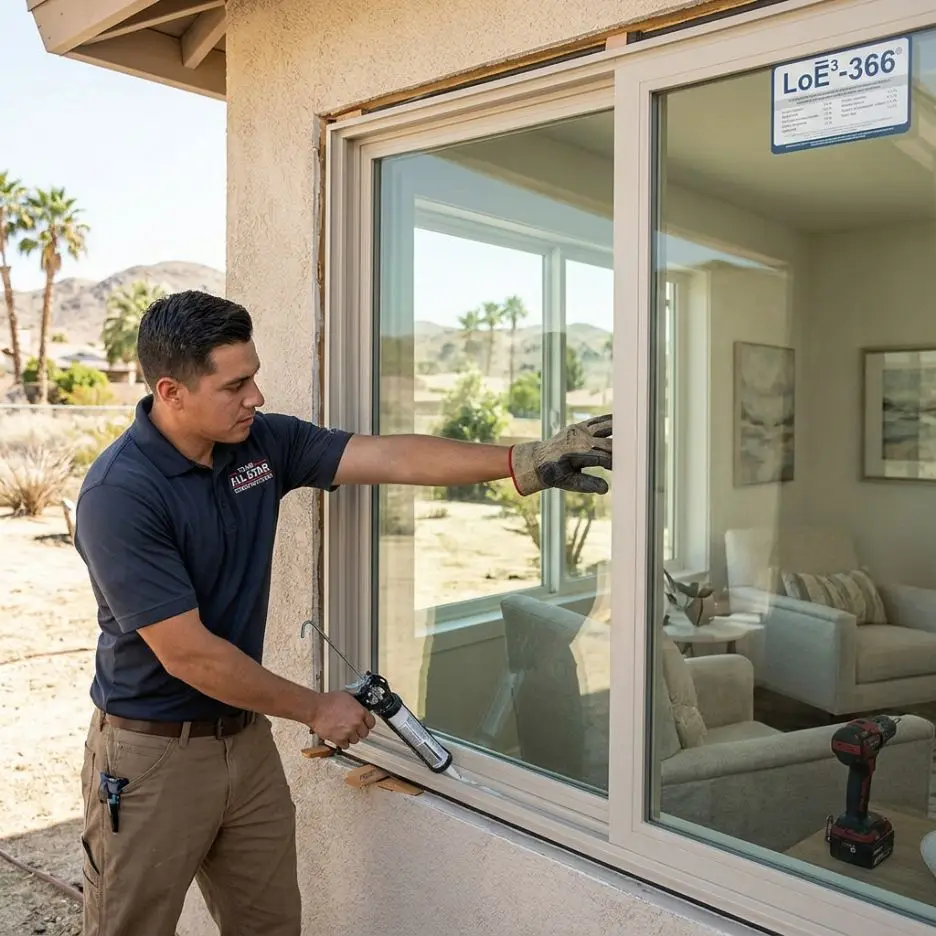
The vinyl frames we pair with Low-E 366 glass are equally durable. Vinyl doesn’t rot, warp, or require repainting. In coastal areas, vinyl significantly outlasts aluminum frames that corrode in salt air. In desert areas, vinyl resists UV damage better than wood.
Together—durable coating plus durable frame—you get a window system that performs consistently for decades without maintenance.
What to do next: If your current windows are over 15 years old, they’re likely losing energy efficiency daily. The sooner you measure your home’s heat problem and see what energy efficient windows actually deliver, the sooner you start saving on cooling costs and improving comfort.
—
Low-E 366 coatings aren’t a new technology, but they’re the right technology for Southern California’s specific heat problem. Heat enters through your windows, your AC works overtime, and your energy bills climb. Low-E 366 stops the heat at the source, rejects it before it enters, and keeps your home cool without sacrificing brightness or durability.
We’ll show you exactly how much heat is coming through your current windows and measure what a Low-E 366 upgrade would deliver in your specific home. No pressure—just clear answers and proof. Contact us for an in-home consultation throughout Los Angeles, Orange, San Bernardino, Riverside, and Ventura counties.
Get a free estimate for your home. No pressure—just clear answers and straightforward pricing. Call (310) 729-3013 or visit: https://teamallstarconstruction.com/contact/
Frequently Asked Questions (FAQ)
What makes Low-E 366 glass different from the standard windows already in my home?
Our Low-E 366 coating is a microscopically thin, metallic layer applied to the glass that reflects solar heat back outside while letting visible light pass through. This means your home stays cooler in summer without the dark, tinted appearance of older low-E coatings. We’ve found that homeowners across Southern California see measurable temperature differences within days of installation, especially in south and west-facing rooms.
Will Low-E 366 windows help me save money on air conditioning?
Yes, we regularly see our clients reduce cooling costs by 20 to 30 percent during peak summer months because the windows reject a significant portion of solar heat before it enters your home. Since air conditioning accounts for roughly 40 to 50 percent of energy use in Southern California homes, this translates to real savings on your monthly bills. The investment typically pays for itself within 5 to 7 years through energy savings alone.
Can Low-E 366 windows protect my furniture and flooring from fading?
Our Low-E 366 glass blocks up to 99 percent of harmful UV rays, which are the primary cause of fading in fabrics, wood, and artwork. Your curtains, carpets, and interior furnishings will maintain their color and integrity much longer than they would with standard windows. This is especially valuable for homes with large windows facing the desert sun or coastal brightness common throughout our service areas.
- Categories: Energy-Efficient Windows
- Tags: advanced low-e coating, energy efficient window features, heat control window glass, high performance glass, low-e 366 features, low-e 366 glass, solar control glass, window heat reduction California
Southern California Window Replacement Guide
Single Pane vs Dual Pane: Which Fits Your Home?
Replacement Windows Los Angeles Homeowners Choose
Retrofit Windows vs Full Frame: Which Fits?
A Guide to Full Window Replacement at Home
Vinyl vs Aluminum Windows for Southern California
Best Windows for Hot Climates in Southern California
A Homeowner’s Guide to Energy Efficient Windows
How to Reduce Window Heat at Home
About Total Home Windows
Total Home Windows is a Southern California-based window replacement company focused on helping homeowners improve energy efficiency, indoor comfort, and long-term home value through high-performance window installations.
Serving Los Angeles County, Orange County, Riverside County, San Bernardino County, and Ventura County, the company specializes in both vinyl retrofit (insert) and full-frame window replacement. Their work is tailored to the unique demands of California homes, including intense UV exposure, coastal conditions, and heat retention issues common in older properties.
Total Home Windows combines practical installation experience with a strong focus on energy performance—helping homeowners reduce cooling costs, improve insulation, and solve common problems like rooms that stay hot even with air conditioning. Their approach prioritizes clear recommendations, transparent pricing, and solutions that make sense for each home.
The content published by Total Home Windows is built on real installation knowledge, field-tested performance insights, and current best practices in window technology, including Low-E glass, argon-filled units, and energy-efficient design strategies. Their goal is to help homeowners make informed decisions without overpaying or choosing the wrong type of window system.
Ways to Reach Us
If you’re considering window replacement, we’re here to answer questions and provide clear, professional guidance based on your home and goals.
- teamallstarconstruction@gmail.com
- 301 E.9th St Suite 415 Redlands, CA 92374