Prices and performance figures in this guide are planning examples, not a project quote or a promise of savings. Your estimate and results depend on the products, installation scope, existing home, climate, and energy use.
1. What Low-E Glass Coatings Actually Do and Why They Matter for Your Home
Your home feels hot even when your AC runs all day. The real culprit isn’t your air conditioner—it’s heat entering through your windows. Low-E glass coatings stop that heat before it gets inside, and the right choice can cut your cooling costs by 20-30% while keeping your home comfortable.
We work with Southern California homeowners every day who think their AC is failing when the actual problem is uncoated or outdated glass letting in too much solar heat. Once we show them the difference a low-E coating makes, they understand why their energy bills spike in summer.
Let’s walk through the seven best low-E coating options and why some deliver real results while others fall short.
Low-E stands for “low emissivity.” The coating is an invisible layer of metal oxide applied to glass that reflects infrared heat back outside while letting visible light through. Think of it as a selective filter: it stops the heat you don’t want while preserving the light you do.
Here’s what happens without it. Raw glass absorbs solar heat and re-radiates it into your home. In summer, this turns your windows into heat radiators working against your AC. With low-E coating, much of that heat bounces back outside before it ever reaches your interior.
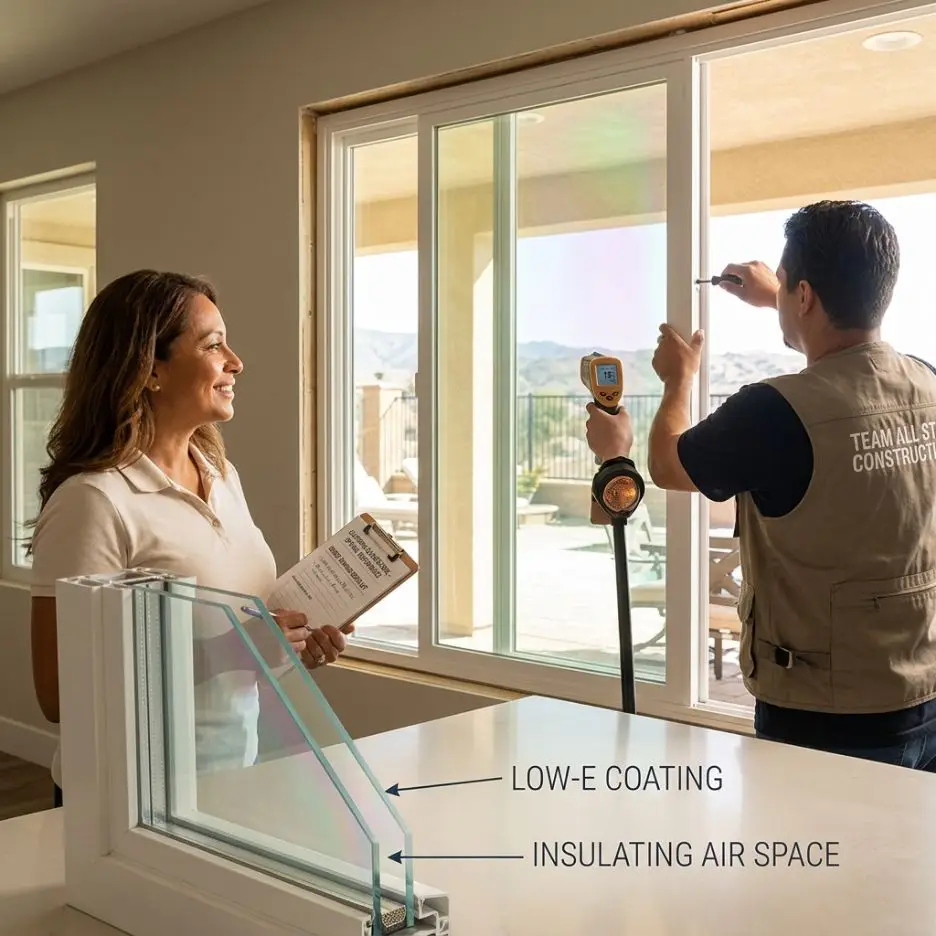
We measure this difference in your home during consultations. You’ll actually see how much heat is coming through uncoated windows versus coated ones. That’s not a guess—it’s data from your specific rooms and sun exposure.
What to do next: Schedule an in-home assessment so we can show you exactly where heat is entering your windows and how much cooling energy you’re losing.
2. Single-Pane Low-E Coatings: Why This Budget Option Leaves You Overheating
Single-pane windows with a low-E coating are better than uncoated single-pane glass, but they’re still a band-aid solution. The coating helps, but single pane glass itself is a poor insulator. Heat still conducts right through the glass into your home.
Here’s the math: A standard single-pane window loses or gains about 10 times more heat than a double-pane window. Even with low-E coating, that single pane can’t match the thermal resistance you need in Southern California’s intense summer sun.
We see homeowners choose single-pane low-E thinking they’re getting a great deal. Six months later, they’re frustrated because their AC bill is still high and their home still gets hot in the afternoon. The coating alone can’t overcome the fundamental limitation of having just one layer of glass.
If you’re in an older home with single-pane windows, a low-E coating is a temporary improvement, but it won’t give you the cooling performance or comfort upgrade your home deserves. This is where you discover the real problem isn’t just coating—it’s the entire window system.
What to do next: If you have single-pane windows, don’t invest in coating alone. Ask us about window replacement options that give you low-E coating plus the insulation you actually need.
3. Double-Pane Low-E Systems: The Standard That Delivers Real Cooling Savings
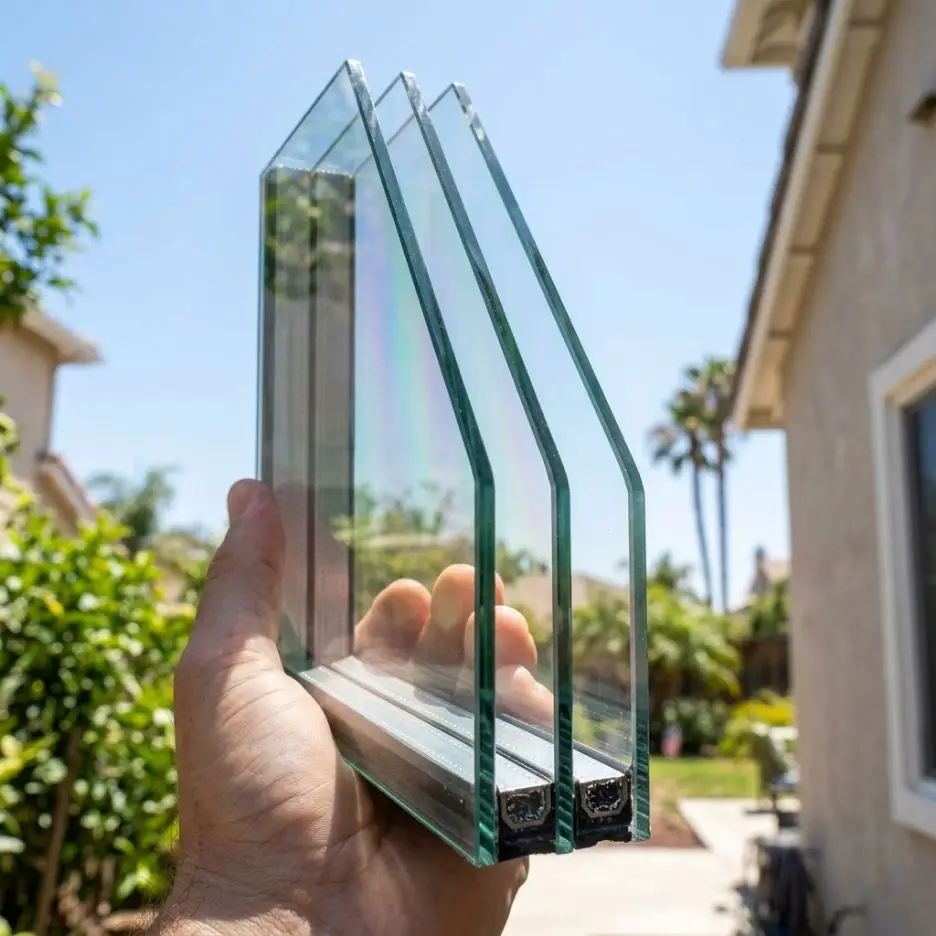
Double-pane windows with low-E coating are where results start. Two panes of glass create an air space between them, which insulates far better than a single pane. Add a low-E coating to one or both panes, and you’ve got genuine heat rejection that homeowners actually feel and see in their energy bills.
Here’s how it works: The outer pane reflects much of the solar heat back outside. The air space acts as insulation. The inner pane stays cooler. Your AC doesn’t fight as hard, and your home stays comfortable even on 100-degree days.
Most homes in Southern California need this baseline. We typically install double-pane systems with a low-E coating on the outer surface, which blocks heat while maintaining excellent visibility and natural light. You get the cooling performance without any darkening of your view.
The difference is measurable. We’ve seen homeowners reduce their cooling costs by 20-25% in the first summer after upgrading to double-pane low-E windows. That adds up to real money, especially if you’re running AC from May through October.
What to do next: If you’re considering any window upgrade, double-pane low-E is the minimum standard we recommend for Southern California homes. We’ll show you the cost difference and payback timeline during a consultation.
4. Triple-Pane Low-E Technology: Maximum Heat Rejection for Extreme California Summers
Triple-pane windows are the premium choice for homes in extreme heat zones or homes with significant western or southern sun exposure. Three panes with two air spaces (or one air space and one insulating gas fill) create maximum thermal resistance.
In areas like Indio, Palm Desert, Cathedral City, and the interior valleys, summer temperatures regularly exceed 115 degrees. Triple-pane systems with spectrally selective low-E coating handle that intensity better than double-pane systems alone. You get superior heat rejection and better interior comfort.
The trade-off is cost and weight. Triple-pane windows run 15-25% more than comparable double-pane systems and are heavier, which matters for some retrofit situations. But if your home is in a high-heat zone or has persistent heat problems despite other upgrades, the investment pays back through lower AC usage and improved comfort.
We recommend triple-pane systems for Mojave Desert communities, mountain homes with full sun exposure, and any property where the homeowner has complained about afternoon heat for years.
What to do next: If your home is in one of our high-heat service areas, let’s assess whether triple-pane makes financial sense for your specific situation.
5. Spectrally Selective Coatings: How We Block Heat Without Blocking Light
Spectrally selective low-E coatings are engineered to block infrared heat while transmitting visible light and even some beneficial near-infrared wavelengths. The result is maximum cooling performance without darkening your home or making your windows look tinted.
This technology matters because standard low-E coatings sometimes create a subtle tint or reduce the brightness of natural light. Spectrally selective coatings get around that problem by being selective about which wavelengths they block. You get the heat rejection you need without losing the natural light quality you want.
We use spectrally selective coatings in south and west-facing windows where solar heat gain is most intense. On the north side of homes, we often use different low-E formulations that balance heat rejection with the home’s heating needs during winter months.
The science here is real, but what matters to you is the experience: your home stays cool, your view stays clear, and natural light fills your rooms without creating a greenhouse effect.
What to do next: When we design your window system, we’ll specify the right low-E coating type for each side of your home based on sun exposure and your climate zone.
6. Our Custom Low-E Solutions: Built for Your Specific Climate Zone
We don’t install the same window coating in Long Beach as we do in Victorville. Southern California’s climate variations are huge, and your window solution should reflect that.
Coastal homes in Santa Monica, Newport Beach, and Ventura deal with salt air and moderate heat. Inland homes in Rancho Cucamonga, Temecula, and Moreno Valley face extreme summer heat. Desert properties in Palm Springs and Yucca Valley need different performance standards than foothill homes in the San Gabriel Mountains.
We assess your specific location, sun exposure, current cooling costs, and comfort complaints. Then we recommend a low-E coating type and window system designed for your exact situation. For a west-facing room in Irvine with all-day sun, that’s different from a north-facing wall in Santa Paula.
This approach means you’re not paying for extra performance you don’t need, and you’re not settling for insufficient performance in high-heat zones. You get the right solution for your home.
What to do next: Schedule a consultation. We’ll measure the heat coming through your current windows and recommend the specific low-E system that solves your problem without over-specifying.
7. Installation Quality Separates Results from Disappointment
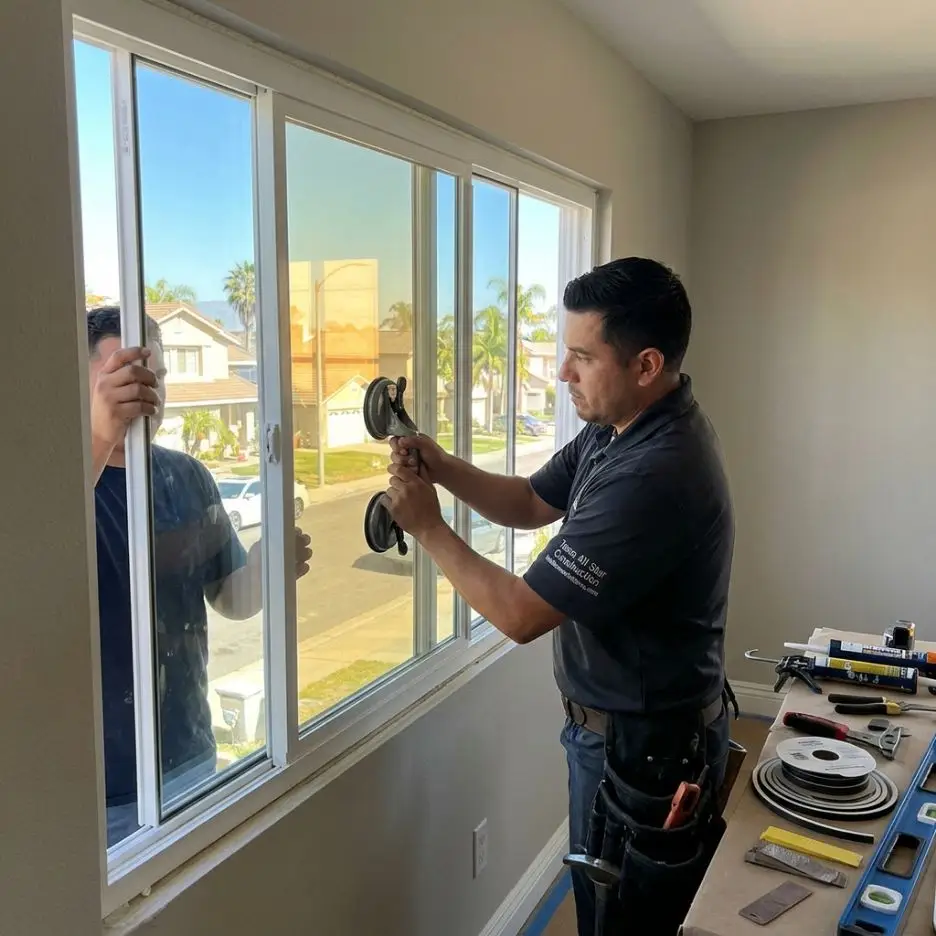
The best low-E coating on the best glass means nothing if installation is sloppy. We see windows installed by other contractors with gaps, poor sealing, and misaligned frames that let conditioned air leak out and hot air leak in.
Quality installation means precise measurements, proper frame preparation, correct fastening and sealing, and attention to details that don’t show but absolutely matter. A poorly installed triple-pane system performs like a poorly installed double-pane system.
We handle all our own installations. That means the same team that measures your heat problem is the team that installs your solution. Confirm the installation team, relevant training, supervision, and responsibility for the work in your written project agreement. We’re accountable for your results.
When we install your windows, we’ll show you how they perform during installation and after they’re sealed. You’ll see the difference between the old windows and the new ones. No guessing, no hoping—just clear proof that your cooling problem is solved.
What to do next: Get a consultation with us. We’ll show you what’s actually happening in your home and recommend a solution we install to our own high standards. No pressure—just honest answers about what your home needs.
Your windows are either your biggest heat problem or your best cooling asset. We help Southern California homeowners move from overheating to comfortable, and from high AC bills to savings that compound every month.
Let’s show you what’s possible for your home.
Get a free estimate for your home. No pressure—just clear answers and straightforward pricing. Call (310) 729-3013 or visit: https://teamallstarconstruction.com/contact/
Frequently Asked Questions (FAQ)
What low-E glass coating should I choose for my Southern California home?
We recommend starting with double-pane low-E systems for most homeowners, as they deliver the best balance of cooling savings and cost-effectiveness in our climate. If you’re in an extreme heat zone like the Coachella Valley or Inland Empire, we often suggest triple-pane low-E technology to maximize heat rejection during peak summer months. Our in-home consultants assess your specific location, window orientation, and budget to recommend the right solution for your property.
How much can I actually save on cooling costs with low-E coatings?
We typically see homeowners reduce their cooling expenses by 20-30% when upgrading to quality low-E windows, though results vary based on your current window condition, home orientation, and local climate zone. Double-pane systems with spectrally selective coatings perform particularly well because they reflect solar heat while still allowing natural light through.
We’re honest about results: older single-pane windows to new low-E replacements deliver the biggest savings, while retrofitting existing frames shows more modest but still meaningful reductions.
Do you service my area in Southern California?
We install windows throughout Los Angeles, Orange, San Bernardino, Riverside, and Ventura counties, covering everything from coastal communities like Huntington Beach to desert regions like Palm Springs and Victorville. Whether you’re in Beverly Hills, Irvine, Rancho Cucamonga, or Temecula, we have the regional expertise and installation capacity to handle your project. Contact us to confirm service availability for your specific address and schedule your free in-home consultation.
- Categories: Energy-Efficient Windows
- Tags: best low-e coatings, cool home windows, energy efficient glass California, heat blocking window glass, low-e glass coatings, low-e window coating types, solar control glass, window heat reduction
Southern California Window Replacement Guide
Single Pane vs Dual Pane: Which Fits Your Home?
Replacement Windows Los Angeles Homeowners Choose
Retrofit Windows vs Full Frame: Which Fits?
A Guide to Full Window Replacement at Home
Vinyl vs Aluminum Windows for Southern California
Best Windows for Hot Climates in Southern California
A Homeowner’s Guide to Energy Efficient Windows
How to Reduce Window Heat at Home
About Total Home Windows
Total Home Windows is a Southern California-based window replacement company focused on helping homeowners improve energy efficiency, indoor comfort, and long-term home value through high-performance window installations.
Serving Los Angeles County, Orange County, Riverside County, San Bernardino County, and Ventura County, the company specializes in both vinyl retrofit (insert) and full-frame window replacement. Their work is tailored to the unique demands of California homes, including intense UV exposure, coastal conditions, and heat retention issues common in older properties.
Total Home Windows combines practical installation experience with a strong focus on energy performance—helping homeowners reduce cooling costs, improve insulation, and solve common problems like rooms that stay hot even with air conditioning. Their approach prioritizes clear recommendations, transparent pricing, and solutions that make sense for each home.
The content published by Total Home Windows is built on real installation knowledge, field-tested performance insights, and current best practices in window technology, including Low-E glass, argon-filled units, and energy-efficient design strategies. Their goal is to help homeowners make informed decisions without overpaying or choosing the wrong type of window system.
Ways to Reach Us
If you’re considering window replacement, we’re here to answer questions and provide clear, professional guidance based on your home and goals.
- teamallstarconstruction@gmail.com
- 301 E.9th St Suite 415 Redlands, CA 92374