Prices and performance figures in this guide are planning examples, not a project quote or a promise of savings. Your estimate and results depend on the products, installation scope, existing home, climate, and energy use.
Why Window Quality Matters More Than Price Alone
When you’re comparing window prices, it’s easy to pick the cheapest option and move on. But windows aren’t like other home upgrades. They sit in your walls for 20-30 years, working every single day to manage heat, sound, and your home’s comfort. A $200 difference per window adds up—but what matters more is what that difference actually buys you.
The real question isn’t “How cheap can I go?” It’s “What will my windows actually do for my home?
We’ve walked through homes across Southern California with windows that looked fine on the surface but were silently letting heat pour inside. The homeowner felt it—hotter rooms, higher AC bills, uneven temperatures. But they didn’t realize the windows were the problem. That’s the gap between a cheap window and one built properly.
Premium windows perform differently because they’re engineered differently. Better frames, better seals, better glass technology. Affordable options can still do a solid job, but they typically have tradeoffs. Understanding those tradeoffs before installation matters far more than just comparing price tags.
Action step: Before deciding, consider how long you’ll own your home. If it’s 10+ years, performance and durability become more important than upfront cost.
Understanding the Real Cost of Low-Quality Windows
Low-cost windows fail in predictable ways. The first sign is usually energy loss. Cheap frames conduct heat more easily. Seals degrade faster. Glass coatings aren’t as effective at blocking UV and solar heat.
In a Southern California climate, this translates directly to money. When outdoor temps hit 95-105 degrees, poor-performing windows mean your AC works constantly to cool spaces. We’ve measured temperature differences of 8-12 degrees on the inside surface of cheap windows versus better-quality options—in the same room, same time of day.
Financing may be available through third-party lenders for qualified applicants. Availability, APR, fees, down payment, and repayment terms depend on the lender and approval. Review the complete loan terms before accepting.
Beyond energy loss, low-quality windows develop other problems:
- Seals fail within 5-8 years, allowing air infiltration and moisture inside the glass
- Frames warp or become loose in our heat cycles and direct sun
- Locks and hardware wear out quickly with heavy use in dusty inland areas
- Condensation and fogging appear earlier, blocking views and signaling seal failure
The “hidden cost” is the frustration. A window that looks cloudy or loses its seal isn’t easily fixed—you’re looking at re-replacement sooner than expected.
Action step: Ask any window company how long their budget options typically last and what their failure rate looks like. The honest answer tells you everything.
What Makes Premium Windows Worth the Investment
Premium windows are built for the long term and for performance. They typically include:
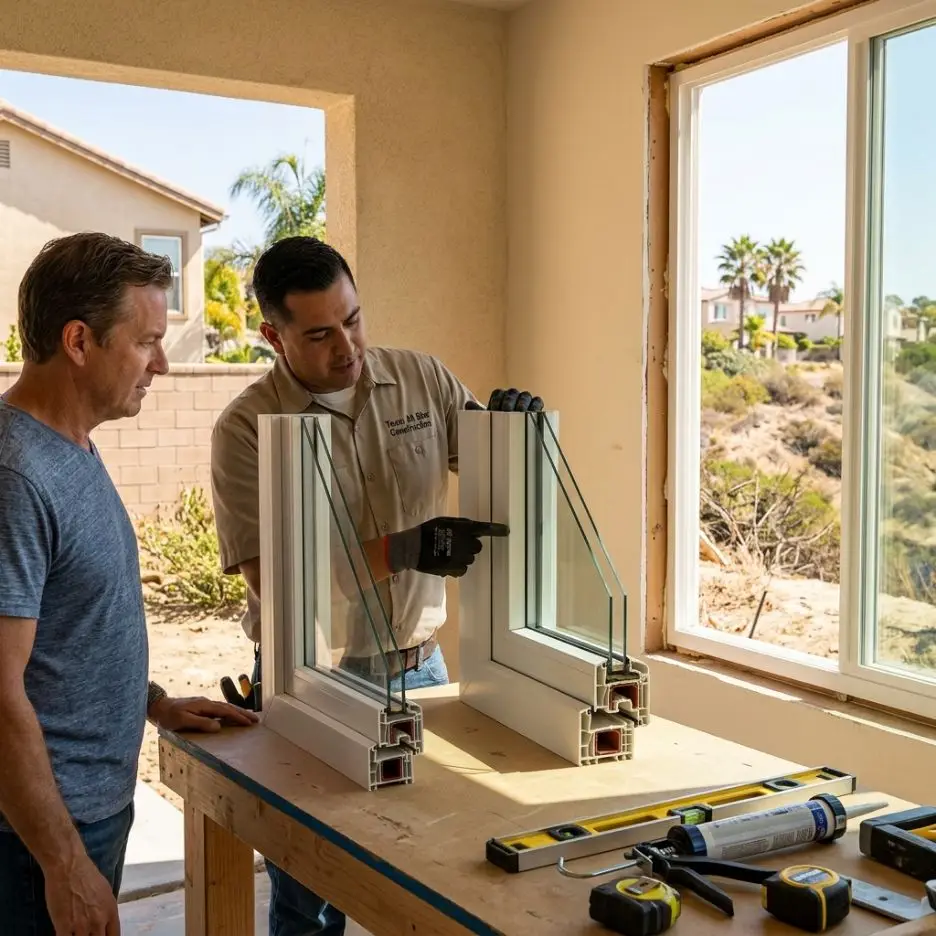
- Multi-chamber vinyl frames with thermal breaks that slow heat transfer
- Double or triple-pane glass with low-emissivity (Low-E) coatings
- Advanced spacer systems that reduce condensation and edge heat loss
- Superior sealing technology with multiple gaskets and compression seals
- Hardware and locks built to handle temperature expansion and heavy use
These features work together. A Low-E coating alone might save 15-20% on heating and cooling costs. Add insulating frames and better seals, and you’re looking at 25-35% total efficiency gains compared to basic windows.
The other value is durability. Premium frames hold their shape through temperature swings. Seals stay intact longer. Hardware functions smoothly after a decade. You’re not replacing windows again in 15 years—you’re genuinely looking at 25-30 year lifespan.
For homes across coastal areas like Santa Monica, Huntington Beach, or inland regions like Temecula and Palm Springs, premium windows handle environmental stress better. Salt air and intense heat don’t degrade premium frames and seals as quickly.
Action step: Compare warranty lengths between options. Premium windows usually carry 15-25 year warranties on seals and frames. Budget options often max out at 5-10 years. That’s your clearest sign of expected lifespan.
Our Window Performance Standards for Southern California Climates
We don’t pick windows based on brand name. We specify them based on what actually performs in this region’s specific conditions.
Southern California doesn’t have one climate. Coastal areas face salt spray, moderate heat, and high humidity. Inland valleys experience intense solar gain, low humidity, and temperature swings from 60 degrees at night to 110 during the day. Desert communities deal with extreme heat and minimal moisture. Each area stresses windows differently.
Our window selections account for this. For coastal homes, we prioritize corrosion resistance and frame durability. For inland homes, we emphasize solar control and thermal performance. Desert installations focus on heat rejection and seal stability under extreme temperature cycling.
Every window we install meets these baseline standards:
- Minimum NFRC U-value of 0.32 (heat transfer resistance) for energy efficiency
- Low-Solar-Gain (LSGA) Low-E coatings for homes with significant sun exposure
- Vinyl frames with minimum 3-4 chambers for insulation
- Compression seals on all moving parts to prevent air infiltration
We measure performance in your specific home. Before installation, we document where heat is entering, which windows are failing, and what improvement you can expect. You’re not guessing—you’re seeing the actual heat problem.
Action step: Ask about thermal imaging before your window project begins. We’ll show you exactly where heat is coming in, so you know why we’re recommending specific products.
Comparing Affordable and Premium Options Side-by-Side
Here’s what you’re actually trading when you choose affordable over premium:
Affordable Windows ($250-400 per window installed)
- Single Low-E coating instead of dual coatings
- Simpler vinyl frames (fewer chambers)
- Standard sealing systems
- 5-10 year seal warranty
- 15-20% better efficiency than old single-pane windows
- Expected lifespan: 15-20 years
Mid-Range Windows ($400-700 per window installed)
- Advanced Low-E coating technology
- Multi-chamber frames with thermal breaks
- Upgraded compression seals
- 10-15 year seal warranty
- 25-30% better efficiency than old single-pane windows
- Expected lifespan: 20-25 years
Premium Windows ($700-1,200+ per window installed)
- Dual Low-E coatings with solar control options
- Maximum insulation in frame design
- Multiple gaskets and advanced sealing
- 15-25 year seal warranty
- 30-40% efficiency improvement
- Expected lifespan: 25-30+ years
For a typical Southern California home needing 12 windows, affordable options might cost $3,000-4,800 total. Premium options might run $8,400-14,400. That’s a real difference—but the math changes when you factor in durability and energy savings over 20-25 years.
Action step: For homes in high-heat areas (inland valleys, desert regions), skip the affordable tier entirely. The extra cost of mid-range or premium pays back within 8-10 years through energy savings.
Energy Efficiency Ratings and Your Long-Term Savings
Every window has an NFRC (National Fenestration Rating Council) label showing U-value (heat loss) and Solar Heat Gain Coefficient (how much solar heat comes through).
In Southern California, Solar Heat Gain matters most. Even in winter, the sun heats your home. In summer, minimizing solar gain is crucial for AC efficiency.
A single-pane window from the 1990s might have a U-value of 0.85 and SHGC of 0.80. That means 80% of solar heat passes through directly into your home.
A quality affordable window brings those to U=0.32 and SHGC=0.23. That’s massive improvement—but summer sun still gets in.
A premium window with advanced Low-E coating might hit U=0.28 and SHGC=0.17. Now your home stays significantly cooler in direct sun.
Over a summer season in Inland Empire regions, this means your AC runs 15-25% less. In Phoenix-like heat (like Yucca Valley or Palm Springs conditions), the difference is even more dramatic.
Action step: Request a detailed energy savings estimate for YOUR home’s size, age, and orientation. We measure actual conditions in your space to project real savings, not generic numbers.
Durability and Lifespan: What You’ll Actually Get
“How long will these windows last?” is really asking two different things: cosmetic lifespan (do they look good?) and functional lifespan (do they still seal and insulate?).
Budget windows typically have a cosmetic lifespan of 15-18 years in Southern California’s sun and heat. The frames stay in decent shape, but seals start failing around year 8-10. Once a seal fails, that window is essentially dead from a performance perspective—moisture gets in, the glass fogs, and you’ve lost all insulation benefit.
Mid-range windows usually keep their cosmetic appearance for 20-22 years. Seals hold strong for 12-15 years before you might see occasional moisture issues in extreme conditions.
Premium windows are genuinely different. They’re still absorbing the same sun and temperature swings, but they’re engineered to handle it. Seals often remain effective for 18-25 years. The frame stays dimensionally stable. At 25 years, a premium window might have a few cosmetic signs of age but still functions like a much newer window.
In high-stress environments—like beachfront homes in Malibu or Laguna Niguel dealing with salt air, or desert homes in Indio and Cathedral City with extreme heat—this durability difference shows up fast. A $1,000 premium window in a harsh climate often outlasts a $300 affordable window by a full decade.
Action step: Check the warranty period on both the frame and the seal specifically. A 20-year seal warranty gives you honest indication of expected lifespan.
Custom Fit Installation That Maximizes Performance
Here’s where the actual value lives: installation quality determines whether any window performs as designed.
An affordable window installed poorly will fail faster. A premium window installed with gaps or shortcuts will underperform dramatically. We’ve opened walls to find windows installed with minimal caulk, poor shims, or inadequate insulation around the frame—and the homeowner blamed the window itself.
Our process is different because we measure and customize for each opening.
Every window opening in your home is slightly different—even two “identical” windows aren’t perfectly square and level. Stock installation assumes generic conditions. Custom installation means:
- Precise measurement of each opening in your home
- Removal of old windows without damaging frame or siding
- Proper shimming to ensure square, level installation
- Complete insulation around the frame cavity
- Proper flashing and caulking to prevent water intrusion
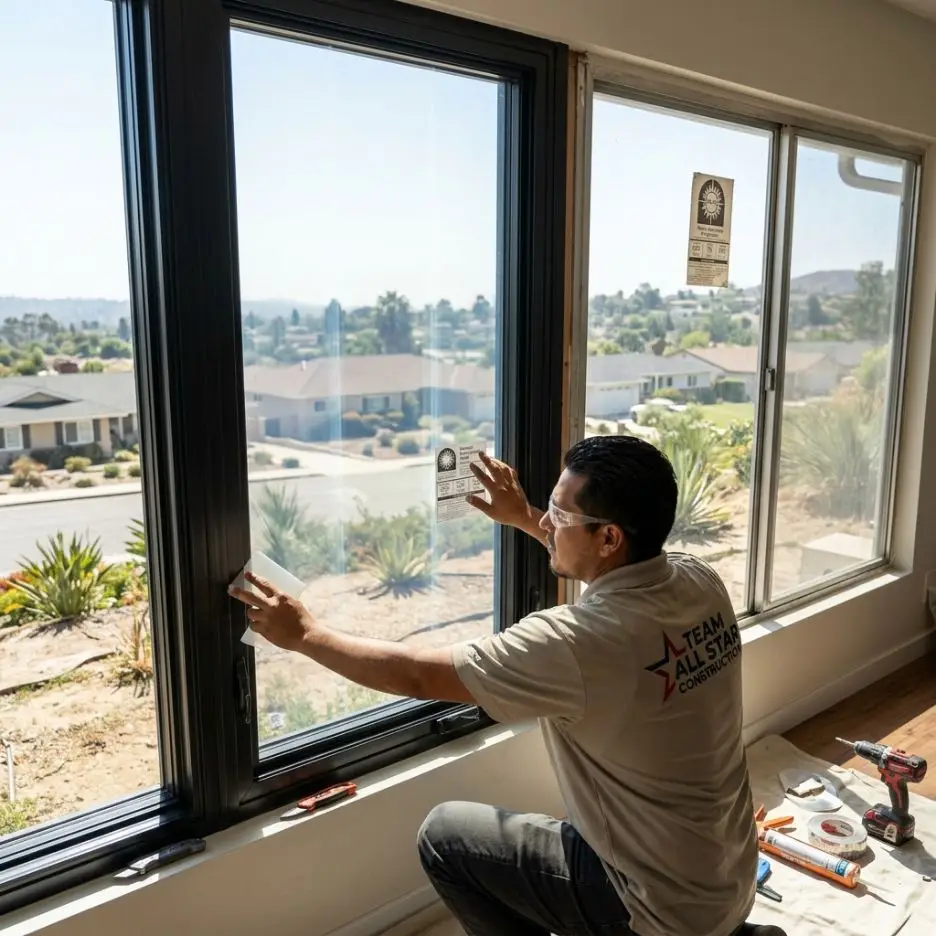
- Testing for air seal and proper operation before we call it done
This is why we specify window performance and installation together. A great window installed poorly is wasted money. An adequate window installed perfectly will outperform a premium window with bad installation.
We document this with photos and measurements so you see exactly what’s happening in your walls.
Action step: When getting quotes, ask specifically about how each company handles the installation cavity. Do they measure each opening individually? What insulation do they use? This matters more than the window brand.
How We Help You Choose the Right Solution
We don’t push premium windows on everyone. We help you match the window to your actual needs and budget.
Here’s our process:
Step 1: Thermal Imaging Assessment We photograph where heat is entering your home. This shows exactly which windows are costing you money and how much.
Step 2: Home Analysis We document your home’s age, window count, sun exposure, climate zone, and budget. A newer home in a shaded area has different needs than a 1980s ranch in inland full sun.
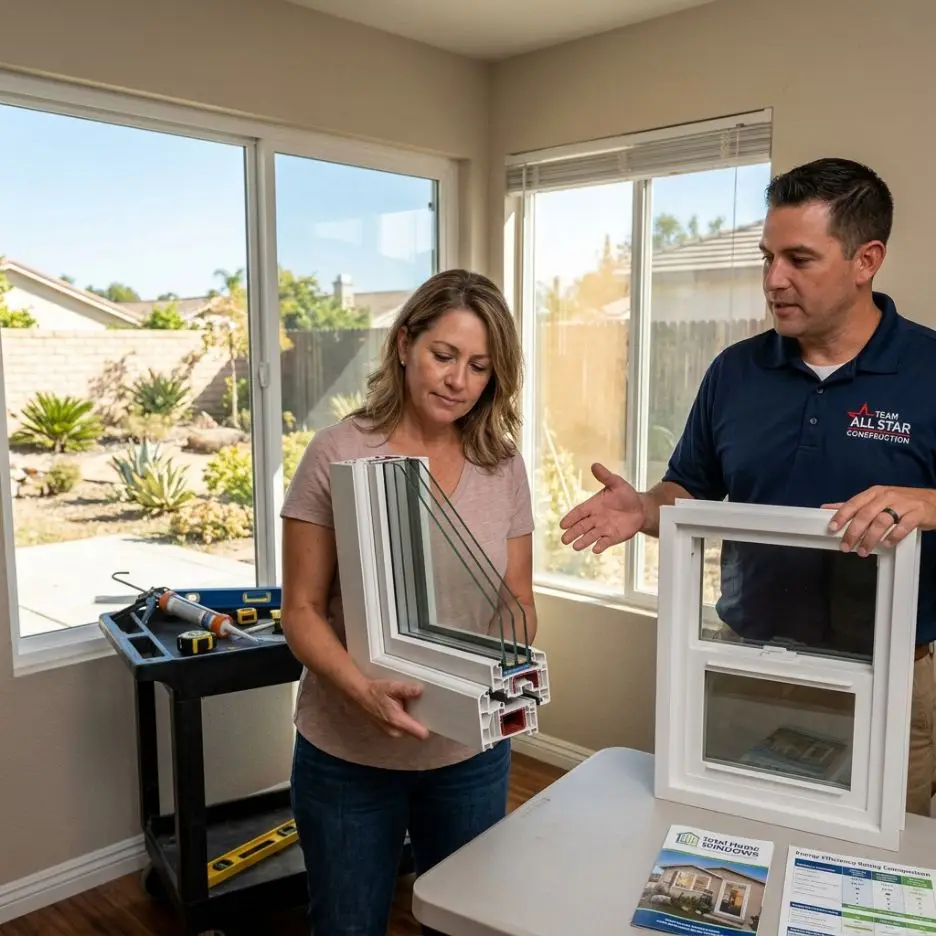
Step 3: Clear Option Breakdown We walk through what affordable, mid-range, and premium options actually deliver for your specific situation. No vague talk about “quality”—actual energy costs, lifespan, and performance differences.
Step 4: Honest Recommendation We recommend the level that makes sense. For some homes, affordable windows with perfect installation are the right call. For others, premium windows save enough energy to pay for themselves. For most, mid-range strikes the real balance.
Step 5: Custom Installation Plan Once you choose, we specify exactly what’s going in each opening and what installation detail matters for that window type.
You see the problem in your home, understand the solution, and know exactly what you’re paying for. No pressure—just clarity.
Action step: Schedule a free in-home consultation. We’ll show you the heat entering your home and what performance levels actually deliver for your situation.
Why Team All Star Construction Windows Outperform Budget Alternatives
We’ve seen the same windows installed by different companies with wildly different results. The window itself is only part of the story.
What sets us apart comes down to measurement and accountability. We don’t guess at performance—we measure it. We document how much heat is entering your home before installation, and we prove improvement after.
We also specify windows for regional conditions, not just brand reputation. A window sold in Nevada might not be ideal for coastal moisture. One built for Arizona heat might be overkill for coastal climates. We match the window to your exact location and conditions.
Our installation standards are stricter than industry minimum. Proper shimming, insulation, flashing, and sealing aren’t optional—they’re how we guarantee performance. We’re not cutting corners to hit a price point.
When you choose us, you’re getting windows paired with installation expertise specific to Southern California climates. That combination is what actually determines whether you feel comfortable in your home and whether your energy bills drop.
Action step: Compare not just window prices, but installation practices. Ask to see photos of installation cavities and ask about their sealing process. Better questions reveal better contractors.
Making Your Final Decision: The Smart Investment Approach
The decision between affordable and premium windows isn’t really about price. It’s about the question: “What will actually fix my home’s heat problem?”
If your home is losing significant energy through windows (and most homes in Southern California are), cheaper windows solve part of the problem. Better windows solve more of it and last longer while doing it.
Here’s the honest math for most Southern California homes:
- Affordable windows: Lower upfront cost, decent performance, likely re-replacement in 15-18 years
- Premium windows: Higher upfront cost, excellent performance, genuine 25-30 year lifespan, measurable energy savings that offset cost
For homes with 10-15 windows, the difference in total cost is $5,000-10,000. If you’ll own the home for 15+ years, that cost disappears when you factor in energy savings and avoided re-replacement.
The real choice is between paying now for durability and performance, or paying later through higher energy bills and premature re-replacement. There’s no “best” answer for everyone—but the right answer for your specific home depends on how long you’ll be there and how much you’ll use your AC.
We help you see that choice clearly. Window replacement in Southern California isn’t about picking the shiniest option—it’s about fixing your actual heat problem with a solution that lasts.
Schedule a consultation. We’ll show you exactly where heat is entering your home, what performance level solves it, and what the real cost-benefit math looks like for your situation. No pressure—just honest answers about what will actually make your home more comfortable and efficient.
- Categories: Window Testing & Performance Guides
- Tags: affordable vs premium windows, best value windows, budget windows California, high end windows comparison, window investment comparison, window material cost differences, window price vs quality, window pricing tiers
Southern California Window Replacement Guide
Single Pane vs Dual Pane: Which Fits Your Home?
Replacement Windows Los Angeles Homeowners Choose
Retrofit Windows vs Full Frame: Which Fits?
A Guide to Full Window Replacement at Home
Vinyl vs Aluminum Windows for Southern California
Best Windows for Hot Climates in Southern California
A Homeowner’s Guide to Energy Efficient Windows
How to Reduce Window Heat at Home
About Total Home Windows
Total Home Windows is a Southern California-based window replacement company focused on helping homeowners improve energy efficiency, indoor comfort, and long-term home value through high-performance window installations.
Serving Los Angeles County, Orange County, Riverside County, San Bernardino County, and Ventura County, the company specializes in both vinyl retrofit (insert) and full-frame window replacement. Their work is tailored to the unique demands of California homes, including intense UV exposure, coastal conditions, and heat retention issues common in older properties.
Total Home Windows combines practical installation experience with a strong focus on energy performance—helping homeowners reduce cooling costs, improve insulation, and solve common problems like rooms that stay hot even with air conditioning. Their approach prioritizes clear recommendations, transparent pricing, and solutions that make sense for each home.
The content published by Total Home Windows is built on real installation knowledge, field-tested performance insights, and current best practices in window technology, including Low-E glass, argon-filled units, and energy-efficient design strategies. Their goal is to help homeowners make informed decisions without overpaying or choosing the wrong type of window system.
Ways to Reach Us
If you’re considering window replacement, we’re here to answer questions and provide clear, professional guidance based on your home and goals.
- teamallstarconstruction@gmail.com
- 301 E.9th St Suite 415 Redlands, CA 92374