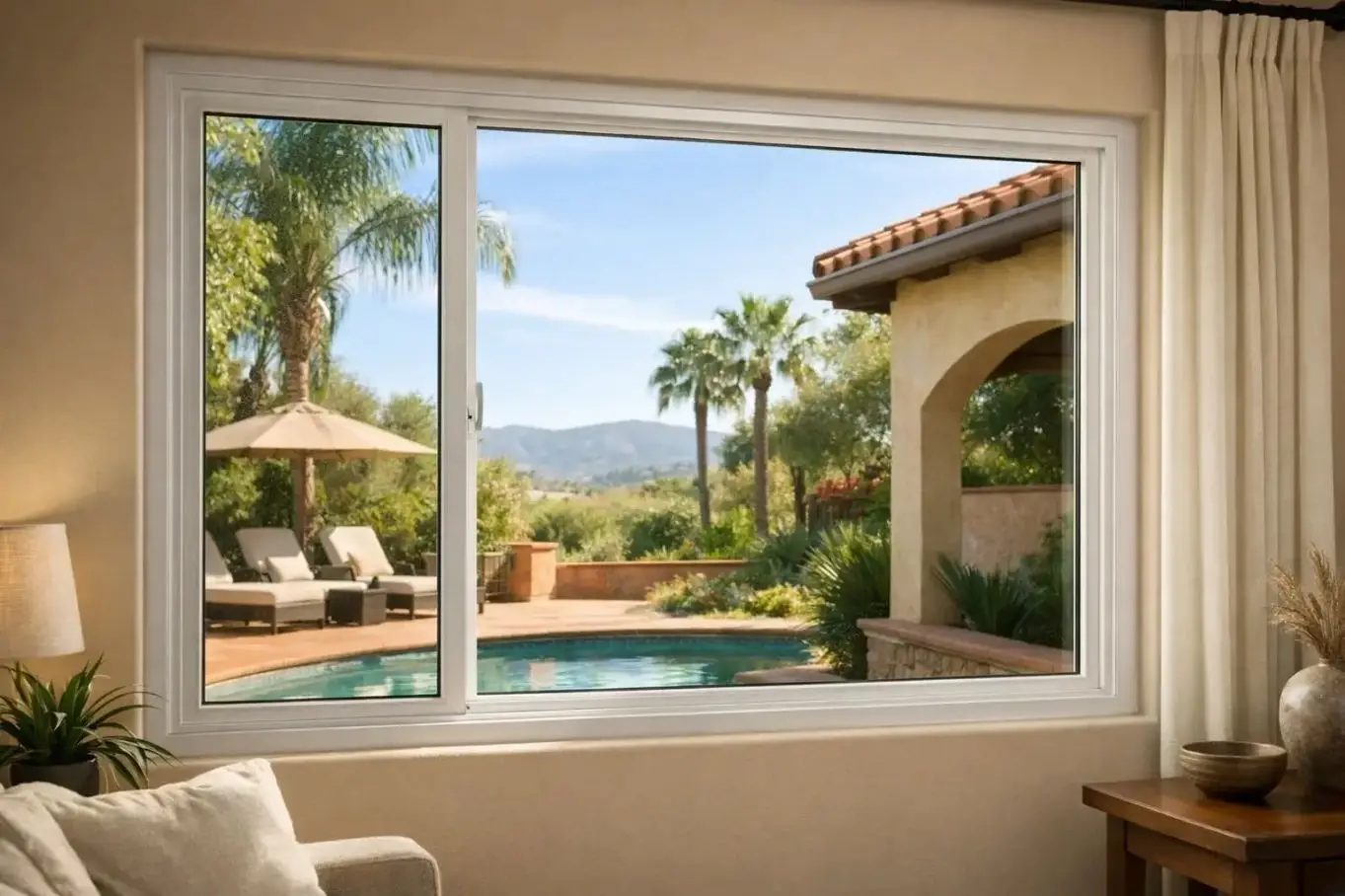
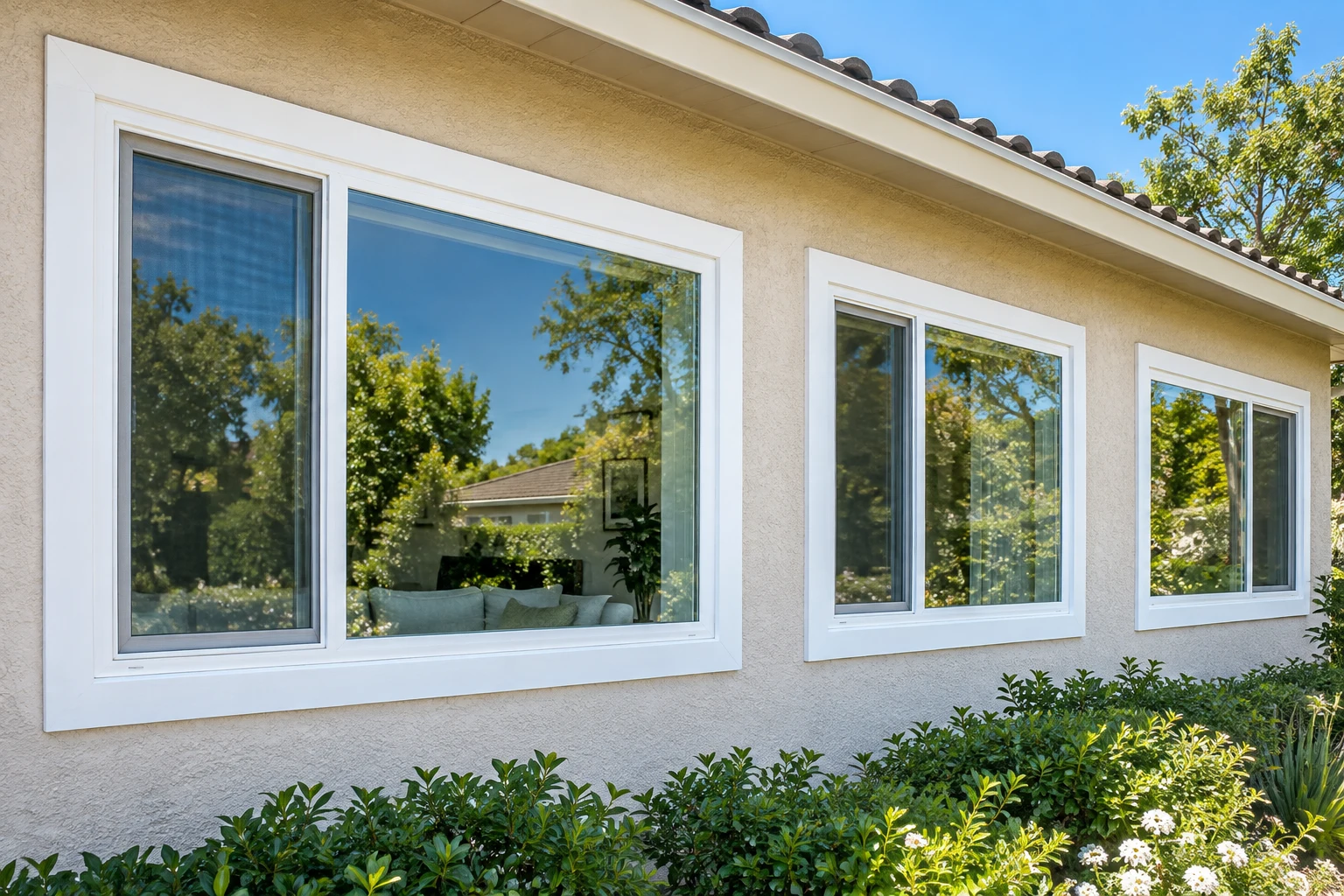
Learn which glass, frames, and ratings make the best windows for hot climates, helping Southern California homes stay cooler and more comfortable all year.
A west-facing living room can feel noticeably hotter than the rest of the house by midafternoon, even with the air conditioner running. For Southern California homeowners, choosing the best windows for hot climates is less about finding a single “best” product and more about selecting a complete window system that limits solar heat, insulates the home, and fits the exposure of each room.
The right replacement windows can make rooms easier to cool, reduce uncomfortable hot spots near the glass, help protect furnishings from intense sunlight, and improve the appearance of an older home. The details matter, though. Glass coatings, solar heat gain ratings, frame design, and professional retrofit installation all work together.
What Makes a Window Effective in a Hot Climate?
Heat reaches your home through windows in two primary ways. Solar radiation passes through the glass when sunlight hits it directly, while outdoor heat transfers through the window assembly itself. A window designed for a cooler climate may focus mainly on retaining indoor heat. In Los Angeles, Orange County, Riverside County, San Bernardino County, Ventura County, and nearby areas, controlling the sun’s heat is often the more immediate comfort concern.
For that reason, the best replacement window is usually a balanced system: insulated dual-pane glass to slow heat transfer, a Low-E coating to manage solar energy, and a well-built frame that limits air leakage and conduction. This is why comparing a window by appearance or pane count alone can be misleading.
A good selection also depends on where the window faces. West- and south-facing windows often receive the strongest afternoon sun. A shaded north-facing bedroom has different needs than a large, exposed family-room window overlooking a patio. A knowledgeable window professional should consider those differences rather than recommending one glass package for every opening.
The Best Windows for Hot Climates Use Low-E Glass
Low-E, or low-emissivity, glass is one of the most valuable features for hot-climate homes. It has a microscopically thin coating that helps manage the movement of heat through the glass. In practical terms, the right Low-E coating can reduce the amount of solar heat entering your home while still allowing useful natural light inside.
Not all Low-E glass performs the same way. Some coatings are designed primarily to retain heat in colder regions, while others are better suited to warm, sunny climates where reducing solar gain is the priority. Southern California homeowners should ask about a glass package intended for cooling comfort, not simply assume that every Low-E option will perform identically.
This distinction is especially helpful in homes with aging single-pane windows. Those windows can allow sunlight to turn rooms into heat traps, making the HVAC system work harder during warm afternoons. Modern Low-E insulated glass can improve comfort near the window as well as throughout the room.
Focus on Solar Heat Gain Coefficient
The Solar Heat Gain Coefficient, commonly called SHGC, measures how much solar heat passes through a window. It is expressed as a number between zero and one. Lower numbers mean less solar heat is admitted.
For many hot, sunny Southern California exposures, a lower SHGC is desirable because it helps reduce the sun-driven heat entering the home. However, the lowest possible number is not automatically right for every room. Homeowners who value daylight, have significant exterior shade, or want passive warmth during cooler months may prefer a more balanced rating.
The goal is not to eliminate all sunlight. It is to prevent excessive heat buildup without making the home feel dark or disconnected from the outdoors.
Understand U-Factor Too
U-factor measures how readily a window allows heat to transfer through it. Lower U-factor values generally indicate better insulation. While solar control receives much of the attention in hot climates, insulation still matters. It helps keep outdoor heat from moving inward and helps maintain stable indoor temperatures after the sun goes down.
A window with a favorable SHGC but weak insulating performance may not deliver the consistent comfort homeowners expect. Looking at both ratings gives a clearer picture of overall performance.
Dual-Pane, Argon-Filled Glass Offers Everyday Comfort
Dual-pane replacement windows use two panes of glass separated by a sealed space. This insulated glass unit slows heat transfer compared with single-pane glass and can also improve noise reduction. For homes near busy streets, airports, schools, or active neighborhoods, that quieter indoor environment can be an equally meaningful benefit.
Many premium insulated glass units include argon gas between the panes. Argon is a colorless, non-toxic gas that provides better insulation than regular air. Homeowners will not see it or need to maintain it, but it contributes to the window’s ability to reduce heat transfer.
Dual-pane, argon-filled Low-E glass is a practical foundation for many Southern California retrofit projects. It does not make a home immune to extreme outdoor temperatures, and it cannot compensate for poor attic insulation or an undersized air-conditioning system. Still, it can substantially reduce the discomfort caused by inefficient, aging windows.
Choose a Frame That Supports Energy Performance
Glass receives most of the attention, but the frame is a major part of the window system. Vinyl replacement windows are a popular choice for Southern California homes because quality vinyl frames offer good insulating value, resist moisture, and require relatively low maintenance. They are available in profiles and colors that can complement both traditional and contemporary homes.
A durable frame should also provide a stable platform for the insulated glass and reliable weatherstripping. If a window allows hot outdoor air to leak around the sash or frame, even excellent glass cannot perform as intended.
Frame selection also involves appearance. Narrower profiles may provide more visible glass and daylight, while other profiles may better match the proportions of an existing home. The best choice balances energy performance, maintenance preferences, sightlines, and curb appeal.
Retrofit Installation Is Part of the Window’s Performance
Even a high-performing window can fall short if it is not correctly measured, fitted, sealed, and finished. In an existing home, retrofit window replacement is designed to update the window system without the disruption of major structural changes. The installation should create a secure, weather-resistant fit while preserving a clean finished appearance.
Proper installation helps reduce drafts, water intrusion concerns, and gaps that undermine energy efficiency. It also affects how smoothly the window operates and how well it blocks outside noise.
This is one reason contractor qualifications matter. An experienced, licensed California contractor can evaluate the existing openings, identify concerns that may affect the project, and recommend a window configuration that suits the home rather than relying on a one-size-fits-all approach. Total Home Windows, the replacement window division of Team All Star Construction, CSLB #1009760, focuses on retrofit solutions that improve the comfort and performance of existing Southern California homes.
How to Choose Windows Room by Room
Start by identifying the rooms that create the biggest comfort problems. Is the upstairs bedroom difficult to cool? Does the kitchen become uncomfortable late in the day? Are furnishings fading near a large patio door or picture window? Those observations can guide the glass selection and help prioritize the openings where replacement will make the most noticeable difference.
Then consider orientation and shading. A west-facing window in Riverside or Rancho Cucamonga may need stronger solar control than a shaded window in Ventura. Exterior overhangs, trees, awnings, and nearby buildings can change how much direct sun reaches the glass. The same home may benefit from different performance priorities on different elevations.
Finally, look beyond one label or feature. A quality window decision should account for Low-E glass, SHGC, U-factor, dual-pane construction, gas fill, frame quality, weatherstripping, operation style, and installation. When those elements are matched to the home, homeowners are more likely to see meaningful comfort improvements over the long term.
Common Questions About Hot-Climate Replacement Windows
Do darker window frames make a home hotter?
Darker exterior frames can absorb more heat from direct sun than lighter frames. Quality frame materials are designed to handle normal temperature changes, but in highly exposed areas, frame color and product quality are worth discussing. This is particularly relevant for large south- and west-facing openings.
Will energy-efficient windows lower cooling bills?
They can reduce heat gain and help the air-conditioning system maintain a more comfortable temperature, which may lower cooling demand. Actual utility savings vary based on the home’s insulation, HVAC equipment, thermostat habits, window exposure, and the condition of the windows being replaced. Comfort, reduced hot spots, and less strain on cooling equipment are often the most immediate benefits.
Are triple-pane windows necessary in Southern California?
Not usually. Triple-pane windows can provide excellent insulation and sound control, but they may not be necessary for every Southern California home. A well-selected dual-pane Low-E, argon-filled window often provides strong hot-climate performance. Triple-pane options may make sense where exceptional noise reduction or higher insulating performance is a priority.
The most useful window upgrade is the one that addresses the rooms you actually avoid on hot afternoons, the cooling system that runs too long, and the aging windows that no longer protect your home from the sun. A tailored evaluation turns those daily frustrations into a clearer path toward a cooler, quieter, more comfortable home.
- Categories: Uncategorized
Southern California Window Replacement Guide
Single Pane vs Dual Pane: Which Fits Your Home?
Replacement Windows Los Angeles Homeowners Choose
Retrofit Windows vs Full Frame: Which Fits?
A Guide to Full Window Replacement at Home
Vinyl vs Aluminum Windows for Southern California
A Homeowner’s Guide to Energy Efficient Windows
How to Reduce Window Heat at Home
Are Retrofit Windows Worth It for Your Home?
About Total Home Windows
Total Home Windows is a Southern California-based window replacement company focused on helping homeowners improve energy efficiency, indoor comfort, and long-term home value through high-performance window installations.
Serving Los Angeles County, Orange County, Riverside County, San Bernardino County, and Ventura County, the company specializes in both vinyl retrofit (insert) and full-frame window replacement. Their work is tailored to the unique demands of California homes, including intense UV exposure, coastal conditions, and heat retention issues common in older properties.
Total Home Windows combines practical installation experience with a strong focus on energy performance—helping homeowners reduce cooling costs, improve insulation, and solve common problems like rooms that stay hot even with air conditioning. Their approach prioritizes clear recommendations, transparent pricing, and solutions that make sense for each home.
The content published by Total Home Windows is built on real installation knowledge, field-tested performance insights, and current best practices in window technology, including Low-E glass, argon-filled units, and energy-efficient design strategies. Their goal is to help homeowners make informed decisions without overpaying or choosing the wrong type of window system.
Ways to Reach Us
If you’re considering window replacement, we’re here to answer questions and provide clear, professional guidance based on your home and goals.
- teamallstarconstruction@gmail.com
- 301 E.9th St Suite 415 Redlands, CA 92374