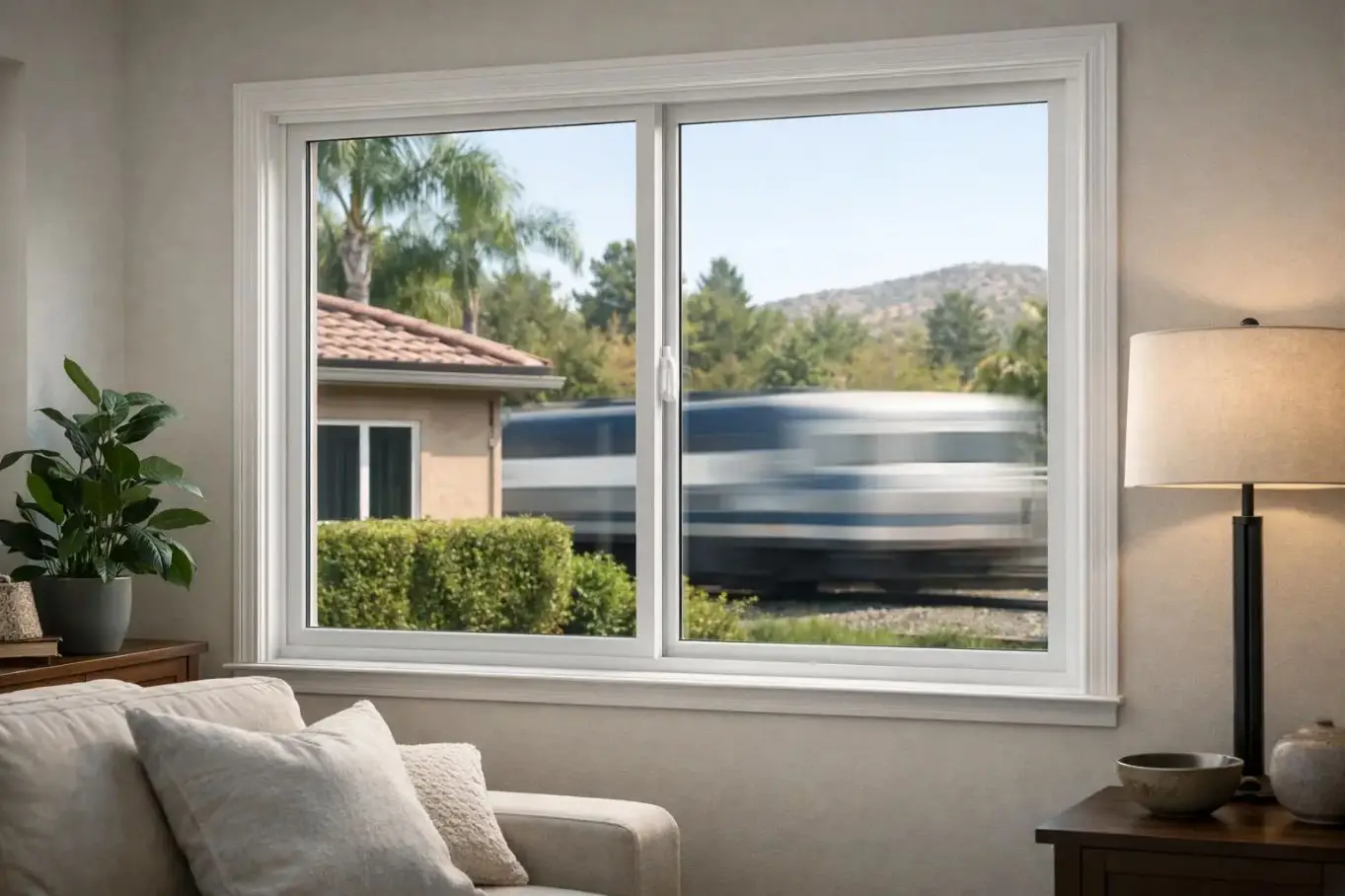
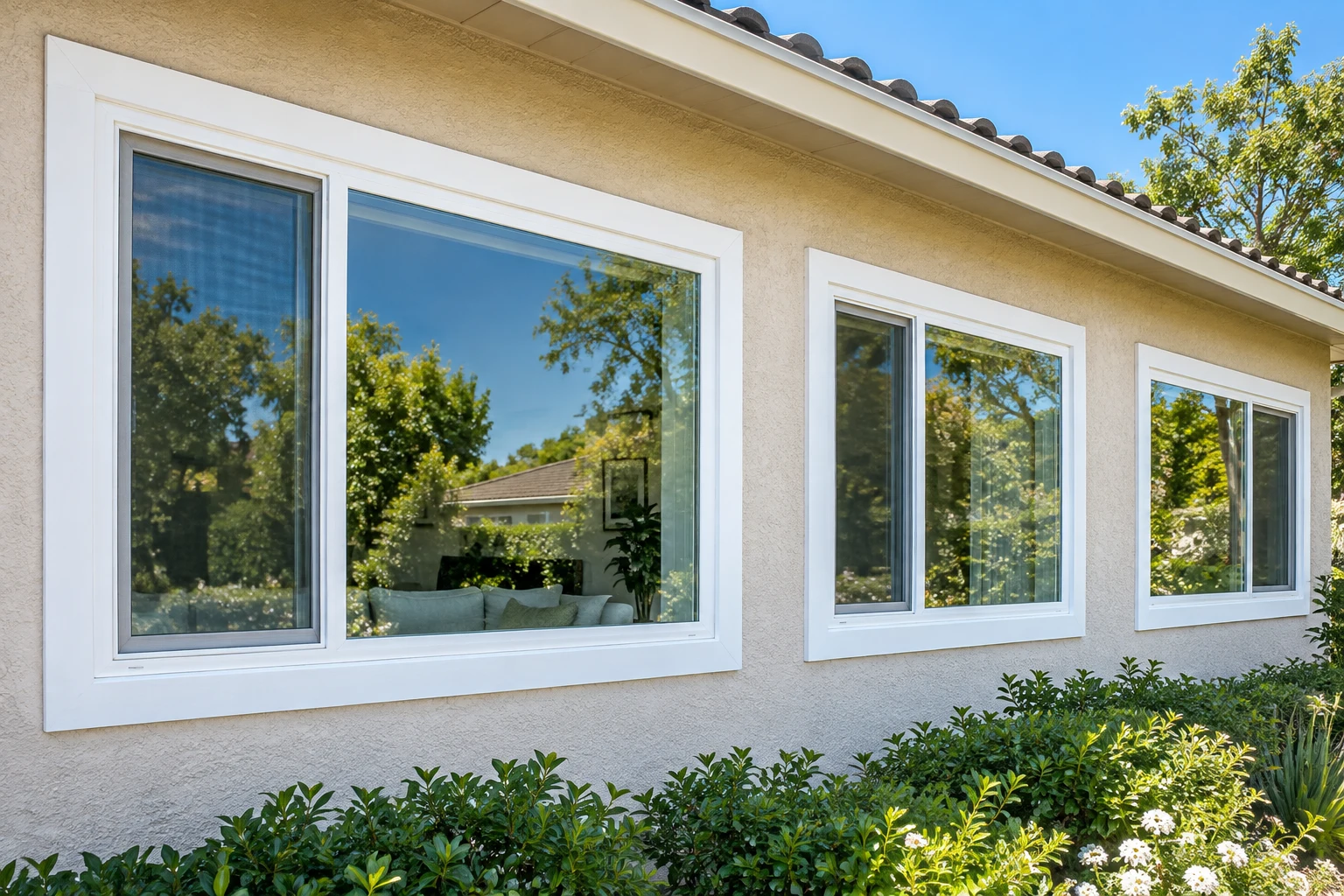
Learn how to choose the best windows for noise reduction, from glass options to frame design, for a quieter, more comfortable home.
If traffic, barking dogs, leaf blowers, or early-morning neighborhood noise keeps making its way indoors, your windows are often a major reason why. The best windows for noise reduction are not simply the thickest or most expensive ones. They are the windows built with the right glass package, frame design, and installation approach for your home’s specific noise problem.
That matters in Southern California, where many homeowners live near busy streets, schools, freeways, flight paths, or densely built neighborhoods. Noise control is rarely about one feature alone. It is about how the entire replacement window system works together to reduce sound while also improving indoor comfort, energy efficiency, and overall home performance.
What actually makes a window quieter?
Sound travels through weak points. With older windows, those weak points are often easy to spot: thin single-pane glass, worn seals, loose-fitting sashes, aluminum frames that conduct vibration, and gaps around the window opening. Even a small air leak can also be a sound leak.
Modern replacement windows reduce noise by addressing several factors at once. The glass can be made thicker, or made with dissimilar panes so sound waves are disrupted instead of passing through evenly. The insulated glass unit can include an airspace or gas fill between panes. The frame can be built to seal more tightly. Just as important, the retrofit installation has to be done carefully so the finished window does not leave pathways for outside noise to enter.
This is one reason homeowners are often disappointed when they focus only on the word dual-pane. Dual-pane windows are usually better than older single-pane windows, but not every dual-pane unit offers the same level of sound control. Some are designed primarily for thermal performance, while others are configured to help with both temperature and noise.
Best windows for noise reduction: what to look for
If your goal is a noticeably quieter home, the best place to start is with the glass package, not just the frame style. Glass does most of the work when it comes to reducing sound transmission.
Dual-pane windows with dissimilar glass thickness
One of the most effective upgrades for residential noise reduction is a dual-pane window made with two panes of different thicknesses. This matters because sound moves differently through each pane. When both panes are identical, certain sound frequencies can pass through more easily. When the panes are different, the vibration pattern is interrupted.
For many homes, this is a smart balance between comfort, performance, and practicality. It can reduce common neighborhood noise without requiring unusual window configurations.
Laminated glass for stronger sound control
If noise is a major issue, laminated glass is often one of the best-performing options. Laminated glass includes a special interlayer between pieces of glass that helps dampen vibration. In simple terms, it is better at absorbing and interrupting sound energy before it enters the home.
This can be especially helpful for homes near high-traffic roads or areas with frequent sharp, disruptive noise. It may also provide added benefits related to security and UV protection, so homeowners sometimes see it as a broader comfort and performance upgrade rather than a single-purpose feature.
Well-sealed vinyl replacement frames
Glass gets most of the attention, but the frame matters too. Vinyl replacement windows are popular for a reason. Quality vinyl frames can help create a tighter seal, reduce air infiltration, and support insulated glass systems designed for both energy efficiency and quieter interiors.
That does not mean every vinyl window performs the same way. The overall design, weatherstripping, sash fit, and manufacturing quality all influence how much noise is reduced once the window is closed.
Professional retrofit installation
Even the best glass package can underperform if the installation leaves gaps, uneven seals, or poor alignment. Sound finds small openings quickly. A properly measured and installed retrofit window helps ensure the full unit performs the way it should.
For homeowners replacing aging windows in existing homes, this is a major advantage of working with a company that specializes in residential retrofit replacement rather than treating windows as one product among many.
Which window styles help most with noise reduction?
Some window styles naturally seal better than others. That affects both energy performance and sound control.
Picture windows are often strong performers because they do not open, which means there are fewer places for air and sound to pass through. Casement windows also tend to seal tightly because the sash closes firmly against the frame. Sliding windows can still perform well, but they may not compress as tightly as a casement when closed. Single-hung and double-hung windows vary depending on build quality and weatherstripping.
This does not mean homeowners should choose style based only on acoustics. Ventilation, appearance, room layout, and ease of use still matter. A quieter home is important, but the right answer usually balances noise reduction with how you actually use the space.
The best windows for noise reduction depend on the kind of noise
Not all outside noise behaves the same way. Low-frequency sound from freeway traffic is different from higher-pitched sounds like voices, barking, or lawn equipment. That is why one homeowner may be satisfied with a quality dual-pane upgrade, while another needs laminated glass or a more specialized insulated glass configuration.
Bedrooms facing a busy street often deserve a different recommendation than a backyard dining room exposed to occasional neighborhood noise. Homes in flight-path areas may need a stronger sound-control package than homes on quiet residential streets. In other words, the best window is often room-specific.
That is also why broad promises can be misleading. Window performance depends on the existing condition of your home, the size of the openings, the style selected, and the frequency and intensity of the outside noise. Good guidance should account for those variables instead of treating every house the same.
Noise reduction and energy efficiency often work together
Homeowners usually start shopping for replacement windows because of one problem, then realize they can solve several at once. If outside noise is bothering you, there is a good chance your current windows are also letting in excess heat, causing drafts, or making certain rooms harder to cool.
Modern insulated windows can help on all of those fronts. Dual-pane glass, Low-E coatings, argon-filled insulated glass units, and tighter frame construction can improve indoor temperature consistency while also reducing sound intrusion. For Southern California homeowners, that combination matters. A quieter home feels better, but so does a cooler room that no longer bakes in afternoon sun.
This is one reason replacement windows are often viewed as a comfort upgrade rather than just a cosmetic one. You are not only changing how the house looks from the curb. You are changing how it feels inside, day after day.
When old windows are the real problem
Many older homes still have original windows with worn hardware, failing seals, and outdated glass. Some have visible issues like condensation between panes or difficult operation. Others simply no longer close as tightly as they should.
In those cases, outside noise is usually a symptom of broader window failure. Replacing the window system can improve more than one frustration at once, including unwanted sound, indoor heat gain, and rising cooling costs.
For homeowners comparing options, it helps to think beyond the question, Which glass is quietest? A better question is, Which full window system is best suited to my home’s noise level, comfort issues, and long-term goals?
What homeowners should ask before choosing replacement windows
A productive conversation should focus on your home’s specific conditions. Where is the noise coming from? Which rooms are affected most? Are the existing windows single-pane or older dual-pane units? Do you also want stronger energy performance, UV protection, or reduced glare?
It also helps to ask whether the proposed window package includes dissimilar glass thickness, laminated glass options, and energy-efficient features like Low-E coatings and insulated dual-pane construction. These are practical questions that lead to better results than choosing based on appearance alone.
For many homeowners in Los Angeles County, Orange County, Riverside County, San Bernardino County, and Ventura County, the right solution is not the most extreme product available. It is a well-designed replacement window tailored to the home, installed correctly, and selected with a clear understanding of the noise problem.
As a licensed California contractor, Team All Star Construction, CSLB #1009760, through Total Home Windows, helps homeowners evaluate those choices in a way that is practical and specific to residential retrofit projects.
A quieter home usually starts with a simple realization: if you can hear too much from outside, your windows may be doing too little. The right replacement window can change that in a way you notice every morning, every evening, and every time the house finally feels calm.
- Categories: Uncategorized
Southern California Window Replacement Guide
Single Pane vs Dual Pane: Which Fits Your Home?
Replacement Windows Los Angeles Homeowners Choose
Retrofit Windows vs Full Frame: Which Fits?
A Guide to Full Window Replacement at Home
Vinyl vs Aluminum Windows for Southern California
Best Windows for Hot Climates in Southern California
A Homeowner’s Guide to Energy Efficient Windows
How to Reduce Window Heat at Home
About Total Home Windows
Total Home Windows is a Southern California-based window replacement company focused on helping homeowners improve energy efficiency, indoor comfort, and long-term home value through high-performance window installations.
Serving Los Angeles County, Orange County, Riverside County, San Bernardino County, and Ventura County, the company specializes in both vinyl retrofit (insert) and full-frame window replacement. Their work is tailored to the unique demands of California homes, including intense UV exposure, coastal conditions, and heat retention issues common in older properties.
Total Home Windows combines practical installation experience with a strong focus on energy performance—helping homeowners reduce cooling costs, improve insulation, and solve common problems like rooms that stay hot even with air conditioning. Their approach prioritizes clear recommendations, transparent pricing, and solutions that make sense for each home.
The content published by Total Home Windows is built on real installation knowledge, field-tested performance insights, and current best practices in window technology, including Low-E glass, argon-filled units, and energy-efficient design strategies. Their goal is to help homeowners make informed decisions without overpaying or choosing the wrong type of window system.
Ways to Reach Us
If you’re considering window replacement, we’re here to answer questions and provide clear, professional guidance based on your home and goals.
- teamallstarconstruction@gmail.com
- 301 E.9th St Suite 415 Redlands, CA 92374