Prices and performance figures in this guide are planning examples, not a project quote or a promise of savings. Your estimate and results depend on the products, installation scope, existing home, climate, and energy use.
Why Radiant Solar Heat Drains Your Cooling Budget
Your air conditioner works hard because radiant solar heat is pouring through your windows all day. This isn’t about air leaks or cracks—it’s about energy from the sun passing directly through glass into your home. Even when your windows look fine and feel solid, they’re often allowing 70-80% of the sun’s heat to enter.
Here’s what happens: the sun hits your window glass, infrared radiation passes through, and that energy converts to heat inside your home. Your AC then runs longer and harder to compensate. In Southern California, where summer temperatures routinely hit 85-95 degrees, this radiant heat can add 5-10 degrees to your interior temperature without proper heat-blocking solutions.
Most homeowners don’t realize their cooling bills spike because of window performance, not because their AC is failing. We’ve measured this in hundreds of homes. The difference between a standard window and one designed to block radiant heat is often 15-20 degrees on the interior glass surface on a hot afternoon.
What to do: Have someone measure your interior glass temperature on a sunny afternoon. If it’s warm to the touch, radiant heat is entering your home. That’s where custom windows make the biggest impact.
The Real Cost of Uncontrolled Heat Gain in Southern California
Uncontrolled radiant heat costs Southern California homeowners thousands of dollars annually. We’re not talking about a few dollars more per month. A home with aging, standard windows can see cooling costs jump 30-40% during summer months compared to homes with heat-blocking window solutions.
The math is straightforward: when radiant heat continuously enters through windows, your cooling system must run more frequently, longer, and at higher capacity. In a typical Orange County or San Bernardino home, this means your AC compressor cycles on earlier in the morning and stays on later into the evening. Over a 120-day cooling season, that adds up to hundreds of extra operating hours.
Beyond energy bills, there are comfort costs. Rooms with large west-facing or south-facing windows become difficult to occupy during peak heat hours. You close blinds and curtains, reducing natural light and making rooms feel cave-like. Your home never reaches a truly comfortable temperature, and different rooms feel dramatically different.
Financing may be available through third-party lenders for qualified applicants. Availability, APR, fees, down payment, and repayment terms depend on the lender and approval. Review the complete loan terms before accepting.
What to do: Pull your last three summer energy bills. Calculate the average monthly cooling cost. That baseline helps you understand the real financial impact of your current windows.
How Radiant Heat Enters Your Home Through Windows
Radiant solar heat works differently than you might think. When sunlight hits your window, about 50% of the energy is visible light and 50% is infrared radiation (heat). Standard glass is essentially transparent to infrared energy—it passes right through as if the glass wasn’t there.
The process happens in layers. First, the sun’s rays hit the exterior glass. Infrared wavelengths penetrate the glass pane. Once inside, that infrared energy hits interior surfaces like furniture, floors, and walls, which absorb it and re-radiate it as heat. Your room temperature rises.
This is different from conduction or convection heat loss through poorly sealed frames. You can have perfectly sealed windows with no air leaks and still experience significant radiant heat gain because the glass itself isn’t blocking the infrared spectrum.
West-facing and south-facing windows are the primary culprits in most Southern California homes. West-facing windows receive direct afternoon sun when outdoor temperatures peak. South-facing windows catch sun all day. Even east-facing windows contribute during morning hours. North-facing windows are the only exposure where radiant heat gain isn’t typically a major issue.
Certain window types make the problem worse. Single-pane glass stops almost no radiant heat. Older double-pane windows without any heat-reflective coatings block only marginal amounts. Standard low-E coatings designed for cold climates actually allow more heat through than they block.
What to do: Walk through your home on a hot afternoon and feel which rooms are warmest. Usually, those are your biggest radiant heat entry points. Note the direction those windows face—that information helps us design the right solution.
Our Custom Window Solutions Block Heat at the Source
We solve radiant heat problems at the source: the glass itself. Our approach combines high-performance glazing, specialized coatings, and proper frame installation to stop heat before it enters your home.
Our custom windows use advanced low-E coatings specifically formulated for Southern California’s climate. Unlike northern-focused coatings, ours reflect infrared energy back outside while allowing visible light through. This means you get natural light without the heat penalty.
We also select glass with optimized solar heat gain coefficients (SHGC). In practical terms, that means the glass is engineered to reject more of the sun’s infrared spectrum. When combined with reflective coatings and proper spacing between panes, the result is dramatic heat reduction.
Every window we install is custom-manufactured for your specific opening. This precision fit eliminates thermal bridging and air leaks that would bypass any heat-control performance. We measure your openings to 1/8 inch accuracy and build windows to those exact specifications.
The frames themselves matter too. We use vinyl frames rather than aluminum because vinyl doesn’t conduct heat the way metal does. Aluminum frames can become hot enough to transfer warmth into your home; vinyl stays thermally neutral.
What to do: When you’re ready to explore solutions, we’ll measure your current window performance and show you exactly how much heat is entering. You’ll have proof before any commitment is made.
Vinyl Retrofit Windows with Heat-Blocking Technology
Retrofit windows are the practical solution for most homeowners who want to avoid full frame replacement. These windows install inside your existing frame, meaning faster installation, minimal disruption, and lower cost than full replacement.
Our vinyl retrofit windows feature multi-chamber frames that trap air and reduce heat transfer. The glass package includes our heat-blocking low-E coating and dual-pane construction with argon gas fill. Argon is denser than air, which slows heat transfer through the gap between panes.
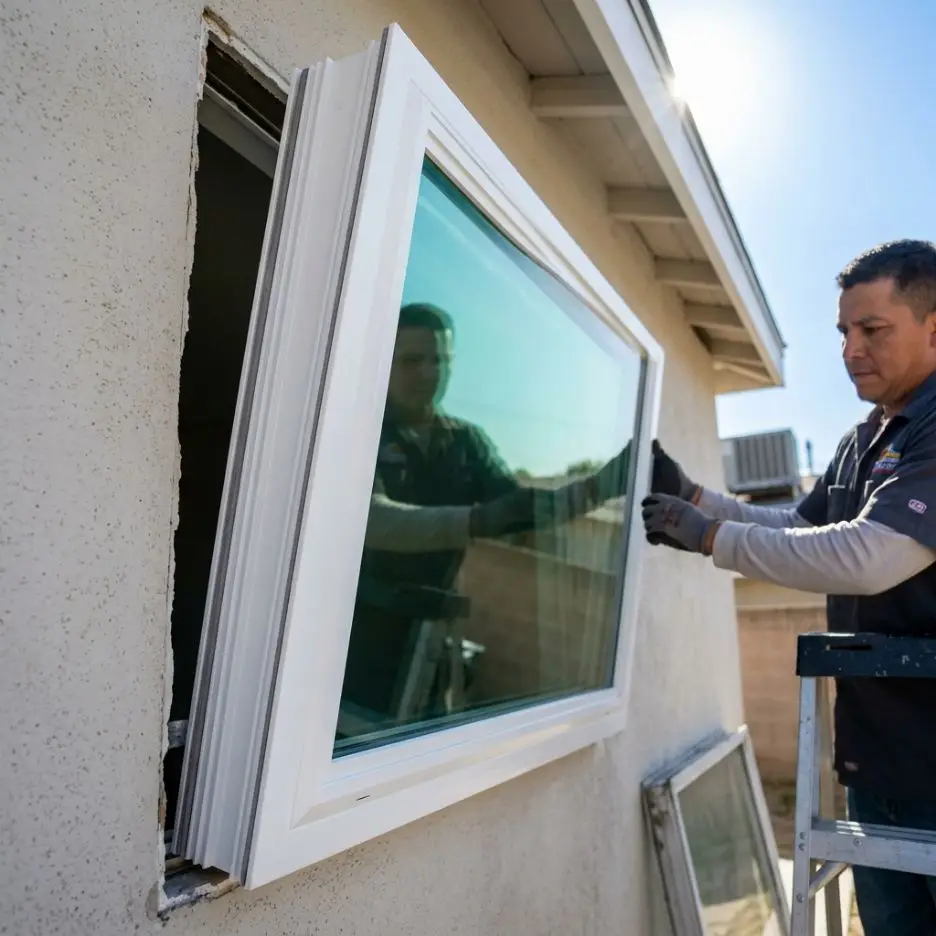
Installation is straightforward: we remove your old sash, clean the frame, and install the new retrofit window inside the existing frame opening. The process takes 30-45 minutes per window. You’re not dealing with exterior work, roofing adjustments, or exterior trim replacement.
Retrofit windows perform exceptionally well for blocking radiant heat because the existing frame provides additional insulation depth. The new window sits back in the frame cavity, which adds an air gap that further reduces heat transfer.
We often use retrofits on homes where the existing frames are solid and well-sealed but the glass is simply old and inefficient. This is common in 1980s-1990s Southern California homes that still have the original single-pane or basic double-pane windows. The frames may be fine; the glass is just allowing too much heat through.
What to do: If your frame is solid and doesn’t have visible rot or damage, retrofit windows are worth discussing. We’ll evaluate your specific situation and show you performance gains with measurements from your actual windows.
Full Frame Replacement for Maximum Solar Control
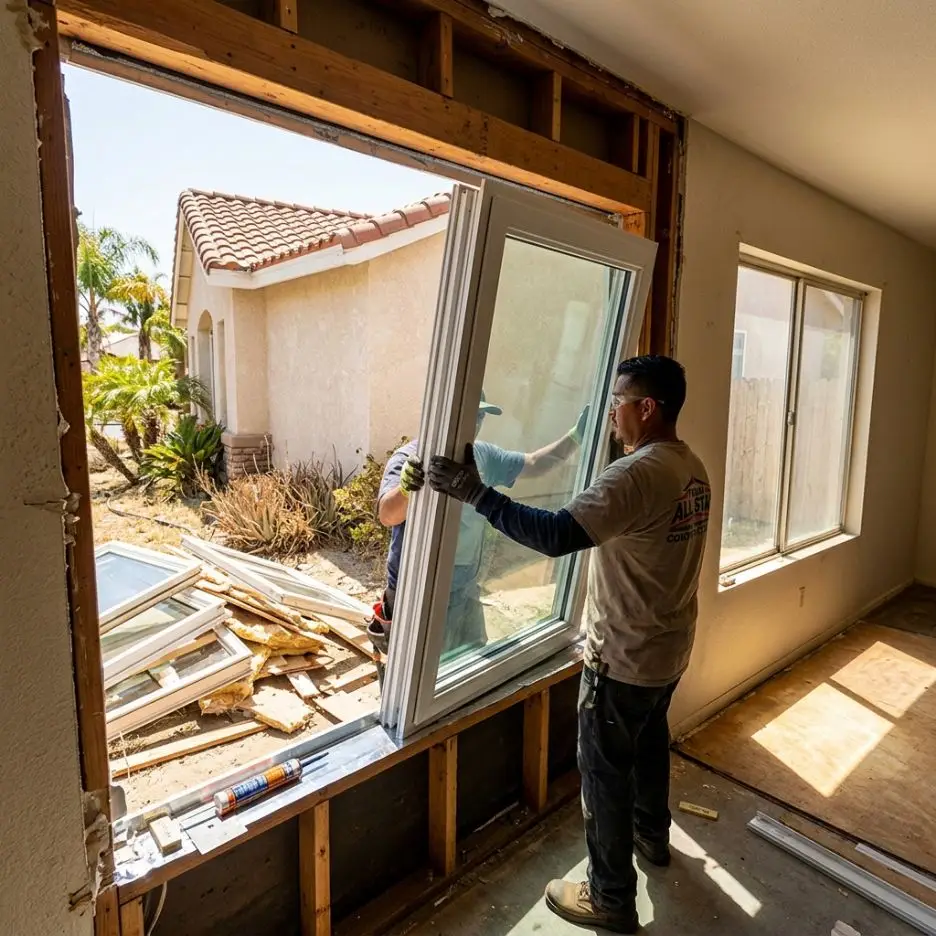
Full frame replacement is the optimal choice when you want maximum heat control, completely new frames, and the ability to upgrade to larger windows or different styles. We remove the entire window assembly, including the frame, and install a completely new system.
This approach lets us seal the rough opening more thoroughly and use thicker, higher-performance frame systems. The new frames can have more insulation, thicker glass packages, and better-performing hardware. There’s no compromising with an older frame cavity.
Full replacement is necessary when existing frames have damage, water intrusion history, or poor original construction. It’s also the choice when you want to change window size, add additional windows, or upgrade aesthetic appearance along with performance.
The installation takes longer (usually 2-3 hours per window) and involves exterior work. But the payoff is windows engineered entirely for your climate and your specific heat challenge. We control everything from frame insulation value to glass package to installation technique.
In arid, high-heat regions like the Inland Empire or desert areas of Riverside County, full replacement allows us to use thicker frames with multiple chambers and the most advanced heat-rejecting glass available. For properties in cooler coastal areas, we can specify different coatings optimized for your actual climate.
What to do: If you’re noticing frame damage, visible weather-stripping deterioration, or if your windows are original to a home built before 2000, schedule a consultation. We’ll assess whether retrofit or full replacement serves you better.
Energy-Efficient Coatings That Stop Radiant Heat
The coating on the glass is where the real heat-blocking magic happens. We use advanced low-E coatings that reflect infrared radiation while transmitting visible light. Think of it as a one-way mirror for heat: light comes in, heat bounces out.
Our coatings are manufactured through a vacuum deposition process that applies a microscopically thin layer of metallic and oxide materials to the glass surface. These layers are invisible to the eye but highly effective at infrared reflection. Different coating formulations are optimized for different climates and orientations.
For Southern California’s intense sun, we typically specify coatings with SHGC ratings between 0.22-0.28 on south and west-facing exposures. This means roughly 75-80% of the sun’s heat is rejected. Compare that to standard windows with SHGC ratings around 0.70-0.80, where 70-80% of heat passes through.
The coating location matters. Some coatings are applied to the exterior surface, others to interior surfaces, and the most effective systems use coatings on multiple surfaces within the glass package. We position coatings to optimize both heat rejection and durability.
These coatings also provide UV protection, which means your furniture, flooring, and artwork fade more slowly. That’s a secondary benefit, but it’s real and appreciated by homeowners who’ve dealt with sun-damaged interiors.
What to do: Ask us which coating formulation we recommend for your specific window exposures. We’ll explain the trade-offs between heat rejection, visible light transmission, and your particular climate zone.
Why Professional Installation Matters for Heat Reduction
Perfect glass and coating don’t deliver maximum performance if installation is poor. We see this repeatedly: homeowners invest in quality windows, but poor installation undermines the investment. Gaps, compression issues, and incorrect sealing all allow heat to bypass your new windows.
Professional installation means proper frame shimming, which positions your window perfectly plumb and level before any fastening. This prevents racking and warping that would create microscopic gaps where heat escapes or enters. It also means the window sits in the opening with consistent compression, which is critical for weathersealing performance.
We seal the rough opening perimeter with foam and caulk, creating a thermal break between the new window frame and your home’s structure. Many DIY installations or contractor-grade shortcuts skip this step or do it poorly. The result is thermal bridging around the window perimeter, which can reduce the entire window’s efficiency by 20-30%.
Installation technique also affects airflow sealing. We prime all caulk surfaces, apply caulk in the right sequence, and tool it properly to create continuous barriers. Proper caulking takes time and skill; rushed caulking creates gaps where air and heat move through.
We also address interior trim and exterior finishing properly. How the drywall, trim, and exterior materials transition around the new window affects long-term performance and moisture protection. Sloppy finishing can create paths for water and air infiltration.
What to do: When you get quotes, ask each contractor to explain their installation process for shimming, sealing, and trim finishing. How they answer tells you whether they understand that installation quality is as important as window quality.
How Our In-Home Consultations Identify Your Heat Problem
We start by measuring what’s actually happening in your home, not guessing based on theory. During an in-home consultation, we assess your current windows, identify primary heat-entry points, and measure glass temperatures on hot days to quantify the problem.
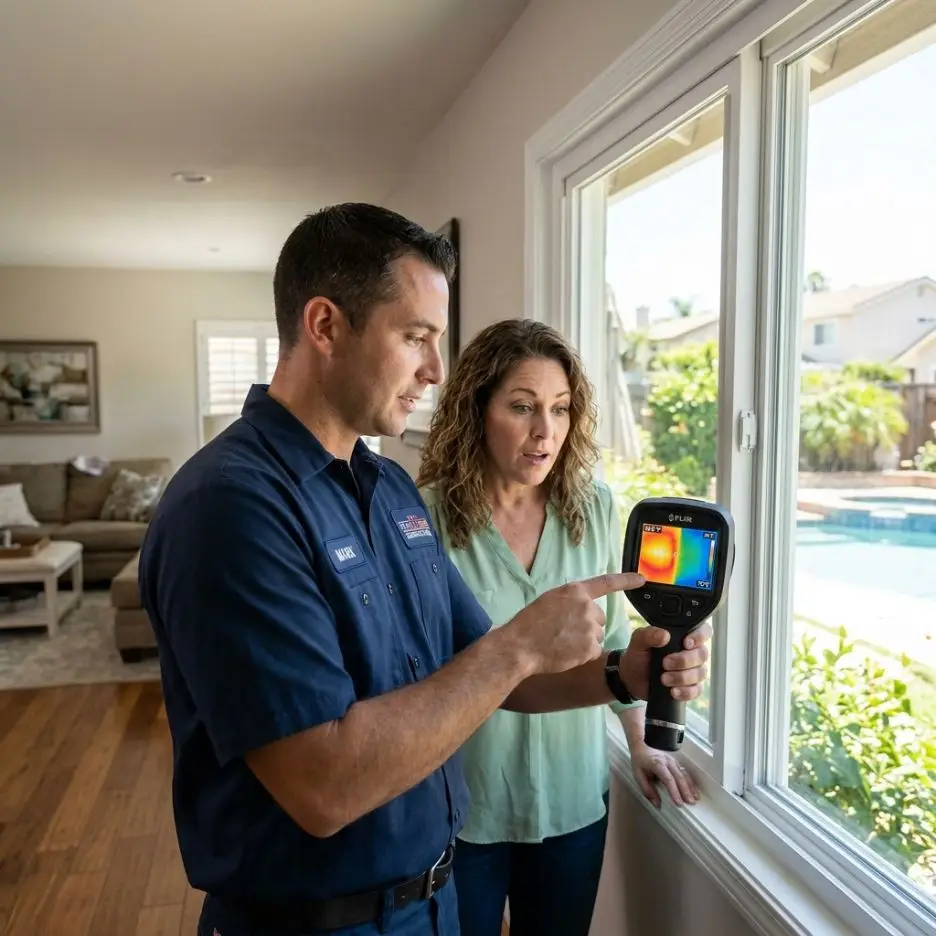
We walk through your home room by room, checking which areas feel hottest and identifying the window exposures. We photograph problem areas and document specific concerns you mention. We use an infrared thermometer to measure exterior and interior glass temperatures, showing you the exact temperature difference that represents heat transfer.
We also evaluate your current windows’ condition. Are frames solid or damaged? Are there moisture stains or signs of seal failure? Do frames operate smoothly or are they sticky or difficult to open? These details help us determine whether retrofit or full replacement makes sense.
We examine your current window style, frame color, and any aesthetic preferences you have. We discuss whether you want to maintain your current appearance or upgrade to a different style. Some clients are content with basic white frames; others want wood grain, bronze, or other finishes.
Based on this assessment, we provide a custom recommendation with specific window solutions for each room or orientation. We explain which windows have the biggest heat-impact opportunity and where the investment pays off fastest. No pressure, just clarity.
What to do: Schedule a consultation at a time when we can visit on a sunny, hot afternoon. Temperature measurements are most meaningful when the sun is intense and the contrast between exterior and interior glass is greatest.
Regional Heat Solutions for Southern California Homes
Heat challenges differ across Southern California. Coastal areas experience ocean breeze moderation and typically 10-15 degree cooler temperatures than inland areas. Desert communities in Riverside and San Bernardino counties face extreme, prolonged heat. LA Basin and Orange County experience intense sun with less wind moderation.
In coastal zones like Santa Monica, Redondo Beach, and Laguna Beach, radiant heat is significant but manageable with moderate heat-blocking solutions. We often recommend medium-performance coatings with SHGC around 0.40-0.50. You still want natural light, and the marine layer provides some natural cooling.
The Inland Empire (San Bernardino and Riverside counties) demands maximum heat rejection. Communities like Rancho Cucamonga, Ontario, and Temecula experience sustained temperatures of 100-110 degrees regularly. We specify the most aggressive heat-blocking coatings available, often with SHGC ratings below 0.25 on south and west exposures.
High desert areas like Victorville, Hesperia, and Apple Valley need similar aggressive heat control, but with slightly more flexibility on visible light transmission since the intense sun creates enough light even with reflective coatings.
The San Gabriel and San Fernando valleys (Pasadena, Glendale, Burbank, Sherman Oaks) fall between coastal and inland extremes. We typically recommend moderate-to-aggressive coatings and often prioritize west-facing windows for maximum heat control.
We also consider seasonal sun angles. In winter, even aggressive heat-rejecting coatings still admit enough solar heat to provide passive heating benefit. This is especially valuable in higher-elevation inland communities where winter mornings can be cool.
What to do: Tell us your specific location and which room or exposure faces the biggest heat challenge. We’ll tailor the coating recommendation to your particular microclimate and exposure.
Start Your Custom Window Solution Today
Radiant solar heat entering through windows is a solvable problem. The solution begins with understanding what’s actually happening in your home, which is why we measure and show you the evidence before recommending anything.
Window replacement in SoCal starts with a conversation. We’ll ask about your comfort concerns, identify your biggest heat-entry points, and explain which window solutions address your specific situation.
Contact us to schedule an in-home consultation. Bring your recent energy bills if you have them, and plan the visit for a warm afternoon when heat transfer is most visible. We’ll measure your current windows’ performance, show you temperature data from your actual glass, and explain which retrofit or replacement approach makes sense for your home.
No pressure, no sales pitch. Just clear answers about why your home gets hot and what actually fixes it.
Get a free estimate for your home. No pressure—just clear answers and straightforward pricing. Call (310) 729-3013 or visit: https://teamallstarconstruction.com/contact/
Frequently Asked Questions (FAQ)
How much can we reduce your cooling costs by blocking radiant solar heat?
We typically see homeowners save 15-25% on cooling costs after installing our heat-blocking windows, though your actual savings depend on your home’s current window condition, sun exposure, and cooling habits. During our in-home consultation, we assess your specific situation and provide a realistic estimate based on your property’s orientation and existing windows. The investment usually pays for itself within 5-7 years through energy savings alone.
Which of your window solutions works best for stopping summer heat gain?
We recommend our full frame replacement windows for maximum solar control because they allow us to install optimal heat-blocking coatings and low-emissivity glass throughout your entire window system. However, if your frames are still solid, our vinyl retrofit windows deliver excellent radiant heat reduction at a lower cost while maintaining your home’s original structure.
We’ll evaluate your windows during a consultation and recommend the approach that gives you the best heat reduction for your budget.
Do you serve my area in Southern California?
We proudly install windows throughout Southern California, including Los Angeles, Orange, San Bernardino, Riverside, and Ventura counties. This includes major cities like Los Angeles, Anaheim, Riverside, Ventura, and hundreds of surrounding communities. The best way to confirm service to your specific address is to contact us directly or request an in-home consultation through our website.
- Categories: Uncategorized
Southern California Window Replacement Guide
Single Pane vs Dual Pane: Which Fits Your Home?
Replacement Windows Los Angeles Homeowners Choose
Retrofit Windows vs Full Frame: Which Fits?
A Guide to Full Window Replacement at Home
Vinyl vs Aluminum Windows for Southern California
Best Windows for Hot Climates in Southern California
A Homeowner’s Guide to Energy Efficient Windows
How to Reduce Window Heat at Home
About Total Home Windows
Total Home Windows is a Southern California-based window replacement company focused on helping homeowners improve energy efficiency, indoor comfort, and long-term home value through high-performance window installations.
Serving Los Angeles County, Orange County, Riverside County, San Bernardino County, and Ventura County, the company specializes in both vinyl retrofit (insert) and full-frame window replacement. Their work is tailored to the unique demands of California homes, including intense UV exposure, coastal conditions, and heat retention issues common in older properties.
Total Home Windows combines practical installation experience with a strong focus on energy performance—helping homeowners reduce cooling costs, improve insulation, and solve common problems like rooms that stay hot even with air conditioning. Their approach prioritizes clear recommendations, transparent pricing, and solutions that make sense for each home.
The content published by Total Home Windows is built on real installation knowledge, field-tested performance insights, and current best practices in window technology, including Low-E glass, argon-filled units, and energy-efficient design strategies. Their goal is to help homeowners make informed decisions without overpaying or choosing the wrong type of window system.
Ways to Reach Us
If you’re considering window replacement, we’re here to answer questions and provide clear, professional guidance based on your home and goals.
- teamallstarconstruction@gmail.com
- 301 E.9th St Suite 415 Redlands, CA 92374