Prices and performance figures in this guide are planning examples, not a project quote or a promise of savings. Your estimate and results depend on the products, installation scope, existing home, climate, and energy use.
Why Most Southern California Homeowners Choose the Wrong Window Type
We see this pattern constantly: homeowners pick a window type based on what their neighbor did or what sounds fancier, not based on what actually solves their heat problem.
The real issue is that dual pane and triple pane windows serve different purposes. Dual pane works well for most Southern California homes. Triple pane costs more but doesn’t always deliver proportional benefits in our climate. Yet many homeowners overspend on triple pane when dual pane would do the job, or they choose dual pane when their specific home situation calls for the extra layer.
The decision isn’t about which is “better” in absolute terms. It’s about which matches your home’s actual heat challenge. To pick the right one, you need to understand what each system actually does and what your particular windows are letting through.
The Energy Efficiency Gap: What Dual Pane Windows Actually Deliver
Dual pane windows have two layers of glass with air or argon gas sealed between them. That air gap creates an insulating barrier that stops a significant amount of heat transfer compared to single pane windows.
Here’s what dual pane actually delivers:
- U-value typically between 0.30 and 0.35 (lower is better; this measures heat transfer)
- Blocks roughly 50-70% more heat than single pane
- Reduces outside noise by 20-30 decibels
- Cuts cooling costs noticeably during summer months in Southern California
The catch: dual pane performs well until the outside temperature climbs high. On a 95-degree day in the Inland Empire, dual pane still lets thermal energy through. It’s not a complete barrier; it’s a substantial improvement.
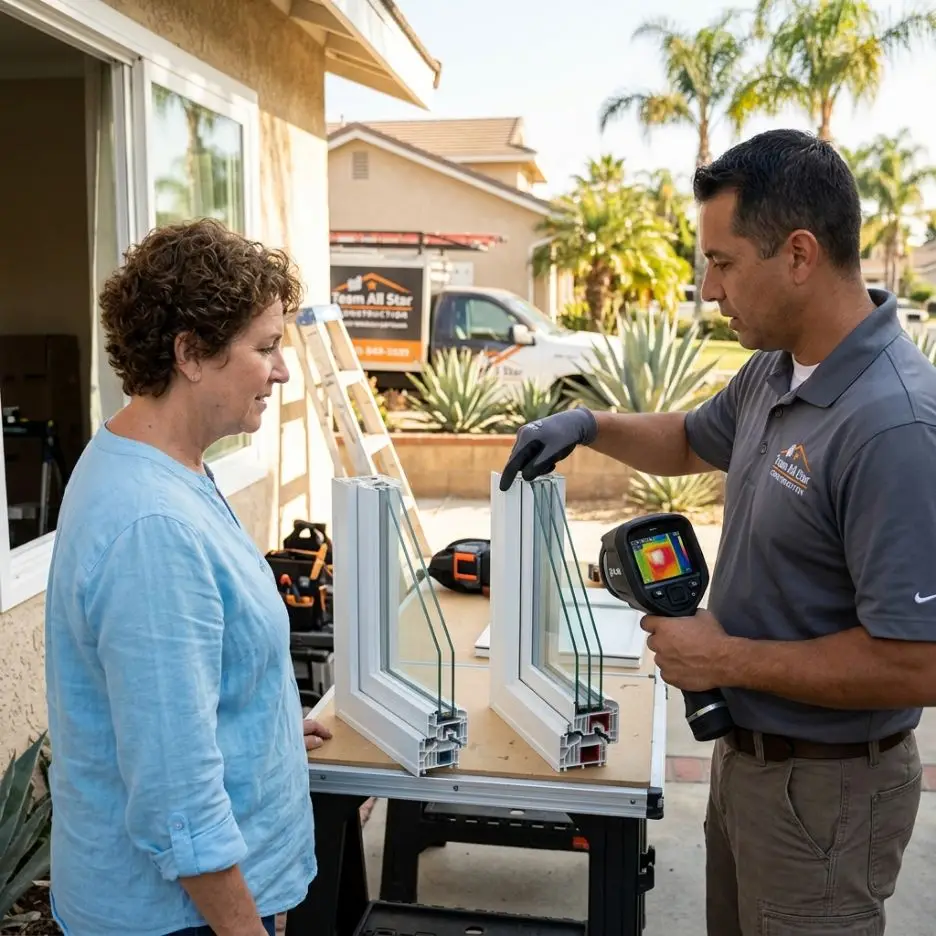
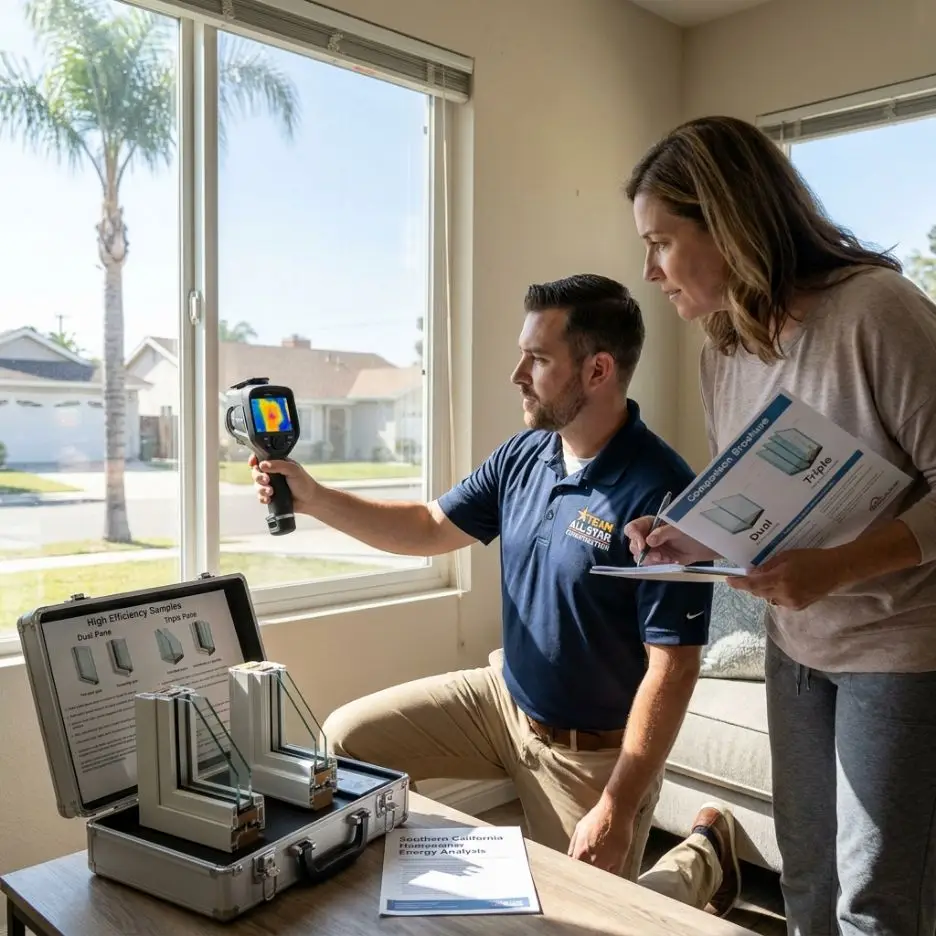
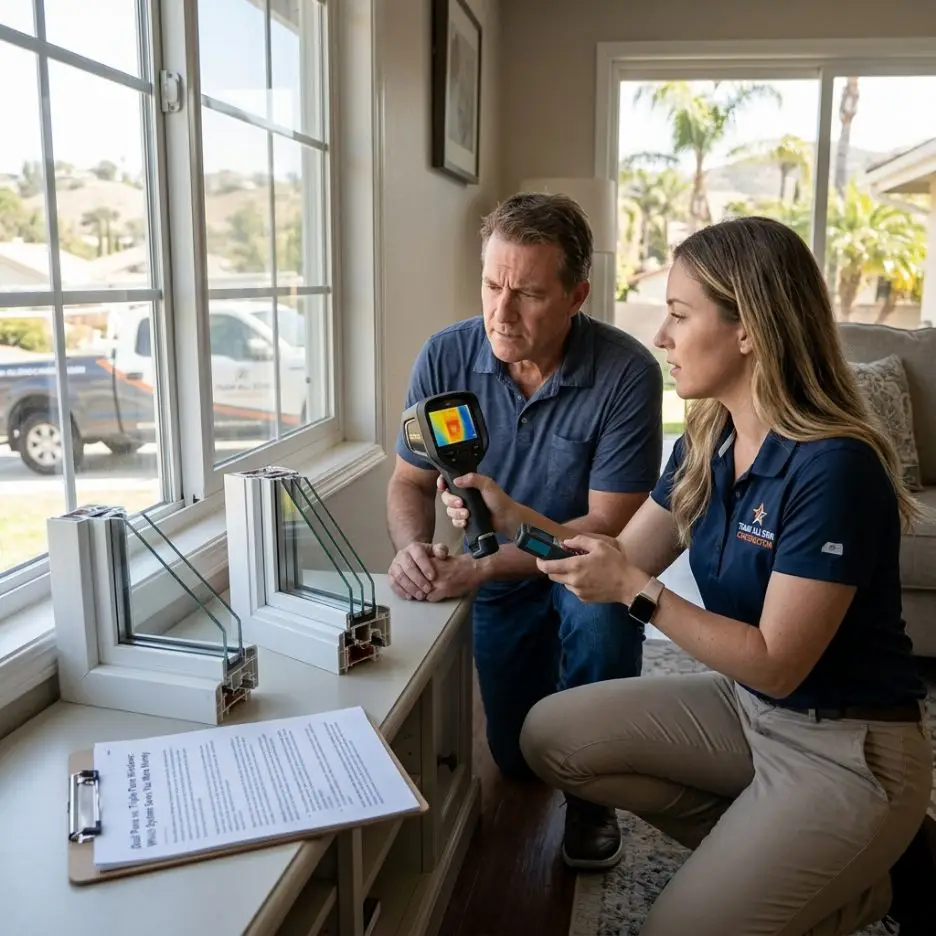
We measure this in your home during our in-home consultation. You’ll see exactly how much heat is entering through your current windows and what dual pane would prevent. Most homeowners are surprised by the volume of heat that even good dual pane doesn’t stop during peak afternoon hours.
For coastal areas like Santa Monica or Laguna Beach where temperatures rarely exceed 80 degrees, dual pane often handles the cooling demand perfectly. For inland regions like San Bernardino or Riverside where triple-digit days are common, the conversation changes.
Triple Pane Windows: Premium Performance and Long-Term Value
Triple pane adds a third glass layer with two separate air gaps, which creates additional insulation. The performance difference shows up most clearly in extreme temperature swings.
What triple pane brings to the table:
- U-value between 0.20 and 0.25 (noticeably better insulation)
- Reduces heat transfer by 15-25% more than dual pane
- Superior sound dampening (important if you’re near traffic or airports)
- Better cold retention during winter months (though this matters less in Southern California)
- Increased home comfort during the hottest parts of the day
The trade-off is weight and cost. Triple pane windows are heavier, require stronger frames, and typically cost 20-40% more than comparable dual pane systems. Installation is more complex, which we account for in our custom manufacturing and installation process.
Triple pane makes the most financial sense if you plan to stay in your home 15+ years and you’re in a region with significant temperature extremes. In inland Southern California communities like Temecula, Menifee, or Palm Springs where summer heat is intense and sustained, triple pane can reduce your cooling costs enough to justify the higher upfront investment.
Climate Considerations: What Your Southern California Home Really Needs
Southern California’s climate is deceptive. We don’t get the extreme cold of other regions, but our heat problem is real and concentrated. Your cooling costs reflect this.
Breaking down our service areas:
Coastal and valley locations (Los Angeles, Pasadena, Burbank, Santa Monica, Orange County beach communities): These areas rarely exceed 85 degrees. Dual pane with low-E coating handles cooling efficiently. Triple pane provides comfort gains that don’t justify the cost for most homeowners.
Inland regions (San Bernardino, Riverside, Temecula, Moreno Valley, Victorville): These areas see sustained 100+ degree days for months. Heat entering through windows is a primary driver of cooling costs. Triple pane’s extra insulation layer provides measurable energy savings.
Desert communities (Palm Springs, Cathedral City, Indio, Rancho Mirage): These areas combine extreme heat with intense sun exposure. Triple pane becomes more valuable here, especially on west and south-facing walls where afternoon sun is relentless.
We measure your specific situation. We check which direction your home faces, how much direct sun your windows receive, and how your current windows are performing. This data points you toward dual pane or triple pane based on what’s actually happening in your home, not assumptions about what you should choose.
Installation Quality Matters More Than You Think
Here’s what most homeowners miss: the window itself is only half the equation. Installation quality determines whether your new windows perform as rated.
Poor installation undermines everything. Air gaps around frames, improper sealing, incorrect flashing, and gaps in weatherstripping let heat bypass even the best dual pane or triple pane systems. You could install triple pane windows and still have a heat problem if installation isn’t precise.
We handle this through custom manufacturing and professional installation. Our process includes:
- In-home measurement to ensure exact fit
- Custom frame manufacturing for your specific openings
- Professional installation with complete sealing and insulation
- Quality verification before we finish
Installation quality is why we recommend getting a professional in-home assessment rather than ordering online. Every home has quirks: window frames aren’t always perfectly square, walls settle unevenly, older homes have unique challenges. Our team accounts for these during installation so your new windows actually perform.
Our Custom Approach to Finding Your Perfect Window Solution
We don’t hand you a catalog and ask you to pick. We start by understanding your heat problem.
Our process:
1. Walk through your home and identify where heat is entering
2. Measure current window performance and heat transfer
3. Discuss your cooling costs and comfort issues
4. Explain what dual pane or triple pane would change for your specific situation
5. Show you the cost difference over time
6. Help you decide based on your timeline and budget
This approach takes time but it eliminates guesswork. You see exactly what’s happening in your home and what each window option would prevent. No pressure—just clear answers that help you make the right choice.
Cost Analysis: Dual Pane vs. Triple Pane Over 20 Years
The financial comparison changes based on where you live and how long you stay in your home.
Dual pane windows:
- Average cost per window: $400-600 installed
- For typical 15-window home: $6,000-9,000 total
- Annual cooling savings: varies by location; inland homes see $200-400 annually
- 20-year savings: $4,000-8,000 in energy costs
Triple pane windows:
- Average cost per window: $550-800 installed
- For typical 15-window home: $8,250-12,000 total
- Annual cooling savings: inland homes see $300-500 annually
- 20-year savings: $6,000-10,000 in energy costs
In coastal areas, dual pane typically breaks even in 8-10 years and triple pane in 12-15 years. In inland areas with higher cooling demands, both break even faster, and triple pane’s advantage becomes clearer over 20 years.
This analysis assumes you’re comparing similar quality windows. We customize our recommendations based on your specific location and energy usage patterns so you’re not overpaying.
How We Help You Make the Right Choice for Your Home
The decision comes down to three factors: your location’s climate intensity, how long you plan to stay in your home, and what comfort level you want to achieve.
We help you evaluate each:
Climate intensity: We check your area’s typical summer temperatures, peak heat periods, and how your home’s orientation affects sun exposure. A west-facing Riverside home with afternoon sun exposure has very different cooling demands than a north-facing Pasadena home.
Timeline: If you’re selling in 5 years, dual pane is typically the better financial choice. If you’re staying 15+ years in an inland area, triple pane’s long-term energy savings justify the investment.
Comfort vs. cost: Some homeowners prioritize reaching a specific indoor temperature without maxing out the AC. Others prioritize minimizing energy bills. We discuss both and help you set realistic expectations about what each window type will achieve.
Why We Recommend One System Over Another Based on Your Situation
We lean toward dual pane for most of our coastal and valley clients. It delivers strong energy performance, solves heat problems efficiently, and costs less. The payback timeline is fast and the comfort improvement is substantial.
We recommend triple pane for inland communities, homes with long-term ownership plans, and situations where summer heat creates specific comfort challenges. The extra insulation layer addresses more of the heat problem, and over 20 years the energy savings offset the higher upfront cost.
What we don’t do: recommend the premium option just to increase the sale price or suggest budget windows that won’t last. We match the window system to your actual situation.
Next Steps: Getting Your Professional In-Home Window Assessment
The best way forward is an in-home consultation. We’ll measure what’s actually happening with your current windows, show you the heat problem, and walk you through what dual pane or triple pane would change.
You’ll leave with clear answers about which system fits your home, your timeline, and your budget. No guesses, no pressure.
Contact us to schedule your in-home assessment. We serve throughout Southern California, including Los Angeles County, San Bernardino County, Orange County, Riverside County, and Ventura County. We’ll show you what’s really happening in your home and help you make the right window choice.
For further reading: Window replacement options.
Get a free estimate for your home. No pressure—just clear answers and straightforward pricing. Call (310) 729-3013 or visit: https://teamallstarconstruction.com/contact/
Frequently Asked Questions (FAQ)
What’s the real difference between dual pane and triple pane windows for homes in Southern California?
We find that dual pane windows work well for most Southern California homeowners because our climate doesn’t demand the extreme insulation that triple pane provides. Dual pane systems give you solid energy efficiency and meaningful cost savings without the premium price tag. Triple pane windows offer additional insulation benefits, but in our region, the extra investment typically takes 15-20 years to recoup through energy bill reductions.
How do we help you decide between dual pane and triple pane for your specific home?
We conduct an in-home consultation where we evaluate your current windows, your home’s location within Southern California, your cooling costs, and your long-term plans for the property. Our assessment considers factors like sun exposure, existing insulation, and whether you’re doing a retrofit or full replacement. This personalized approach means we recommend the system that actually matches your needs and budget, not just the most expensive option.
Does installation quality really impact how much money these windows save you?
Absolutely. We’ve seen perfectly good window systems underperform because poor installation created air leaks around the frames and seals. Confirm the installation team, relevant training, supervision, and responsibility for the work in your written project agreement. Even a premium triple pane window won’t deliver its promised efficiency if it’s not installed correctly.
- Categories: Uncategorized
Southern California Window Replacement Guide
Single Pane vs Dual Pane: Which Fits Your Home?
Replacement Windows Los Angeles Homeowners Choose
Retrofit Windows vs Full Frame: Which Fits?
A Guide to Full Window Replacement at Home
Vinyl vs Aluminum Windows for Southern California
Best Windows for Hot Climates in Southern California
A Homeowner’s Guide to Energy Efficient Windows
How to Reduce Window Heat at Home
About Total Home Windows
Total Home Windows is a Southern California-based window replacement company focused on helping homeowners improve energy efficiency, indoor comfort, and long-term home value through high-performance window installations.
Serving Los Angeles County, Orange County, Riverside County, San Bernardino County, and Ventura County, the company specializes in both vinyl retrofit (insert) and full-frame window replacement. Their work is tailored to the unique demands of California homes, including intense UV exposure, coastal conditions, and heat retention issues common in older properties.
Total Home Windows combines practical installation experience with a strong focus on energy performance—helping homeowners reduce cooling costs, improve insulation, and solve common problems like rooms that stay hot even with air conditioning. Their approach prioritizes clear recommendations, transparent pricing, and solutions that make sense for each home.
The content published by Total Home Windows is built on real installation knowledge, field-tested performance insights, and current best practices in window technology, including Low-E glass, argon-filled units, and energy-efficient design strategies. Their goal is to help homeowners make informed decisions without overpaying or choosing the wrong type of window system.
Ways to Reach Us
If you’re considering window replacement, we’re here to answer questions and provide clear, professional guidance based on your home and goals.
- teamallstarconstruction@gmail.com
- 301 E.9th St Suite 415 Redlands, CA 92374