Prices and performance figures in this guide are planning examples, not a project quote or a promise of savings. Your estimate and results depend on the products, installation scope, existing home, climate, and energy use.
Why Your Cooling Costs Keep Rising: The Hidden Culprits
Your air conditioning bill climbs every summer, but you’re not using it more. Something else is happening: your home is absorbing more heat than it should, and your AC is working overtime to fight it.
The main culprits aren’t always obvious. It’s not just that the outside temperature is higher or that you’re leaving doors open. The real problem sits in your walls, frames, and glass. Your windows and doors are letting heat pour inside faster than your AC can cool it out. Meanwhile, poor insulation, heat-absorbing roofing materials, and sun exposure through old glass compound the problem.
Here in Southern California, this problem is especially sharp. The intense sun, especially in inland areas like the San Bernardino Valley, Riverside, and the desert regions, creates radiant heat that penetrates homes through unprotected glass. Coastal areas like Los Angeles County and Orange County experience consistent heat that builds throughout the day.
The result: your cooling system runs longer, works harder, and costs you more each month. Understanding what’s driving those costs is the first step to fixing them.
How Air Leaks and Drafts Drain Your Budget
Air leaks around windows are like leaving your front door cracked open while running the AC. Warm air continuously seeps inside, and cooled air escapes outside. Your AC never gets a rest.
These leaks happen around window frames where the glass meets the frame, along the edges where the frame meets your wall, and through gaps that develop as windows age and settle. Old single-pane windows are notorious for this. Even double-pane windows from 10 or 15 years ago have significantly degraded seals that allow air exchange.
Here’s what happens in a typical home with air leaks:
- Outside air carrying heat pushes in around the frame
- Cooled air from your home leaks out through the same gaps
- Your AC runs more frequently to maintain temperature
- Energy bills spike by 15 to 25 percent in extreme cases
You might notice this as hot spots near windows or rooms that never feel cool even when the AC is running. In a Pasadena home with west-facing windows, for example, afternoon heat becomes unbearable because old window seals allow that radiant energy straight inside.
The fix isn’t complicated: new, properly sealed windows stop the leak. But the installation method matters enormously, which we’ll cover later.
Window Quality and Age: Your Home’s Biggest Energy Weakness
Your windows are one of the few parts of your home’s exterior you can see working against you every day. If they’re old, they’re costing you real money.
Single-pane windows, common in homes built before 1980, offer almost no insulation. Heat transfers through the glass almost as easily as an open hole. Double-pane windows became standard in the 1980s and 1990s, but many of those seals have failed by now. If you see condensation between the panes on cold mornings, the seal is broken, and that window is essentially a single-pane window again.
Even newer windows (15 to 20 years old) were built with older efficiency standards. The coatings, frame materials, and glass technology have improved significantly. A window from 2006 performs noticeably worse than one made today.
The age of your windows directly affects your cooling costs. A home in Corona with single-pane windows in a 1970s-era house might spend 40 percent more on cooling than an identical home next door with modern replacement windows. The difference isn’t theoretical, it’s on your electric bill.
What to do: Have your windows inspected by someone who will actually measure the problem rather than just tell you they look old. We’ll show you exactly what’s happening with your current windows and how much heat is entering through them.
Understanding U-Factor and Solar Heat Gain Ratings
When you look at window specifications, you’ll see two numbers that actually matter: U-Factor and Solar Heat Gain Coefficient (SHGC).
U-Factor measures how much heat passes through the window. Lower numbers are better. A window with a U-Factor of 0.35 lets less heat through than one with a U-Factor of 0.55. In Southern California’s climate, you want windows with U-Factors between 0.30 and 0.35 for optimal cooling efficiency.
SHGC measures how much solar heat the window lets in. On a scale of 0 to 1, lower numbers mean less solar heat enters your home. For cooling efficiency in Southern California, aim for SHGC ratings between 0.23 and 0.35. This is especially important on west and south-facing windows that take direct afternoon sun.
Here’s why this matters practically: A standard replacement window might have a U-Factor of 0.50 and SHGC of 0.40. An energy-efficient window we install has ratings closer to 0.30 and 0.28. That difference translates to noticeably cooler rooms and lower bills, particularly in homes in inland areas like Victorville, Hesperia, and Palm Springs where summer heat is relentless.
The glass type makes the biggest difference. Modern low-emissivity (Low-E) coatings reflect heat back outside while letting light in. This invisible coating on the glass is what separates an efficient window from an average one.
The Direct Connection Between Poor Windows and High AC Bills
Your high cooling bill and your old windows are not separate problems. They’re the same problem.
Here’s the energy flow: Outside heat enters your home primarily through windows and glass doors. Every square foot of unprotected or poorly rated window glass admits solar heat. On a hot July afternoon in Irvine or Mission Viejo, that heat builds continuously from 10 a.m. until 6 p.m. Your AC system must remove that heat, plus the heat from everything else inside your home.
A home with poor windows requires the AC to work 30 to 50 percent harder than the same home with efficient windows. Over a typical Southern California cooling season (May through September, sometimes longer), that’s hundreds of dollars in extra energy costs.
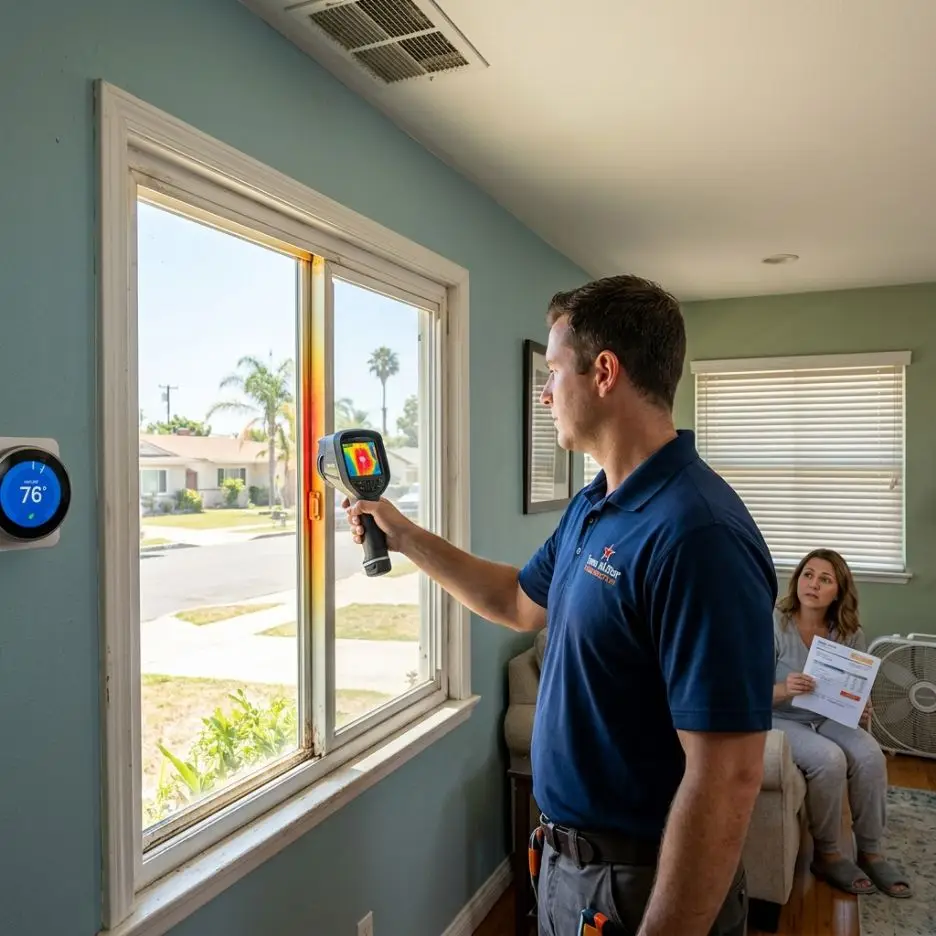
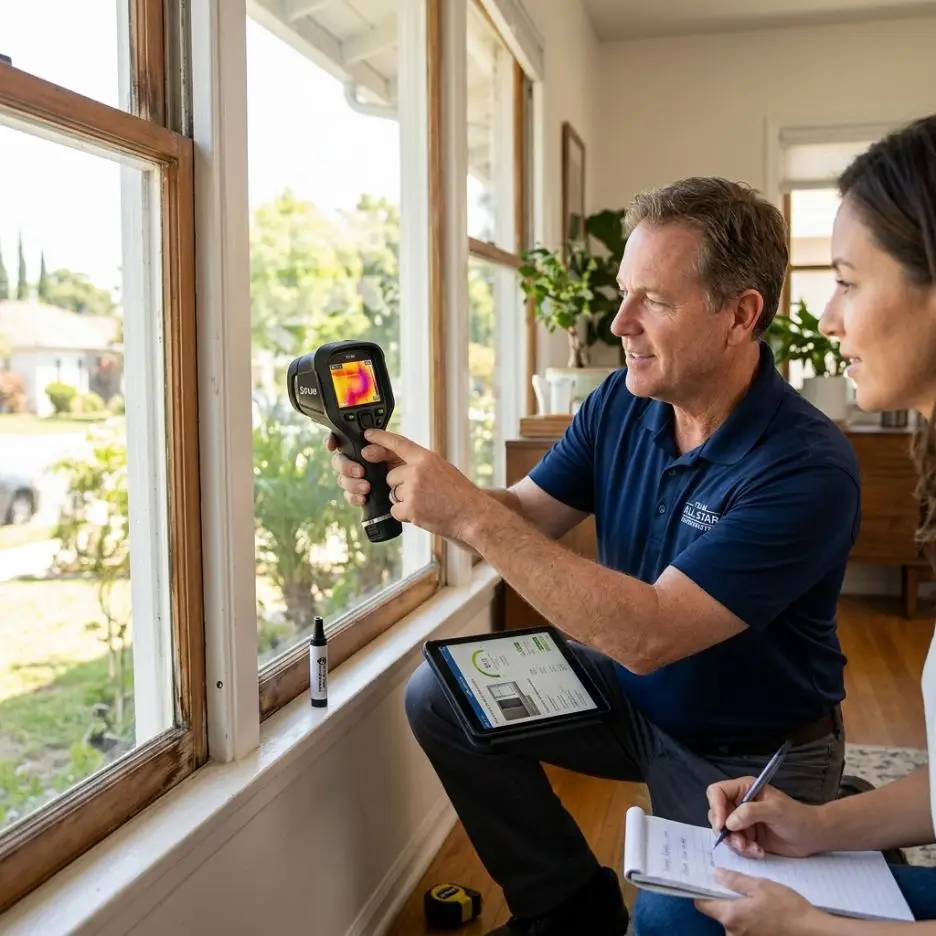
The correlation is measurable. We can show you exactly how much heat is entering through your current windows using thermal imaging. You’ll see the heat patterns in your home, understand where it’s coming from, and know precisely what replacing those windows will change.
Homeowners in Downey, Lakewood, and Long Beach often discover that their high bills aren’t a thermostat problem or an AC problem. It’s a window problem. Once they know that, the solution becomes clear.
How Our Custom-Fit Vinyl Replacement Windows Solve the Problem
We don’t install generic windows. We manufacture custom-fit window replacement systems designed specifically for your home and Southern California’s climate.
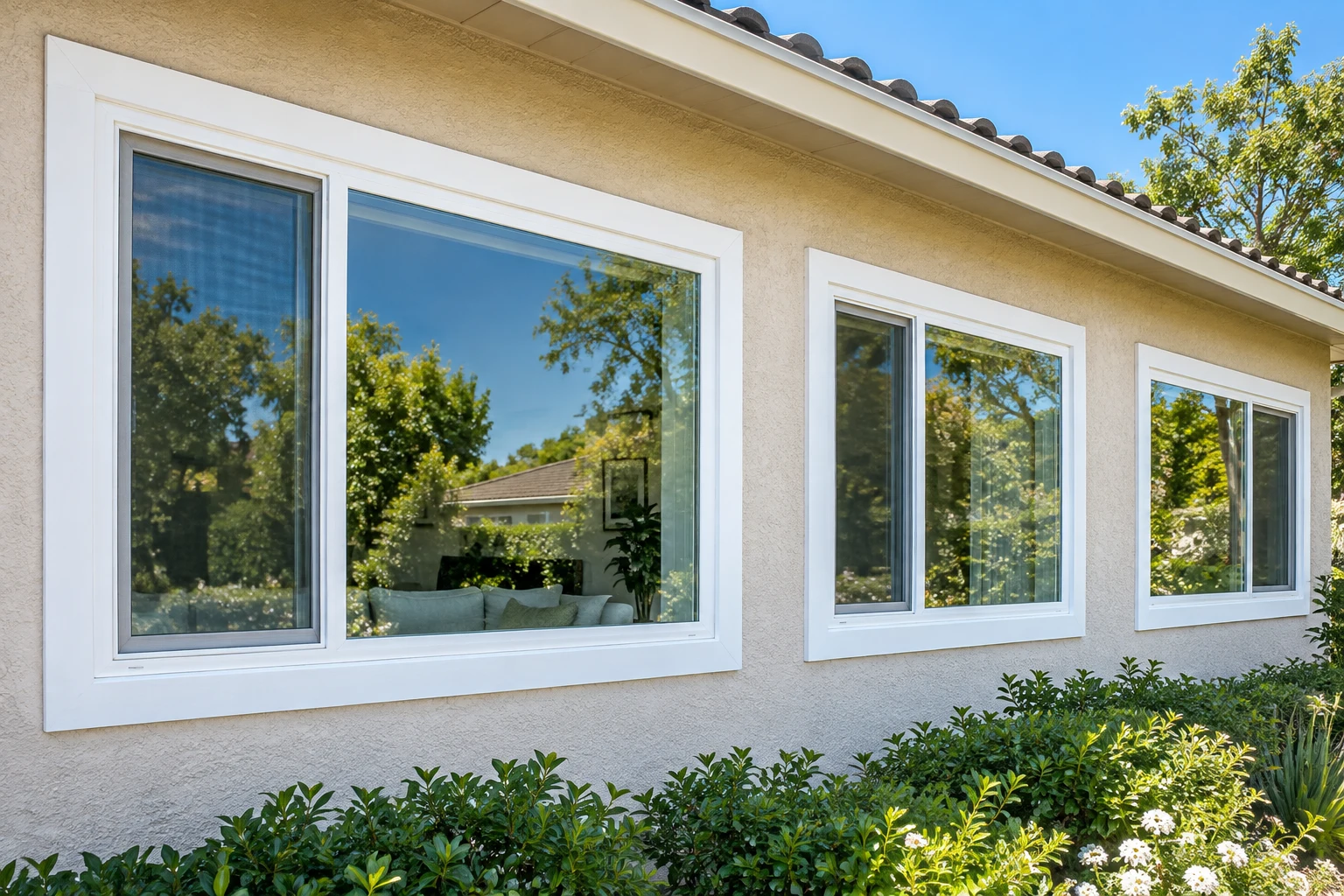
Each window we install is measured precisely to fit your opening. Our vinyl frames are engineered to minimize heat transfer while maximizing durability in Southern California’s sun and heat. The glass we use features advanced Low-E coatings and, when appropriate, reflective tints that reduce solar heat gain without darkening your home.
Here’s how it works:
- We measure your windows on-site with precision tools
- We customize glass and frame specifications based on window orientation and sun exposure
- We use high-performance sealants and weatherstripping during installation
- The result is airtight, thermally efficient windows that fit perfectly
A west-facing window in Sherman Oaks gets different glass specifications than a north-facing window in the same house. A second-floor window in Pasadena might need higher reflectivity than a shaded ground-floor window. This isn’t about one-size-fits-all solutions. It’s about solving your specific heat problem.
The vinyl frames we use won’t warp, crack, or require painting. They’ll perform consistently for 20 plus years in Southern California’s heat and occasional coastal salt air.
What Makes Our Window Systems Different from Standard Options
Standard replacement windows are built to general specifications and installed quickly with minimal customization. They work, but they don’t optimize for your home or climate.
Our approach is different. We start with measurement. We come to your home, examine your window openings, assess sun exposure, and understand your specific cooling challenges. Then we build windows to those specifications rather than forcing your home to accept off-the-shelf sizes and glass options.
The differences show up in:
- Glass formulations selected for your home’s orientation (different coatings for west-facing versus north-facing windows)
- Frame and seal designs that account for your home’s settling and your wall construction
- Installation methods that ensure airtight seals, not just code-minimum installation
- Warranty coverage backed by local support, not national call centers
A homeowner in Temecula might need solar-control glass that reflects 60 percent of incoming solar heat. A homeowner in Culver City might prioritize visibility with slightly less reflectivity because their home is naturally shaded. One-size windows don’t address these differences. Custom solutions do.
When you choose our windows, you’re not just getting replacement glass. You’re getting a system engineered for your home, installed by technicians who understand Southern California’s regional climate variations, and backed by our commitment to your comfort and efficiency.
Professional Installation: Why It Matters for Cooling Performance
A perfectly engineered window installed incorrectly performs like a mediocre window. Installation quality determines whether those efficiency ratings actually happen in your home.
Poor installation creates the same air leaks and thermal problems you’re trying to eliminate. Gaps around the frame, inadequate sealing, and misaligned windows allow air exchange and heat entry just like old windows do. We’ve seen homes where new windows barely improved cooling costs because the installation left gaps that defeated the upgrade.
Our installation process focuses on airtightness and thermal integrity:
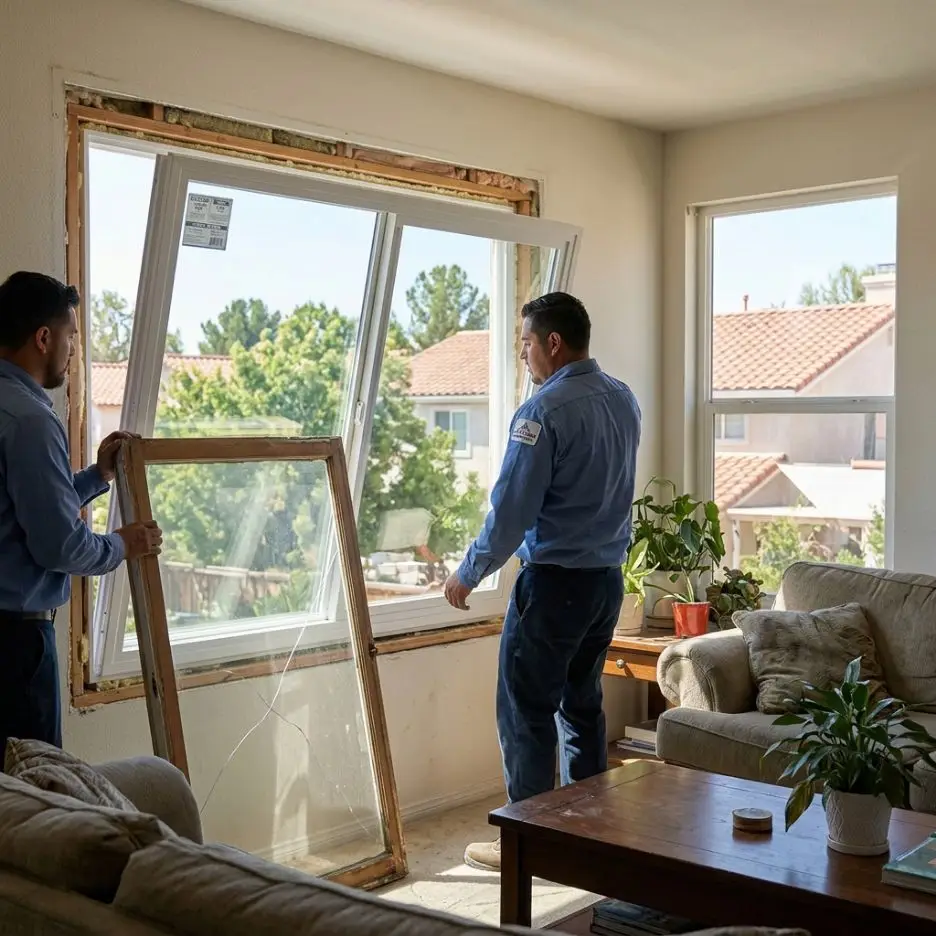
- We remove old windows carefully without compromising wall structure
- We measure opening clearances and shim frames perfectly level and square
- We use high-performance sealants and weatherstripping designed for California heat
- We verify airtightness before we consider the job complete
The time we spend on installation takes longer than standard window replacement. That’s intentional. A proper installation in Redondo Beach, where salt air can degrade seals, requires more care than a rush job. A retrofit in a 1950s Spanish colonial in Hancock Park, where wall structures aren’t perfectly square, requires custom framing.
This detail is why you notice cooling improvements immediately after we finish, not gradually over weeks.
Real Cooling Improvements Our Southern California Customers Experience
Our customers don’t estimate or guess at results. They see the difference on their electric bill.
A family in Chino Hills replaced their old double-pane windows with our custom vinyl system. Their June-July cooling costs dropped 22 percent compared to the previous year (controlling for temperature differences). The home felt noticeably cooler at the same thermostat setting.
A Huntington Beach homeowner with extensive west-facing glass reported that their master bedroom, which was often 3 to 4 degrees warmer than the rest of the home, reached thermal balance. The reflective Low-E coating on those west-facing windows stopped the afternoon heat spike.
In Ontario, where summer temperatures regularly exceed 105 degrees, a customer reported that their AC ran roughly 4 to 5 hours less per day during peak heat season. The thermostat could be set 2 degrees higher with the same comfort level, translating to 15 to 20 percent lower overall cooling costs.
These aren’t outliers. They’re typical results when you solve the actual heat entry problem rather than just adding window frames.
The pattern holds across our service areas, from the coastal comfort of Newport Beach to the harsh inland heat of Yucca Valley and Joshua Tree. Better windows stop heat entry. Your AC runs less. Your bills drop.
Choosing the Right Window Solution for Your Home
Not every home needs the same window solution. The choice depends on your sun exposure, current window condition, budget, and comfort goals.
If your home has mostly intact windows and you’re primarily concerned with efficiency, a full frame replacement with high-performance glass solves the problem. If you have severely damaged or stuck windows, it’s clearly replacement time. If you want to upgrade without full replacement, vinyl retrofit windows fit inside your existing frame, though they offer slightly less customization.
Consider your home’s orientation and shade patterns. Homes in Palm Springs with unshaded south and west exposure need aggressive solar control. Homes in Laguna Beach with natural tree cover and ocean breezes can use slightly less reflective glass and maintain views.
Your budget matters too. A comprehensive replacement of all windows in a large Calabasas home costs more than replacing windows in a smaller Norwalk home. Phased replacement, starting with the most problematic windows (usually west and south-facing), is a legitimate option.
The right choice comes down to understanding what’s actually happening in your home. That’s why we start with a detailed in-home assessment, not a sales pitch.
Schedule Your In-Home Consultation Today
The first step is seeing what’s actually happening with your home’s cooling efficiency. We’ll walk through your home, identify where heat is entering, measure your window performance, and show you exactly what replacement windows will change.
No pressure. No sales pitch. Just clear answers about your home’s specific situation and what actually fixes it.
Contact us to schedule your in-home consultation. We serve Southern California from Los Angeles County through the Inland Empire, Orange County, Riverside County, and Ventura County. We’ll come to your home, show you the problem, and explain the solution.
Your cooler, more efficient home starts with understanding why it’s hot right now. Let’s show you what’s happening.
Get a free estimate for your home. No pressure—just clear answers and straightforward pricing. Call (310) 729-3013 or visit: https://teamallstarconstruction.com/contact/
Frequently Asked Questions (FAQ)
How much can I expect to save on cooling costs by replacing my windows?
Most of our Southern California customers see cooling cost reductions between 15-30% after installing our custom-fit vinyl replacement windows, though your actual savings depend on your current window condition, home size, and climate zone. Homes with older, single-pane windows or significant air leaks typically experience savings on the higher end of that range.
We recommend scheduling an in-home consultation so we can assess your specific situation and give you a realistic estimate based on your current energy usage.
What’s the difference between a vinyl retrofit and a full frame replacement?
A vinyl retrofit fits a new window frame inside your existing opening without removing the old frame, which works well when your current frames are still structurally sound. A full frame replacement removes the entire old window system, allowing us to seal air leaks around the opening and install our windows properly from the studs outward, giving you better performance and addressing hidden drafts that retrofits can’t fix.
We’ll evaluate your windows during our consultation and recommend whichever approach will deliver the best cooling efficiency and long-term value for your home.
Do you serve my area in Southern California?
We install windows throughout Los Angeles, Orange, San Bernardino, Riverside, and Ventura counties, covering everything from coastal communities like Huntington Beach and Santa Monica to inland areas like Temecula, Palm Springs, and Victorville. If you’re in Southern California and unsure whether we reach your specific city, contact us directly and we’ll confirm our service availability.
Our regional installation expertise means we understand local climate challenges and building conditions specific to your area.
- Categories: Uncategorized
Southern California Window Replacement Guide
Single Pane vs Dual Pane: Which Fits Your Home?
Replacement Windows Los Angeles Homeowners Choose
Retrofit Windows vs Full Frame: Which Fits?
A Guide to Full Window Replacement at Home
Vinyl vs Aluminum Windows for Southern California
Best Windows for Hot Climates in Southern California
A Homeowner’s Guide to Energy Efficient Windows
How to Reduce Window Heat at Home
About Total Home Windows
Total Home Windows is a Southern California-based window replacement company focused on helping homeowners improve energy efficiency, indoor comfort, and long-term home value through high-performance window installations.
Serving Los Angeles County, Orange County, Riverside County, San Bernardino County, and Ventura County, the company specializes in both vinyl retrofit (insert) and full-frame window replacement. Their work is tailored to the unique demands of California homes, including intense UV exposure, coastal conditions, and heat retention issues common in older properties.
Total Home Windows combines practical installation experience with a strong focus on energy performance—helping homeowners reduce cooling costs, improve insulation, and solve common problems like rooms that stay hot even with air conditioning. Their approach prioritizes clear recommendations, transparent pricing, and solutions that make sense for each home.
The content published by Total Home Windows is built on real installation knowledge, field-tested performance insights, and current best practices in window technology, including Low-E glass, argon-filled units, and energy-efficient design strategies. Their goal is to help homeowners make informed decisions without overpaying or choosing the wrong type of window system.
Ways to Reach Us
If you’re considering window replacement, we’re here to answer questions and provide clear, professional guidance based on your home and goals.
- teamallstarconstruction@gmail.com
- 301 E.9th St Suite 415 Redlands, CA 92374