Prices and performance figures in this guide are planning examples, not a project quote or a promise of savings. Your estimate and results depend on the products, installation scope, existing home, climate, and energy use.
If you’ve started researching new windows, you’ve probably run into a frustrating pattern:
- One company pushes a “premium” brand at a high price
- Another offers something much cheaper that looks similar
- And somewhere in the middle, you’re trying to figure out what’s actually worth it
So here’s the truth most homeowners don’t get upfront:
The best replacement windows for your money in 2026 aren’t about brand alone—they’re about how the product, installation, and total project scope come together.
And in California, that matters even more.
Because between heat, energy codes, stucco construction, and long-term performance, the wrong decision isn’t just inconvenient—it can get expensive fast.
What “Best for the Money” Actually Means in 2026
Most comparison guides get this wrong.
They rank brands like:
- “#1 Best Window”
- “#2 Best Value”
But that’s not how real projects work.
From the research and real California project data, what homeowners are actually paying for is a complete system, not just a window unit.
That includes:
- Product (frame + glass)
- Installation method
- Labor conditions (access, structure, repairs)
- Permits and code compliance
- Project management overhead (especially with retail providers)
For example, big-box providers like Home Depot don’t just sell windows—they sell a managed installation service, bundling product, labor, measurement, and coordination into one quote.
That’s why two quotes with “similar windows” can end up thousands apart.
The Real Cost Reality in California (Why Value Matters)
Before we even get into brands, you need to understand the pricing landscape.
Recent California project data shows:
- Roughly $900 to $1,300 per window for standard retrofit jobs
- Around $10,500–$12,000 for 10 windows on straightforward installs
- And significantly higher for:
- Custom sizes
- Full-frame replacement
- Stucco or structural work
That means when homeowners ask things like:
- How much should 10 windows cost?
- Is Home Depot cheaper?
The answer always depends on scope—not just brand.
Most homeowners don’t realize their quote includes more than just windows—this shows where the money goes.
If you want a deeper breakdown of that pricing, you can see how it plays out in real projects here:
→ how much does it cost to replace 10 windows
Why Brand Alone Doesn’t Determine Value
Here’s where most people go wrong:
They assume:
> “Better brand = better results”
But the data—and real-world installs—show something different.
Even high-quality windows can underperform if:
- Installed into a compromised frame
- Poorly sealed
- Used in the wrong application
And that’s not just opinion.
Building science guidance consistently shows that installation quality directly impacts performance and even warranty validity.
So the real hierarchy looks like this:
1. Installation quality
2. Correct installation method (retrofit vs full-frame)
3. Glass performance (Low-E, argon, etc.)
4. Frame material and build quality
5. Brand name
California Changes the Equation (A Lot)
If you’re in Southern California, your window decision isn’t the same as someone in another state.
Here’s why:
1. Heat and Solar Gain
Windows are one of the biggest contributors to:
- Indoor heat buildup
- Uneven room temperatures
- AC overuse
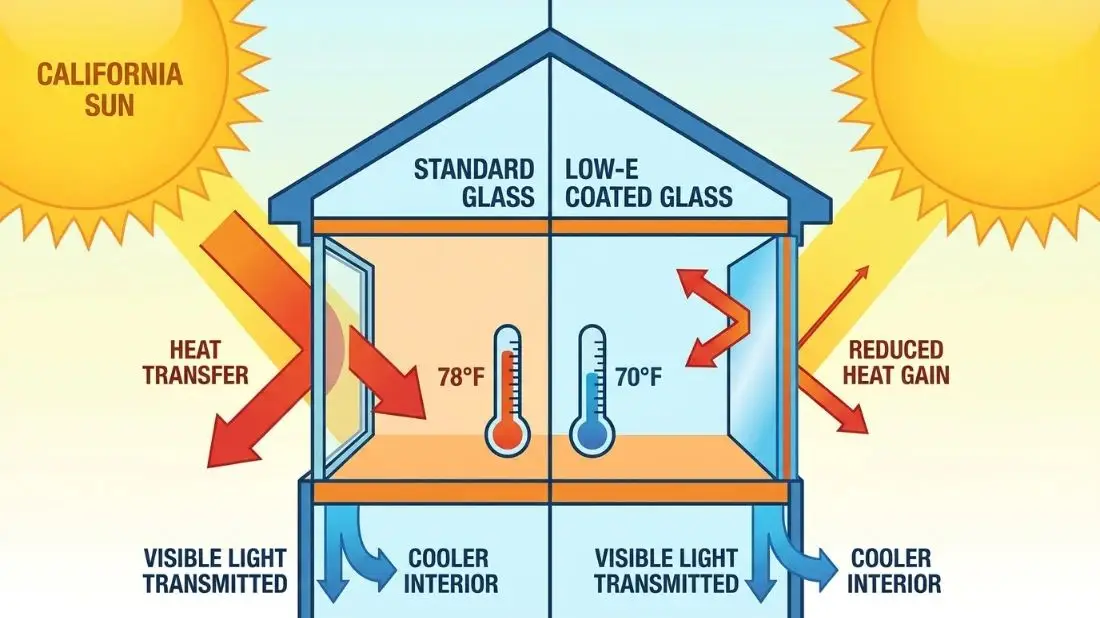
Poor window glass is one of the biggest reasons homes overheat—especially in Southern California.
If you’ve ever wondered why your house gets hot every afternoon, it’s often tied to window performance:
→ why your house gets hot every afternoon
2. Energy Code Requirements (Title 24)
California isn’t optional when it comes to efficiency.
As of 2026:
- Replacement windows must meet Title 24 energy standards
- U-factor and SHGC ratings matter
- Documentation and compliance forms are often required
This directly affects:
- What windows are allowed
- What upgrades are needed
- And how much your project costs
3. Stucco Homes and Installation Complexity
A huge percentage of California homes use stucco.
That impacts:
- Installation method
- Labor cost
- Risk level
For example:
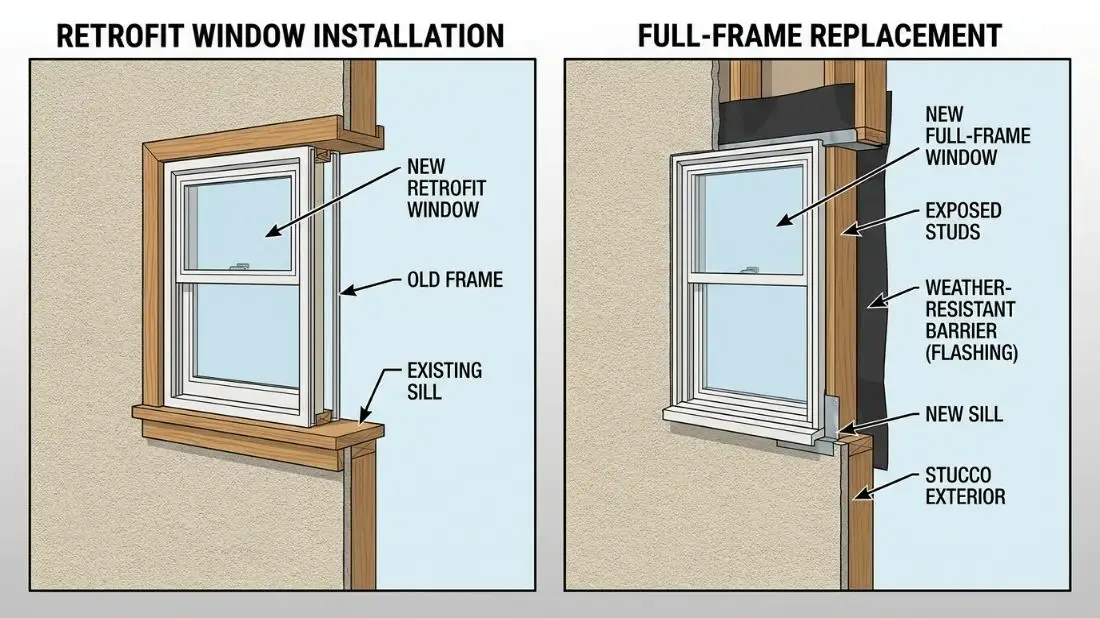
- Retrofit installs are less invasive
- Full-frame installs may require cutting stucco and rebuilding
And that difference alone can push costs from:
- ~$1,000 per window → to $2,000+ per window in some cases
The Three Window Value Tiers (What You’re Really Choosing Between)
Instead of “best brand,” it’s more useful to think in tiers.
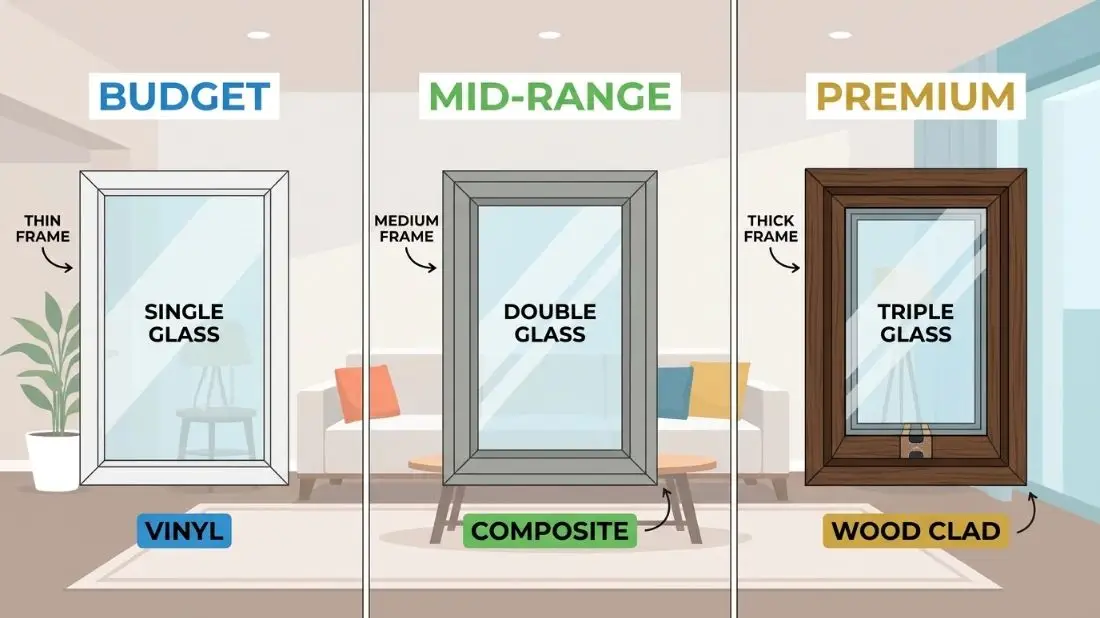
Budget Windows: Lowest Upfront Cost
These are typically:
- Entry-level vinyl windows
- Limited upgrades
- Basic dual-pane glass
Common brands include:
- American Craftsman Windows
- JELD-WEN (entry lines)
- Ply Gem Windows
Best for:
- Rentals
- Flips
- Tight budgets
Trade-offs:
- Lower efficiency
- Shorter lifespan
- Less durability in heat
Mid-Range Windows: Best Overall Value
This is where most California homeowners should focus.
Common brands:
- Milgard Windows
- Simonton Windows
- Anlin Windows
What you get:
- Strong energy efficiency (Low-E + argon standard in many cases)
- Better frame construction
- Longer lifespan
- More customization
In fact, many installed windows—even through large providers—already include:
- Dual-pane glass
- Low-E coatings
- Argon gas as a baseline
If you want to understand how those upgrades actually impact performance:
→ low-e vs standard glass
Premium Windows: High-End Performance
Common brands:
- Andersen Windows
- Pella Windows
- Marvin Windows
What you’re paying for:
- Fiberglass or composite materials
- Advanced glass systems
- Design flexibility
- Longer lifespan
But here’s the catch:
Triple-pane and premium upgrades can cost 20–40% more, and may not always deliver proportional value in Southern California’s climate.
Not all windows are built the same—this shows how frame quality, glass performance, and durability change by tier.
The Hidden Cost Factor Most Homeowners Miss
This is where pillar pages need to go deeper than competitors.
The biggest cost variable isn’t the window—it’s the installation scope.
Retrofit (Insert) Installation
- Lower cost
- Less disruption
- Uses existing frame
Full-Frame Replacement
- Higher cost
- More labor
- Fixes underlying structural issues
And here’s the problem:
Many quotes start as retrofit…
Then turn into full-frame after issues are discovered.
That’s exactly how a “cheap quote” turns expensive.
The installation method has a bigger impact on cost and performance than most homeowners realize.
If you’re comparing providers like Home Depot, this becomes even more important to understand:
→ is Home Depot a good place to get windows installed
Connecting the Bigger Questions Homeowners Are Asking
This guide is part of a bigger set of decisions homeowners are trying to make.
Here’s how they all connect:
- Wondering if installation is really “free”?
→ does Home Depot install windows for free
- Trying to budget for a real project?
→ how much should you spend on replacement windows
- Debating whether your old windows are worth replacing?
→ is it worth replacing 20 year old windows
- Comparing overall pricing in California?
→ window replacement cost in California guide
You can explore more breakdowns here:
What “Best for the Money” Really Comes Down To
After all the comparisons, brands, and pricing breakdowns, it comes down to this:
The best replacement window for your money is the one that:
- Matches your home’s condition
- Performs well in California heat
- Is installed correctly
- And is priced based on the real scope—not assumptions
Because in the end:
You’re not just buying windows.
You’re buying:
- Comfort
- Energy efficiency
- Long-term durability
- And peace of mind that the job was done right
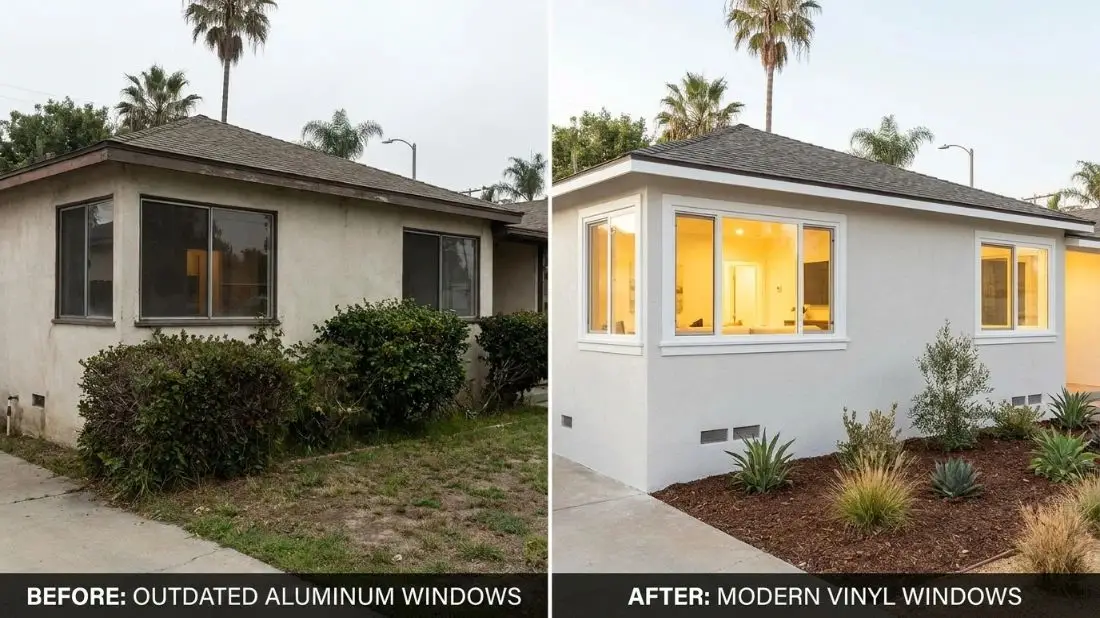
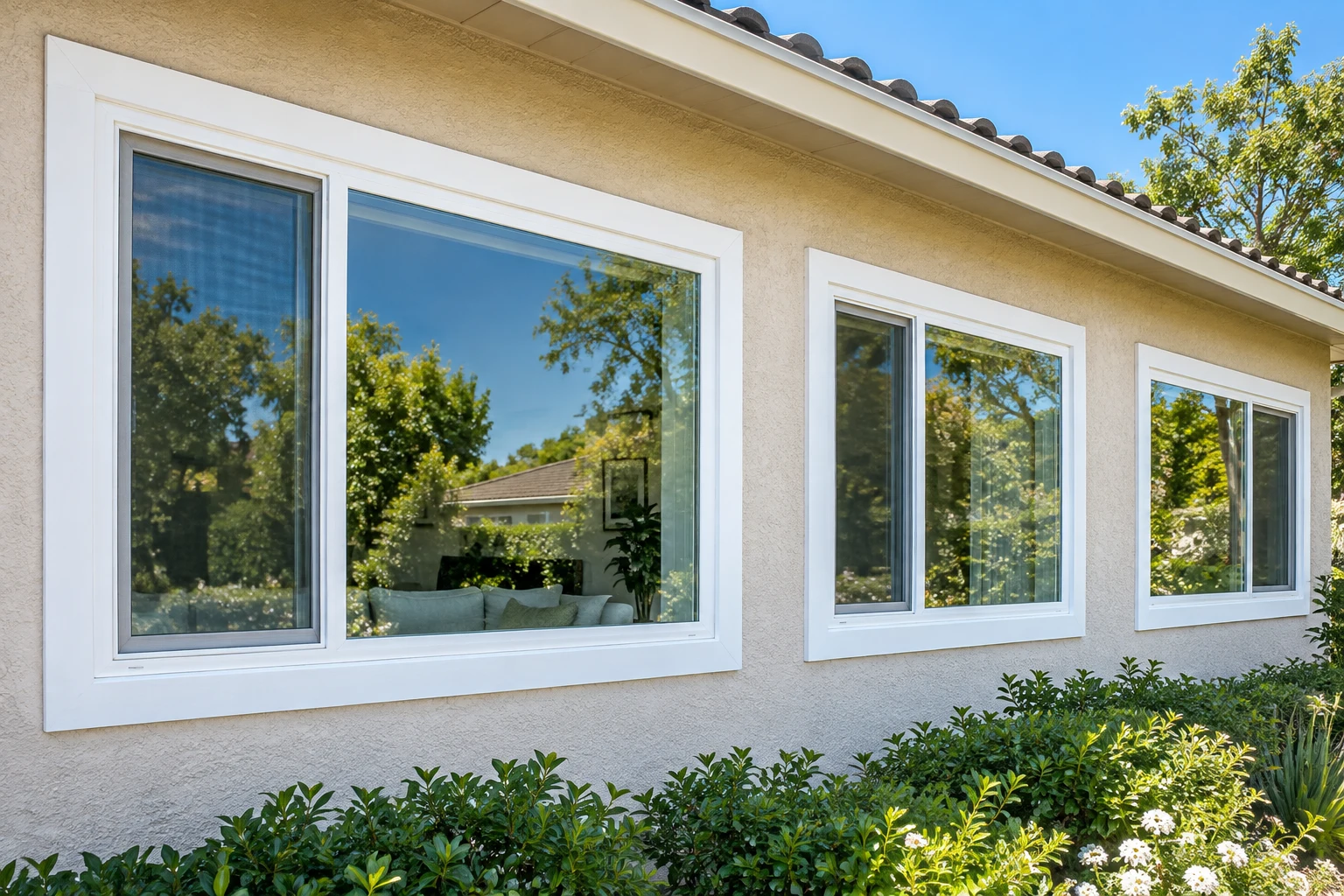
Upgrading from older windows can dramatically improve comfort, efficiency, and appearance.
Top Replacement Window Brands Compared in 2026 (What Actually Delivers Value in California)
Now that you understand how pricing and value really work, let’s get into what most homeowners are trying to figure out:
Which window brands actually give you the best return for your money in 2026?
Not just on paper—but in real California homes.
Because based on real project data and installation outcomes, the biggest mistake homeowners make is this:
> They choose a brand… before understanding the type of project they actually have.
How Brands Are Really Positioned in 2026
Instead of ranking brands from “best to worst,” it’s more accurate to group them by how they’re typically used in real projects.
Because each brand can perform well—or poorly—depending on:
- Installation method
- Product line
- Home condition
Budget Brands (Entry-Level Value)
Common Brands You’ll See
- American Craftsman Windows
- JELD-WEN (lower-tier lines)
- Ply Gem Windows
Where These Show Up
These are often used in:
- Big-box store projects
- Entry-level contractor bids
- Budget-focused replacements
You’ll commonly see them in quotes from places like Home Depot, where the goal is to keep upfront pricing competitive.
What the Data Shows
From real California project examples:
- Lower-tier vinyl windows are often part of $900–$1,300 per window installs
- These are typically retrofit (insert) installations
- They assume:
- No frame damage
- Standard sizes
- Minimal repair work
Where Homeowners Get Burned
The issue isn’t that these windows “don’t work.”
It’s that they:
- Leave little margin for performance upgrades
- Don’t handle long-term heat exposure as well
- Are often paired with minimal-scope installs
So when problems show up later (air leaks, comfort issues), it’s not always obvious whether it’s the window or the install.
Mid-Range Brands (Best Value for Most Homes)
Common Brands
- Milgard Windows
- Simonton Windows
- Anlin Windows
Why This Tier Wins in California
This is where the numbers, performance, and real-world outcomes line up best.
Most mid-range windows already include:
- Dual-pane glass
- Low-E coatings
- Argon gas fills
These aren’t “upgrades” anymore—they’re often standard baseline performance in 2026 installs.
What Actually Improves at This Level
Compared to budget options, you get:
- Stronger frame construction (less warping over time)
- Better sealing and insulation
- More consistent energy performance
- Longer-lasting hardware and components
And in Southern California, that translates directly to:
- Lower cooling demand
- More consistent indoor temperatures
- Less strain on your AC
If you’ve ever questioned whether windows affect your electric bill:
→ do windows really affect your electric bill
Real-World Cost Positioning
Mid-range projects typically fall into:
- $14,000–$22,000 for 10–15 windows
- Driven by:
- Window size
- Type (slider vs casement)
- Installation complexity
Not just “brand upgrades.”
Why This Tier Is the Sweet Spot
In our experience:
> This is where you stop paying for “just getting by”…
> and start paying for long-term performance.
Premium Brands (When They Actually Make Sense)
Common Brands
- Andersen Windows
- Pella Windows
- Marvin Windows
What You’re Paying For Premium windows offer:
- Fiberglass or composite frames
- Structural strength for larger openings
- Advanced glass packages
- Design flexibility
The Real Cost Difference
From 2026 pricing data:
- Vinyl windows: ~$500–$900 installed
- Fiberglass: ~$900–$1,800+ installed
- Triple-pane upgrades: 20–40% more
When Premium Is Worth It
- Large custom openings
- Structural upgrades
- High-end remodels
- Long-term, design-focused homes
When It’s Not
If your home:
- Has standard window sizes
- Doesn’t need structural changes
- Is primarily focused on energy savings
Then mid-range windows often deliver similar real-world performance at a much lower cost.
The Biggest Factor: Installation (Not Brand)
Across all tiers, one thing stays consistent:
Installation quality matters more than brand name.
The research makes this clear:
- Poor installation can reduce efficiency
- It can cause air leaks or water intrusion
- It can even impact warranty coverage
Why Big-Box vs Contractor Quotes Feel So Different
This is where homeowners start comparing options like:
- Home Depot
- Local window specialists
And notice major price differences.
Here’s why:
Big-Box Model
- Bundled pricing (product + install + admin)
- Third-party installers
- Simplified scopes (often retrofit-first)
Contractor-Direct Model
- More control over installation
- Ability to handle:
- Stucco repair
- Frame damage
- Full-frame installs
- More detailed scope breakdown
That’s why Home Depot isn’t always cheaper—it’s just structured differently.
If you want a full breakdown of that comparison:
→ how much does Home Depot charge for window installation
The Real Reason Quotes Change (What Homeowners Miss)
One of the most important insights from the research:
> The initial quote is often based on the wrong scope.
For example:
- A project starts as retrofit
- Hidden damage is discovered
- It shifts to full-frame
And suddenly:
- Costs increase significantly
- Timeline changes
- Scope expands
This is especially common in:
- Older homes
- Stucco exteriors
- Properties with water damage
How to Choose the Best Window for Your Money
Instead of focusing only on brands, use this framework:
Step 1: Identify Your Real Project Type
- Retrofit vs full-frame
- Frame condition
- Structural needs
Step 2: Choose the Right Tier
- Budget → short-term or rental
- Mid-range → most homeowners
- Premium → custom or structural needs
Step 3: Evaluate the Installation Plan
- Who is installing?
- What’s included?
- What happens if issues are found?
Bringing It All Together
The goal isn’t to find the “best brand.”
It’s to find the best combination of:
- Product
- Installation
- Scope accuracy
- Long-term performance
Because that’s what actually determines value.
And if you’re still comparing options, these are the next questions most homeowners ask:
- Is Home Depot really installing windows for free?
→ https://teamallstarconstruction.com/blog/does-home-depot-install-windows-for-free/
- What should a real 10-window project cost?
→ https://teamallstarconstruction.com/blog/how-much-does-it-cost-to-replace-10-windows/
- Are older windows even worth replacing?
→ https://teamallstarconstruction.com/blog/is-it-worth-replacing-20-year-old-windows/
- Is Home Depot a good choice overall?
→ https://teamallstarconstruction.com/blog/is-home-depot-a-good-choice-for-window-installation/
FAQs
Does Home Depot install windows for free?
No—window installation is not actually free. What usually happens is the installation cost is bundled into the total project price rather than listed separately. That can make it look like you’re getting free labor, but in reality, you’re paying for a full-service package that includes product, installation, coordination, and overhead. This is why quotes from companies like Home Depot often appear higher than expected once everything is included.
If you want a full breakdown of how that pricing works, you can review the detailed explanation here (https://teamallstarconstruction.com/blog/does-home-depot-install-windows-for-free/).
How much should it cost to replace 10 windows in California?
For a standard retrofit project in California, most 10-window replacements typically fall somewhere around the low five-figure range when the job is straightforward. Real-world examples show projects landing around $10,500 to $12,000 when using standard vinyl windows and minimal upgrades, but that number can increase significantly depending on window size, materials, and installation method. Once you factor in custom sizing, second-story access, or full-frame replacement, costs can rise quickly.
If you want a clearer breakdown of pricing scenarios, this guide walks through real examples (https://teamallstarconstruction.com/blog/how-much-does-it-cost-to-replace-10-windows/).
Is it worth replacing 20-year-old windows?
In many cases, yes—but it depends on their condition and performance. Older windows often lack modern energy-efficient features like Low-E coatings and insulated glass, which means they allow more heat transfer and make your HVAC system work harder. If your home struggles with hot rooms, high energy bills, or drafts, replacing older windows can significantly improve comfort and efficiency. However, if the frames are still in good shape, a retrofit solution might be enough.
If there’s structural damage or long-term wear, a full-frame replacement may be the better investment. You can explore how to evaluate that decision here (https://teamallstarconstruction.com/blog/is-it-worth-replacing-20-year-old-windows/).
Is Home Depot a good place to get windows installed?
It can be a convenient option, especially for straightforward projects, but it’s important to understand how their model works. Home Depot typically uses third-party installers and provides a managed service that includes consultation, ordering, and coordination. That can simplify the process, but it also means the quality of installation can vary depending on the local crew.
For more complex projects—especially older homes, stucco exteriors, or situations that may require full-frame replacement—a specialized contractor may provide more control over the installation and long-term results. This breakdown explains the pros and trade-offs in more detail (https://teamallstarconstruction.com/blog/is-home-depot-a-good-choice-for-window-installation/).
Get Clarity Before You Commit to a Window Brand
Choosing the “best window for the money” isn’t really about picking a brand—it’s about understanding:
- What your home actually needs
- What type of installation makes sense
- And what you’re really paying for in the quote
That’s where most homeowners get stuck—and where costly mistakes happen.
At Total Home Windows, we help you break down your options clearly so you can compare quotes the right way and choose a solution that actually performs long-term.
Call: (310) 729-3013
Email: teamallstarconstruction@gmail.com
Or request a quote here: https://teamallstarconstruction.com/contact/
No pressure. Just straightforward answers based on your home and your goals.
- Categories: Window Replacement Cost Guides
- Tags: California window cost, cost per window installed, Home Depot window cost, labor vs material window cost, retrofit vs full frame cost, window cost breakdown, window installation pricing, window replacement cost 2026
Southern California Window Replacement Guide
Single Pane vs Dual Pane: Which Fits Your Home?
Replacement Windows Los Angeles Homeowners Choose
Retrofit Windows vs Full Frame: Which Fits?
A Guide to Full Window Replacement at Home
Vinyl vs Aluminum Windows for Southern California
Best Windows for Hot Climates in Southern California
A Homeowner’s Guide to Energy Efficient Windows
How to Reduce Window Heat at Home
About Total Home Windows
Total Home Windows is a Southern California-based window replacement company focused on helping homeowners improve energy efficiency, indoor comfort, and long-term home value through high-performance window installations.
Serving Los Angeles County, Orange County, Riverside County, San Bernardino County, and Ventura County, the company specializes in both vinyl retrofit (insert) and full-frame window replacement. Their work is tailored to the unique demands of California homes, including intense UV exposure, coastal conditions, and heat retention issues common in older properties.
Total Home Windows combines practical installation experience with a strong focus on energy performance—helping homeowners reduce cooling costs, improve insulation, and solve common problems like rooms that stay hot even with air conditioning. Their approach prioritizes clear recommendations, transparent pricing, and solutions that make sense for each home.
The content published by Total Home Windows is built on real installation knowledge, field-tested performance insights, and current best practices in window technology, including Low-E glass, argon-filled units, and energy-efficient design strategies. Their goal is to help homeowners make informed decisions without overpaying or choosing the wrong type of window system.
Ways to Reach Us
If you’re considering window replacement, we’re here to answer questions and provide clear, professional guidance based on your home and goals.
- teamallstarconstruction@gmail.com
- 301 E.9th St Suite 415 Redlands, CA 92374