Prices and performance figures in this guide are planning examples, not a project quote or a promise of savings. Your estimate and results depend on the products, installation scope, existing home, climate, and energy use.
If you’re planning a window replacement project, you’re probably asking the most important question first:
How much should 10 windows cost to replace in 2026?
Here’s the most realistic, experience-based answer:
→ Most homeowners in 2026 will spend between $10,000 and $15,000 for 10 windows
→ Simple projects can land closer to $8,000–$10,000
→ More complex projects can reach $18,000–$30,000+
And that wide range is exactly why this topic is confusing.
Because the real answer isn’t just about averages—it’s about what kind of project you actually have.
Why “Average Cost” Is Misleading
You’ve probably seen numbers like:
- $6,000 for 10 windows
- $20,000+ for 10 windows
Both can be true.
But they’re describing completely different projects.
The real question isn’t:
> “What’s the average?”
It’s:
> “What does my 10-window project actually include?”
The Simplest Way to Think About Pricing
Instead of focusing on total price, break it down like this:
Cost Per Window Installed (2026 Reality)
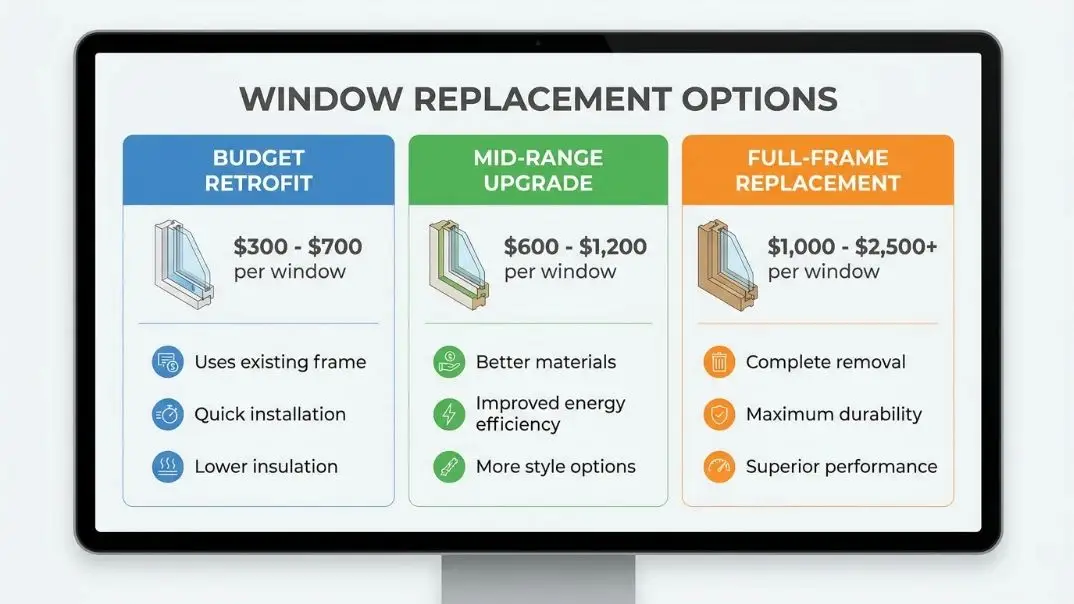
- Retrofit (basic install): ~$800 – $1,300 per window
- Full-frame / complex: $1,300 – $2,000+ per window
That’s the clearest way to understand where your project will land.
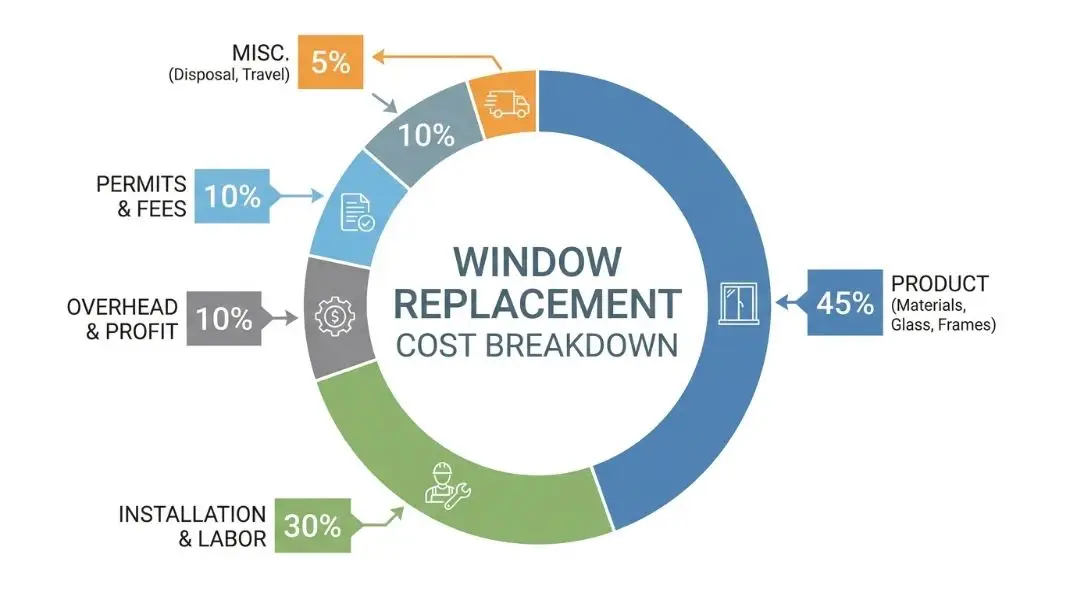
Most of the cost isn’t just the window—it’s labor, installation, and project complexity.
The 3 Real Pricing Scenarios (What Most Homes Fall Into)
Let’s make this practical.
Most 10-window projects fall into one of these three categories:
1. Budget Retrofit Project ($8,000 – $10,000)
What This Includes:
- Standard vinyl windows
- Retrofit (insert) installation
- Good existing frames
- Minimal upgrades
Why It’s Cheaper:
- Faster installation
- No structural work
- Less labor
The Trade-Off:
- Doesn’t fix hidden damage
- Keeps existing frame limitations
This is where many “low quotes” come from.
2. Mid-Range Project ($10,500 – $15,000)
What This Includes:
- Better-quality vinyl windows
- Low-E glass + argon gas
- Mixed window styles
- Professional installation
Why Most Homeowners Land Here:
- Better energy efficiency
- Better long-term performance
- Balanced cost vs value
The same 10-window project can vary widely depending on installation type and scope.
This aligns with typical California pricing and real-world installs.
If you’re comparing options, this helps explain what you’re paying for:
→ what is a good price for replacement windows
3. Full-Frame or Older Home Project ($18,000 – $30,000+)
What This Includes:
- Full-frame replacement
- Frame repair or damage
- Stucco or siding work
- Custom sizing or structural changes
Why Costs Increase:
- More labor
- More materials
- Longer install time
- Higher risk
In many California homes, this scenario is more common than homeowners expect.
The Biggest Cost Factor: Installation Type
This matters more than brand, glass, or even window material.
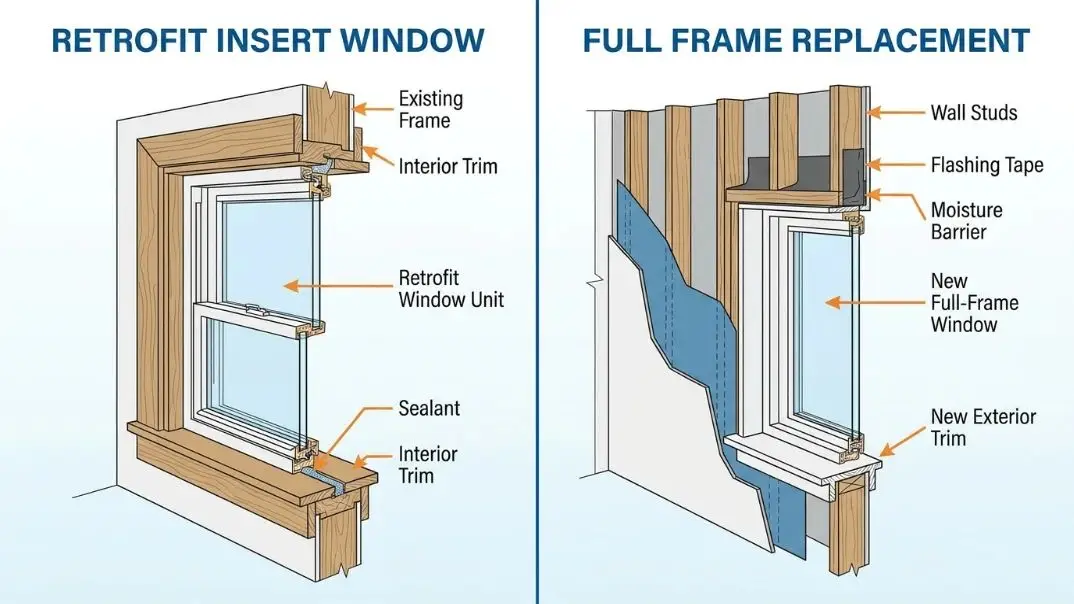
Retrofit (Insert Installation)
- Lower cost
- Faster
- Keeps existing frame
Full-Frame Replacement
- Higher cost
- Removes everything
- Fixes hidden problems
If your home has:
- Damage
- Old framing
- Water issues
Then:
Your project may not stay in the “budget” category
Installation type is the biggest factor affecting total cost.
Why California Projects Cost More
If you’re in California, there are a few additional cost drivers:
1. Energy Code Requirements
Window replacements must meet strict energy standards (Title 24), which can affect:
- Glass type
- Performance requirements
2. Permits (City-Dependent)
Some cities require:
- Permits for replacement
- Energy compliance paperwork
Others vary—this alone can change pricing.
3. Stucco Homes
This is a big one.
Replacing windows in stucco:
- Takes more time
- Requires careful repair
- Adds labor cost
Even minor stucco repair can add hundreds to thousands to a project.
Why Quotes Change After Inspection
This is one of the biggest surprises homeowners face.
A quote might start at: $9,000
Then after inspection:
- Frame damage is found
- Stucco repair is needed
- Permits are required
And the project becomes: $12,000–$15,000+
This happens because many initial quotes:
- Assume ideal conditions
- Don’t include hidden issues
Big-Box vs Contractor Pricing (Quick Reality Check)
When comparing quotes from places like Home Depot vs local contractors:
- Home Depot = bundled pricing, convenience
- Contractors = more scope control, sometimes better pricing
But neither is always cheaper.
If you want a full breakdown:
→ how much does Home Depot charge for window installation
What Actually Drives the Price (Not What You Think)
Most homeowners assume:
> “The window brand determines the cost.”
In reality, price is driven more by:
- Installation method
- Labor complexity
- Repairs needed
- Window size and type
- Access (first floor vs second story)
Materials matter—but less than most people think.
How This Connects to Your Bigger Decision
If you’re planning a project, this question ties into:
- Is Home Depot installation actually free?
- Is it worth replacing older windows at all?
- Is Home Depot a good installer?
Or explore everything here:
→ https://teamallstarconstruction.com/blog/
Bottom Line
How much should 10 windows cost to replace?
→ Plan for $10,000–$15,000 for a realistic project
→ Expect $8,000–$10,000 for simple installs
→ Be prepared for $18,000+ if your home needs more work
Because at the end of the day:
The price isn’t about the windows—it’s about the work required to install them correctly.
What Most Homeowners Actually Pay (And Why Quotes Vary So Much)
Now that you know the realistic ranges, let’s answer the part that confuses almost everyone:
→ Why do quotes for 10 windows vary by thousands—even for the “same” project?
Because in reality, they’re almost never the same project.
Real Example: Two 10-Window Quotes (Why They’re So Different)
Let’s say two homeowners both get quotes for 10 windows:
Quote A: $9,000
Quote B: $14,500
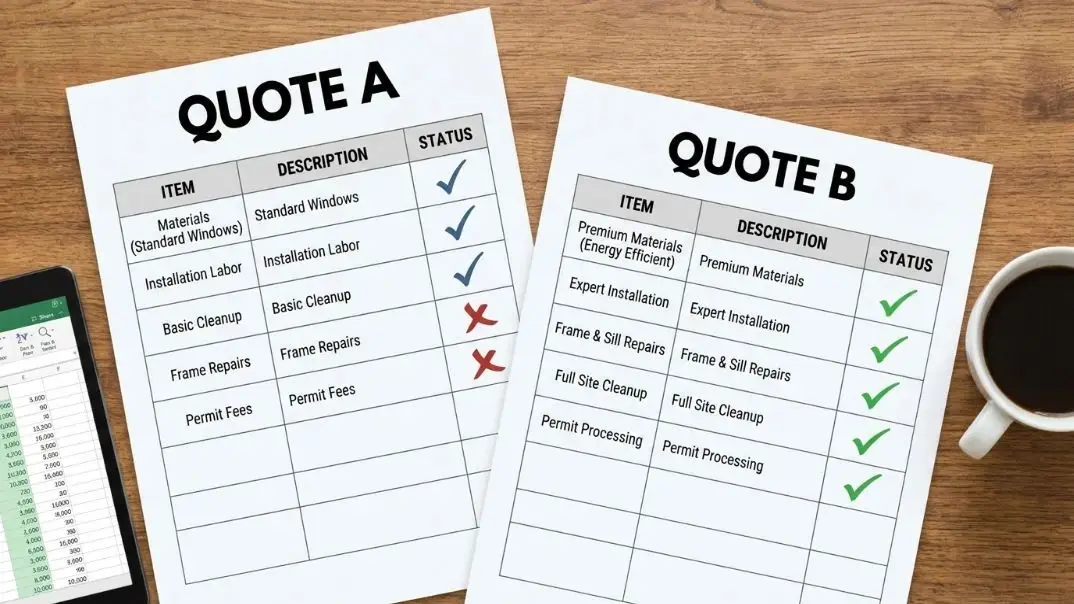
Two quotes can look similar—but include completely different scopes of work.
At first glance, it looks like one company is overpriced.
But here’s what’s usually happening:
Lower Quote Often Assumes:
- Retrofit installation
- Standard vinyl windows
- No repairs
- No permit complications
Higher Quote Often Includes:
- Better glass (Low-E, argon)
- Mixed window styles
- Labor for more complex install
- Potential repairs or contingencies
→ Same number of windows—but completely different scope.
The Hidden Costs Most Quotes Don’t Show Up Front
This is where budgets get thrown off.
Even legitimate quotes often don’t fully include:
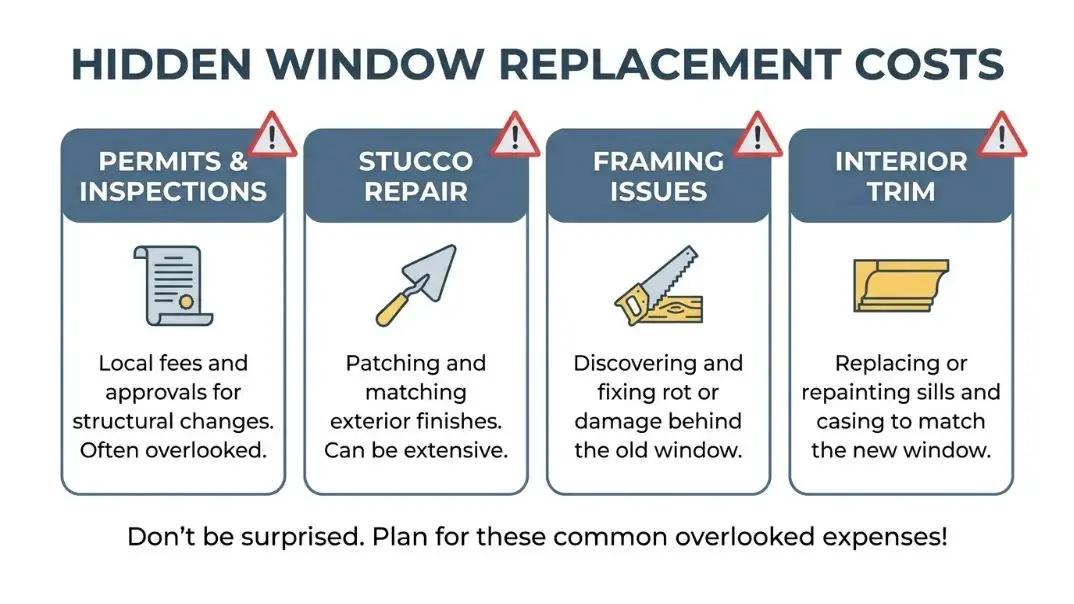
- Permit costs (varies by city)
- Stucco or siding repair
- Interior drywall/trim repair
- Frame damage or wood rot
- Egress or code upgrades
And these aren’t small add-ons.
For example:
- Frame repair can add hundreds per window
- Stucco repair can add thousands across a project
These are the costs that often cause projects to exceed the original estimate.
The “Quote Jump” Scenario (Very Common)
Here’s what happens in real projects:
1. Initial quote: $9,500
2. Installation starts
3. Hidden damage is discovered
4. Scope changes
Final cost:
→ $12,000 – $15,000+
This isn’t always a bait-and-switch.
It’s often because:
- The original quote assumed ideal conditions
- Real homes rarely match those assumptions
Why Window Type Changes Everything
A “10-window project” sounds simple.
But not all windows cost the same.
For example:
- Standard double-hung = lower cost
- Casement or sliding = mid-range
- Picture, bay, or custom = significantly higher
So if one quote includes:
- 10 basic windows
And another includes:
- A mix of styles
→ The pricing will be very different.
Material Upgrades (What Actually Matters)
Most homeowners focus heavily on materials—but here’s the truth:
Material affects price, but less than installation does.
Typical Material Impact:
- Vinyl = baseline
- Fiberglass = moderate increase
- Wood = higher cost
Glass upgrades also matter:
- Low-E coatings
- Argon gas
- Noise-reduction glass
These can increase cost—but also improve comfort significantly.
If you’re comparing options, this helps explain the difference:
→ low-e vs standard glass
Labor: The Biggest Variable Nobody Talks About
Labor is where projects really separate.
Basic installs:
- ~$100–$300 per window
Complex installs:
- $300–$600+ per window
And complexity includes:
- Second-story access
- Large or custom openings
- Structural adjustments
This is why two homes with the same number of windows can have very different costs.
California-Specific Cost Factors (Important)
If your home is in California, expect additional cost drivers:
1. Title 24 Energy Compliance
- Required energy efficiency standards
- May require upgraded glass packages
2. Permit Variability
Some cities:
- Require permits for all replacements
Others:
- Only for structural changes
This inconsistency alone creates pricing differences.
3. Stucco Construction
This is one of the biggest cost factors in Southern California.
Even minor work can:
- Add labor time
- Increase material cost
- Require specialized installation
Big-Box vs Contractor Quotes (What You’re Really Comparing)
When comparing quotes from Home Depot vs local contractors:
Home Depot Model:
- Bundled pricing
- Managed process
- Subcontracted installers
Contractor Model:
- Direct installation
- More control over scope
- Often clearer breakdowns
Neither is always cheaper.
What matters is:
Comparing the same scope, not just the total price
How to Compare Quotes Without Getting Burned
Here’s the simplest way to avoid costly mistakes:
Always Ask:
- Is this retrofit or full-frame?
- What repairs are included?
- Are permits included?
- What happens if damage is found?
- Who is doing the installation?
Red Flags to Watch For:
- Very low quotes with vague scope
- No mention of installation method
- No discussion of potential repairs
- “Too good to be true” pricing
Because in most cases:
The cheapest quote becomes expensive later
The Most Important Pricing Insight
Here’s what everything comes down to:
> You’re not buying 10 windows—you’re buying a 10-window installation project.
And that project includes:
- Labor
- Risk
- Repairs
- Compliance
- Expertise
That’s why pricing varies so much.
Final Takeaway Before You Get Quotes
So—how much should 10 windows cost to replace?
- $8,000–$10,000 → simple retrofit
- $10,000–$15,000 → realistic standard project
- $18,000+ → complex or full-frame work
But more importantly:
Focus on what’s included, not just the number
Because that’s what determines whether you’re getting real value—or just a low starting price.
FAQs
How much should 10 windows cost to replace in 2026?
For most homeowners, a realistic price for replacing 10 windows in 2026 falls between $10,000 and $15,000 for a standard, professionally installed project. Simpler retrofit jobs can come in closer to $8,000–$10,000, while more complex projects involving full-frame replacement, repairs, or custom windows can reach $18,000 to $30,000 or more. The exact price depends on installation type, materials, and the condition of your home—not just the number of windows.
Why are window replacement quotes so different for the same number of windows?
Because most quotes are based on different assumptions. One company might be pricing a simple retrofit install with standard windows, while another includes better materials, more labor, or potential repairs. Even factors like window style, access, and permit requirements can change the cost significantly. That’s why two quotes for “10 windows” can vary by thousands—it’s rarely the same scope of work.
Is $8,000 a good price for 10 windows?
It can be—but only under very specific conditions. That price usually reflects a basic retrofit project with standard vinyl windows, minimal labor complexity, and no repairs. If your home has any underlying issues, requires permits, or involves more advanced window types, the cost will likely be higher. A low price isn’t necessarily a bad deal—but it’s important to confirm what’s included.
What’s included in a typical 10-window replacement quote?
Most standard quotes include the window units, basic installation labor, and disposal of old windows. However, many do not fully include things like permits, structural repairs, stucco work, or interior finishing. These items are often added later if needed, which is why final costs can increase after inspection or during installation.
Is it cheaper to go through Home Depot or a local contractor?
It depends on the project. Home Depot offers a bundled, convenience-based service that includes coordination and installation through subcontractors. Local contractors may offer more flexibility, clearer scope control, or competitive pricing—especially for more complex jobs. The only accurate way to compare is to make sure both quotes include the same materials, installation method, and scope of work.
Get a Real Price—Not Just an Estimate
If you’re planning to replace 10 windows, the most important step is understanding what your project actually involves—not just guessing based on averages.
Before you commit, you should know:
- Whether your home needs retrofit or full-frame installation
- What’s included in your quote—and what’s not
- How your specific home affects pricing
At Total Home Windows, we walk you through the real numbers so you can compare quotes confidently and avoid costly surprises.
Call: (310) 729-3013
Email: teamallstarconstruction@gmail.com
Or request a quote here: https://teamallstarconstruction.com/contact/
No pressure—just clear, honest pricing based on your home.
- Categories: Window Replacement Cost Guides
- Tags: average window project cost, cost to replace 10 windows, home window upgrade cost, multi window discount, price per window installed, total window project cost, window bundle pricing, window replacement estimate
Southern California Window Replacement Guide
Single Pane vs Dual Pane: Which Fits Your Home?
Replacement Windows Los Angeles Homeowners Choose
Retrofit Windows vs Full Frame: Which Fits?
A Guide to Full Window Replacement at Home
Vinyl vs Aluminum Windows for Southern California
Best Windows for Hot Climates in Southern California
A Homeowner’s Guide to Energy Efficient Windows
How to Reduce Window Heat at Home
About Total Home Windows
Total Home Windows is a Southern California-based window replacement company focused on helping homeowners improve energy efficiency, indoor comfort, and long-term home value through high-performance window installations.
Serving Los Angeles County, Orange County, Riverside County, San Bernardino County, and Ventura County, the company specializes in both vinyl retrofit (insert) and full-frame window replacement. Their work is tailored to the unique demands of California homes, including intense UV exposure, coastal conditions, and heat retention issues common in older properties.
Total Home Windows combines practical installation experience with a strong focus on energy performance—helping homeowners reduce cooling costs, improve insulation, and solve common problems like rooms that stay hot even with air conditioning. Their approach prioritizes clear recommendations, transparent pricing, and solutions that make sense for each home.
The content published by Total Home Windows is built on real installation knowledge, field-tested performance insights, and current best practices in window technology, including Low-E glass, argon-filled units, and energy-efficient design strategies. Their goal is to help homeowners make informed decisions without overpaying or choosing the wrong type of window system.
Ways to Reach Us
If you’re considering window replacement, we’re here to answer questions and provide clear, professional guidance based on your home and goals.
- teamallstarconstruction@gmail.com
- 301 E.9th St Suite 415 Redlands, CA 92374