Prices and performance figures in this guide are planning examples, not a project quote or a promise of savings. Your estimate and results depend on the products, installation scope, existing home, climate, and energy use.
Why Most Homeowners Don’t Realize Their Windows Are Losing Heat
Your home feels hot even when your AC is running full blast. You assume your air conditioning isn’t powerful enough, or you blame the outdoor temperature. The real culprit, though, is often your windows.
Most homeowners don’t connect window condition to indoor temperature because heat loss through windows happens invisibly. Unlike a leaky roof or a broken seal, window heat transfer doesn’t produce obvious signs until your energy bills spike or certain rooms feel consistently warmer than others. Single-pane or older dual-pane windows are particularly inefficient, allowing heat to pass right through the glass instead of reflecting it back outside.
In Southern California, this problem intensifies. Our intense sun and consistent year-round heat mean windows work overtime. A window that looked fine five years ago may be letting significant heat through today. Without a professional assessment, you’re essentially guessing about a problem that directly affects your comfort and budget.
What to do next: Before scheduling anything, walk through your home on a hot afternoon and note which rooms feel warmer or stay cooler. This observation will help you and our team identify which windows are underperforming.
The Real Cost of Unaddressed Window Heat Loss in Southern California
Energy waste from poor window performance costs Southern California homeowners more than most realize. If your windows allow heat to enter during our hot months, your AC system runs longer and harder to compensate. That translates to higher electricity bills month after month.
Consider this scenario: A home with twenty aging windows across Los Angeles County or Riverside County might be losing 20-30% of its cooled air through window gaps, poor seals, or inefficient glass. During peak summer months, this can add 40-60 dollars or more to your monthly bill. Over a year, that’s hundreds of dollars wasted just to maintain comfort.
Beyond the direct cost, unaddressed heat loss also accelerates AC system wear. Your cooling system isn’t designed to overcome massive heat loads from poor window insulation. Components wear faster, repairs become more frequent, and you’re closer to needing an expensive replacement. Additionally, rooms with high heat gain become unusable during certain times of day, limiting how you enjoy your home.
The financial impact compounds across years. A window problem that costs you 500 dollars in extra cooling expenses in year one will cost similar amounts in year two, year three, and beyond until you address it. Early intervention prevents this long-term waste.
How to Identify Heat Loss in Your Current Windows
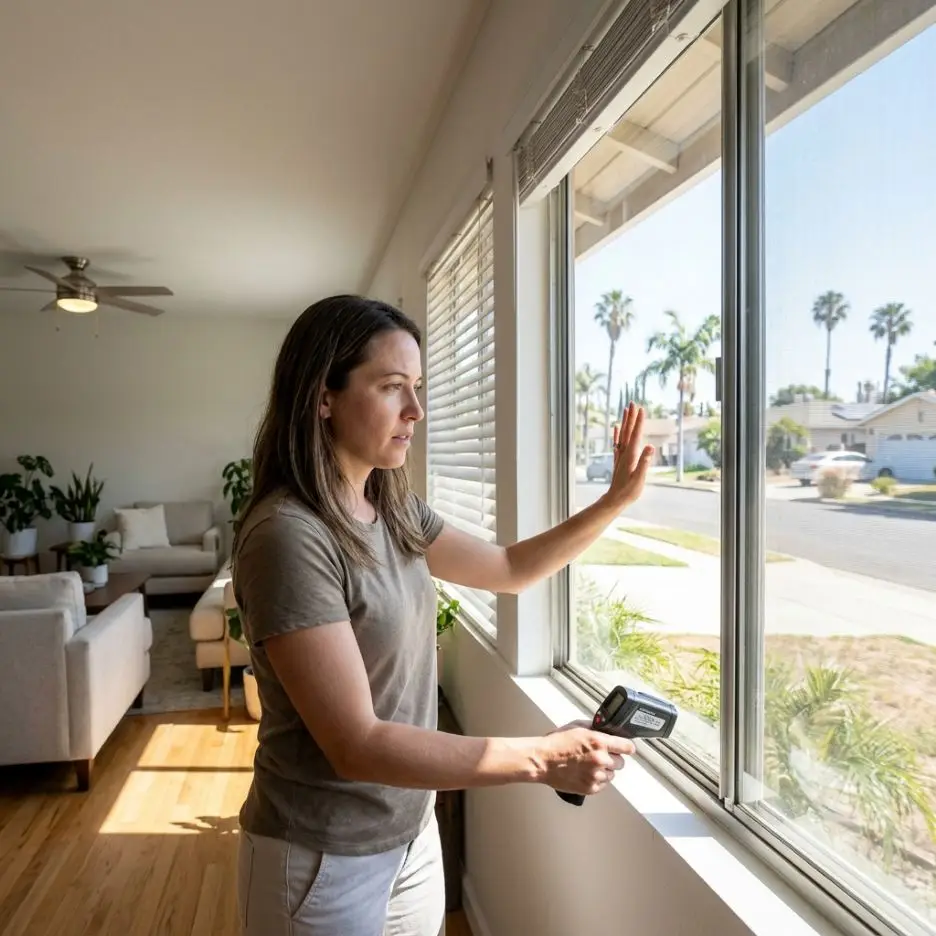
Start with a simple touch test. On a hot afternoon, place your hand near the glass on the interior side of a window. If you feel noticeable warmth transferring through the glass itself, heat loss is occurring. Quality energy-efficient windows should feel nearly as cool as your interior wall.
Next, examine the frame and seals. Run your fingers along where the frame meets the glass and where the frame meets the wall. Any gaps, cracks, or deteriorating caulk are pathways for heat. Look for visible separation between the frame and wall, especially in older homes where settling has occurred over decades.
Check the glass itself for visible signs. Do you see condensation between panes of glass? This indicates a broken seal that allows moisture and heat to pass through. Some windows may have visible discoloration, haze, or cloudiness in the insulating space, suggesting the window is no longer functioning as intended.
Pay attention to temperature patterns throughout your home. If your living room stays noticeably hotter than your kitchen despite both having AC vents, the living room likely has problematic windows. Uneven temperature distribution almost always points to specific windows failing to keep heat out.
Actionable step: Photograph any visible cracks, gaps, or condensation between panes. These details will be valuable during a professional evaluation and help document the problem for reference.
Common Signs Your Windows Need Professional Evaluation
Beyond physical inspection, certain behavioral signs indicate your windows need professional assessment. If you find yourself closing blinds and curtains during the day to manage interior heat, your windows aren’t doing their job. While window treatments help, they’re a workaround, not a solution.
Rising energy bills without a corresponding increase in AC usage is another red flag. If your cooling costs climbed 15-25% year over year while your usage patterns stayed the same, window heat loss is likely the cause. Your utility company sends you historical data; compare it across several years to spot trends.
Drafts are obvious, but many people attribute them to wind rather than window failure. On a calm day with no outdoor breeze, feel around window frames for air movement. Even slight drafts indicate the seal is compromised and heat is moving through as well.
Some homeowners notice their AC system cycling on and off more frequently than it used to, or running nearly constantly during hot periods. This is your system struggling to maintain temperature because windows are introducing heat faster than the AC can remove it.
If your home has different zones that require different thermostat settings for comfort, windows are often the culprit. A bedroom with western-facing windows that gets afternoon sun while other rooms are comfortable indicates uneven heat gain through those specific windows.
Why DIY Fixes Fall Short Without Professional Assessment
Caulking gaps and applying weatherstripping are temporary band-aids. They might reduce air movement slightly, but they don’t address the fundamental issue: the glass itself is letting heat through. A single-pane or degraded dual-pane window will continue radiating heat into your home no matter how well you seal the frame.
Window film and reflective coatings sound promising but deliver limited results. They reduce glare and block some solar heat, but they don’t perform like properly insulated glass. More importantly, applying them to old, failing windows is throwing good money after bad. You’re investing in maintenance for something that should be replaced.
Exterior shade solutions like awnings help, but they’re not a complete fix either. Shade reduces solar gain, but it doesn’t address conduction through poor-quality glass or heat loss through damaged seals. Once a window’s seal is broken, no external solution will restore its insulating properties.
The real problem with DIY approaches is they lack measurement and diagnosis. You’re guessing about how much heat is actually coming through and whether your efforts are making a real difference. Our team uses thermal imaging and professional assessment to show you exactly what’s happening in your home. We measure the problem so you can see the specific heat loss, then recommend solutions based on data, not assumptions.
Without this clarity, most homeowners waste time and money on partial fixes that don’t improve comfort meaningfully or lower bills significantly.
Our Proven Approach to Heat Loss Reduction
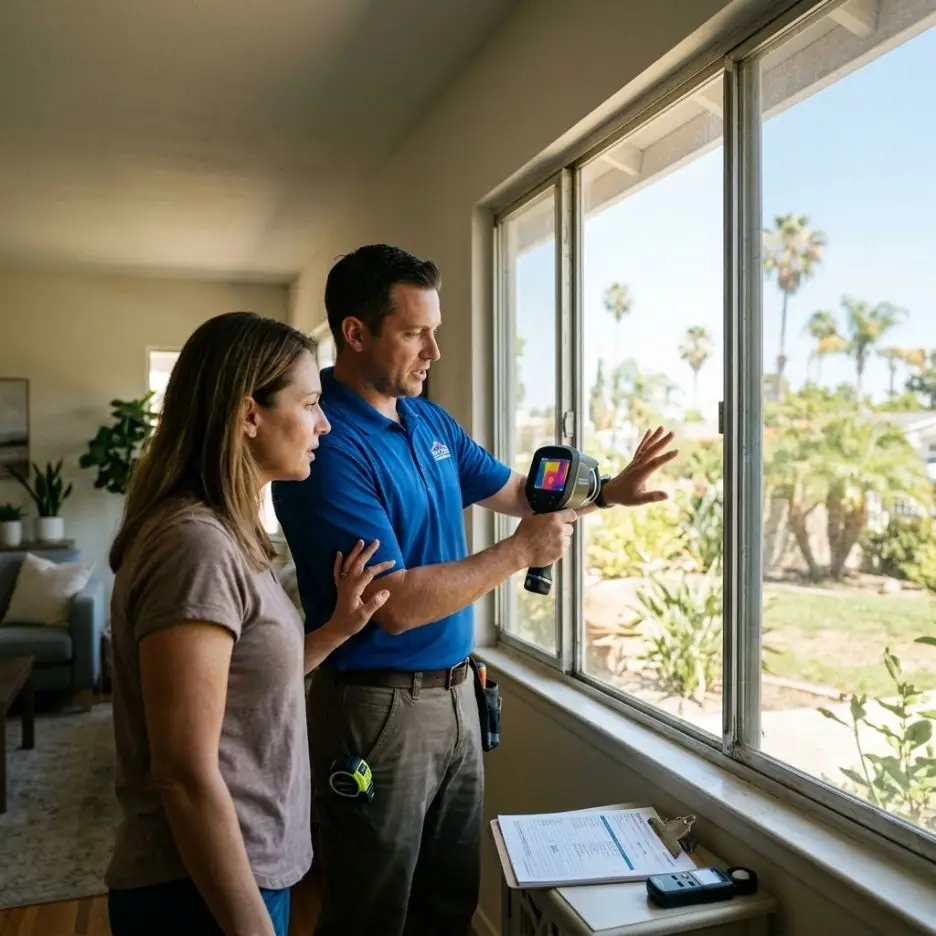
We start by visiting your home for an in-home consultation. We don’t send quotes or assessments remotely. Instead, we walk through your space, identify problem windows, and show you exactly where heat is entering.
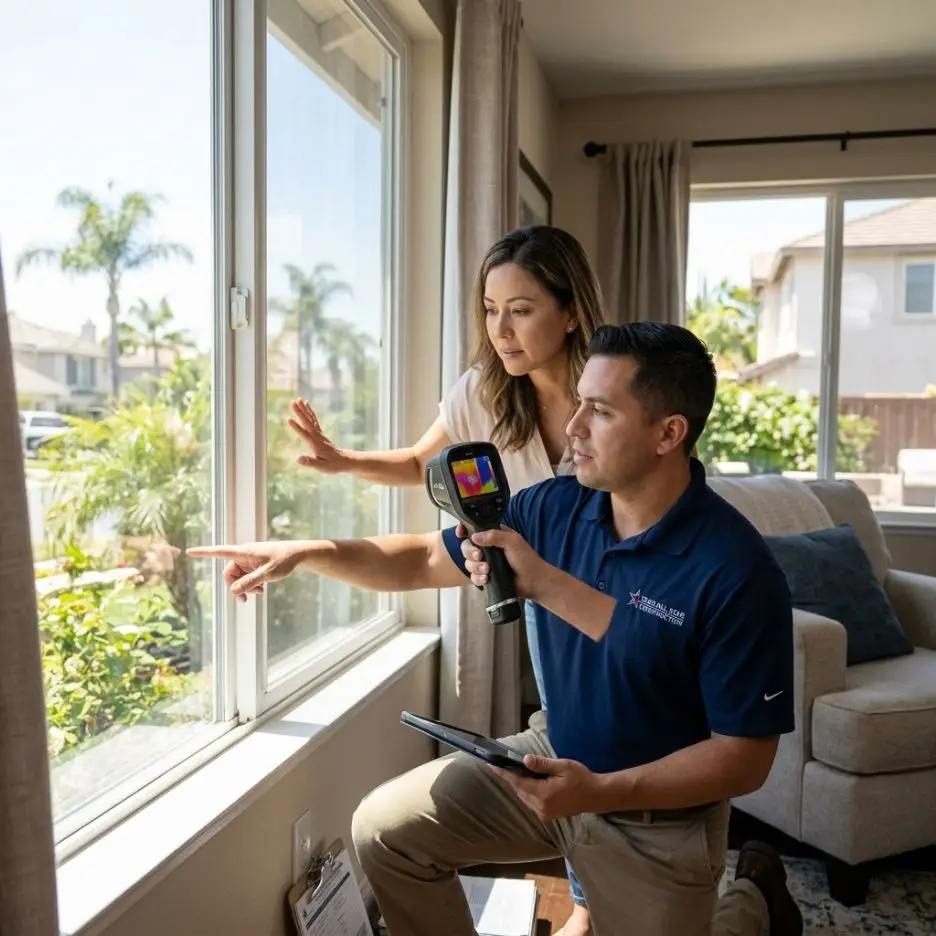
Using thermal imaging technology, we visualize heat patterns on your exterior walls and windows. You’ll see on a screen exactly which windows are losing performance and how much heat is coming through compared to better-performing areas. This proof removes guesswork and gives you confidence in whatever solution we recommend.
We then measure your windows for proper fit and discuss your options. Some homes benefit most from vinyl retrofit windows, which we install inside existing frames without removing exterior trim. Other situations call for full frame replacement, where we remove the entire old window assembly and install new ones. Both approaches improve energy efficiency dramatically, but the right choice depends on your specific window condition and home structure.
We assess your home’s sun exposure, room usage patterns, and cooling costs to recommend the windows that will deliver the best results for your situation. A west-facing bedroom might benefit from different glass options than a north-facing living room, for example.
Our team handles every step from assessment through installation, ensuring your new energy-efficient windows are properly fitted and sealed. No gaps, no shortcuts, just professional installation that prevents future heat loss.
Vinyl Retrofit Windows vs Full Frame Replacement for Maximum Efficiency
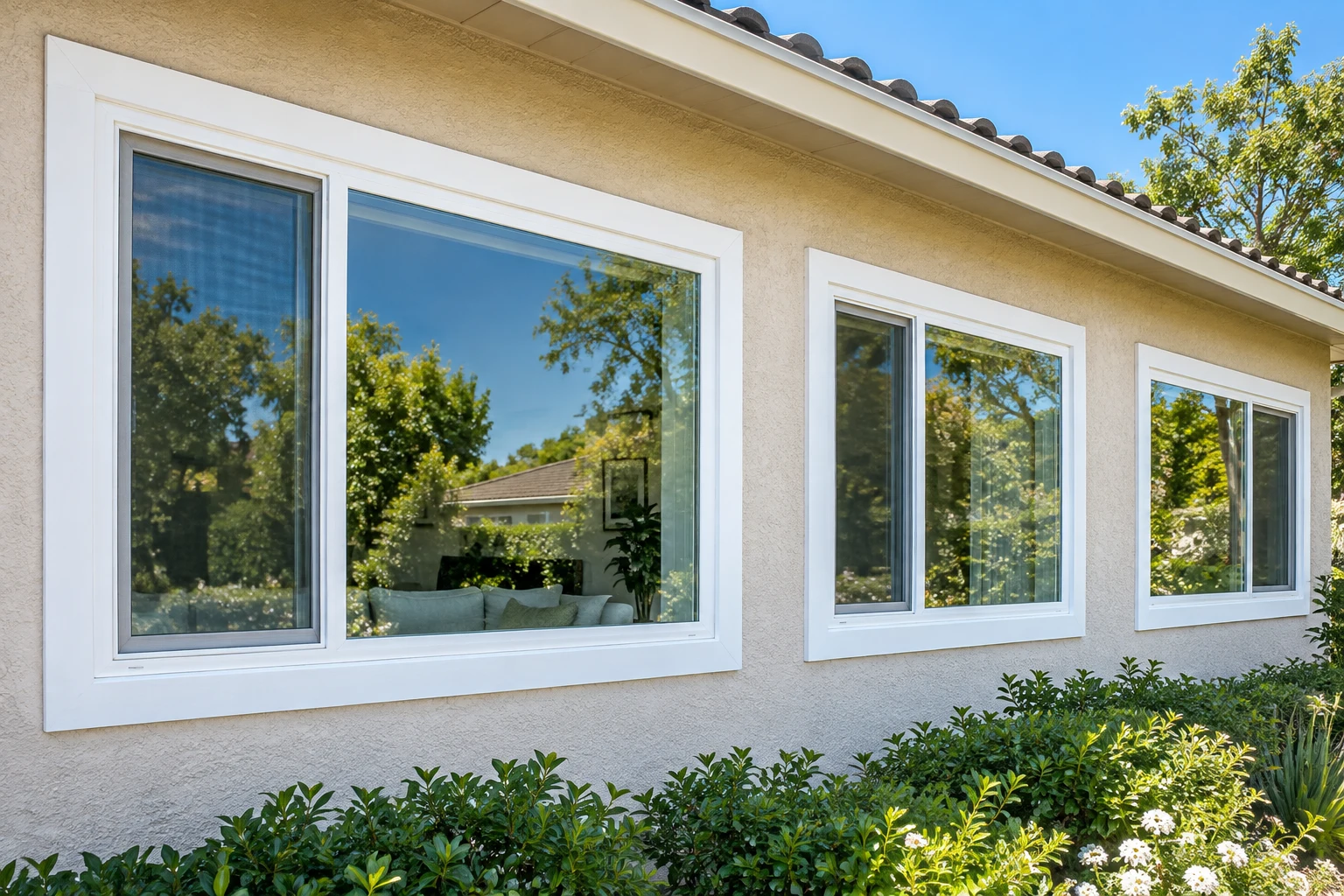
Vinyl retrofit windows fit inside your existing frame, taking up slightly less interior space. They’re ideal when your current frame is structurally sound but the glass is failing. Installation is faster and causes minimal disruption to your home’s interior and exterior appearance.
Retrofit windows work well in most Southern California homes where frames have held up reasonably well over the years. They deliver significant efficiency improvements compared to the originals they replace. The cost is lower than full frame replacement because we’re not removing and replacing the entire window assembly.
Full frame replacement removes the entire window, frame and all, down to the rough opening. We then install a completely new window assembly with modern framing materials and sealing methods. This approach is necessary when frames are rotting, severely damaged, or when you want to optimize the window size or opening itself.
Full replacement offers advantages in older homes where settling has created uneven openings or where previous repairs compromised frame integrity. It also allows us to upgrade flashing and sealing techniques that prevent future water infiltration and air leakage. The result is maximum energy efficiency and durability.
Both options use vinyl frames and modern glass technology that reflects heat and resists heat transfer far more effectively than original windows. Whether you choose retrofit or full replacement, you’ll see meaningful reductions in heat gain and cooling costs compared to what you have now.
Practical consideration: We’ll assess which approach makes sense for your specific windows during the in-home consultation. There’s no one-size-fits-all answer; it depends on frame condition and your home’s characteristics.
The Installation Process That Prevents Future Heat Loss
Our installation process focuses on preventing heat loss from the start. We don’t just swap out windows; we create a complete thermal seal around each new window.
We begin by properly preparing the opening, removing any deteriorated caulking or old sealing materials. We then install new windows with precision fit, ensuring no gaps between the frame and the opening. This precise fit is critical; even small gaps can become pathways for heat.
After positioning the window, we seal around the frame with professional-grade insulation that stops air and heat movement. We use expanding foam sealant that expands to fill cavities completely, then trim excess and caulk the seams with weather-resistant materials. This layered sealing approach is what separates professional installation from DIY attempts.
We pay special attention to corners and transitions where different materials meet. These areas are where air leakage and heat transfer typically occur if not sealed properly. Our team ensures every corner is protected.
Once installation is complete, we test the seals and verify that the windows operate smoothly and close securely. You’ll notice immediately that these windows don’t have drafts, don’t transmit heat the way your old ones did, and feel solid and permanent.
This careful installation process means your new windows will perform at their rated efficiency level for years. You’re not just getting new glass; you’re getting a complete system designed to keep heat out and comfort in.
What Homeowners Save After Upgrading to Energy-Efficient Windows
Most Southern California homeowners see energy bill reductions of 15-25% after upgrading all windows to efficient models. The exact savings depend on how many windows you replace, how old the originals were, and your cooling usage patterns. A home with twenty windows replacing very old single-pane glass typically saves more than a home replacing windows that were already reasonably modern.
In dollar terms, a home spending 200 dollars monthly on cooling costs might see savings of 30-50 dollars per month after a full window upgrade. That’s 360-600 dollars annually, and the savings continue year after year. Over ten years, you’re looking at thousands of dollars returned to your household budget.
Comfort improvements show up immediately. Rooms that were previously hot during afternoon hours become usable again. You can reduce your thermostat setting slightly while maintaining the same comfort level, amplifying cost savings. Some homeowners report not needing to close blinds during certain times of day because heat gain is so much lower.
Beyond cooling costs, properly insulated windows reduce noise transmission from outside. If you live near a busy street in areas like Los Angeles or Anaheim, this improvement in quiet is valuable but rarely quantified in dollars. It’s pure quality-of-life enhancement.
When it comes time to sell your home, energy-efficient windows are an attractive feature to buyers. They’re a visible upgrade that shows your home is well-maintained and efficient. While windows alone won’t make or break a sale, they’re part of the overall impression that the home is move-in ready.
Schedule Your In-Home Window Heat Loss Consultation Today
You’ve identified that your windows are likely losing heat. You understand the cost of doing nothing. The next step is getting a clear assessment of what’s happening in your specific home.
We offer in-home consultations throughout Southern California, including Los Angeles County, Orange County, San Bernardino County, Riverside County, and Ventura County. We’ll visit at a time convenient for you, walk through your home, and show you exactly where heat is entering.
During the consultation, we’ll use thermal imaging so you see the problem visually. We’ll discuss whether your windows need vinyl retrofit installation or full frame replacement. We’ll answer questions about the installation process, timeline, and cost. Most importantly, we’ll give you honest guidance on what will actually improve your home’s efficiency and comfort.
There’s no pressure, no obligation, and no sales pitch. We’re here to help you understand your window situation and decide whether upgrading makes sense for your home. Many homeowners find that the clarity alone is worth the consultation.
Contact us to schedule your in-home assessment. Let us show you what’s really happening with your windows so you can make an informed decision about your home’s energy efficiency.
Get a free estimate for your home. No pressure—just clear answers and straightforward pricing. Call (310) 729-3013 or visit: https://teamallstarconstruction.com/contact/
Frequently Asked Questions (FAQ)
How can I tell if my windows are actually losing heat?
We recommend looking for these telltale signs: condensation between window panes, drafts you can feel near the frames, uneven temperatures in different rooms, and visible cracks or gaps in the caulking. If you’re noticing higher cooling bills during summer months despite normal usage, that’s usually a strong indicator that heat is escaping through your windows. The best way to know for certain is to schedule an in-home consultation with us, where we can assess your specific situation.
What’s the difference between vinyl retrofit windows and full frame replacement?
With a retrofit installation, we remove your existing window sashes and install new vinyl units within your current frames, which works well if your frame structure is still sound. Full frame replacement means we remove everything, including the original frame, and install a completely new system from the studs outward, giving you maximum efficiency and a completely fresh setup.
We’ll evaluate your windows during a consultation and recommend whichever approach makes the most sense for your home’s condition and your budget.
How much can I actually save by upgrading my windows?
Our Southern California customers typically see a 10-15% reduction in their cooling costs after upgrading to energy-efficient windows, with some seeing even more depending on how many windows they replace and their current system’s condition. The exact savings depend on factors like your home’s age, current window quality, and how much direct sun exposure different rooms get throughout the day.
We can give you a realistic estimate during your in-home consultation based on your actual windows and local climate conditions.
- Categories: Uncategorized
Southern California Window Replacement Guide
Single Pane vs Dual Pane: Which Fits Your Home?
Replacement Windows Los Angeles Homeowners Choose
Retrofit Windows vs Full Frame: Which Fits?
A Guide to Full Window Replacement at Home
Vinyl vs Aluminum Windows for Southern California
Best Windows for Hot Climates in Southern California
A Homeowner’s Guide to Energy Efficient Windows
How to Reduce Window Heat at Home
About Total Home Windows
Total Home Windows is a Southern California-based window replacement company focused on helping homeowners improve energy efficiency, indoor comfort, and long-term home value through high-performance window installations.
Serving Los Angeles County, Orange County, Riverside County, San Bernardino County, and Ventura County, the company specializes in both vinyl retrofit (insert) and full-frame window replacement. Their work is tailored to the unique demands of California homes, including intense UV exposure, coastal conditions, and heat retention issues common in older properties.
Total Home Windows combines practical installation experience with a strong focus on energy performance—helping homeowners reduce cooling costs, improve insulation, and solve common problems like rooms that stay hot even with air conditioning. Their approach prioritizes clear recommendations, transparent pricing, and solutions that make sense for each home.
The content published by Total Home Windows is built on real installation knowledge, field-tested performance insights, and current best practices in window technology, including Low-E glass, argon-filled units, and energy-efficient design strategies. Their goal is to help homeowners make informed decisions without overpaying or choosing the wrong type of window system.
Ways to Reach Us
If you’re considering window replacement, we’re here to answer questions and provide clear, professional guidance based on your home and goals.
- teamallstarconstruction@gmail.com
- 301 E.9th St Suite 415 Redlands, CA 92374