Learn how to measure vinyl replacement windows accurately so you can compare options, avoid sizing mistakes, and plan your project with confidence.
A replacement window that is even slightly off can create a chain reaction of problems – poor fit, air leaks, trim issues, and delays during ordering. That is why learning how to measure vinyl replacement windows matters before you start comparing styles, glass packages, or energy-saving upgrades.
For homeowners, the goal is not to become an installer. It is to understand the opening well enough to have an informed conversation, set realistic expectations, and avoid common sizing mistakes. If you are planning a retrofit window replacement, accurate measurements help clarify what is possible and what questions to ask before moving forward.
What you are actually measuring
When people measure windows for the first time, they often focus on the glass. That is almost never what matters. For replacement windows, the key measurement is the existing window opening within the frame where the new vinyl replacement unit will fit.
In many Southern California homes, retrofit replacement windows are installed into the existing frame rather than requiring major structural changes. That approach helps reduce disruption, but it also means precision matters. You are measuring the usable opening, not the decorative trim, and not the outside stucco line.
This is also where homeowners can get tripped up. Older homes may have settled slightly over time. Frames can be out of square, and dimensions may vary from top to bottom or side to side. A quick single measurement is rarely enough.
Tools to use before you measure
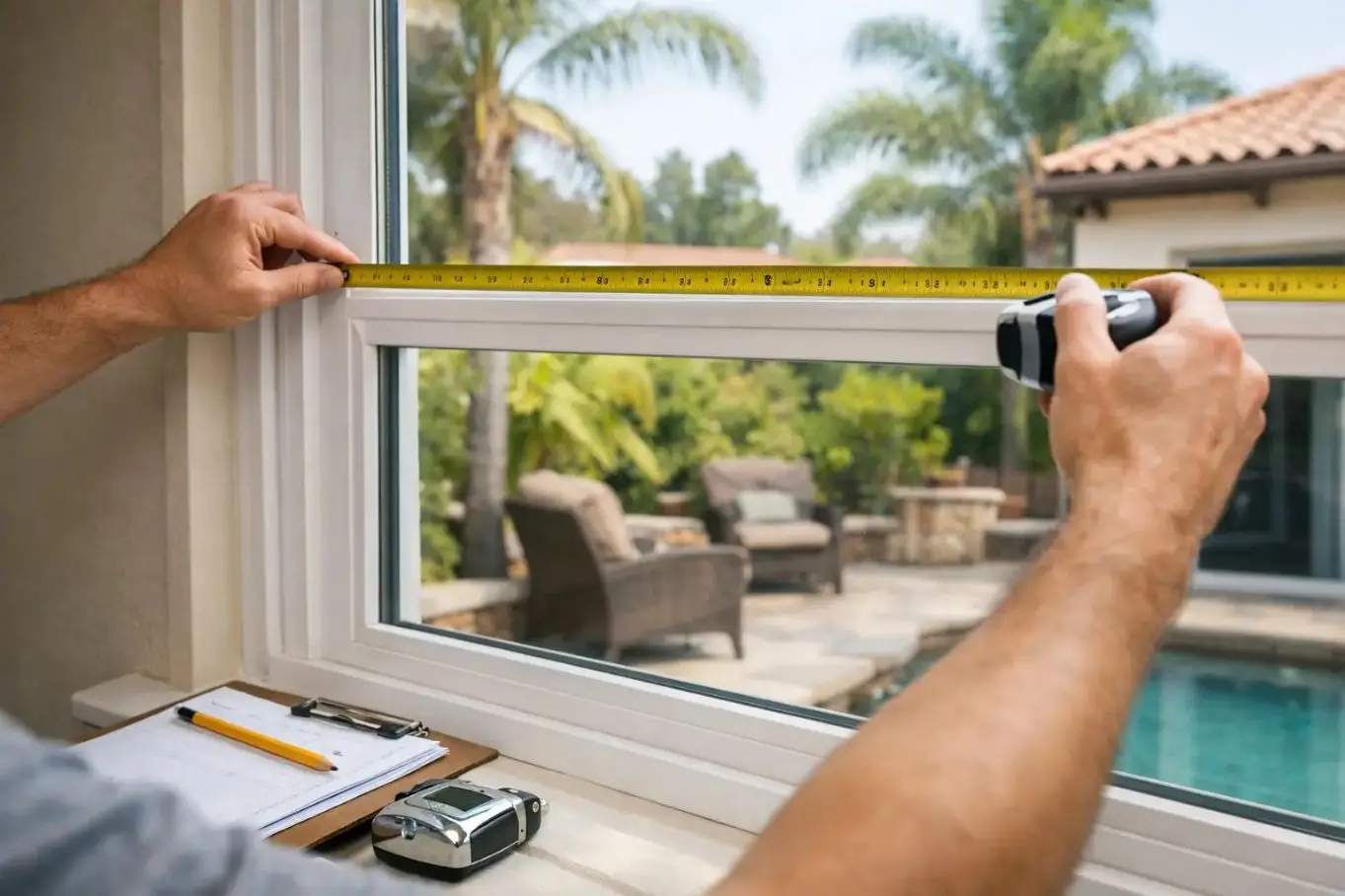
You do not need much. A metal tape measure, not a cloth one, is the right place to start. A notepad or phone for recording dimensions is essential, and taking a photo of each window while you measure can save confusion later.
If you have several windows that look similar, label them by room and wall location. For example, “front bedroom north wall” is much more useful than “bedroom window.” That small habit can prevent ordering confusion, especially in homes with multiple openings that appear identical at a glance.
How to measure vinyl replacement windows correctly
Start from inside the home unless a window design makes that difficult. Measure the width in three places: across the top, across the middle, and across the bottom of the existing window opening. Then measure the height in three places: from the top of the opening down to the sill at the left, center, and right.
Write down all six numbers. The smallest width and the smallest height are usually the measurements that matter most because they reflect the tightest point in the opening. A replacement window has to fit the narrowest usable space, not the widest one.
You should also check whether the frame appears square. One simple method is to measure diagonally from upper left to lower right, then from upper right to lower left. If those dimensions are close, the opening is likely fairly square. If they differ noticeably, that is a sign the frame may be out of alignment, which can affect product selection and installation planning.
Measure carefully to the nearest one-eighth of an inch. Rounding too aggressively can create avoidable problems. A window opening is not like ordering furniture. Small differences matter because they affect weather sealing, insulation, and how cleanly the new window fits within the existing frame.
Where homeowners often measure the wrong area
The most common mistake is measuring from trim edge to trim edge. Interior trim can make the opening look larger or smaller than it really is. Exterior measurements can be even more misleading because stucco, siding, and finish details do not tell you the true fit area for a retrofit replacement.
Another mistake is measuring only the visible sash or glass area. The new vinyl replacement window is sized to the frame opening, not just the viewing space. If you only measure the glass, the number will be too small and not useful for planning.
Sills can create confusion too. Some windows have sloped sills, and others have flatter profiles. That detail affects how height is interpreted and how the replacement product is configured. It is one reason homeowners can gather helpful preliminary dimensions while still relying on a professional field measurement before final manufacturing.
Why old homes need extra attention
Homes across Los Angeles County, Orange County, Riverside County, San Bernardino County, and Ventura County often include a wide range of construction eras and window types. A house built decades ago may have slight movement in the framing, multiple layers of paint, or older aluminum windows that do not measure as neatly as expected.
That does not mean replacement is complicated. It just means the measuring process needs a careful eye. In older homes, two windows that look identical from the street may not match exactly once you start measuring. Assuming they are all the same can lead to ordering mistakes.
This is also where energy performance becomes part of the conversation. If your current windows allow too much heat, outdoor noise, or drafts, replacement sizing is only one part of the improvement. The right vinyl replacement window can also be built with dual-pane glass, Low-E coatings, and insulated glass options that better suit Southern California conditions.
Measuring for planning versus measuring for ordering
There is an important difference between homeowner planning measurements and final order measurements. Planning measurements help you research options, compare styles, and have a productive estimate appointment. Final measurements are typically verified by an experienced professional before the window is manufactured.
That distinction matters because the final sizing process often includes more than width and height. Frame condition, sill angle, installation method, and product tolerances all come into play. If a home has settling, unusual trim conditions, or previous replacement work, the final field measure may differ slightly from what you recorded.
That is normal. It is not a sign that you measured badly. It simply reflects the difference between homeowner-level planning and jobsite-level precision.
What to record besides size
As you measure, note how each window operates. Is it a slider, single hung, picture window, or something else? Also record whether there are any noticeable issues such as condensation between panes, difficulty opening, outside noise, or rooms that get especially hot in the afternoon.
Those details help connect measurements to performance goals. A homeowner may begin by asking how to measure vinyl replacement windows, but the better question is often what problem the new windows need to solve. If a west-facing room overheats every day, the glass package matters. If traffic noise is a constant issue, the conversation may shift toward sound control as well as fit.
When not to rely on your own measurements alone
If a window frame looks warped, soft, damaged, or heavily altered by previous work, homeowner measurements should be treated as rough reference points only. Bay and bow configurations, specialty shapes, and very large openings also deserve a more detailed evaluation.
Even with standard windows, there is value in having an experienced replacement window specialist confirm the exact dimensions and installation approach. That is especially true when you want the finished result to improve comfort, reduce heat transfer, and look clean from both inside and outside.
A licensed contractor who specializes in residential retrofit window replacement can also help explain trade-offs. In some homes, preserving the existing frame makes sense because it limits disruption. In others, frame condition or design goals may change the recommended approach. The right answer depends on the home, not just the tape measure.
A practical way to use your measurements
Once you have your numbers, use them as a starting point for conversations, not as the final authority. Share the smallest width and height for each opening, along with notes about operation style and comfort issues. That gives a window specialist useful context early in the process.
For homeowners working through a broader home comfort upgrade, this can be especially helpful. New windows are not only about appearance. They can help reduce solar heat gain, improve indoor consistency from room to room, and cut down on outside noise when the right product is matched to the home.
That is the value of measuring well. It helps you move from guessing to planning. And when the conversation shifts from rough dimensions to the right vinyl replacement solution for your home, you are already asking the right questions.
- Categories: Uncategorized
Southern California Window Replacement Guide
Single Pane vs Dual Pane: Which Fits Your Home?
Replacement Windows Los Angeles Homeowners Choose
Retrofit Windows vs Full Frame: Which Fits?
A Guide to Full Window Replacement at Home
Vinyl vs Aluminum Windows for Southern California
Best Windows for Hot Climates in Southern California
A Homeowner’s Guide to Energy Efficient Windows
How to Reduce Window Heat at Home
About Total Home Windows
Total Home Windows is a Southern California-based window replacement company focused on helping homeowners improve energy efficiency, indoor comfort, and long-term home value through high-performance window installations.
Serving Los Angeles County, Orange County, Riverside County, San Bernardino County, and Ventura County, the company specializes in both vinyl retrofit (insert) and full-frame window replacement. Their work is tailored to the unique demands of California homes, including intense UV exposure, coastal conditions, and heat retention issues common in older properties.
Total Home Windows combines practical installation experience with a strong focus on energy performance—helping homeowners reduce cooling costs, improve insulation, and solve common problems like rooms that stay hot even with air conditioning. Their approach prioritizes clear recommendations, transparent pricing, and solutions that make sense for each home.
The content published by Total Home Windows is built on real installation knowledge, field-tested performance insights, and current best practices in window technology, including Low-E glass, argon-filled units, and energy-efficient design strategies. Their goal is to help homeowners make informed decisions without overpaying or choosing the wrong type of window system.
Ways to Reach Us
If you’re considering window replacement, we’re here to answer questions and provide clear, professional guidance based on your home and goals.
- teamallstarconstruction@gmail.com
- 301 E.9th St Suite 415 Redlands, CA 92374