Prices and performance figures in this guide are planning examples, not a project quote or a promise of savings. Your estimate and results depend on the products, installation scope, existing home, climate, and energy use.
If your windows are around 20 years old, you’re probably asking a very practical question:
“Do I actually need to replace these… or can I wait?”
Here’s the honest answer:
Yes—replacing 20-year-old windows can be worth it in 2026… but only under the right conditions.
And this is where most articles get it wrong.
Because the decision isn’t based on age alone—it’s based on condition, performance, and how your home is actually functioning.
Why 20 Years Is a Turning Point (But Not a Deadline)
A lot of homeowners assume:
> “If my windows are 20 years old, I should replace them.”
But that’s not always true.
In reality:
- Some windows start failing around 15–20 years
- Others (especially well-maintained vinyl or wood) can last much longer
What 20 years really represents is this:
An inspection point—not an automatic replacement point
At this stage, windows are more likely to develop:
- Air leaks
- Seal failure
- Reduced insulation performance
- Operational issues
But if they’re still in good shape, replacement may not be urgent.
When Replacing 20-Year-Old Windows Is Worth It
Let’s start with the situations where replacement makes the most sense.
1. You’re Dealing With Comfort Problems
This is the most common—and most overlooked—reason.
If your home has:
- Rooms that get hot every afternoon
- Uneven temperatures
- AC that constantly runs but doesn’t keep up
Your windows are likely part of the problem.
Older windows—especially early 2000s models—don’t block heat nearly as well as modern ones.
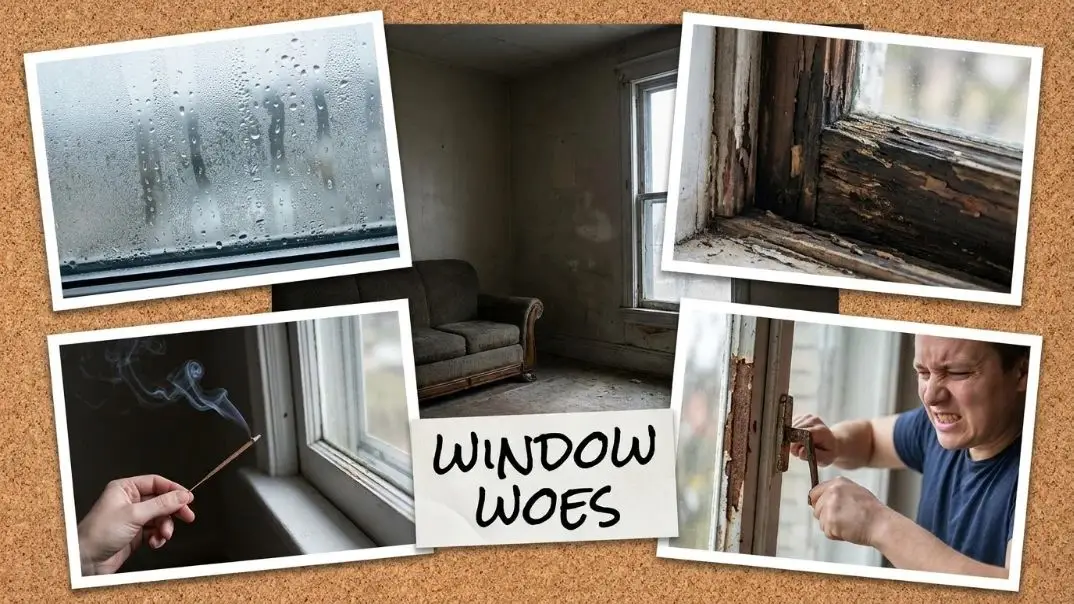
These are the most common signs that 20-year-old windows are no longer performing properly.
If that sounds familiar, this is worth understanding:
→ why your house gets hot every afternoon
2. You Notice Drafts or Air Leaks
Over time:
- Seals weaken
- Frames shift
- Gaps develop
Even if you can’t see it, you’ll feel it:
- Cold drafts in winter
- Warm air infiltration in summer
This is a clear sign your windows are no longer performing properly.
3. Your Windows Have Failed Seals
This shows up as:
- Fogging between glass panes
- Condensation inside the window
At that point:
- The insulation value is compromised
- Repairs are often temporary
And replacement becomes the more practical long-term solution.
4. They’re Hard to Open or Close
This is more than an inconvenience.
It can indicate:
- Frame warping
- Hardware failure
- Structural shifting
And it becomes a safety issue—especially for emergency exits.
5. There’s Visible Damage or Water Issues
This is where replacement becomes urgent.
Look for:
- Rotting wood
- Water stains
- Soft or deteriorating frames
At this point:
It’s no longer just a window problem—it’s a home integrity issue
When It’s NOT Worth Replacing Yet
Now the part most companies won’t tell you:
Sometimes, you don’t need to replace your windows yet.
1. Your Windows Are Still Structurally Sound
If:
- Frames are solid
- No seal failure
- No water damage
Then replacement becomes more of an upgrade—not a necessity.
2. You’re Not Experiencing Comfort Issues
If your home:
- Stays comfortable
- Doesn’t have overheating problems
- Doesn’t feel drafty
Then the urgency is lower.
3. You Can Improve Performance Without Replacing
In some cases, you can:
- Add weatherstripping
- Improve sealing
- Use window coverings
- Apply solar-control film
These can improve efficiency at a much lower cost.
What Modern Windows Actually Do Better
If you’re comparing old vs new, the biggest improvements are in the glass.
Modern windows include:
- Low-E coatings
- Argon gas between panes
- Improved spacers and seals
These upgrades can:
- Reduce heat transfer significantly
- Improve indoor comfort
- Lower strain on your HVAC system
For example, modern Low-E glass can reduce energy loss by 30–50% compared to older glass.
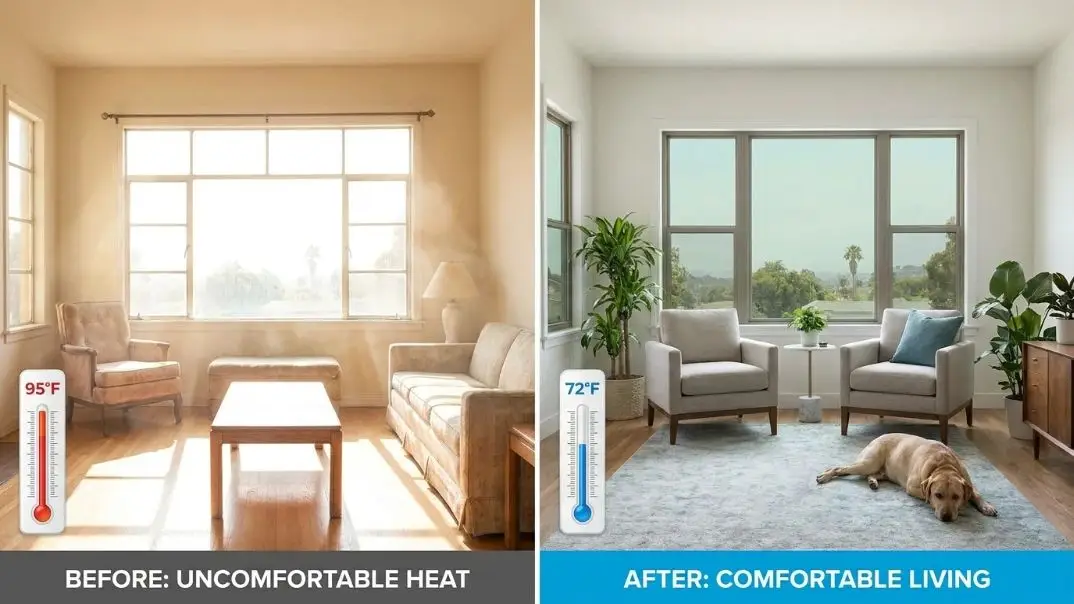
Modern windows block significantly more heat and improve indoor comfort.
If you want to understand how that works in real homes:
→ low-e vs standard glass
The Truth About Energy Savings (This Is Important)
A lot of articles claim:
> “New windows will pay for themselves.”
That’s misleading.
Here’s the reality:
- Energy savings typically average around 10–13%
- Annual savings may be a few hundred dollars depending on the home
- Payback periods can be long—sometimes decades
So if you’re replacing windows purely for energy savings:
It usually doesn’t justify the cost on its own.
What You’re Really Paying For
This is the part most homeowners don’t realize.
When you replace windows, you’re not just buying efficiency.
You’re buying:
- More consistent indoor comfort
- Reduced heat in the summer
- Less reliance on your AC
- Better noise control
- Easier operation
- Updated appearance
In many cases:
Comfort—not savings—is the biggest return.
What It Costs to Replace 20-Year-Old Windows
In 2026, most homeowners can expect:
- $800–$1,300 per window for standard retrofit installs
- $1,300–$2,000+ per window for full-frame replacement
Older homes often cost more due to:
- Custom sizing
- Frame repair
- Structural adjustments
If you want a full breakdown of what that looks like:
→ how much should 10 windows cost to replace
Retrofit vs Full-Frame (Why It Matters Here)
This is especially important with older windows.
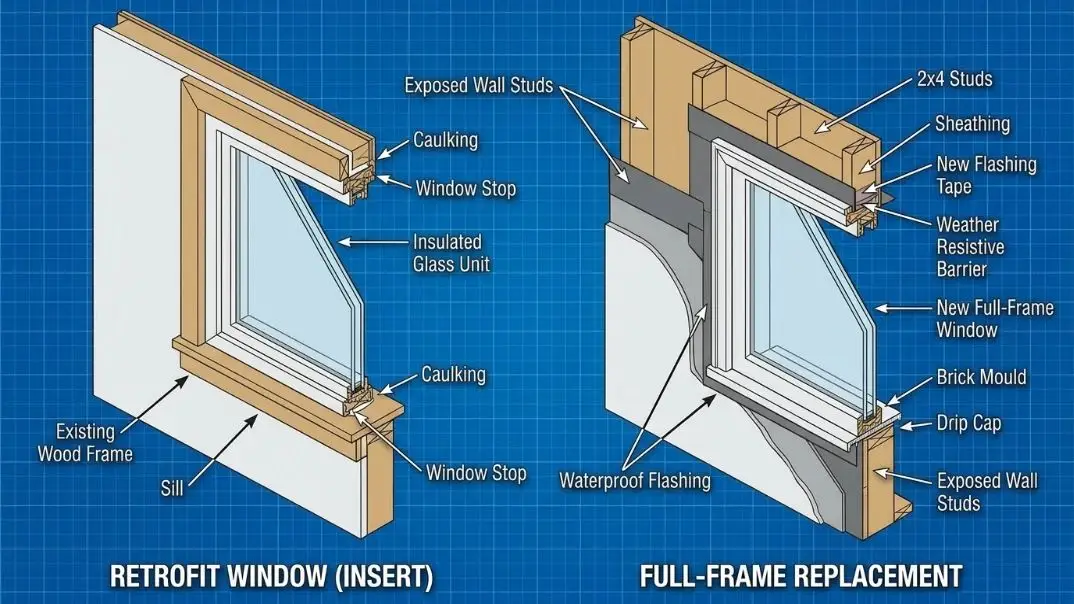
Retrofit (Insert)
- Keeps existing frame
- Lower cost
- Less invasive
Full-Frame
- Removes everything
- Fixes hidden issues
- Higher cost
If your windows are 20 years old:
- Retrofit may work if frames are solid
- Full-frame may be needed if there’s damage
The condition of your existing frame determines whether you need a simple upgrade or a full replacement.
California Changes the Decision
In Southern California, this decision is even more important.
Why?
Because:
- Heat control matters more than in other climates
- Solar gain through windows is a major issue
- Energy efficiency directly impacts comfort
If your home struggles with heat, this is worth reviewing:
→ why is my house hot even with AC
How This Connects to the Bigger Picture
This decision ties into other key questions homeowners are asking:
- What does replacement actually cost?
→ window replacement cost in California
- How does Home Depot pricing compare?
→ Home Depot window replacement cost
- Is installation really “free”?
→ does Home Depot install windows for free
Or explore everything here:
Bottom Line
Is it worth replacing 20-year-old windows?
- Yes—if they’re causing comfort issues, showing damage, or underperforming
- No—if they’re still in good condition and your home feels comfortable
Because at the end of the day:
Age alone doesn’t make the decision—performance does.
Real Scenarios: When Replacing 20-Year-Old Windows Makes Sense (And When It Doesn’t)
At this point, you understand the basics:
- 20 years is a decision point, not a deadline
- Replacement is about performance, not age
Now let’s make this practical.
Because most homeowners don’t make this decision based on theory—they make it based on what’s happening in their home.
Scenario 1: Windows Still Work, But the House Gets Hot
This is extremely common in California.
- Windows open and close fine
- No visible damage
- But rooms heat up fast in the afternoon
In this case:
Replacement is usually a comfort upgrade—not a necessity
Modern glass (Low-E + argon) can:
- Block significantly more heat
- Reduce solar gain
- Improve indoor temperature balance
But here’s the honest trade-off:
- You’ll feel the difference
- But the financial payback will be slow
This is the strongest case for:
- Comparing upgrade vs wait
- Or exploring lower-cost improvements first
If this sounds familiar:
→ why your window glass feels hot to the touch
Scenario 2: Noticeable Comfort Issues (AC Can’t Keep Up)
This is where the decision becomes easier.
If your home has:
- Hot rooms that never cool down
- AC running constantly
- Uneven temperatures
Then your windows are no longer just “old”—they’re affecting how your home functions.
In this case:
Replacement is usually worth it
Because you’re not just improving efficiency—you’re fixing a daily problem.
If you’ve ever felt like your system is struggling:
→ the #1 reason your AC can’t keep up
Scenario 3: Seal Failure or Foggy Glass
This is one of the clearest signals.
Once you see:
- Fog between panes
- Moisture trapped inside
That means:
- The insulating seal has failed
- The window is no longer performing as designed
At this point:
- Repair is usually temporary
- Replacement becomes the more reliable option
Scenario 4: Visible Damage or Water Issues
This is where waiting becomes risky.
Signs include:
- Rotting frames
- Water stains
- Soft wood
- Leaks
Now you’re dealing with:
- Structural risk
- Potential wall damage
And this shifts the decision from:
“Should I replace?”
to
“How soon should I replace?”
Scenario 5: Budget-Conscious Homeowner
Not everyone can replace all windows at once—and that’s okay.
In this case, a smarter approach is:
Step 1: Fix What You Can
- Seal leaks
- Repair hardware
- Improve insulation
Step 2: Replace Strategically
Start with:
- West-facing windows (most heat gain)
- Rooms that are uncomfortable
- Windows showing early failure
Step 3: Plan for Full Replacement Later
This phased approach helps:
- Spread out cost
- Improve comfort gradually
- Avoid rushing into a large expense
Scenario 6: Replacing Before Selling
This is a strategic decision—not always necessary.
Replacing windows can:
- Improve curb appeal
- Reduce buyer objections
- Help with inspection results
In some markets, homeowners recover a large portion of the cost at resale.
But here’s the key:
It’s worth it when windows are visibly aging or problematic
Not just because they’re “old”
Repair vs Replace: How to Decide
Here’s a simple way to think about it:
Choose Repair (or Wait) If:
- Windows are structurally sound
- No seal failure
- No water damage
- Comfort is acceptable
Choose Replacement If:
- You have drafts or air leaks
- Seal failure is visible
- Comfort is a daily issue
- There’s damage or deterioration
Choose Retrofit Replacement If:
- Frames are still solid
- You want better efficiency
- You want lower cost
Choose Full-Frame Replacement If:
- Frames are damaged
- Water issues exist
- You want a complete reset
The Cost vs Value Reality
Let’s bring it all together.
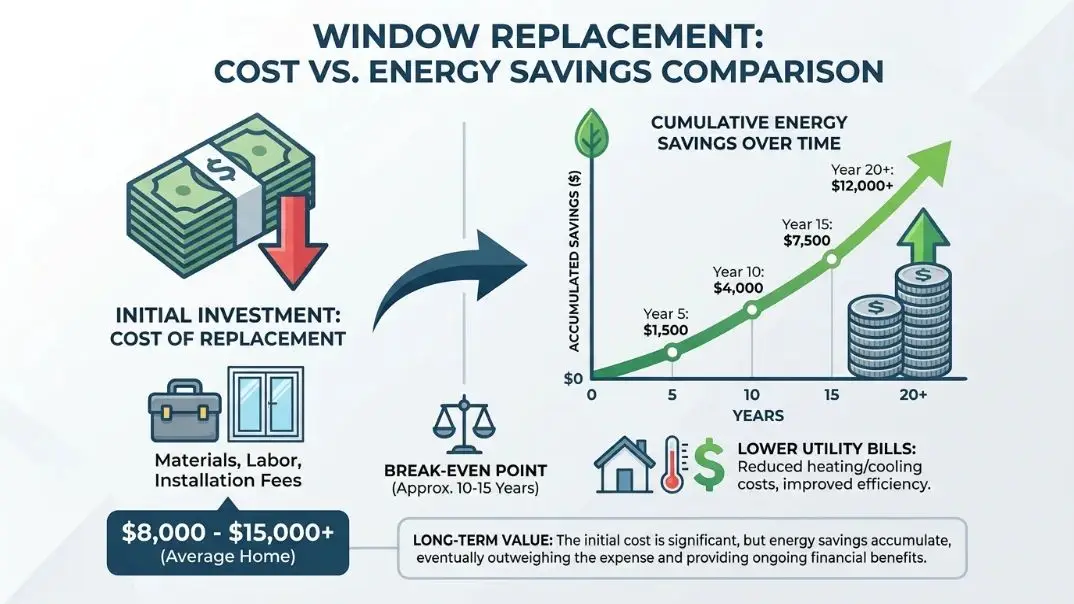
A typical project might cost:
- $8,000 – $15,000+ for a 10-window replacement
But energy savings alone:
- May only save a few hundred dollars per year
Which means:
This is not purely a financial investment
It’s a comfort + performance investment
Window replacement is more about comfort and performance than quick financial return.
The Most Honest Answer (Final Takeaway)
So—is it worth replacing 20-year-old windows?
Here’s the clearest answer:
- Yes, if your windows are underperforming, uncomfortable, or failing
- No, if they’re still functioning well and your home feels comfortable
And most importantly:
Don’t replace windows just because they’re old
Replace them because they’re no longer doing their job
The biggest benefit of replacing older windows is often comfort—not just savings.
How This Fits Into Your Overall Decision
This question connects directly to the bigger picture:
- What will the project cost?
→ how much should 10 windows cost to replace
- How does Home Depot compare?
→ Home Depot window replacement cost
- Is installation really “free”?
→ does Home Depot install windows for free
Or explore everything here:
FAQs
Is it worth replacing 20-year-old windows if they still work?
It depends on how well they’re performing—not just whether they open and close. Many 20-year-old windows are still functional but allow significant heat transfer, especially in California homes. If your home feels comfortable and you’re not dealing with drafts, heat issues, or rising energy bills, you may not need to replace them yet. But if you’re noticing temperature swings, hot rooms, or AC strain, replacement becomes much more worthwhile.
Do new windows really save money on energy bills?
Yes, but not as much as many homeowners expect. Modern windows with Low-E coatings and insulated glass can reduce energy loss, but the actual savings depend on your home, insulation, and climate. In most cases, energy savings alone won’t quickly pay for the full cost of replacement. The bigger benefit is improved comfort, more consistent temperatures, and reduced strain on your HVAC system.
If you want to understand how windows impact your bills, this explains it clearly: how windows impact your bills
Should I replace all my windows at once or do it in phases?
You don’t always need to replace everything at once. If budget is a concern, a phased approach can make more sense. Start with the worst-performing windows—usually those facing direct sun, rooms that overheat, or windows showing seal failure. This allows you to improve comfort where it matters most while spreading out the cost over time.
What’s the biggest sign that I need to replace my windows now?
The clearest signs are seal failure (fog between panes), noticeable drafts, water damage, or windows that are difficult to operate. These issues indicate that the window is no longer performing properly and may even be affecting the structure of your home. At that point, replacement is usually the more reliable long-term solution compared to repeated repairs.
Is it better to repair old windows instead of replacing them?
Repairs can make sense if the windows are still structurally sound and the issues are minor, like small drafts or hardware problems. However, if you’re dealing with multiple issues—such as poor insulation, seal failure, and frame wear—repairs can add up quickly without solving the underlying problem. In those cases, replacement is often the better long-term investment.
Find Out What Actually Makes Sense for Your Home
If you’re trying to decide whether to replace your windows now or wait, the most important step is understanding:
- How your current windows are performing
- What improvements you’d actually see
- And what your real costs would look like
At Total Home Windows, we help homeowners evaluate their situation honestly—so you don’t replace windows too early or wait too long.
Call: (310) 729-3013
Email: teamallstarconstruction@gmail.com
Or request a quote here: https://teamallstarconstruction.com/contact/
No pressure—just clear, practical guidance based on your home.
- Categories: Window Replacement Cost Guides
- Tags: big box vs contractor windows, Home Depot installers quality, Home Depot vs local contractor, Home Depot window review, who installs windows best, window contractor vs retail, window installation comparison, window installation pros cons
Southern California Window Replacement Guide
Single Pane vs Dual Pane: Which Fits Your Home?
Replacement Windows Los Angeles Homeowners Choose
Retrofit Windows vs Full Frame: Which Fits?
A Guide to Full Window Replacement at Home
Vinyl vs Aluminum Windows for Southern California
Best Windows for Hot Climates in Southern California
A Homeowner’s Guide to Energy Efficient Windows
How to Reduce Window Heat at Home
About Total Home Windows
Total Home Windows is a Southern California-based window replacement company focused on helping homeowners improve energy efficiency, indoor comfort, and long-term home value through high-performance window installations.
Serving Los Angeles County, Orange County, Riverside County, San Bernardino County, and Ventura County, the company specializes in both vinyl retrofit (insert) and full-frame window replacement. Their work is tailored to the unique demands of California homes, including intense UV exposure, coastal conditions, and heat retention issues common in older properties.
Total Home Windows combines practical installation experience with a strong focus on energy performance—helping homeowners reduce cooling costs, improve insulation, and solve common problems like rooms that stay hot even with air conditioning. Their approach prioritizes clear recommendations, transparent pricing, and solutions that make sense for each home.
The content published by Total Home Windows is built on real installation knowledge, field-tested performance insights, and current best practices in window technology, including Low-E glass, argon-filled units, and energy-efficient design strategies. Their goal is to help homeowners make informed decisions without overpaying or choosing the wrong type of window system.
Ways to Reach Us
If you’re considering window replacement, we’re here to answer questions and provide clear, professional guidance based on your home and goals.
- teamallstarconstruction@gmail.com
- 301 E.9th St Suite 415 Redlands, CA 92374