Prices and performance figures in this guide are planning examples, not a project quote or a promise of savings. Your estimate and results depend on the products, installation scope, existing home, climate, and energy use.
Why Your Current Windows May Be Costing You More Than You Realize
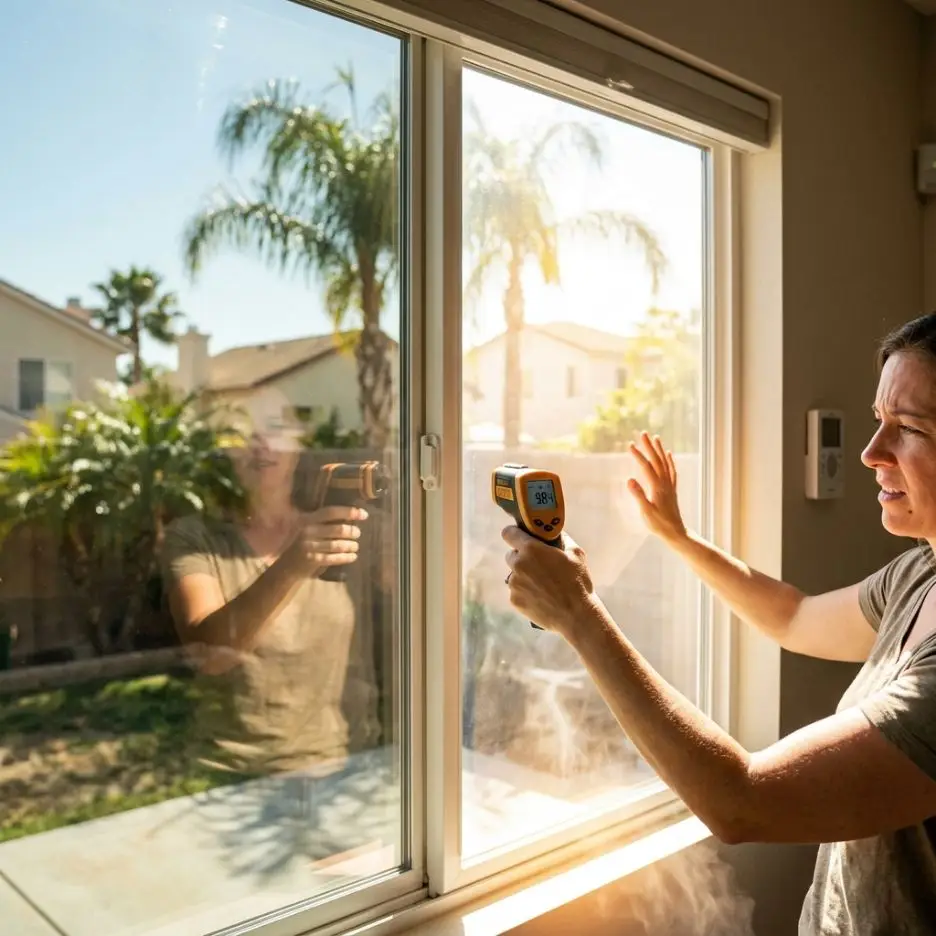
If your home stays hot even with the air conditioning running, your windows are likely the culprit. Standard glass does almost nothing to stop heat from entering, especially in Southern California where the sun beats down relentlessly. On a hot day, regular window glass transmits nearly 80% of the sun’s heat energy straight into your home, forcing your AC to work overtime.
Financing may be available through third-party lenders for qualified applicants. Availability, APR, fees, down payment, and repayment terms depend on the lender and approval. Review the complete loan terms before accepting.
We meet homeowners all the time who’ve spent years tolerating uncomfortable rooms or running their cooling systems constantly. The real problem isn’t effort, it’s equipment. Upgrading to modern glass technology changes the equation entirely.
Understanding the Difference Between Low-E and Standard Glass
Standard glass is transparent and that’s about it. When sunlight hits regular window panes, the glass allows visible light and infrared radiation (heat) to pass through freely. You get the view, but you also get all the thermal energy that comes with it.
Low-E (low-emissivity) glass has a microscopically thin metallic coating applied to one surface. This coating reflects infrared heat back outside while still allowing visible light through. The difference in appearance is almost invisible, but the thermal performance is dramatically different.
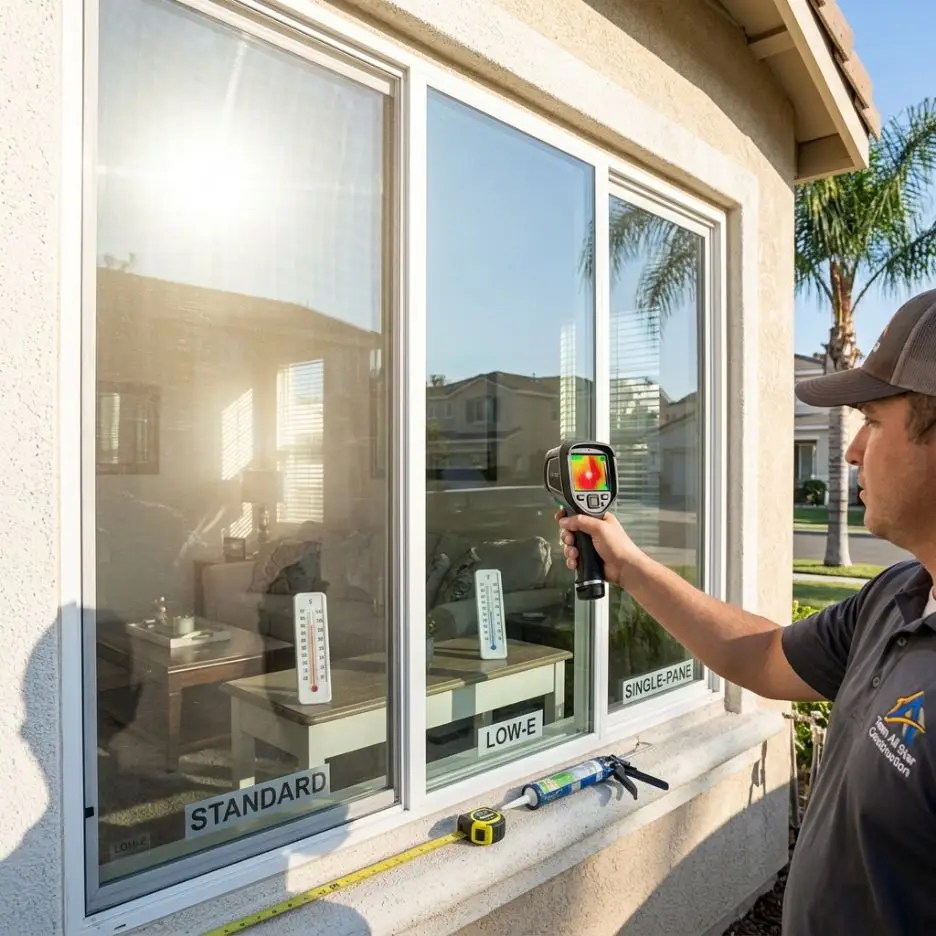
Here’s the practical comparison:
- Standard glass: High solar heat gain coefficient (SHGC) around 0.80 to 0.86
- Low-E glass: SHGC typically 0.30 to 0.40
That numerical difference translates directly to heat staying outside your home instead of entering through your windows. In Southern California’s climate, this isn’t a luxury upgrade, it’s a function upgrade.
How Low-E Coatings Work to Keep Your Home Comfortable
The coating on Low-E glass works through selective transmission. It’s engineered to allow most visible light wavelengths to pass through (so your view and natural light remain clear) while reflecting back the infrared wavelengths that carry heat.
Think of it this way: visible light and heat are different parts of the same solar radiation spectrum. The coating on Low-E glass is smart enough to say yes to visible light and no to infrared heat. The coating does this without creating any noticeable change to how the window looks from inside or outside.
When we install Low-E windows in your home, you’re getting the same brightness and clarity you’d get with standard glass, but the heat rejection happens silently in the background. Your home stays cooler without feeling dark or blocked off from the outside.
In winter months (rare as they are in Southern California), a second benefit appears: the same coating that reflects heat back outside also reflects interior heat back inside, helping retain warmth. This dual benefit is why Low-E glass works year-round.
The Real Energy Savings You Can Expect in Southern California
The savings depend on your home’s current window condition, the direction your windows face, and how much sun exposure you get. But we can give you real numbers from homes we’ve upgraded across the region.
Homes with heavy west or south-facing glass exposure (common in LA County and the Inland Empire) see savings on the higher end of that range. Coastal properties in Orange County or Ventura County often see slightly lower percentages because coastal breezes naturally moderate temperatures, but the comfort improvement is still substantial.
The savings compound over years. A home that costs $600 to cool during July with standard glass might cost $450 with Low-E. Multiply that across five months of heavy cooling season and you’re looking at $750 to $1,200 in annual savings for an average home.
How Much You’ll Pay Upfront and When You Break Even
Low-E glass costs more upfront than standard glass, but the difference is smaller than most homeowners expect. When we compare Low-E retrofit windows to standard glass alternatives, the upgrade typically runs $150 to $300 per window in additional cost, depending on size and frame style.
For a typical Southern California home with 15 to 20 windows, that additional cost totals $2,250 to $6,000 on top of your full replacement project.
We’ve found that most Southern California homeowners see payback within 3 to 4 years under normal cooling schedules. If you’re someone who keeps your home cooler or runs your AC frequently, break-even comes faster.
Beyond the energy savings, Low-E windows also reduce fading of furniture and flooring by blocking UV radiation, an additional long-term benefit that doesn’t show up in electric bill reductions.
Why We Install Low-E Windows in Every Southern California Home
We don’t recommend Low-E windows as an optional upgrade. In our region’s climate, it’s simply the practical choice.
Southern California receives over 250 sunny days per year in most areas. Your windows face that sun regardless of whether you’re in Los Angeles, San Bernardino, Orange County, Riverside, or Ventura County. Standard glass in this environment is like having no sun protection at all.
We’ve installed thousands of windows across our service area, and we’ve seen the difference firsthand. Homeowners who choose Low-E report noticeably cooler homes in the same conditions where neighbors with standard glass are struggling. That’s not subjective comfort, that’s thermal physics.
The cost-benefit math is strong: low upfront premium, fast payback, and years of compounding savings. But beyond the numbers, there’s the daily comfort factor. Your home simply feels better when it’s not fighting to cool down against constant heat gain through your windows.
Comparing Low-E Performance Across Our Service Areas
Performance expectations vary slightly by location based on climate and sun exposure patterns.
Los Angeles County and Coastal Areas: Intense midday sun but moderating ocean breezes. West and south-facing windows benefit most. Expect 15-20% cooling reduction.
San Bernardino County Inland: Hotter, more sustained sun with less coastal moderation. West-facing exposure here creates serious heat gain. Low-E impact reaches 20-25% savings.
Orange County: Mix of coastal and inland properties. Coastal communities see moderate savings; inland areas like Irvine and Mission Viejo see stronger returns.
Riverside County: Desert and semi-desert climate with intense summer heat. Properties in Riverside, Corona, and Temecula experience sustained triple-digit temperatures. Low-E performance is among the strongest in our service region, often reaching 25%+ reductions.
Ventura County: Similar to LA County with coastal moderation in Ventura and Oxnard. Inland areas like Thousand Oaks and Simi Valley experience hotter conditions and see stronger savings.
The pattern is clear: the hotter and sunnier your location, the faster your break-even and the greater your total savings.
Making the Smart Choice for Your Home’s Climate Zone
The decision isn’t actually complicated. Ask yourself two questions:
1. Does your home stay hot even with AC running during summer months?
2. Are your energy bills climbing year after year?
If you answered yes to either question, Low-E glass is worth the investment. The math works in virtually every Southern California climate.
Standard glass only makes sense if your home stays naturally cool or if you’re prioritizing absolute lowest upfront cost at the expense of higher operating costs for years afterward. For most homeowners, that’s not a winning tradeoff.
We’ve seen homes where residents were genuinely surprised by how much cooler their spaces felt after upgrading to Low-E. People would comment that their favorite room, which was previously unusable on hot afternoons, suddenly became comfortable. That shift in livability is worth measuring.
What Makes Our Low-E Window Installation Different
We don’t just drop standard Low-E windows into your home and move on. We measure your home’s specific heat problems first.
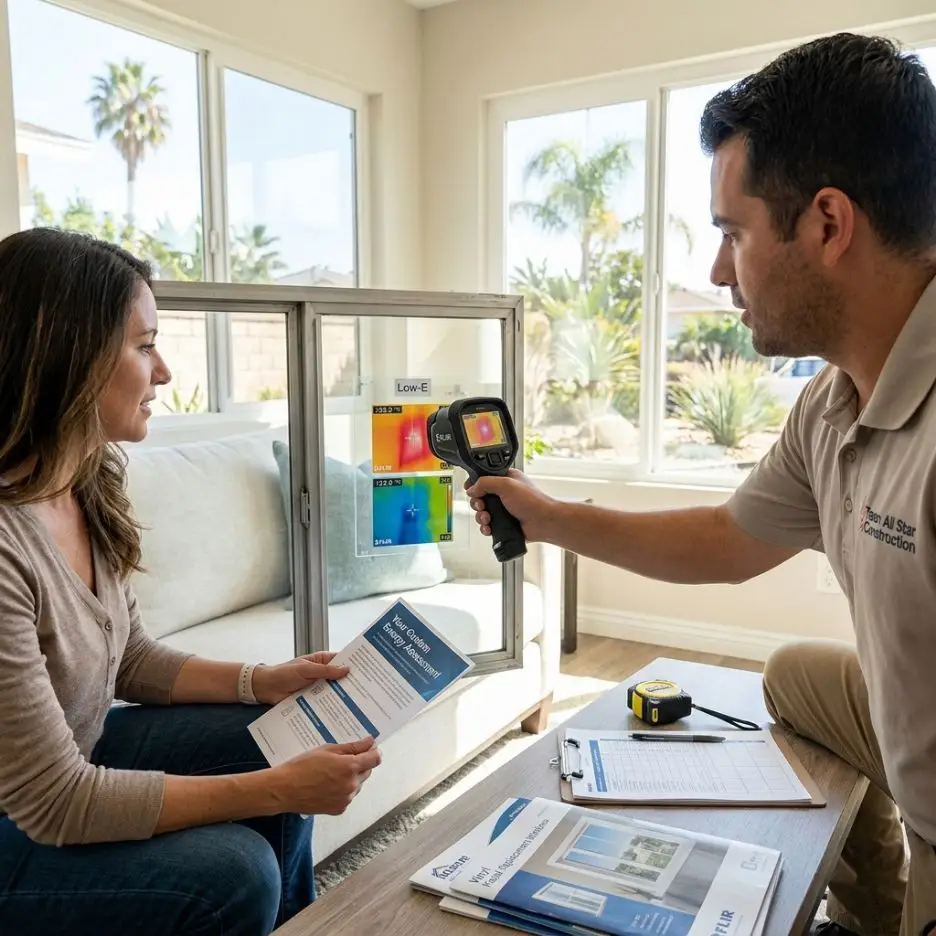
During our in-home consultation, we show you exactly where heat is entering your windows. We identify which windows are contributing most to your cooling load. We walk you through the numbers so you understand the problem and the solution clearly.
This approach matters because not every window in your home needs the same solution. A north-facing window that barely gets sun behaves completely differently from a west-facing window in direct afternoon exposure. We customize which windows get upgraded first and which can wait, helping you prioritize your investment.
We also ensure proper installation. A Low-E window installed poorly with air leaks around the frame won’t deliver full performance. Our team handles the frame, seals, and insulation so the thermal benefit carries through completely.
Our goal is to show you measurable improvement in your home’s comfort and your energy bills. No pressure, no guesses. Just clear information and proven results.
Getting Your Custom Energy Efficiency Assessment Today
The best way forward is to schedule a consultation at your home. We’ll measure your current window performance, identify where heat is entering, and show you exactly what Low-E glass would change in your specific situation.
We serve all of Southern California, including Los Angeles County, San Bernardino County, Orange County, Riverside County, and Ventura County. Whether you’re in a coastal community or the high desert, we have the regional expertise to help.
During the assessment, we’ll walk through your energy costs, show you the heat gain patterns in your home, and explain which windows matter most for your budget. You’ll have clear answers about whether the upgrade makes sense for your situation and timeline.
No obligation. Just the information you need to make a confident decision. Contact us today to schedule your in-home assessment and discover what’s really happening with your home’s heat problem.
For further reading: Smarter window upgrades.
Get a free estimate for your home. No pressure—just clear answers and straightforward pricing. Call (310) 729-3013 or visit: https://teamallstarconstruction.com/contact/
Frequently Asked Questions (FAQ)
What’s the actual difference between low-E glass and standard glass windows?
Low-E glass has a special microscopically thin coating that reflects heat back outside during summer and back inside during winter, while standard glass lets most thermal energy pass right through. We install low-E windows because the coating does the heavy lifting to keep your home at a consistent temperature without forcing your AC and heater to work overtime. The coating is virtually invisible to the naked eye, so your view stays crystal clear.
How much money can I actually save on my energy bills with low-E windows?
Most of our Southern California clients see 10-15% reductions in cooling costs during the hot months, which adds up to real money over time. Your specific savings depend on your home’s size, current window condition, and which county you’re in since our service areas have different climate patterns. We provide a free in-home assessment where we calculate your potential savings based on your exact situation rather than giving you generic estimates.
When will low-E windows pay for themselves?
We typically see our customers break even on their low-E window investment within 5-7 years through energy savings, though this timeline varies based on your current utility costs and how much you use heating and cooling. Beyond the financial payback, you get immediate benefits like better temperature control, reduced glare, and improved comfort in your home. We’re happy to walk through the numbers during your consultation so you can see the timeline for your specific property.
- Categories: Energy-Efficient Windows
- Tags: energy efficient windows comparison, glass performance comparison, heat blocking vs regular glass, low-e benefits, low-e vs standard glass, window efficiency upgrade, window energy savings, window glass upgrade worth it
Southern California Window Replacement Guide
Single Pane vs Dual Pane: Which Fits Your Home?
Replacement Windows Los Angeles Homeowners Choose
Retrofit Windows vs Full Frame: Which Fits?
A Guide to Full Window Replacement at Home
Vinyl vs Aluminum Windows for Southern California
Best Windows for Hot Climates in Southern California
A Homeowner’s Guide to Energy Efficient Windows
How to Reduce Window Heat at Home
About Total Home Windows
Total Home Windows is a Southern California-based window replacement company focused on helping homeowners improve energy efficiency, indoor comfort, and long-term home value through high-performance window installations.
Serving Los Angeles County, Orange County, Riverside County, San Bernardino County, and Ventura County, the company specializes in both vinyl retrofit (insert) and full-frame window replacement. Their work is tailored to the unique demands of California homes, including intense UV exposure, coastal conditions, and heat retention issues common in older properties.
Total Home Windows combines practical installation experience with a strong focus on energy performance—helping homeowners reduce cooling costs, improve insulation, and solve common problems like rooms that stay hot even with air conditioning. Their approach prioritizes clear recommendations, transparent pricing, and solutions that make sense for each home.
The content published by Total Home Windows is built on real installation knowledge, field-tested performance insights, and current best practices in window technology, including Low-E glass, argon-filled units, and energy-efficient design strategies. Their goal is to help homeowners make informed decisions without overpaying or choosing the wrong type of window system.
Ways to Reach Us
If you’re considering window replacement, we’re here to answer questions and provide clear, professional guidance based on your home and goals.
- teamallstarconstruction@gmail.com
- 301 E.9th St Suite 415 Redlands, CA 92374