Retrofit vs full replacement: learn which window option fits your home, budget, comfort goals, and Southern California climate needs best.
A window project can look simple from the street and still involve two very different installation paths. When homeowners compare retrofit vs full replacement, the real question is not just cost. It is whether your existing window frame is still doing its job, and whether you want to improve performance without opening up the wall or address deeper issues that a new insert alone cannot fix.
For many Southern California homes, the right answer comes down to comfort, condition, and scope. If your house gets too hot in the afternoon, outside noise carries into bedrooms, or older windows have lost their seal and efficiency, replacement windows can make a meaningful difference. But the method matters, because retrofit and full replacement solve different problems.
What retrofit vs full replacement really means
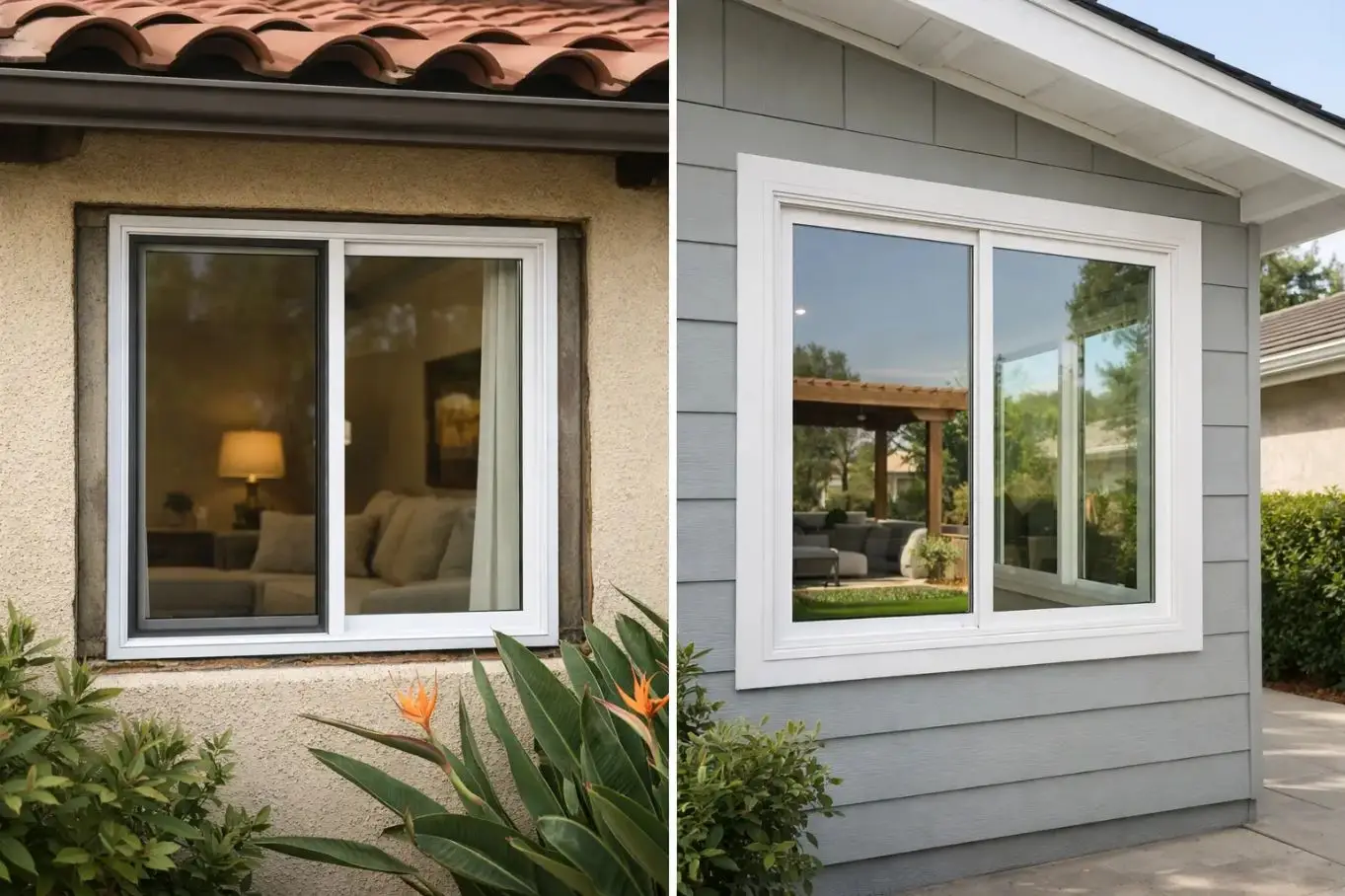
A retrofit window replacement, sometimes called an insert replacement, keeps the existing window frame in place. The new window is installed inside that frame, which allows the old window components to be removed and the new system fitted without major structural changes to the surrounding wall.
A full replacement removes the entire window assembly, including the frame. This approach exposes the rough opening so the contractor can install a completely new window system and address any hidden damage or construction issues around the opening.
That distinction affects installation time, finish work, cost, and what problems the project can actually fix. Homeowners often assume full replacement is always better because it is more extensive, but that is not necessarily true. A well-executed retrofit can deliver major gains in energy efficiency, indoor comfort, noise reduction, and appearance when the original frame is still sound.
When retrofit windows make the most sense
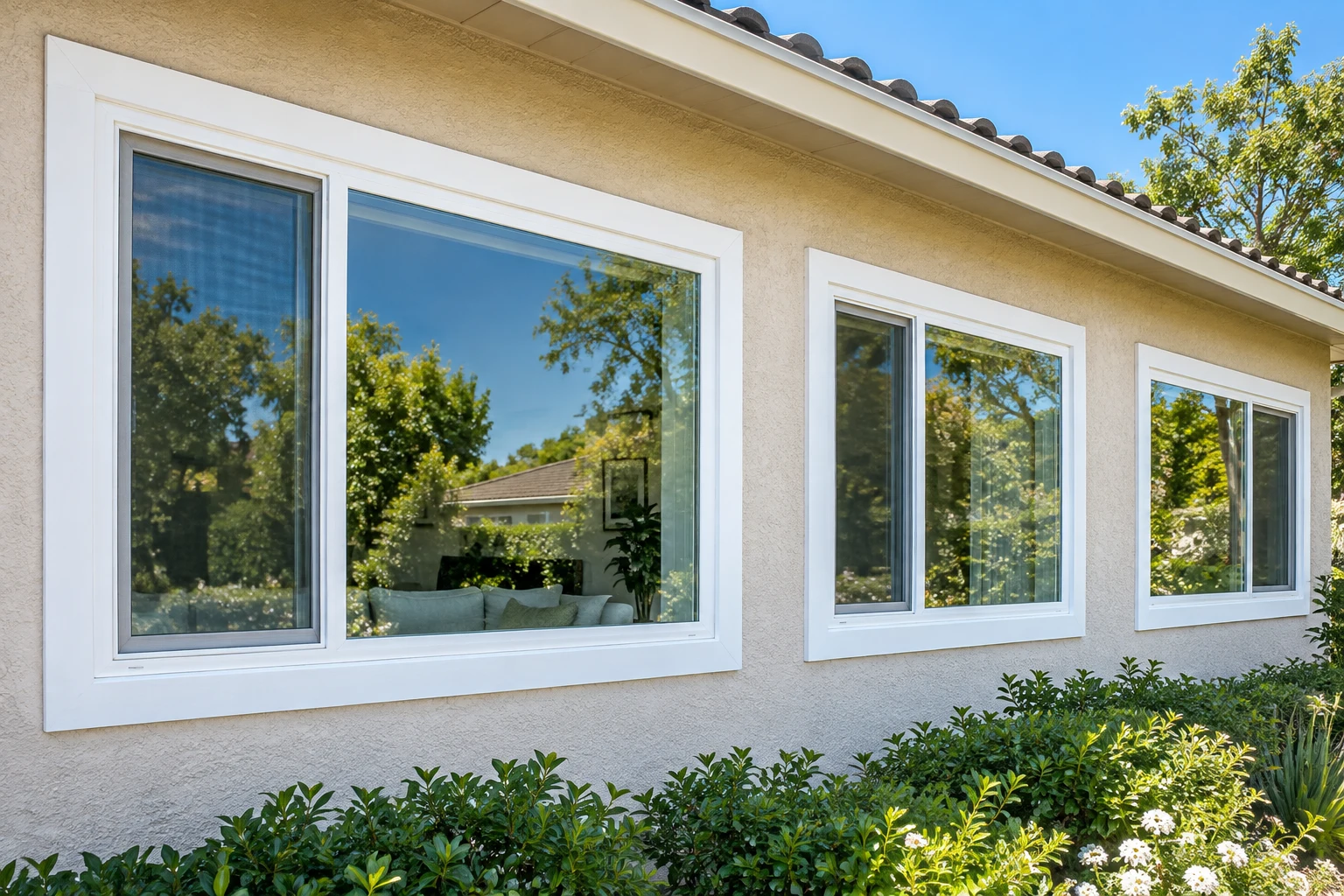
Retrofit replacement is often the best fit for existing homes with structurally solid frames and no signs of surrounding damage. In these cases, homeowners can upgrade from older single-pane or worn-out aluminum windows to modern vinyl replacement windows with dual-pane glass, Low-E coatings, and insulated glass systems without the disruption of tearing into stucco, siding, or interior finishes.
That matters in Southern California, where many homeowners want better thermal performance but do not want a major reconstruction project. If your goal is to reduce heat transfer, ease the load on your air conditioning, improve noise control, and refresh the look of the home, a retrofit system can be a very practical solution.
There is also a cleanliness factor. Because the existing frame stays in place, retrofit installation is typically less invasive. That usually means less disturbance to interior trim, exterior materials, and daily life in the home. For occupied homes, especially when multiple windows are being replaced, that can be a real advantage.
Retrofit is often ideal when the problems are centered on the old window unit itself. Drafts, condensation between panes, fading from sun exposure, sticky operation, poor insulation, and dated appearance can often be solved with a modern replacement insert if the frame is still square, secure, and free of deterioration.
When full replacement is the better choice
Full replacement becomes the smarter path when the frame or surrounding area has problems that should not be covered over. If there is wood rot, water intrusion, structural movement, previous installation errors, or visible deterioration in the frame, leaving that material in place can limit the long-term value of the project.
This approach also makes sense when homeowners want to significantly alter the window opening, change the style in a way that requires structural adjustment, or correct issues tied to the original construction. In older homes, especially those that have had decades of weather exposure or multiple remodels, a full replacement can provide a cleaner reset.
Another reason to choose full replacement is visibility. Once the old assembly is removed, the installer can inspect the opening more thoroughly. If moisture damage or framing issues are present, they can be addressed before the new window goes in. That kind of access is not available in the same way with a retrofit installation.
The trade-off is disruption. Full replacement often requires more labor, more finish work, and more coordination with exterior and interior materials. Depending on the home, it may involve stucco, trim, drywall, or paint work. For some homeowners, that added scope is worthwhile. For others, it is unnecessary if the existing frame is still in good shape.
Performance differences homeowners should care about
From a homeowner perspective, the most important performance question is not which method sounds more complete. It is whether the finished window system will solve the comfort issues you are dealing with.
A quality retrofit window can deliver excellent energy performance when paired with the right glass package. Dual-pane glass, Low-E coatings, and argon-filled insulated units can help reduce solar heat gain, limit hot spots near windows, and make rooms easier to cool. They can also help reduce outside noise, which matters in neighborhoods near traffic, schools, and busy streets.
Full replacement can offer similar comfort gains, but its added value comes from addressing what is around the window, not just the glass and sash. If the surrounding frame is compromised, even the best glass package will not perform as intended. That is where full replacement earns its place.
There is one practical consideration homeowners sometimes overlook. Retrofit windows slightly reduce the visible glass area because the new window fits within the existing frame. In many homes, the change is minor. Still, if maximizing daylight and glass area is a top priority, it is worth discussing during the design stage.
Cost, value, and the mistake of comparing price alone
In most cases, retrofit installation costs less than full replacement because labor and finish work are more limited. That does not automatically make it the better value, and full replacement being more expensive does not automatically make it the better investment.
Value comes from matching the method to the condition of the home. If your frames are solid and your main goals are cooler rooms, lower energy loss, better sound control, and updated curb appeal, paying for full replacement may add scope you do not need. On the other hand, choosing retrofit over damaged framing can leave underlying issues unresolved.
A trustworthy contractor should help you understand what your home actually requires, not default to the bigger project or the cheaper one. That is especially important with window replacement, where much of the decision depends on conditions you cannot fully judge from indoors.
How Southern California homes affect the choice
Climate matters here. In Southern California, homeowners are often less concerned with severe winter weather and more focused on heat, sun exposure, indoor comfort, and rising cooling costs. West-facing rooms that bake in the afternoon, bedrooms exposed to street noise, and homes with older aluminum windows are common examples where modern retrofit replacement can make a noticeable difference.
At the same time, older homes in Los Angeles County, Orange County, Riverside County, San Bernardino County, and Ventura County may have aging frames or installation details that justify a closer look. Homes that have experienced long-term sun exposure, moisture issues, or years of deferred updates are not all candidates for the same solution.
That is why window replacement should start with inspection, not assumptions. The right recommendation depends on the frame condition, the style of home, the surrounding materials, and your goals for comfort and appearance.
How to decide between retrofit vs full replacement
If you are weighing retrofit vs full replacement, start with three questions. First, are the existing frames structurally sound and free of moisture damage? Second, are your goals mainly performance and appearance, or do you also need to correct construction or framing issues? Third, how much disruption are you comfortable with during the project?
If the frame is sound and your priorities are efficiency, noise reduction, comfort, and a cleaner installation process, retrofit is often the right fit. If the frame is deteriorated, the opening needs correction, or hidden damage is a concern, full replacement is usually the safer long-term choice.
This is where working with a licensed specialist matters. An experienced replacement window contractor can evaluate frame condition, explain what can be preserved, and recommend window systems that make sense for your climate and home layout. For homeowners who want better comfort without unnecessary construction, that guidance is what keeps the project practical.
Total Home Windows, a division of Team All Star Construction, CSLB #1009760, focuses on helping Southern California homeowners choose replacement window solutions based on real home conditions, not one-size-fits-all advice.
The best window project is not the one with the biggest scope. It is the one that leaves your home cooler, quieter, better looking, and easier to live in for years to come.
- Categories: Uncategorized
Southern California Window Replacement Guide
Single Pane vs Dual Pane: Which Fits Your Home?
Replacement Windows Los Angeles Homeowners Choose
Retrofit Windows vs Full Frame: Which Fits?
A Guide to Full Window Replacement at Home
Vinyl vs Aluminum Windows for Southern California
Best Windows for Hot Climates in Southern California
A Homeowner’s Guide to Energy Efficient Windows
How to Reduce Window Heat at Home
About Total Home Windows
Total Home Windows is a Southern California-based window replacement company focused on helping homeowners improve energy efficiency, indoor comfort, and long-term home value through high-performance window installations.
Serving Los Angeles County, Orange County, Riverside County, San Bernardino County, and Ventura County, the company specializes in both vinyl retrofit (insert) and full-frame window replacement. Their work is tailored to the unique demands of California homes, including intense UV exposure, coastal conditions, and heat retention issues common in older properties.
Total Home Windows combines practical installation experience with a strong focus on energy performance—helping homeowners reduce cooling costs, improve insulation, and solve common problems like rooms that stay hot even with air conditioning. Their approach prioritizes clear recommendations, transparent pricing, and solutions that make sense for each home.
The content published by Total Home Windows is built on real installation knowledge, field-tested performance insights, and current best practices in window technology, including Low-E glass, argon-filled units, and energy-efficient design strategies. Their goal is to help homeowners make informed decisions without overpaying or choosing the wrong type of window system.
Ways to Reach Us
If you’re considering window replacement, we’re here to answer questions and provide clear, professional guidance based on your home and goals.
- teamallstarconstruction@gmail.com
- 301 E.9th St Suite 415 Redlands, CA 92374