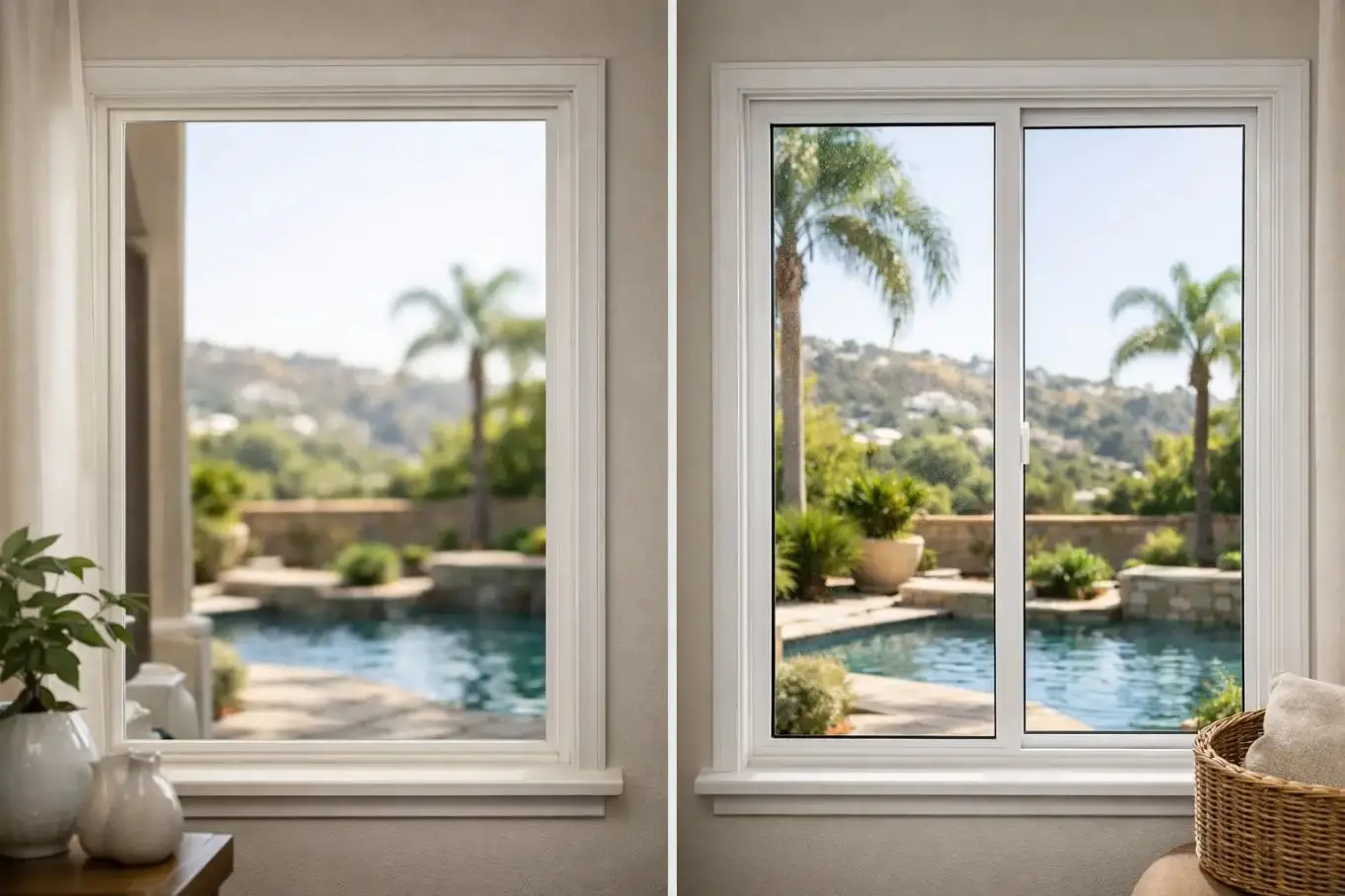
Compare single pane vs dual pane windows for Southern California homes. Learn how insulation, noise control, and comfort affect replacement decisions.
A west-facing living room that heats up every afternoon, traffic noise that follows you indoors, and an air conditioner that seems to run nonstop often point back to the same part of the home: aging windows. In the single pane vs dual pane decision, the difference is not simply one sheet of glass versus two. It affects how comfortable your rooms feel, how hard your cooling system works, and how well your home handles Southern California sun and noise.
For many homeowners, single-pane windows are original to the home. They may still open and close, but their performance can be far behind current replacement window options. Understanding what each window type does well, where its limits are, and what features matter beyond the number of panes can make a replacement decision much clearer.
Single Pane vs Dual Pane: The Core Difference
A single-pane window has one layer of glass between the inside and outside of the home. It offers very little resistance to heat transfer. On a hot day, heat absorbed by the exterior glass can move indoors more easily. When outdoor temperatures drop, indoor warmth can escape through that same glass.
A dual-pane window uses two panes of glass separated by a sealed space. That space is an insulating barrier, often filled with air or argon gas. Argon is a colorless, non-toxic gas that slows heat transfer better than ordinary air. The result is an insulated glass unit that helps the indoor side of the window stay closer to the indoor temperature.
This does not mean every dual-pane window performs the same. Glass coatings, frame materials, the quality of the sealed unit, and professional retrofit installation all influence real-world results. Still, moving from an older single-pane window to a quality dual-pane replacement window is usually a meaningful performance upgrade for an existing Southern California home.
Why Single-Pane Windows Struggle in Southern California
Southern California homeowners face a particular mix of conditions. Inland communities such as Rancho Cucamonga, Riverside, Corona, and San Bernardino can experience intense summer heat. Coastal areas may have milder temperatures but still deal with sun exposure, salt air, and neighborhood noise. Los Angeles and Orange County homes can also be affected by busy streets, nearby freeways, aircraft, and active neighborhoods.
Single-pane glass offers minimal insulation against those conditions. A room with older windows may feel noticeably warmer near the glass, especially in the afternoon. The air conditioner then has to remove the extra heat entering through the windows, which can make certain rooms difficult to cool even when the thermostat is set properly.
Single-pane windows also provide limited sound control. Glass alone cannot eliminate outside noise, but a single, thin barrier allows more sound energy to pass into the home. If traffic, barking dogs, lawn equipment, or nearby activity affects your daily comfort, the window system deserves a closer look.
Another concern is condensation. Condensation can occur when a cold window surface meets warm, humid indoor air. While indoor humidity and ventilation also matter, single-pane glass tends to get colder than insulated glass. That makes surface condensation more likely under certain conditions.
What Dual-Pane Windows Change
Dual-pane replacement windows are designed to improve the separation between indoor and outdoor conditions. The insulating space between the panes reduces conductive heat transfer, helping rooms feel more stable from morning through evening.
For homeowners, the benefit is usually felt as better comfort rather than a dramatic technical statistic. A sunny bedroom may stay more manageable in the afternoon. A family room near a street may feel quieter. You may be less likely to avoid sitting near a window because of heat or glare. These are practical improvements that make the home easier to enjoy.
Dual-pane systems can also help reduce strain on heating and cooling equipment by limiting unwanted heat gain and loss. Actual utility bill changes depend on the home’s size, insulation, HVAC condition, thermostat habits, shade, window orientation, and local weather. Replacement windows should not be presented as a guaranteed bill reduction. Their value is better understood as part of an overall home-comfort strategy.
Low-E Glass Matters as Much as the Second Pane
When comparing replacement options, ask about Low-E glass. Low-E, short for low emissivity, is a microscopically thin coating applied to glass that helps manage heat from the sun while still allowing useful daylight into the room.
In warm Southern California climates, the right Low-E package can reduce solar heat gain, particularly on west- and south-facing windows that receive strong afternoon sun. It can also help limit ultraviolet exposure that contributes to fading on floors, furnishings, and artwork. The best glass choice depends on your home’s orientation, shade from trees or patio covers, and how each room is used.
A dual-pane window without an appropriate glass package may not address a heat problem as effectively as a dual-pane window selected for the home’s specific exposure. This is why a room-by-room evaluation is more useful than choosing windows based on one feature alone.
Noise Reduction Is Helpful, Not Absolute
Dual-pane windows can reduce outside noise because they add another layer of glass and an insulating airspace. A tightly built replacement window can also limit sound that enters through gaps around old frames, worn weatherstripping, or poor seals.
However, homeowners should have realistic expectations. Standard dual-pane windows can improve everyday noise comfort, but they will not make a home silent. For substantial noise concerns near major roads or flight paths, glass thickness and laminated glass options may be worth discussing. The right configuration depends on the type and frequency of the noise, not just its volume.
When Is Replacing Single-Pane Windows Worth It?
Replacement becomes especially compelling when old windows contribute to comfort problems that affect daily life. Drafts, hot rooms, faded furnishings, visible condensation, deteriorated frames, difficult operation, and persistent outdoor noise are all signs that the existing windows may no longer serve the home well.
Appearance matters, too. Older aluminum or wood windows can make an otherwise updated home look dated. Modern vinyl replacement windows are available in styles that complement traditional, contemporary, ranch, and mid-century homes while improving energy performance. For homeowners preparing to sell, updated windows may also improve curb appeal and help communicate that the home has been cared for.
There are cases where a homeowner may not need a whole-house project at once. If a few rooms are clearly the most uncomfortable, a phased plan can make sense. Prioritizing large sun-exposed windows, bedrooms with noise concerns, or windows showing visible failure can provide a practical starting point. A qualified contractor can help identify where replacement will make the greatest difference.
Look Beyond the Glass When Comparing Windows
The glass unit is central to window performance, but it is only one part of the finished system. A well-made window also needs a durable frame, dependable weather seals, properly operating hardware, and careful installation within the existing opening.
Retrofit window replacement is a popular option for many Southern California homes because it can improve performance without major structural modifications. The existing frame is assessed, and the new window is installed to provide a clean, secure fit. Proper measurements and installation details matter because even an efficient window can underperform if air or water can move around it.
Before choosing a window, homeowners should consider these practical questions: Which rooms receive the strongest sun? Where is noise most disruptive? Are there signs of moisture or failed seals? Is preserving a particular architectural look important? The answers help determine the right combination of frame style, glass package, and operating type.
Choosing a Window Partner for Your Home
A replacement window consultation should begin with your comfort concerns, not a one-size-fits-all recommendation. An experienced provider will evaluate the condition of the existing windows, listen to how each room performs, explain glass and frame options in plain language, and set realistic expectations.
Total Home Windows, the replacement window division of Team All Star Construction, CSLB #1009760, helps homeowners across Los Angeles, Orange, Riverside, San Bernardino, and Ventura Counties evaluate energy-efficient retrofit window solutions for their homes. The goal is not simply to replace old glass. It is to create cooler, quieter, more comfortable living spaces with window systems selected for the home and its environment.
If single-pane windows are making parts of your home uncomfortable, the right dual-pane replacement can be a lasting improvement to how those rooms feel every day. Start with the issues you notice most, then choose a window system built to address them.
- Categories: Uncategorized
Southern California Window Replacement Guide
Replacement Windows Los Angeles Homeowners Choose
Retrofit Windows vs Full Frame: Which Fits?
A Guide to Full Window Replacement at Home
Vinyl vs Aluminum Windows for Southern California
Best Windows for Hot Climates in Southern California
A Homeowner’s Guide to Energy Efficient Windows
How to Reduce Window Heat at Home
Are Retrofit Windows Worth It for Your Home?
About Total Home Windows
Total Home Windows is a Southern California-based window replacement company focused on helping homeowners improve energy efficiency, indoor comfort, and long-term home value through high-performance window installations.
Serving Los Angeles County, Orange County, Riverside County, San Bernardino County, and Ventura County, the company specializes in both vinyl retrofit (insert) and full-frame window replacement. Their work is tailored to the unique demands of California homes, including intense UV exposure, coastal conditions, and heat retention issues common in older properties.
Total Home Windows combines practical installation experience with a strong focus on energy performance—helping homeowners reduce cooling costs, improve insulation, and solve common problems like rooms that stay hot even with air conditioning. Their approach prioritizes clear recommendations, transparent pricing, and solutions that make sense for each home.
The content published by Total Home Windows is built on real installation knowledge, field-tested performance insights, and current best practices in window technology, including Low-E glass, argon-filled units, and energy-efficient design strategies. Their goal is to help homeowners make informed decisions without overpaying or choosing the wrong type of window system.
Ways to Reach Us
If you’re considering window replacement, we’re here to answer questions and provide clear, professional guidance based on your home and goals.
- teamallstarconstruction@gmail.com
- 301 E.9th St Suite 415 Redlands, CA 92374