Prices and performance figures in this guide are planning examples, not a project quote or a promise of savings. Your estimate and results depend on the products, installation scope, existing home, climate, and energy use.
Why Your Current Windows Are Draining Your AC System
Your AC system works harder than it should because heat is entering your home through the windows. Single-pane or older dual-pane windows allow thermal transfer—warm air passes straight through the glass and frame, forcing your cooling system to compensate for the constant heat gain.
Think of it this way: if your AC is trying to maintain 72 degrees indoors while 100-degree heat streams through inefficient windows, your unit cycles continuously. That’s not a cooling problem. That’s a heat infiltration problem, and no amount of AC maintenance will fix it.
We’ve measured this in hundreds of Southern California homes. Homeowners tell us their AC never shuts off during summer, or certain rooms stay warm no matter what. The root cause is almost always the windows. Old frames develop gaps, seals fail, and single-pane glass offers virtually no thermal resistance.
The practical takeaway: upgrading to energy-efficient windows reduces the heat entering your home, which means your AC doesn’t have to work so hard. Your unit runs less frequently, uses less electricity, and lasts longer.
The Hidden Cost of Aging Windows in Southern California Heat
Southern California’s climate puts unique stress on windows. We have intense direct sun exposure, temperature swings between seasons, and homes built across different eras with vastly different window standards. A 1970s window in Pasadena faces the same 115-degree summer heat as a 1990s window in Irvine, but with far less protection.
Older windows lose their seals over time. You might not see it happening, but air leakage increases gradually. In summer, the heat transfer through aging frames and glass contributes directly to higher cooling costs. Homeowners in areas like Inland Empire, where summer temperatures regularly exceed 105 degrees, feel this impact most sharply.
Financing may be available through third-party lenders for qualified applicants. Availability, APR, fees, down payment, and repayment terms depend on the lender and approval. Review the complete loan terms before accepting.
Beyond dollars, aging windows reduce comfort. Drafts in winter, hot spots near windows in summer, condensation buildup, and UV damage to furnishings all stem from poor window performance. The cost compounds over years of operation and declining home value.
Action step: if your home was built before 2005, your windows are likely costing you money. We recommend an in-home energy assessment to measure exactly what’s happening in your space.
How Modern Vinyl Windows Stop Energy Waste Before It Starts
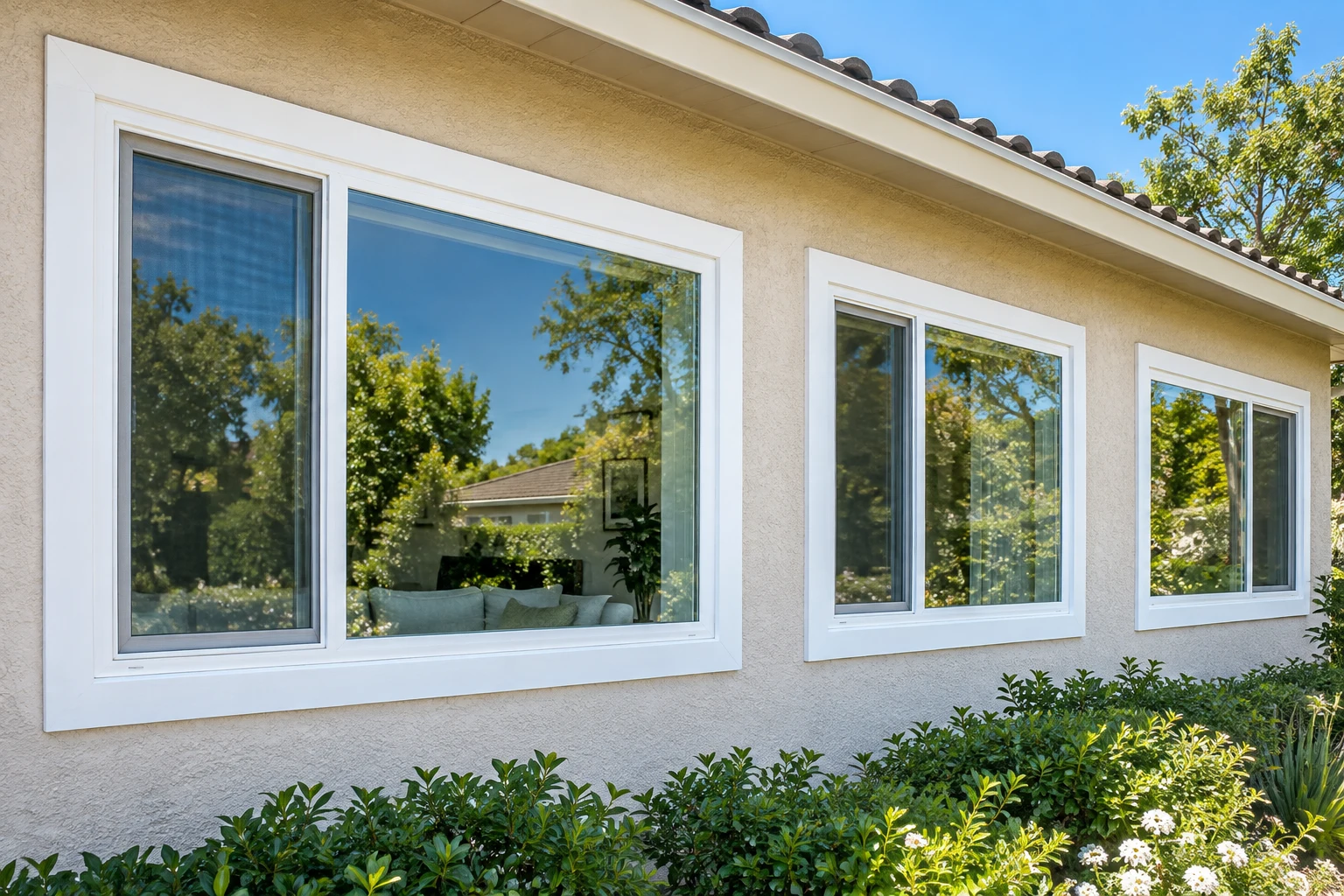
Modern vinyl windows use multiple layers of engineering to block heat transfer. Our systems combine low-emissivity (low-E) glass coatings, insulated frames, and multi-chamber designs that standard older windows simply cannot match.
The low-E coating is transparent but reflects infrared heat back outside while allowing visible light through. In summer, this blocks 70-80% of solar heat gain. The glass itself is typically double or triple-pane with insulating gas (usually argon) between panes, creating a thermal barrier that aging windows lack entirely.
Vinyl frames distribute temperature differently than aluminum or wood frames. They don’t conduct heat the way aluminum does, so the frame stays closer to interior temperature. This eliminates the hot metal frame effect you feel near older windows on summer afternoons.
Sealed construction is another critical difference. Modern windows use advanced weatherstripping and gasket systems that don’t degrade as quickly as older materials. Air leakage is virtually eliminated compared to original windows from the 1970s-1990s.
The result: less heat enters your home, your AC runs less often, your energy bills drop, and comfort improves immediately. You’ll notice the difference the first hot day after installation.
Our Custom-Fit Approach to Maximum Efficiency
We don’t install off-the-shelf windows that almost fit your openings. We measure each window opening precisely, account for the orientation (south-facing vs. north-facing windows perform differently), and match the glass specification to your specific climate zone.
A window facing direct afternoon sun in Rancho Cucamonga needs different solar control than a north-facing window in coastal Ventura. We design each installation with these conditions in mind. Our custom manufacturing process ensures exact fit, which eliminates gaps and improves thermal performance.
The custom approach also matters for installation quality. When windows fit precisely, the seal around the frame is perfect. No gaps means no air leakage, and that’s where real energy savings happen. We measure heat transfer in your home before and after installation so you see the actual performance improvement.
For homeowners considering window replacement and installation across Southern California, the custom-fit difference is significant. It’s the difference between “windows that fit okay” and “windows that perform exactly as engineered.”
Full Frame Replacement vs. Retrofit: Which Solution Fits Your Home
Retrofit windows (also called insert windows) sit inside your existing frame. They’re faster to install and less disruptive, which appeals to many homeowners. However, they retain the original frame structure, which may have thermal issues or hidden damage.
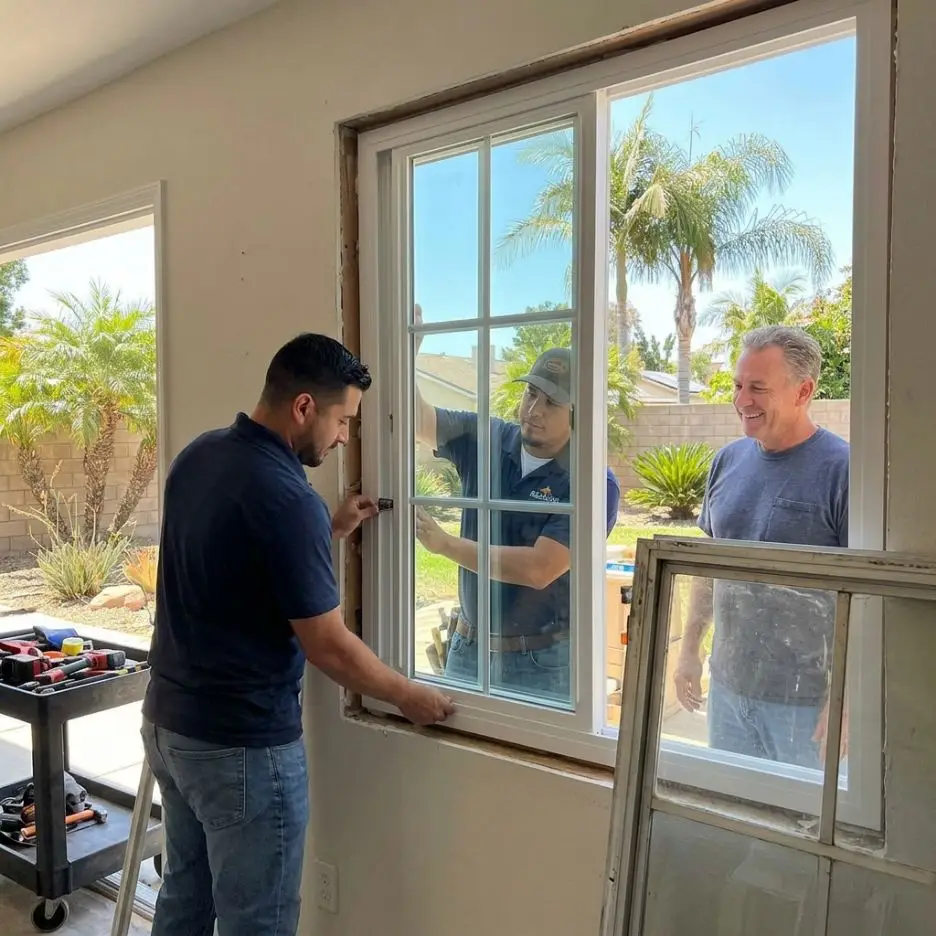
Full frame replacement removes the entire original window assembly, including the frame. We inspect the opening for water damage or structural issues, repair as needed, and install a complete new unit. This approach guarantees maximum performance because there’s no compromised original frame remaining.
The choice depends on your home’s condition and your goals. If your existing frames are solid and your priority is speed and cost, retrofit windows work well. If you want maximum efficiency, longer warranty coverage, and confidence that no hidden damage exists, full frame is the better choice.
In Southern California’s variable climate and with older homes common across our service areas (Los Angeles, Orange County, San Bernardino, Riverside, and Ventura counties), we typically recommend full frame for homes over 25 years old. The slight additional cost is offset by superior performance and peace of mind.
We’ll walk you through both options during your consultation. No pressure—just clear answers about what makes sense for your specific situation.
Real Energy Savings You Can Expect This Summer
The variation depends on several factors: home size, number and orientation of windows, your current thermostat settings, and how much of the original glazing we’re replacing. Homes with many south and west-facing windows see larger percentage savings because that’s where the most solar heat enters.
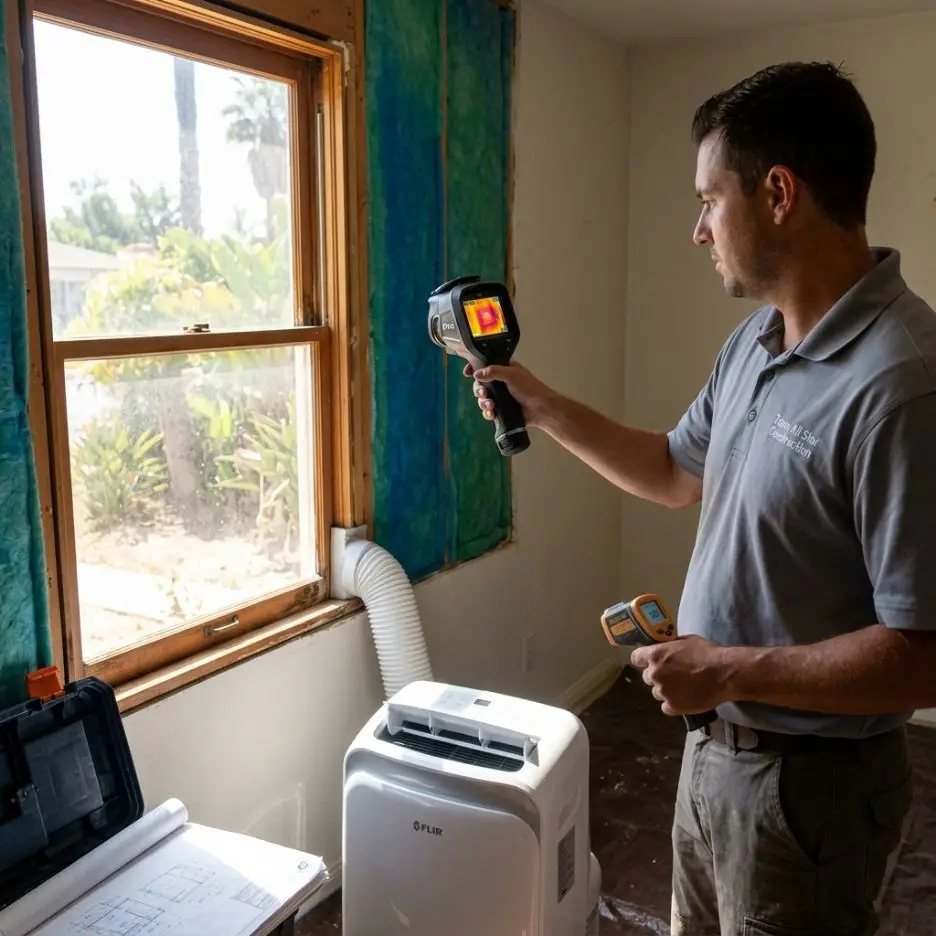
These aren’t estimates. We measure actual energy performance with thermal imaging and follow up with clients on their utility bills. Proof matters more than promises.
Why Professional Installation Matters for Your Climate Zone
Installation quality directly impacts window performance. Poor installation creates air leaks around the frame perimeter that undermine the window’s thermal properties. We’ve seen retrofit jobs where the installer left gaps a quarter-inch wide around the frame. That small gap eliminates 30-40% of the window’s energy efficiency.
Southern California’s climate demands proper installation because temperature swings create expansion and contraction stress. Windows installed with incorrect fastener spacing or wrong weatherstripping fail faster in our heat cycles. A window installed correctly in our desert and coastal regions lasts 20-25 years. Poorly installed windows show degradation in 8-10 years.
We install according to manufacturer specs and local building codes, but we go further. We seal frame perimeters with expanding foam, shim windows perfectly plumb and level, and use fasteners rated for our climate extremes. The difference is visible in how windows perform in summer and winter, and measurable in your energy bills.
Professional installation also means warranty coverage. Most manufacturers void warranties if installation isn’t done to spec. Confirm the installation team, relevant training, supervision, and responsibility for the work in your written project agreement.
How We Design Windows for Southern California’s Unique Demands
We’re not installing the same window in Calabasas (high elevation, cooler) as we are in Barstow (desert heat). Design matters.
High-desert areas like Victorville and Adelanto experience extreme temperature swings and intense UV exposure. We specify darker-tinted or bronze glass that handles these conditions better. Coastal areas like Manhattan Beach and Long Beach have salt spray and humidity concerns, so we use vinyl and stainless fasteners that resist corrosion.
Inland Empire homes in Riverside and San Bernardino often have larger south-facing windows and less natural shade. We design with higher solar heat gain coefficients to reduce interior temperature rise. Foothill communities like Chatsworth and Woodland Hills have variable sun angles and wind exposure, requiring different weatherstripping specifications.
This isn’t generic. We’ve installed thousands of windows across our service area and know how each climate zone behaves. That experience goes into every design.
From Consultation to Installation: Our Process for Your Home
We start with an in-home consultation where we walk your home, identify problem areas, measure windows, and discuss your goals. No pressure, just information gathering.
We use thermal imaging to show you where heat is actually entering your home. You see the hot spots around your windows on our thermal camera. This visual proof helps you understand exactly what new windows will fix.
Next, we provide a detailed quote with window specifications, energy performance ratings (U-value and solar heat gain coefficient), and installation scope. We explain what each specification means and why it matters for your climate zone.
Once you approve the quote, our crews schedule installation at your convenience. Most projects complete in 1-3 days depending on the number of windows. We clean up thoroughly and test each window to confirm proper operation.
After installation, we follow up with energy bill comparisons after your first full cooling season. You see the actual dollar savings on your utility statement.
Start Saving on Your AC Bills This Season
Heat entering through old windows is costing you money every hot day. Modern, energy-efficient windows stop that heat transfer before it reaches your AC system. The result is lower cooling costs, better comfort, and a home that performs like it was built in 2026, not 1986.
We’re ready to show you what’s actually happening in your home and what new windows will do to improve it. Schedule a consultation today. We’ll measure your heat problem, design a solution, and prove the performance with real numbers.
Your AC doesn’t need to run so hard. Your windows do.
Get a free estimate for your home. No pressure—just clear answers and straightforward pricing. Call (310) 729-3013 or visit: https://teamallstarconstruction.com/contact/
Frequently Asked Questions (FAQ)
How much can I expect to save on my AC bills after installing new energy-efficient windows?
Most of our customers see cooling cost reductions of 15-30% during Southern California’s hot months, depending on their current window condition and home size. We’ve found that homes with older, single-pane windows or poor seals experience the most dramatic savings since new vinyl windows eliminate the air leaks that force your AC to work overtime. Your actual savings depend on factors like how many windows you’re replacing and your local utility rates, which we discuss during your in-home consultation.
What’s the difference between retrofit and full frame replacement for my home?
We recommend retrofit installation when your existing frames are still in good condition and can accommodate new windows, which keeps costs down and installation time shorter. Full frame replacement removes the entire old window assembly and is necessary if your frames are damaged, rotting, or you want a different window size or style. During our consultation, we’ll assess your specific situation and recommend the approach that gives you the best efficiency upgrade for your investment.
Why does professional installation matter for windows in Southern California’s climate?
Our installers understand how extreme heat, UV exposure, and seasonal temperature swings affect window performance in your region, so we use proper sealing and mounting techniques that prevent future air leaks and warping. Improper installation can actually reduce your energy savings by 20-40%, even with high-quality windows, because gaps and poor weatherproofing let conditioned air escape.
We stand behind every installation with our expertise in Southern California’s unique demands, ensuring your windows perform as designed for years to come.
- Categories: Window Heat & Home Comfort Problems, Window Testing & Performance Guides
- Tags: AC efficiency windows, cooling cost reduction, efficient windows California, energy waste windows, heat reduction windows, HVAC energy savings, reduce AC usage windows, window insulation upgrade
Southern California Window Replacement Guide
Single Pane vs Dual Pane: Which Fits Your Home?
Replacement Windows Los Angeles Homeowners Choose
Retrofit Windows vs Full Frame: Which Fits?
A Guide to Full Window Replacement at Home
Vinyl vs Aluminum Windows for Southern California
Best Windows for Hot Climates in Southern California
A Homeowner’s Guide to Energy Efficient Windows
How to Reduce Window Heat at Home
About Total Home Windows
Total Home Windows is a Southern California-based window replacement company focused on helping homeowners improve energy efficiency, indoor comfort, and long-term home value through high-performance window installations.
Serving Los Angeles County, Orange County, Riverside County, San Bernardino County, and Ventura County, the company specializes in both vinyl retrofit (insert) and full-frame window replacement. Their work is tailored to the unique demands of California homes, including intense UV exposure, coastal conditions, and heat retention issues common in older properties.
Total Home Windows combines practical installation experience with a strong focus on energy performance—helping homeowners reduce cooling costs, improve insulation, and solve common problems like rooms that stay hot even with air conditioning. Their approach prioritizes clear recommendations, transparent pricing, and solutions that make sense for each home.
The content published by Total Home Windows is built on real installation knowledge, field-tested performance insights, and current best practices in window technology, including Low-E glass, argon-filled units, and energy-efficient design strategies. Their goal is to help homeowners make informed decisions without overpaying or choosing the wrong type of window system.
Ways to Reach Us
If you’re considering window replacement, we’re here to answer questions and provide clear, professional guidance based on your home and goals.
- teamallstarconstruction@gmail.com
- 301 E.9th St Suite 415 Redlands, CA 92374