Prices and performance figures in this guide are planning examples, not a project quote or a promise of savings. Your estimate and results depend on the products, installation scope, existing home, climate, and energy use.
Why Window Material Matters for Your Home’s Performance
Your windows are either working with your air conditioning or against it. The material they’re made from determines how much heat enters your home, how long they last, and what you’ll spend maintaining them over the next 20 years.
Most Southern California homeowners don’t realize that window material affects thermal performance differently depending on climate. A window material that works well in dry desert heat behaves differently in coastal humidity. This matters because we see extreme variations across our service areas, from Palm Springs to Santa Monica.
The material choice also affects how your windows respond to thermal expansion and contraction. In places like the Inland Empire where temperatures swing 40 degrees between day and night, material flexibility becomes a real factor in long-term durability.
What to do next: Before comparing vinyl and fiberglass, think about where your home is located and what your biggest problem is right now. Is your AC running constantly? Are your utility bills climbing? Do your windows feel hot to the touch? The answer tells us what to prioritize.
The Rising Cost of Inefficient Windows in Southern California
An older single-pane or poor-performing double-pane window can cost you 200-400 dollars extra per year in cooling expenses across Southern California. That’s not a small number over a decade.
We measure this directly in homes. A typical homeowner in Los Angeles or Orange County with aging windows might be losing 30-40% of their air conditioning efficiency through poor window performance. In the desert regions like Victorville or Indio, that percentage can be even higher because the sun exposure is more intense.
The cost compounds when you factor in window replacement timelines. An inefficient window you keep operating costs you money every single month. A window that needs replacement in five years costs more total dollars than one you replace strategically now.
Replace inefficient windows with energy-efficient ones, and most homeowners see 15-25% reductions in cooling costs. Some see more, depending on how many windows they replace and how old the originals were.
What to do next: Check your last 12 months of energy bills. Add them up. If you’re in a high-heat area, inefficient windows could be costing you 2,400 to 4,800 dollars annually. That’s your baseline for whether replacement makes financial sense.
Understanding Vinyl Windows: Durability, Maintenance, and Real-World Performance
Vinyl is the most common window material we install because it handles Southern California conditions well and costs less upfront than fiberglass.
Vinyl doesn’t rot, doesn’t need painting, and handles temperature swings without structural problems. The material expands and contracts with heat, but modern vinyl formulations are engineered to stay stable through extreme swings. In Riverside County heat or coastal areas, this flexibility matters.
Maintenance is straightforward: occasional cleaning and lubrication of the tracks. That’s it. No seasonal upkeep, no repainting every few years like wood frames would require.
Vinyl’s thermal performance comes from the frame construction and glass package, not the vinyl material itself. A high-quality vinyl frame with low-E coated glass and argon fill performs nearly as well as fiberglass in most applications. We use vinyl with energy-efficient glass systems that meet or exceed Title 24 standards across our entire service area.
The lifespan is typically 20-30 years with proper installation. We’ve seen vinyl windows installed 25 years ago still performing well in homes throughout Los Angeles County and Orange County.
Actionable insight: If budget is a concern and your goal is pure energy savings, vinyl windows with a quality glass package deliver excellent performance for less money. They’re not a compromise on efficiency, just a practical choice.
Understanding Fiberglass Windows: Strength and Thermal Efficiency
Fiberglass is stronger, denser, and more rigid than vinyl. It doesn’t expand or contract as much with temperature changes, which appeals to homeowners who want maximum structural stability.
Thermal conductivity is where fiberglass shows a theoretical advantage. The material itself conducts less heat than vinyl, which means fiberglass frames perform slightly better at insulation than vinyl frames of equivalent quality. However, the difference is measurable but small in real-world conditions.
Fiberglass costs more upfront, typically 15-30% higher than vinyl for comparable windows. In large whole-home replacements across San Bernardino County or Ventura County, that adds up quickly.
Fiberglass can be painted or stained to match any aesthetic. It doesn’t require repainting like wood, but it allows more design flexibility than standard vinyl color options. For custom homes or heritage properties, this matters.
The lifespan potential is longer, often 30-40 years, because the material is more stable and doesn’t degrade under UV exposure like vinyl can over decades.
Actionable insight: Choose fiberglass when thermal performance is your top priority and budget allows, or when aesthetic customization is important for your home’s design.
Direct Comparison: Vinyl and Fiberglass in Southern California Climates
Here’s what matters for your specific location:
Desert regions (Victorville, Palm Springs, Indio, San Bernardino): Both materials perform well. The intense sun exposure is the real challenge, not the material choice. Low-E coatings matter more than frame material. Vinyl handles the extreme heat cycles without issues.
Coastal areas (Santa Monica, Huntington Beach, Newport Beach): Salt air and humidity put vinyl through harder conditions than inland areas. Both vinyl and fiberglass last well, but fiberglass’s lower moisture absorption gives it a slight edge. Still, quality vinyl with proper sealing handles coastal conditions fine.
High-temperature swing areas (Riverside, Temecula, Corona): These regions see 40-50 degree temperature swings between day and night. Fiberglass’s lower expansion rate can mean less stress on seals over years. Vinyl handles it well, but this is where fiberglass’s rigidity shows a real advantage.
Typical suburban areas (Los Angeles, Orange, San Bernardino counties): Either material works equally well. Cost and aesthetic preference matter more than performance difference.
Real-world performance difference between vinyl and fiberglass in Southern California is less than 5-10% in energy savings. The installation quality and glass package matter far more than the frame material itself.
What to do next: Your location and climate matter, but probably less than you’d think. Both materials work in Southern California. Focus on glass quality and professional installation instead.
Energy Savings You’ll Actually See With the Right Window Material
The energy savings from window replacement come primarily from the glass package, not the frame material. Low-E coatings, argon fill, and double or triple glazing drive efficiency, regardless of whether the frame is vinyl or fiberglass.
A vinyl window with high-performance glass outperforms a fiberglass window with standard glass. The glass matters more than the frame.
We see typical homeowners in Los Angeles, Orange County, and Riverside County achieve 15-25% cooling cost reductions after replacing inefficient windows with high-performance systems. Some see more if they replace many windows or had extremely poor originals.
The actual dollar savings depends on your current system, how many windows you replace, and your local climate. A home in the Coachella Valley or Inland Empire might see 35-40 dollars monthly savings per four replaced windows. Coastal homes often see smaller percentage reductions because they have less extreme heat load.
These savings continue year after year. Over a 25-year window lifespan, that’s thousands of dollars in cumulative savings, regardless of whether you chose vinyl or fiberglass.
What to do next: Calculate your current monthly cooling costs. Reduce that estimate by 15-20%. That’s approximately what you’ll save monthly after replacement. Divide your window replacement cost by the monthly savings. That’s your payback period. Most homeowners break even in 5-8 years, then save money for the remainder of the window’s life.
Installation Quality: Why Material Choice Depends on Professional Expertise
Material choice matters less than installation quality. A poorly installed vinyl window will underperform a perfectly installed fiberglass window every time.
We focus on installation because it directly affects thermal performance. Air leaks around the frame, poor insulation of the rough opening, and incorrect flashing cause more heat gain than frame material differences ever could.
Professional installation includes proper sealing, insulation of the opening, weather stripping verification, and flashing that handles water intrusion correctly. This work looks identical whether the frame is vinyl or fiberglass.
Homeowners who install windows themselves or use inexperienced installers often see minimal energy savings because the installation work is the limiting factor. We’ve replaced poorly installed replacement windows that were less efficient than the originals.
Choose your installer first, then decide on materials together based on your specific home and goals. A great installer with vinyl delivers better results than a mediocre installer with fiberglass.
Actionable step: When getting quotes, ask installers how they handle rough opening insulation, flashing, and air sealing. The answer tells you whether installation quality matches the material you’re choosing.
Customization Options Available in Vinyl and Fiberglass
Vinyl comes in standard colors: white, tan, gray, brown, and sometimes custom options. Some vinyl windows accept paint, but it’s not the original design.
Fiberglass can be painted any color, stained to match wood tones, or finished with exterior cladding options. For homes with specific aesthetic requirements, fiberglass offers more flexibility.
Both materials support any glass configuration you need: single hung, double hung, sliding, casement, or specialty shapes. The material doesn’t limit glass type or arrangement.
Custom sizing is available in both. If your rough openings are non-standard, we manufacture vinyl and fiberglass windows to fit exactly.
Interior trim and grilles can be customized independently of frame material. Wood-grain grilles, low-profile frames, and heritage-style dividers work with either vinyl or fiberglass.
Actionable insight: If your home has a specific architectural style that requires particular colors or finishes, fiberglass might be the better choice. If standard colors work for your design, vinyl offers the same customization options at lower cost.
Long-Term Cost Analysis: Which Material Protects Your Investment
Vinyl window total cost of ownership is lower. Lower upfront cost plus no special maintenance equals fewer total dollars spent over 25 years.
A home replacing 15 windows with vinyl might spend 8,000-12,000 dollars total. Maintenance is minimal. Energy savings accumulate. After 25 years, total cost is approximately the initial investment plus occasional maintenance.
Fiberglass costs 20-30% more upfront, so the same home might spend 10,000-15,000 dollars. Maintenance is slightly more involved if you want to maintain painted finishes, but structural durability is higher.
Energy savings are nearly identical between vinyl and fiberglass when both are installed professionally with high-performance glass. So the cost difference comes down to upfront expense and aesthetic preference.
For most Southern California homeowners, vinyl provides better financial value. The performance is excellent, the cost is lower, and the maintenance is minimal.
For homeowners where aesthetics require specific customization or where fiberglass’s longer potential lifespan justifies higher cost, fiberglass makes sense.
What to do next: Compare total cost, not just purchase price. Include maintenance expectations, energy savings, and how long you plan to stay in the home. That calculation guides the right choice for your situation.
How We Help Southern California Homeowners Choose the Right Material
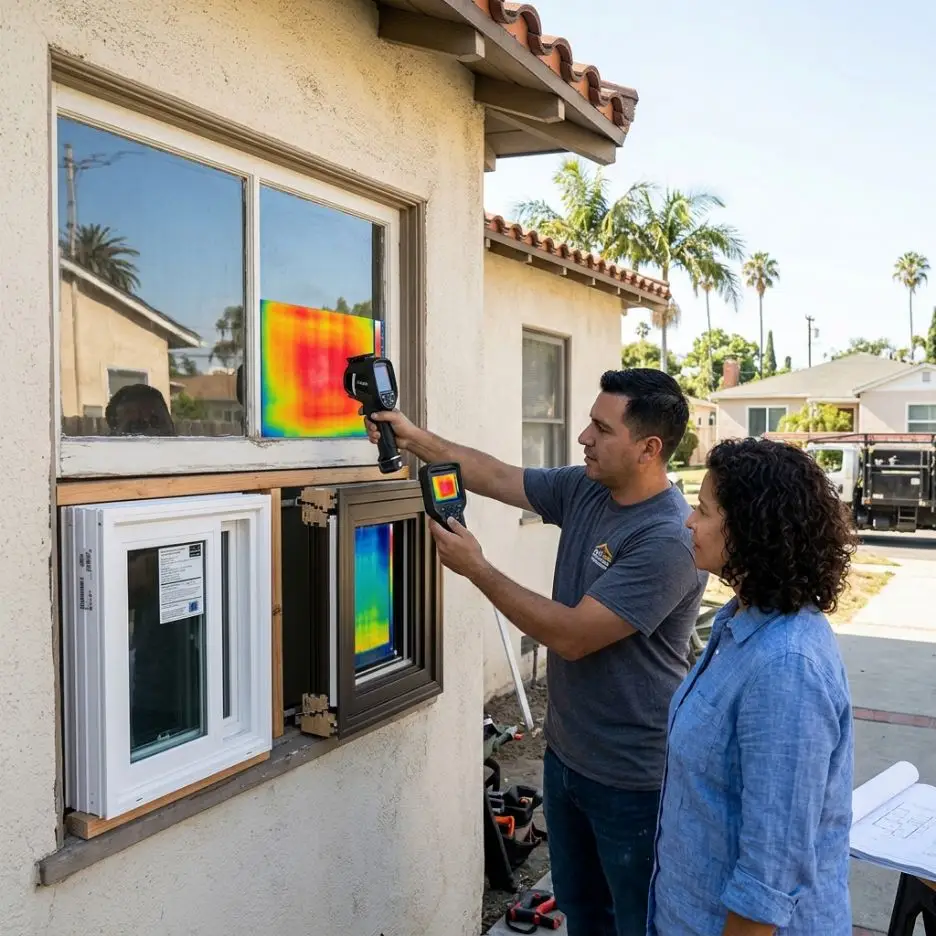
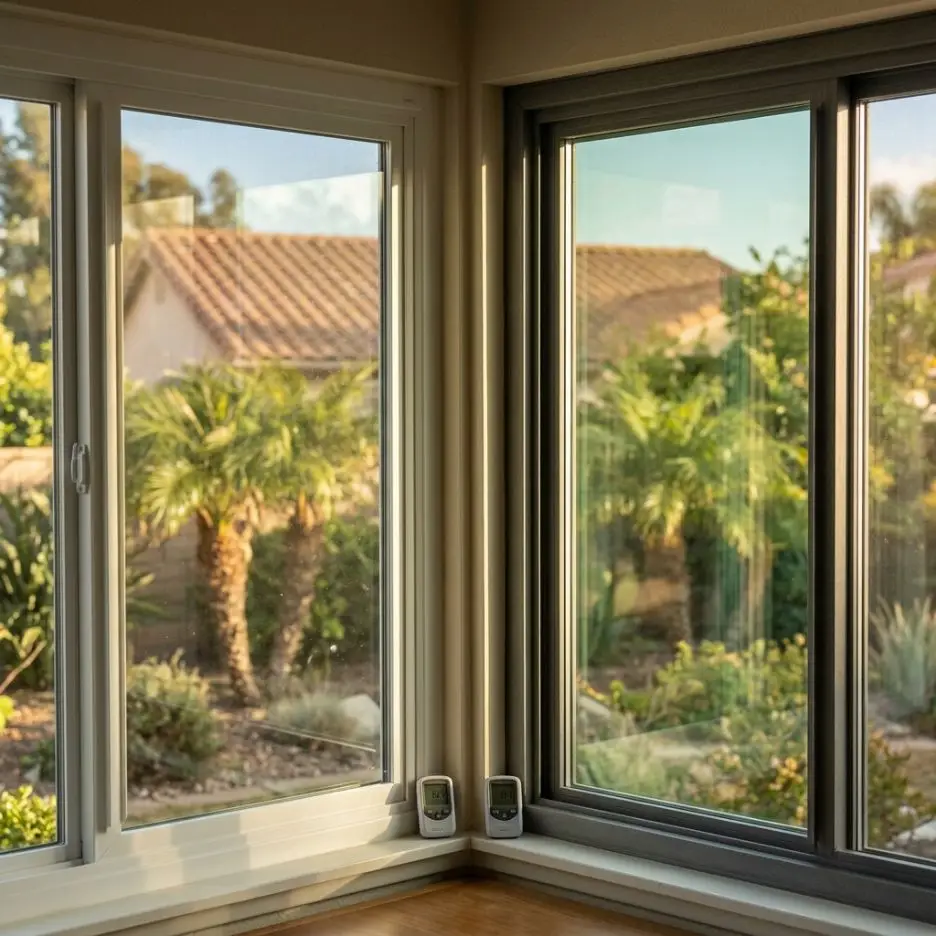
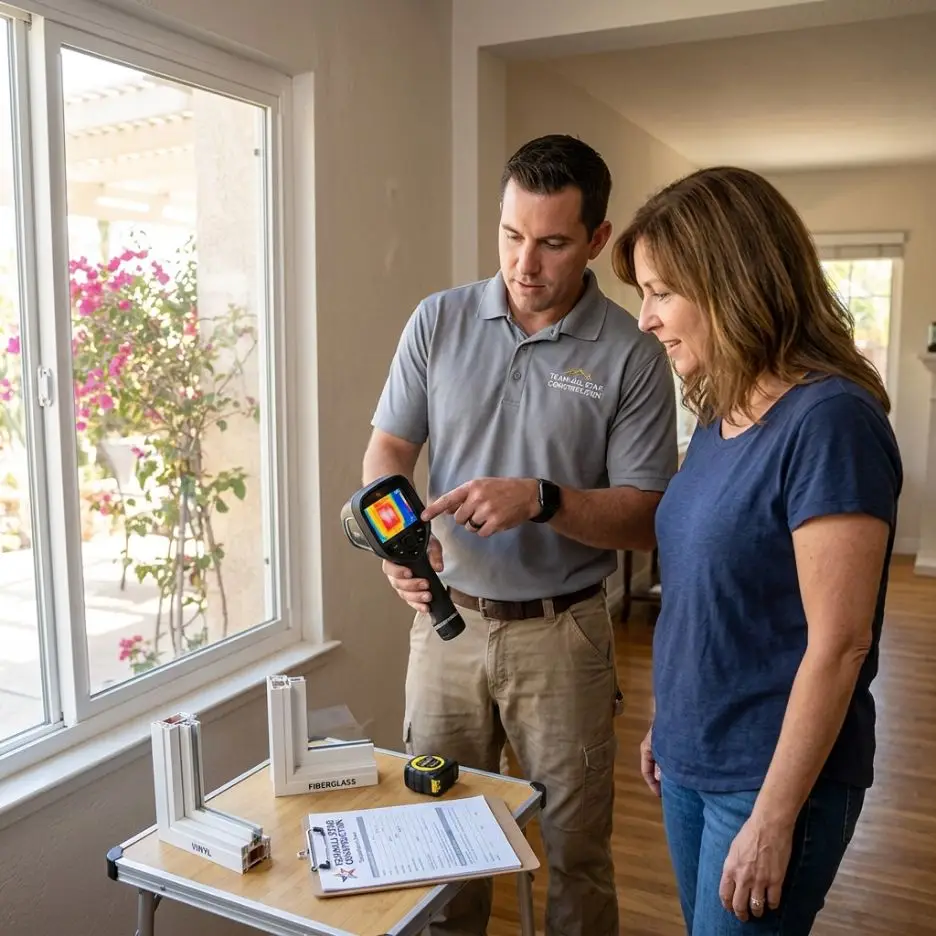
We start by measuring what’s actually happening in your home. We show you where heat is entering, how your current windows are performing, and what the problem really is.
Then we explain both vinyl and fiberglass options clearly, with actual cost comparisons specific to your home. No pressure, no sales pitch. Just clear information so you understand the choice.
We measure the potential energy savings based on your current system and local climate. We walk you through the payback calculation. We answer your questions about durability, maintenance, and long-term performance.
We provide a custom quote that accounts for your specific rough openings, aesthetic preferences, and climate location across our entire Southern California service area, including Los Angeles County, Orange County, San Bernardino County, Riverside County, and Ventura County.
We handle the entire installation with the professional expertise that makes material choice actually matter. You get the performance you’re paying for.
Getting Started With Your Window Upgrade Today
Schedule a free in-home consultation. We’ll show you what’s happening in your home right now, measure your current window performance, and explain whether vinyl or fiberglass makes more sense for your situation.
No obligation, no pressure. You’ll have clear answers and a specific cost comparison before you decide anything.
Contact us today to arrange your in-home consultation. We serve all of Southern California and can help you understand exactly which window material saves you the most money based on your home, location, and goals.
For further reading: Window replacement in SoCal.
Get a free estimate for your home. No pressure—just clear answers and straightforward pricing. Call (310) 729-3013 or visit: https://teamallstarconstruction.com/contact/
Frequently Asked Questions (FAQ)
Which window material saves more money in Southern California’s climate?
We’ve found that vinyl windows typically deliver better long-term savings for our Southern California customers because they cost less upfront and perform well in our mild, sunny climate. Fiberglass offers slightly better thermal efficiency, but the price difference means you’d need 15+ years of energy savings to break even. We help each homeowner calculate their specific savings based on their current windows, local energy costs, and cooling patterns.
Do vinyl windows hold up well in Southern California’s sun and heat?
Our vinyl windows are engineered to resist UV fading and thermal expansion across our region’s temperature swings, from coastal coolness to inland desert heat. We’ve installed thousands of vinyl systems throughout Los Angeles, Orange, San Bernardino, Riverside, and Ventura counties that maintain their appearance and performance for decades. The key is using quality vinyl with proper installation, which is why we handle both to guarantee results.
How do I know whether vinyl or fiberglass is right for my home?
We schedule in-home consultations where we assess your current windows, your home’s sun exposure, your energy goals, and your budget to recommend the material that actually makes sense for you. Neither material is universally “better” – we match the choice to your specific situation. Once we understand what you need, we’ll show you real performance data and cost comparisons so you can decide with confidence.
- Categories: Uncategorized
Southern California Window Replacement Guide
Single Pane vs Dual Pane: Which Fits Your Home?
Replacement Windows Los Angeles Homeowners Choose
Retrofit Windows vs Full Frame: Which Fits?
A Guide to Full Window Replacement at Home
Vinyl vs Aluminum Windows for Southern California
Best Windows for Hot Climates in Southern California
A Homeowner’s Guide to Energy Efficient Windows
How to Reduce Window Heat at Home
About Total Home Windows
Total Home Windows is a Southern California-based window replacement company focused on helping homeowners improve energy efficiency, indoor comfort, and long-term home value through high-performance window installations.
Serving Los Angeles County, Orange County, Riverside County, San Bernardino County, and Ventura County, the company specializes in both vinyl retrofit (insert) and full-frame window replacement. Their work is tailored to the unique demands of California homes, including intense UV exposure, coastal conditions, and heat retention issues common in older properties.
Total Home Windows combines practical installation experience with a strong focus on energy performance—helping homeowners reduce cooling costs, improve insulation, and solve common problems like rooms that stay hot even with air conditioning. Their approach prioritizes clear recommendations, transparent pricing, and solutions that make sense for each home.
The content published by Total Home Windows is built on real installation knowledge, field-tested performance insights, and current best practices in window technology, including Low-E glass, argon-filled units, and energy-efficient design strategies. Their goal is to help homeowners make informed decisions without overpaying or choosing the wrong type of window system.
Ways to Reach Us
If you’re considering window replacement, we’re here to answer questions and provide clear, professional guidance based on your home and goals.
- teamallstarconstruction@gmail.com
- 301 E.9th St Suite 415 Redlands, CA 92374