Prices and performance figures in this guide are planning examples, not a project quote or a promise of savings. Your estimate and results depend on the products, installation scope, existing home, climate, and energy use.
If you’re trying to save money on window replacement, this is one of the smartest questions you can ask:
What time of year are windows actually the cheapest?
The short answer:
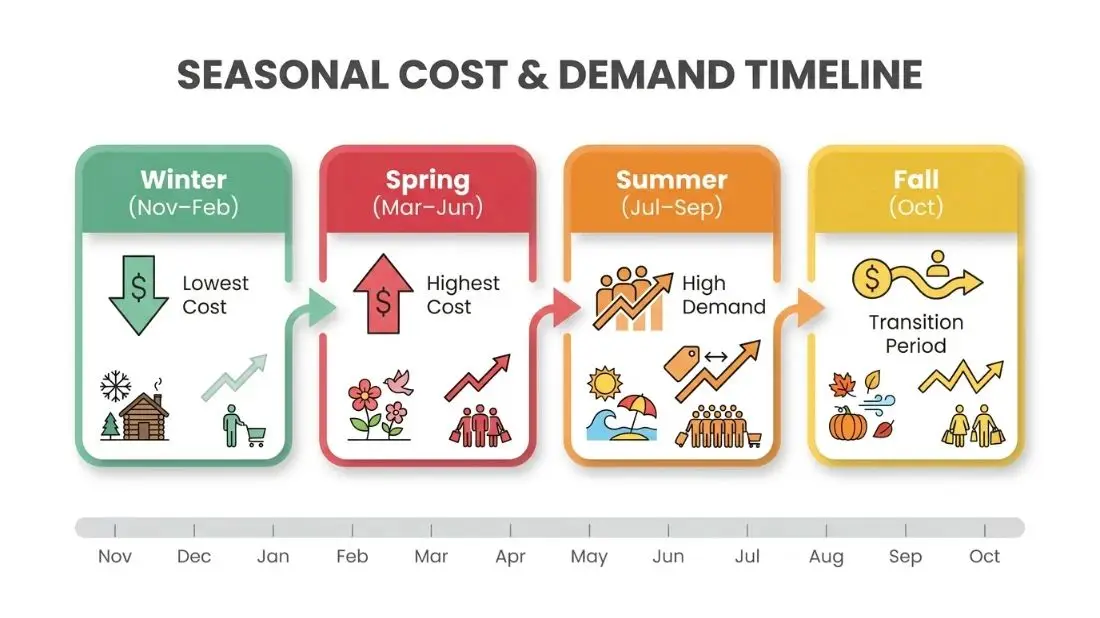
Late fall through winter (roughly November–February) is usually the cheapest time to replace windows.
But that’s only part of the story.
Because timing doesn’t just affect price—it affects:
- Installation quality
- Scheduling flexibility
- Product availability
- And even long-term performance
In this guide, we’ll break down when prices drop, why they drop, and when it actually makes sense to wait (or not wait).
Why Window Prices Change Throughout the Year
Window replacement isn’t priced like a fixed retail product.
Pricing fluctuates based on:
- Demand
- Installer availability
- Manufacturer production cycles
- Weather conditions
Here’s what that means in real terms:
→ When demand is high, prices tend to hold firm
→ When demand slows down, companies become more flexible
Window pricing follows seasonal demand—lower in winter, higher during peak spring and summer months.
The Cheapest Time of Year: Late Fall & Winter
November – February (Best Time to Save)
This is typically the slow season for window companies.
Why?
- Fewer homeowners are thinking about renovations
- Holidays shift priorities
- Cooler weather reduces urgency
As a result:
- Installers have more open schedules
- Companies are more willing to offer discounts
- Promotions are more common
→ This is where you’ll often find the best pricing opportunities.
But Here’s the Catch
Lower demand doesn’t automatically mean the best decision for every homeowner.
In our experience, homeowners who wait purely for winter pricing sometimes overlook:
- Urgent energy efficiency issues
- Comfort problems during peak heat
- Rising utility costs
If your home is already struggling with heat, this article on why your house gets hot every afternoon explains why waiting can actually cost you more in the long run.
The Most Expensive Time: Spring & Early Summer
March – June (Peak Demand Season)
This is when window demand starts to spike.
Homeowners are:
- Preparing for summer heat
- Tackling home improvement projects
- Using tax refunds or seasonal budgets
As demand increases:
- Installation schedules fill up
- Pricing becomes less flexible
- Discounts are harder to find
→ This is usually the most expensive time to replace windows.
Summer: High Demand, High Urgency
July – September
Summer is interesting.
It’s still a busy season, but for a different reason:
→ Homeowners feel the problem.
- Rooms get too hot
- AC systems struggle
- Energy bills increase
That urgency drives demand—even at higher prices.
If this sounds familiar, this guide on why your AC can’t keep up connects directly to window performance issues.
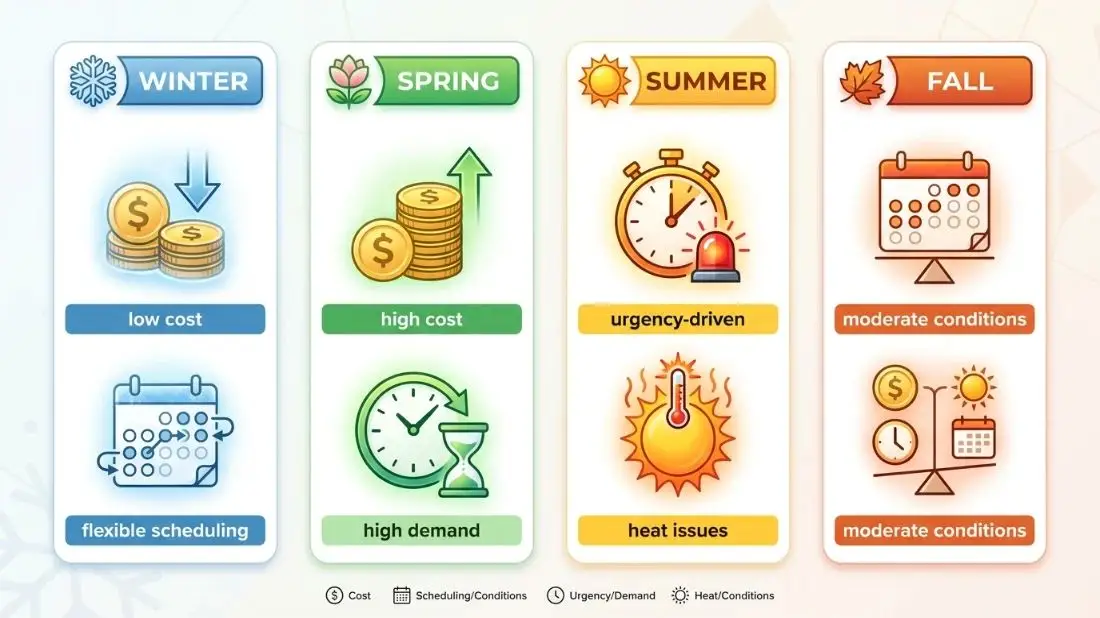
Each season comes with trade-offs—lower cost vs faster scheduling vs urgency.
So… Should You Wait for Winter to Save Money?
Not always.
Here’s the reality:
→ The cheapest time isn’t always the smartest time.
You need to balance:
- Upfront savings
- Energy costs
- Comfort
- Installation timing
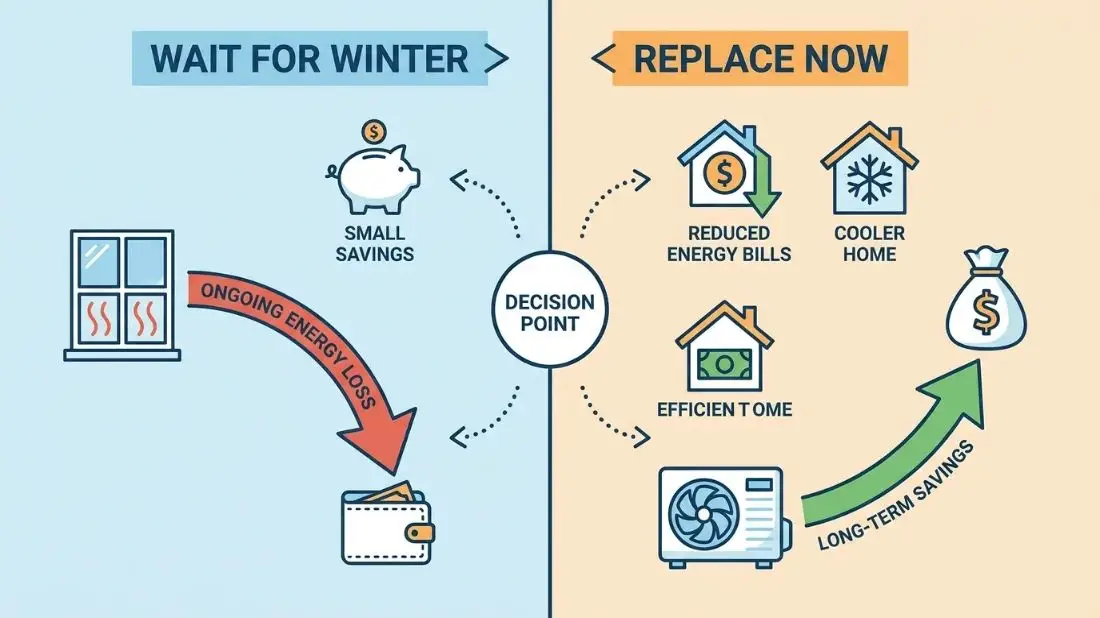
Saving 10% upfront may cost more if your home is already losing energy every day.
When Waiting Makes Sense
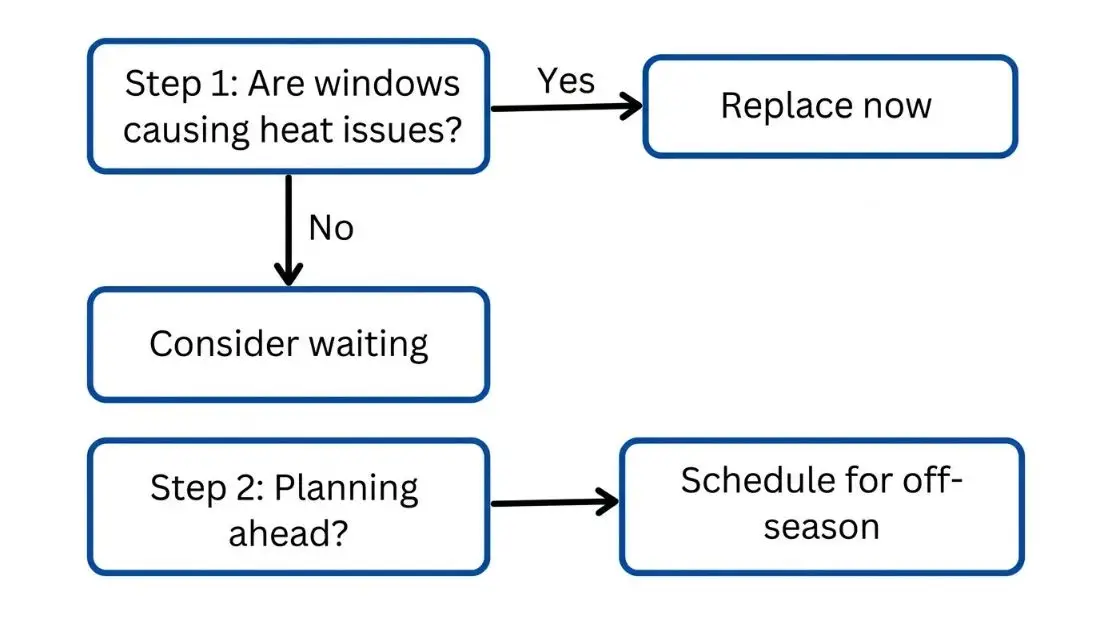
You might benefit from waiting until winter if:
- Your windows are still functional
- You’re not dealing with major heat issues
- You’re planning ahead (not reacting to a problem)
- You want to maximize discounts
When You Shouldn’t Wait
You’re often better off replacing sooner if:
- Your home gets excessively hot
- Your energy bills are rising
- Your windows feel hot to the touch
- You notice drafts or air leaks
For example, this breakdown of why window glass feels hot shows how poor-performing windows actively increase indoor temperatures.
Waiting in that situation can cost you more in cooling expenses than you save on installation.
What Actually Affects Window Pricing (More Than Timing)
Timing matters—but it’s not the biggest factor.
Here’s what has a bigger impact on your total cost:
1. Installation Type
- Retrofit (lower cost)
- Full-frame (higher cost, more labor)
If you’re comparing options, this guide on how much you should spend on replacement windows explains how installation type affects pricing.
2. Window Size & Customization
- Standard sizes cost less
- Custom openings increase cost
3. Energy Efficiency Upgrades
- Low-E coatings
- Argon gas fills
- Heat-reflective glass
These directly affect performance in California homes.
If you want to understand how that works, this article on how modern windows control radiant heat breaks it down in practical terms.
4. Installation Quality
This is the big one.
→ A cheaper install done poorly will cost more long-term.
If you’re comparing pricing benchmarks, this guide on what is a good price for replacement windows helps you evaluate whether you’re actually getting value.
How This Ties Into Overall Window Costs
If you zoom out, timing is just one piece of the bigger pricing picture.
For a full breakdown of what homeowners actually pay across California—including by window type and installation method—this window replacement cost guide connects everything together.
The Real Answer (Simple and Honest)
→ The cheapest time of year to replace windows is late fall through winter (November–February).
But…
→ The best time to replace your windows is when your home actually needs it.
Because:
- Energy loss adds up
- Comfort issues get worse
- Delays can cost more than discounts save
How Much Can You Actually Save by Timing Your Window Replacement?
Now that we’ve established that late fall through winter is usually the cheapest time, let’s answer the question most homeowners really care about:
→ How much can you realistically save by waiting?
Typical Seasonal Savings
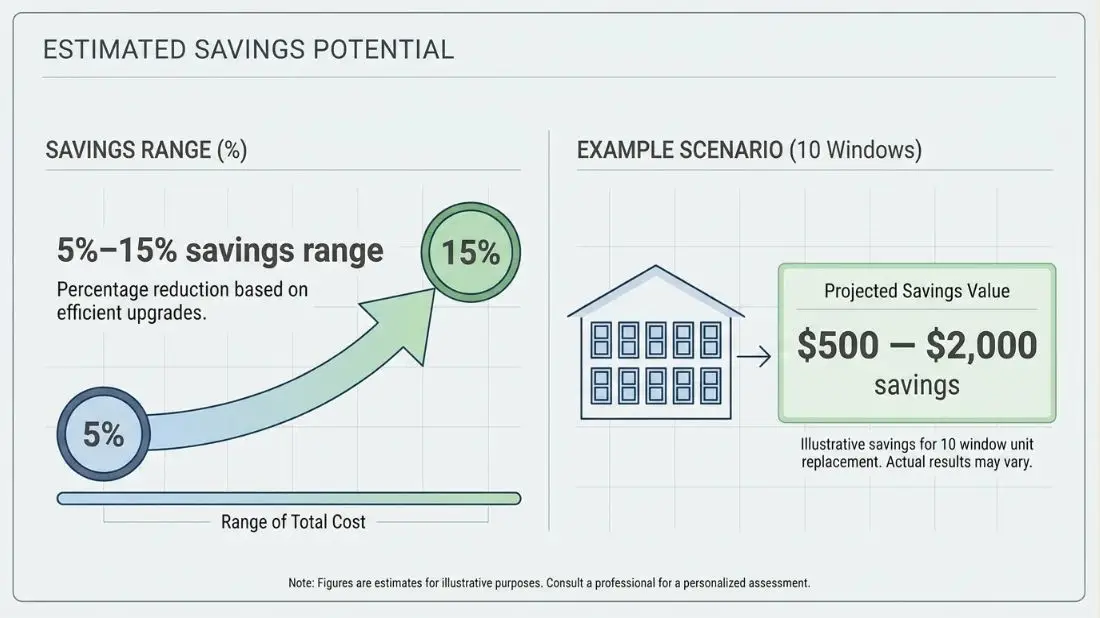
In most cases, timing your project right can save:
- 5% to 15% off total project cost
- Occasionally more during promotions or slower months
That might not sound huge—but depending on your project size, it adds up:
- 10 windows → $500 to $2,000+ in potential savings
- Full-home replacement → even more impact
Seasonal timing can reduce costs—but the impact depends on your project size.
Why Discounts Happen in the Off-Season
This isn’t random.
Window companies lower pricing (or become more flexible) during slower months because:
- Crews need consistent work
- Schedules open up
- Fewer homeowners are actively shopping
So instead of rigid pricing, you’ll often see:
- Promotional discounts
- Faster scheduling
- More negotiation flexibility
→ You’re not just saving money—you’re gaining leverage.
The Trade-Off Most Homeowners Miss
Here’s where things get more nuanced.
Saving 10% upfront sounds great—but what if:
- Your home overheats every afternoon
- Your AC is constantly running
- Your energy bills spike during summer
In that case, waiting 6–8 months could cost you more than you save.
If you’ve ever noticed this happening, this breakdown of how much heat actually comes through your windows shows why inefficient windows can quietly drive up costs.
Winter Installation: Is It a Good Idea?
A lot of homeowners hesitate to install windows in winter.
But in Southern California, this concern is usually overblown.
In reality:
- Installations are completed quickly (often same day per section)
- Openings are not left exposed long-term
- Mild winter conditions make installation manageable
→ Winter is often one of the easiest times to schedule and complete a project.
Faster Scheduling = Real Value
One of the biggest (and most overlooked) advantages of off-season replacement:
→ You won’t be waiting weeks—or months—for installation.
During peak season:
- Projects get delayed
- Installers are rushed
- Scheduling becomes limited
During slower months:
- You get more flexibility
- Crews have more time per project
- Installation quality can improve due to less pressure
Timing vs Installation Quality
Let’s be clear about something:
→ Timing should never outweigh installation quality.
A rushed summer install at a higher price is obviously not ideal.
But neither is:
- Choosing the cheapest bid in winter
- Hiring based on price alone
- Overlooking experience or specialization
Because at the end of the day:
→ A poorly installed window will cost more than any seasonal discount saves.
Comparing Seasonal Scenarios (Real-World Examples)
Scenario 1: Winter Installation (Best Price)
- Lower demand
- Potential discounts
- Faster scheduling
- More installer availability
→ Best for: proactive homeowners planning ahead
Scenario 2: Spring Installation (Highest Cost)
- High demand
- Limited flexibility
- Longer wait times
→ Best for: homeowners who prioritize timing over price
Scenario 3: Summer Installation (Urgency Driven)
- High demand
- Higher prices
- Immediate comfort concerns
→ Best for: homes with severe heat issues
If your home already struggles with heat, this article on why your house gets hot even with AC explains why waiting may not be worth it.
How to Plan Your Window Replacement the Smart Way
Instead of just asking “When is it cheapest?”, a better question is:
→ “When should I replace my windows based on my home?”
Here’s a practical approach:
Step 1: Evaluate Current Performance
- Are rooms overheating?
- Are energy bills rising?
- Do windows feel hot or drafty?
If yes → don’t wait
Step 2: Get Quotes Before Peak Season
Even if you plan to install later:
- Get quotes in late summer or early fall
- Lock in pricing if possible
- Schedule for off-season installation
Step 3: Understand Your Real Budget
Timing helps—but understanding total cost matters more.
This guide on how much you should spend on replacement windows helps you set realistic expectations based on your home.
Step 4: Compare Value, Not Just Price
Use this as a baseline:
- What’s included?
- What type of installation is recommended?
- What performance improvements will you see?
You can also compare with big-box pricing using this Home Depot installation cost breakdown, which shows how pricing varies by project type.
The right timing depends on your home—not just the calendar.
The Bigger Picture: Energy Savings vs Timing Savings
Here’s where everything comes together.
→ Saving 10% on installation is helpful
→ But reducing energy loss every month is more impactful
If your windows are inefficient, you’re paying for it daily.
This guide on how windows affect your electric bill explains how quickly those costs add up.
The Key Takeaway
Yes—timing matters.
→ Late fall and winter are typically the cheapest times to replace windows.
But the real decision should come down to:
- Your home’s current performance
- Your comfort level
- Your long-term energy costs
- The quality of installation you’re getting
FAQs: When Is the Cheapest Time to Replace Windows?
Do window prices drop during holidays?
Sometimes—but not always in the way homeowners expect.
You may see promotions around:
- Black Friday
- End-of-year sales
- Early spring events
But here’s the reality:
→ Holiday promotions are often tied to slower seasons—not the holiday itself.
That means:
- A “sale” in November or December may align with already lower demand
- Discounts can be similar (or better) outside of advertised promotions
So instead of chasing a specific holiday, focus on overall timing and total project value.
Is it worth waiting for a sale or promotion?
It depends on your situation.
Waiting can make sense if:
- Your current windows are still performing reasonably well
- You’re planning ahead and not in a rush
- You want to compare multiple quotes
Waiting may not make sense if:
- Your home gets too hot
- Your energy bills are climbing
- Your windows are clearly underperforming
For example, if your home struggles with heat gain, this article on how modern windows control radiant heat explains why delaying upgrades can cost more over time.
Are windows cheaper in winter everywhere?
Not always—but in Southern California, the trend is consistent.
Because:
- Weather is mild year-round
- Installation doesn’t slow down as much as colder regions
- Demand still drops seasonally
→ Winter remains one of the best opportunities for lower pricing and better scheduling flexibility.
Can you negotiate window replacement pricing?
Yes—especially during slower months.
In late fall and winter, companies are more likely to:
- Offer flexible pricing
- Match or beat competitor quotes
- Include upgrades or added value
→ This is when homeowners have the most leverage.
How do I know if I’m actually getting a good deal?
This is where many homeowners get stuck.
A “good deal” isn’t just about timing—it’s about what you’re getting for the price.
You should always evaluate:
- Installation type (retrofit vs full-frame)
- Energy efficiency performance
- What’s included in labor and materials
- Long-term durability
If you need a clear benchmark, this guide on what is a good price for replacement windows helps you avoid overpaying.
So, What Time of Year Are Windows the Cheapest?
Let’s answer the main question clearly:
→ The cheapest time of year to replace windows is typically late fall through winter (November–February).
That’s when:
- Demand is lowest
- Scheduling is more flexible
- Discounts are more common
But Here’s the Smarter Way to Think About It
Instead of asking:
❌ “When is the absolute cheapest time?”
Ask:
✅ “When does it make the most sense for my home?”
Because the truth is:
- Waiting might save you 5–15% upfront
- But inefficient windows can cost you every single month
If your home heats up quickly, this breakdown of why some rooms are always hotter than others shows how window performance plays a direct role.
The Bigger Cost Picture (Don’t Skip This)
Timing is just one factor.
Your total cost is also affected by:
- Window type and size
- Installation method
- Energy efficiency upgrades
- Condition of your home
If you want a complete breakdown of real pricing across California, this window replacement cost guide ties everything together.
You can also compare timing with budget planning using this guide on how much you should spend on replacement windows, which helps align your project with realistic expectations.
Final Takeaway
→ Yes, winter is usually the cheapest time to replace windows.
But:
→ The best time is when your home needs it—and when you can get quality installation at a fair price.
Because in the long run:
- Comfort matters
- Energy efficiency matters
- Installation quality matters more than timing
Get Clear Pricing for Your Home (No Guesswork)
If you’re trying to figure out the right timing—or whether it’s worth waiting—it helps to look at real numbers based on your home, not just averages.
Request a Quote or Ask Questions
- Call: (310) 729-3013
- Email: teamallstarconstruction@gmail.com
- Contact: https://teamallstarconstruction.com/contact/
We’ll help you:
- Decide if now or later makes more sense
- Break down what’s actually affecting your price
- Compare options so you don’t overpay or under-invest
No pressure—just clear, practical answers.
- Categories: Window Replacement Cost
- Tags: best time to replace windows, cheapest time window replacement, off season window installation, when to buy windows, window cost seasonal trends, window discounts timing, window installation season, window replacement deals
Southern California Window Replacement Guide
Single Pane vs Dual Pane: Which Fits Your Home?
Replacement Windows Los Angeles Homeowners Choose
Retrofit Windows vs Full Frame: Which Fits?
A Guide to Full Window Replacement at Home
Vinyl vs Aluminum Windows for Southern California
Best Windows for Hot Climates in Southern California
A Homeowner’s Guide to Energy Efficient Windows
How to Reduce Window Heat at Home
About Total Home Windows
Total Home Windows is a Southern California-based window replacement company focused on helping homeowners improve energy efficiency, indoor comfort, and long-term home value through high-performance window installations.
Serving Los Angeles County, Orange County, Riverside County, San Bernardino County, and Ventura County, the company specializes in both vinyl retrofit (insert) and full-frame window replacement. Their work is tailored to the unique demands of California homes, including intense UV exposure, coastal conditions, and heat retention issues common in older properties.
Total Home Windows combines practical installation experience with a strong focus on energy performance—helping homeowners reduce cooling costs, improve insulation, and solve common problems like rooms that stay hot even with air conditioning. Their approach prioritizes clear recommendations, transparent pricing, and solutions that make sense for each home.
The content published by Total Home Windows is built on real installation knowledge, field-tested performance insights, and current best practices in window technology, including Low-E glass, argon-filled units, and energy-efficient design strategies. Their goal is to help homeowners make informed decisions without overpaying or choosing the wrong type of window system.
Ways to Reach Us
If you’re considering window replacement, we’re here to answer questions and provide clear, professional guidance based on your home and goals.
- teamallstarconstruction@gmail.com
- 301 E.9th St Suite 415 Redlands, CA 92374