Prices and performance figures in this guide are planning examples, not a project quote or a promise of savings. Your estimate and results depend on the products, installation scope, existing home, climate, and energy use.
Why Southern California Homeowners Face Constant Heat Gain Challenges
Your air conditioner runs all day, yet your home still feels hot. The rooms facing the sun are uncomfortable, and your energy bills keep climbing. You’re not alone—Southern California homeowners deal with this constantly. The real issue isn’t that your AC isn’t working hard enough. It’s that heat is pouring into your home faster than your cooling system can handle it.
We’ve spent years diagnosing why homes overheat in Southern California, and the answer is straightforward: most of the unwanted heat comes through your windows. Once you understand where the heat is actually coming from, you can fix it at the source instead of just fighting it with higher AC bills.
Southern California’s climate creates a perfect storm for heat gain. Our intense sun, low humidity, and year-round warmth mean your home absorbs solar energy from morning until evening. Unlike other regions with seasonal cooling demands, we face this challenge almost every day of the year.
The problem intensifies if your home has an older design. West and south-facing walls get direct sun exposure for hours. Homes built before the 1990s often have single-pane or early dual-pane windows that weren’t engineered for today’s energy demands. Even homes from the 2000s frequently have windows that don’t meet current efficiency standards.
Geography compounds this too. Homes in Orange County and inland areas near San Bernardino or Riverside see higher afternoon temperatures than coastal properties. Mountain communities like those in Ventura County experience different sun angles, but the solar gain is equally intense. Regardless of where you live across our service area, your windows are letting heat pass through that your AC must then remove.
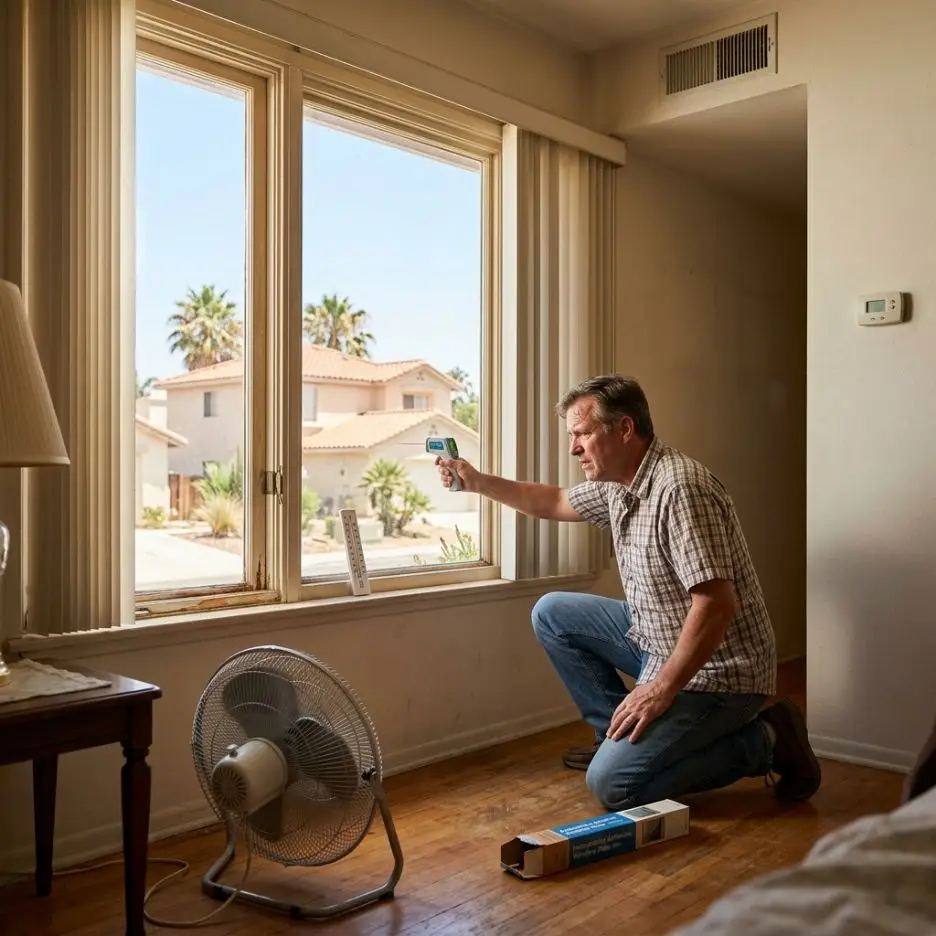
Here’s what homeowners typically experience: rooms on the sunny side of the house feel 5-10 degrees warmer than the rest of the home. You close blinds to block light, which makes rooms darker and less usable. You set the thermostat lower, which sends cooling bills through the roof. None of these band-aids address the actual problem.
The Window Problem: Your Biggest Heat Culprit
Windows are responsible for 25-40% of unwanted heat gain in most homes. That’s not a minor contributor—that’s your largest single source of heat entering your space.
Think about it physically: glass is transparent. Light passes through it. That light carries energy, and when it hits furniture, flooring, and walls inside your home, that energy converts to heat. An older window has almost no resistance to this process. It’s like having a hole in your wall that lets sunlight pour straight inside.
The problem gets worse with size. A large sliding glass door or a wall of windows on a south-facing wall can introduce enormous amounts of heat during peak sun hours. We’ve measured temperature differences in homes where rooms with older windows reached 78-82 degrees while rooms with shaded, efficient windows stayed at 72-74 degrees. That’s all solar heat gain.
Multiply this across every window in your home, add the heat that leaks through the frames and edges, and you’re cooling an enormous amount of heat that shouldn’t be entering in the first place. Your AC becomes a heat-removal machine fighting a losing battle against the sun.
How Solar Radiation Enters Through Older Windows
Solar radiation reaches Earth as visible light and infrared heat. Older windows offer virtually no filtering for either. Single-pane and basic dual-pane windows allow about 75-85% of that solar energy to pass straight through the glass into your home.
Modern low-emissivity (low-E) coatings change this equation. A microscopically thin metallic coating on the glass reflects infrared heat back outside while allowing visible light in. You still get daylight, but the heat stays out. This is the key difference between an old window and an energy-efficient one.
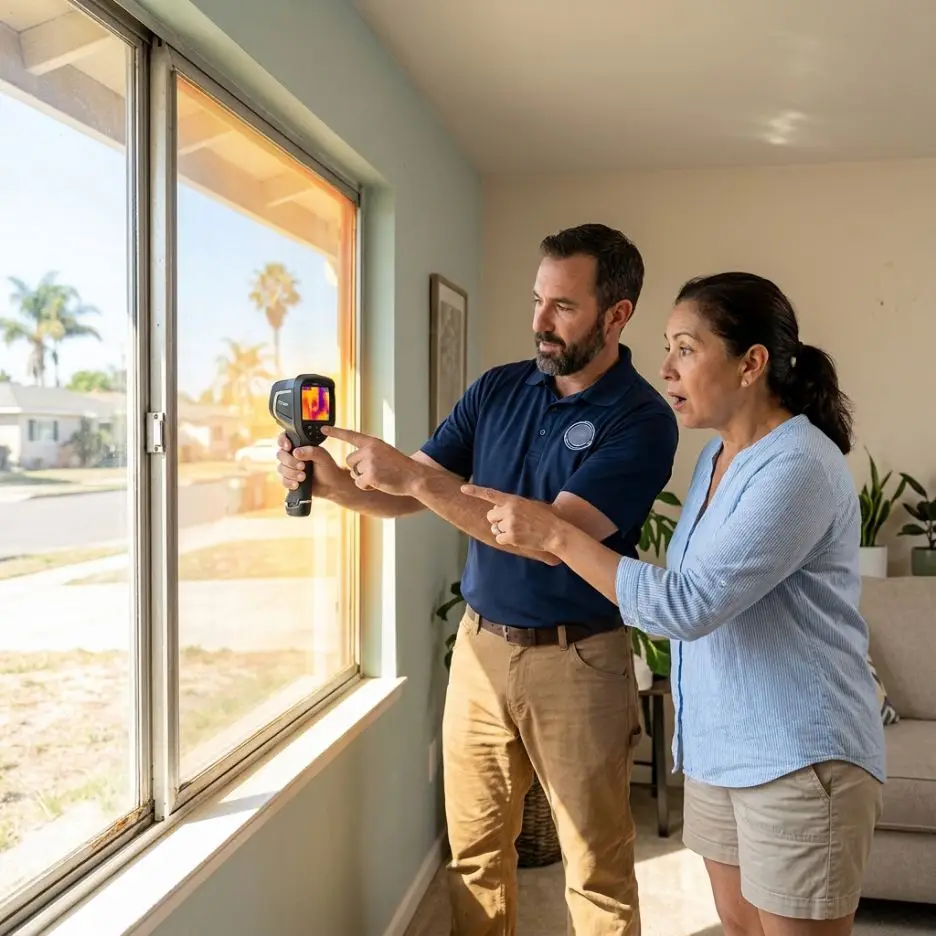
The coating is invisible to the eye, but its effect is measurable. We use thermal imaging cameras during in-home assessments to show homeowners exactly where heat is coming through. You see the problem in real time: hot spots on walls where sunlight enters through windows, temperature gradients that prove solar gain is uneven across your home.
Without this coating, your windows are essentially transparent barriers with zero heat protection. The glass itself conducts heat. The frame conducts heat. Every ray of sunlight that enters through your window becomes your AC’s responsibility.
The Role of Poor Insulation and Air Leaks
Beyond solar gain, older windows leak air. Even when they’re closed, small gaps around the frame allow hot air to infiltrate your home, especially on warm days when outdoor air is hotter than indoor air.
These leaks happen where the window frame meets the wall. Caulking degrades over time. Wood frames expand and contract with temperature changes, creating small but cumulative gaps. Aluminum frames conduct temperature directly from outside to inside, adding thermal transfer on top of air leakage.
A single poorly sealed window might not seem significant. But a home with 15-20 windows, each leaking slightly, creates multiple pathways for heat entry. We’ve measured air leakage rates that suggest some homes are cycling outdoor heat inside multiple times per hour on hot days.
When we install retrofit windows with proper sealing and modern frame materials, we eliminate these air pathways. You’re not just getting better glass; you’re getting an airtight seal that keeps hot outside air from entering in the first place.
Heat Transfer Through Walls, Roofs, and Foundations
Windows are the primary culprit, but they’re not the only entry point. Heat also transfers through walls, roofs, and even foundations, though these contribute less than windows in most cases.
Dark or uninsulated roofs absorb tremendous solar energy during the day. Heat conducts downward through the attic into living spaces. Walls facing the sun warm up on the exterior and gradually conduct that heat inward. Concrete foundations and slab-on-grade floors absorb and retain heat, slowly warming your interior space.
The difference is that you can control window heat gain with treatments like our retrofit windows. Roof and wall solutions are more complex and expensive. This is why focusing on window efficiency first delivers the fastest return on investment for most homeowners.
In our assessments, we measure how much heat is entering through each source. Typically, windows account for 60-70% of the controllable heat gain problem. That’s why our approach targets windows first.
Appliances and Indoor Heat Sources That Add Up
Heat is also generated inside your home. Lighting, appliances, cooking, and even people create internal heat loads that contribute to how hard your AC must work.
LED lighting has helped reduce this burden compared to incandescent bulbs, but older homes with halogen or incandescent fixtures still generate unnecessary heat. Cooking appliances, water heaters, and refrigerators all release heat into living spaces. In summer, these become additional burdens on your cooling system.
People themselves generate heat. A home full of family on a hot day means your AC is cooling not just the space, but removing the metabolic heat that everyone produces.
The key insight: you can’t eliminate internal heat sources (and wouldn’t want to), so controlling the external solar heat gain becomes even more critical. When you reduce the baseline heat entering through windows, your AC handles the internal loads more easily, and you use less energy overall.
Why Your Current Cooling Strategy Isn’t Working
Many homeowners try to manage heat with tactical fixes: closing blinds, running fans, adjusting the thermostat, using window films. These provide temporary relief but don’t address root causes.
Closing blinds blocks light but darkens rooms and makes spaces feel smaller and less comfortable. Fans move air around but don’t actually cool it on a hot day; they mainly work when interior temperature is lower than exterior. Lowering your thermostat forces your AC to run longer and harder, which is why your bills spike.
Window films sound promising but deliver inconsistent results. Some films reduce visible light enough that you lose the benefit of natural daylighting. Others are visibly tinted, which changes your home’s appearance. Performance varies widely, and films can cloud or bubble over time.
None of these strategies stop the heat from entering. They just manage symptoms. It’s like trying to empty a bathtub while the tap runs full blast. You can bail faster, but you’re still fighting against the source.
Our Energy-Efficient Window Solution Stops Heat at the Source
We solve this by replacing the source of the problem: the windows themselves. Our energy-efficient windows are engineered specifically to block solar heat while maintaining clear views and natural light.
Every window we install features low-E coatings that reflect infrared heat back outside. Our frames are vinyl, which provides superior insulation compared to aluminum and doesn’t conduct temperature the way metal does. Our sealing and installation process eliminates air leaks at the frame perimeter.
The result: you get daylight and views without the heat. Rooms feel noticeably cooler without running the AC harder. Energy bills drop because your cooling system isn’t fighting excess solar gain.
We’re not guessing about performance. During your in-home assessment, we measure what’s happening in your home right now using thermal imaging. We show you the exact heat patterns, the room-by-room temperature differences, and where the biggest problems are. Then we model what happens after an upgrade so you see the expected improvement before committing.
How Our Vinyl Retrofit Windows Block Solar Heat
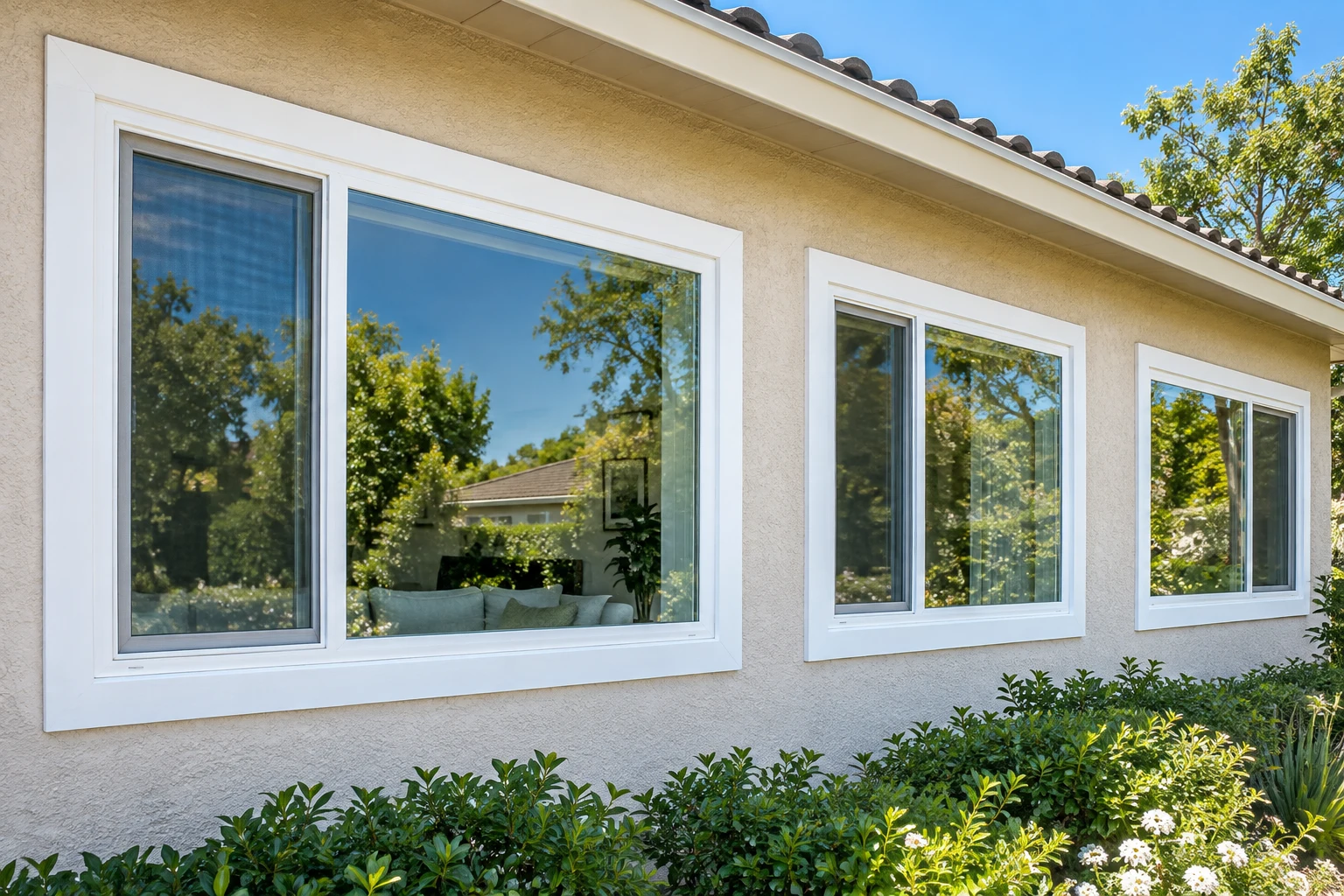
Our retrofit windows use multiple strategies to manage solar heat. The glass itself is engineered, not just standard pane material. We use spectrally selective coatings that allow beneficial light in while blocking heat wavelengths.
The coating is applied to the glass surface facing outside, creating an invisible but highly effective barrier against infrared radiation. This is the same technology used in commercial office buildings and high-performance homes, now available for residential applications.
Behind the coated outer pane, we layer insulating air space filled with argon gas (denser than air, better insulation). The inner pane provides additional temperature buffering. The frame holds everything together while providing insulation along the perimeter.
When sunlight hits one of our windows, roughly 65-70% of solar energy is blocked or reflected. Light enters your home, but the heat stays outside. In thermal imaging, you see cooler window areas compared to older windows, and you see the difference in room temperature immediately adjacent to the new windows.
This performance isn’t marketing—it’s measurable physics. We show homeowners the numbers during their assessment and again after installation, proving the improvement.
Custom-Fit Installation Eliminates Air Leaks and Drafts
Retrofit installation means we remove your old windows and install new ones in the existing frame opening, then seal everything properly. This is where most window companies cut corners, and it’s where we differentiate.
Poor sealing leaves gaps that allow air infiltration. We use multiple sealing strategies: spray foam around the frame perimeter (fills gaps completely), backer rod (compressible foam that creates a base for caulk), and flexible caulk that expands and contracts with temperature changes.
The frame itself sits firmly against the existing wall opening. We shim and level each window to ensure it’s square and sits flush. Poor installation allows the frame to twist slightly, creating gaps that leak air for years.
During installation, we also address any wall damage or deterioration around the old frame. If brick, stucco, or siding is compromised, we repair it before sealing to ensure no water intrusion or air leakage remains.
Custom manufacturing means your windows are built to your exact dimensions and specifications, not cut to fit a standard size. That precision eliminates the gaps that stock windows require.
Real Cooling Cost Savings Our Southern California Customers Experience
Energy savings vary based on your home’s current window condition, square footage, orientation, and climate zone within Southern California. Homeowners we work with typically see 15-25% reduction in cooling costs during the first summer after installation.
A homeowner in Long Beach with 18 older windows running AC six months per year might see $800-1,200 in annual cooling savings. Someone in inland San Bernardino County with higher peak temperatures and longer cooling seasons might see $1,200-1,800 annually. A Riverside County home with significant west-facing glass might see savings exceeding $2,000 per year.
These numbers come from homeowner bills and utility company data, not manufacturer estimates. We track real performance in real homes. Most of our Southern California clients recoup their investment in 7-10 years, then enjoy savings indefinitely.
Beyond energy cost, there’s comfort: rooms no longer overheat. You don’t need to close blinds all day. Your AC doesn’t need to run as hard, which means fewer mechanical failures and longer system life. You also get improved sound reduction, better UV protection for furniture and flooring, and often a more attractive window appearance.
Schedule Your In-Home Heat Gain Assessment Today
The first step is understanding what’s actually happening in your home. We’ll visit at no cost or obligation, bring thermal imaging equipment, and show you exactly where heat is entering and how much it’s affecting your cooling load.
During the assessment, we’ll measure temperature differences between rooms, identify where air leaks are occurring, discuss your current cooling bills, and ask about comfort issues you’re experiencing. We’ll then walk through what an energy-efficient retrofit would look like for your specific home.
You’ll see the problem clearly. You’ll understand the solution. And you’ll have real numbers on expected energy savings and investment cost. No pressure—just clear answers so you can make an informed decision.
We serve homeowners throughout Southern California including Los Angeles, Orange, San Bernardino, Riverside, and Ventura Counties. Whether you’re in coastal areas like Santa Monica and Newport Beach, inland regions like Irvine and Ontario, or mountain communities in Ojai and Thousand Oaks, we can visit your home and provide a personalized assessment.
Contact us today to schedule your heat gain assessment. We’ll show you where your home’s heat is coming from and exactly how to stop it.
Get a free estimate for your home. No pressure—just clear answers and straightforward pricing. Call (310) 729-3013 or visit: https://teamallstarconstruction.com/contact/
Frequently Asked Questions (FAQ)
How much heat actually comes through windows compared to other parts of my home?
We’ve found that windows are typically responsible for 25-30% of unwanted heat gain in Southern California homes, making them the single biggest culprit. While your roof, walls, and air leaks certainly contribute, windows allow solar radiation to pass directly through glass, and older single-pane or poorly sealed windows make this problem much worse. That’s why we focus on windows first when helping homeowners reduce their cooling costs.
Will upgrading to energy-efficient windows actually lower my AC bills?
Yes, our customers typically see noticeable reductions in their cooling costs, especially during our intense summer months. Our vinyl retrofit windows are specifically designed to block solar heat while allowing natural light, which means your AC doesn’t have to work as hard to maintain a comfortable temperature.
The exact savings depend on your current window condition, home size, and sun exposure, but we’re confident enough in our solutions that we discuss realistic savings during your in-home consultation.
Do you serve my area in Southern California?
We proudly install windows throughout Los Angeles, Orange, San Bernardino, Riverside, and Ventura counties. Whether you’re in a coastal community like Santa Monica or inland areas like Palm Springs, we have the region-specific expertise to handle your home’s unique heat gain challenges. Contact us to confirm service availability for your specific address.
- Categories: Uncategorized
Southern California Window Replacement Guide
Single Pane vs Dual Pane: Which Fits Your Home?
Replacement Windows Los Angeles Homeowners Choose
Retrofit Windows vs Full Frame: Which Fits?
A Guide to Full Window Replacement at Home
Vinyl vs Aluminum Windows for Southern California
Best Windows for Hot Climates in Southern California
A Homeowner’s Guide to Energy Efficient Windows
How to Reduce Window Heat at Home
About Total Home Windows
Total Home Windows is a Southern California-based window replacement company focused on helping homeowners improve energy efficiency, indoor comfort, and long-term home value through high-performance window installations.
Serving Los Angeles County, Orange County, Riverside County, San Bernardino County, and Ventura County, the company specializes in both vinyl retrofit (insert) and full-frame window replacement. Their work is tailored to the unique demands of California homes, including intense UV exposure, coastal conditions, and heat retention issues common in older properties.
Total Home Windows combines practical installation experience with a strong focus on energy performance—helping homeowners reduce cooling costs, improve insulation, and solve common problems like rooms that stay hot even with air conditioning. Their approach prioritizes clear recommendations, transparent pricing, and solutions that make sense for each home.
The content published by Total Home Windows is built on real installation knowledge, field-tested performance insights, and current best practices in window technology, including Low-E glass, argon-filled units, and energy-efficient design strategies. Their goal is to help homeowners make informed decisions without overpaying or choosing the wrong type of window system.
Ways to Reach Us
If you’re considering window replacement, we’re here to answer questions and provide clear, professional guidance based on your home and goals.
- teamallstarconstruction@gmail.com
- 301 E.9th St Suite 415 Redlands, CA 92374