Prices and performance figures in this guide are planning examples, not a project quote or a promise of savings. Your estimate and results depend on the products, installation scope, existing home, climate, and energy use.
The Problem: Why Your Windows Are Getting Too Hot
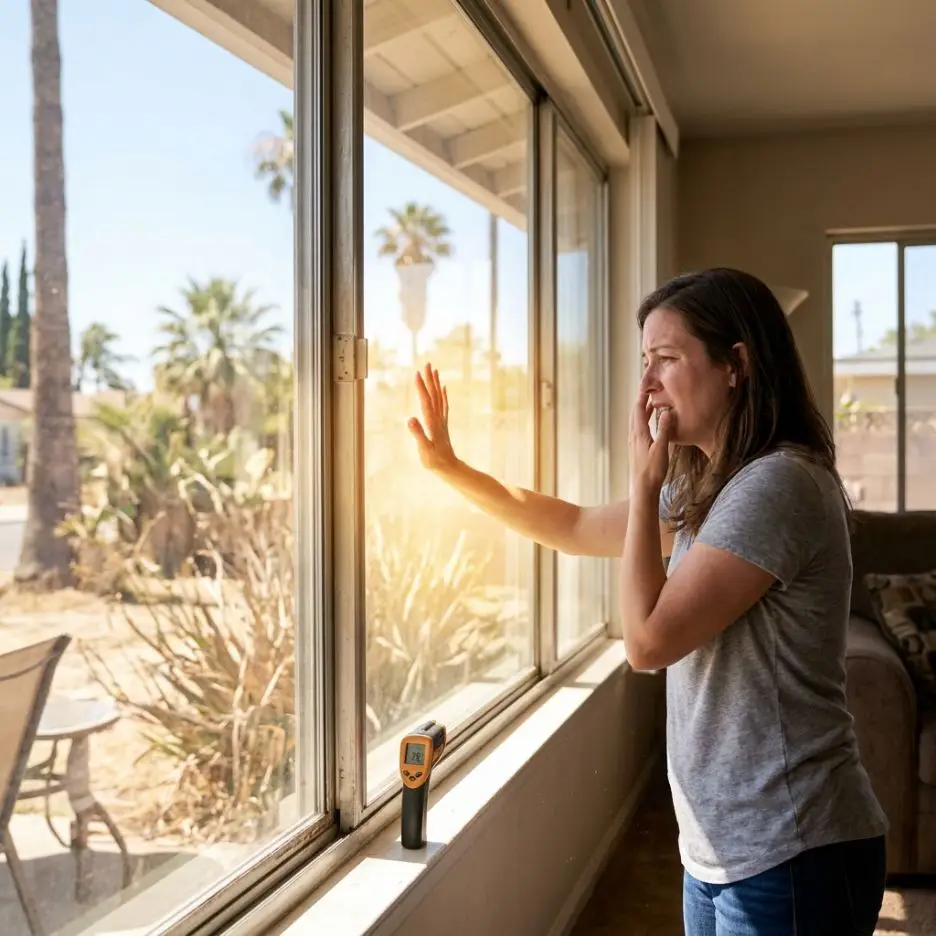
If you’ve touched your window glass on a sunny afternoon and felt heat radiating through it, your windows are doing exactly what older glass does: absorbing and transmitting solar heat directly into your home. This isn’t a minor issue. In Southern California’s climate, hot windows mean your air conditioning works harder, your energy bills climb, and your home stays uncomfortable despite cooling running constantly.
The culprit is simple: standard single-pane or older dual-pane windows lack the technology to block heat. Glass conducts thermal energy efficiently. When sunlight hits the glass, that energy passes through and heats your interior surfaces, furniture, and air. Your thermostat responds by running the AC longer and harder.
We see this every day in homes across Los Angeles County, Orange County, Riverside, San Bernardino, and Ventura counties. Homeowners assume their AC is failing when the real problem is upstairs in their windows. Understanding this distinction changes everything about your cooling costs and home comfort.
How Heat Transfer Works in Your Current Windows
Heat moves through windows in three primary ways: conduction, convection, and radiation. Conduction occurs when heat passes directly through the glass itself. Older windows lack barriers to slow this process. Convection happens when warm air on the exterior surface of the glass transfers energy inward. Radiation is solar energy that travels through transparent glass as light and converts to heat once inside.
Standard dual-pane windows provide minimal defense against these three mechanisms. The air gap between panes helps somewhat, but without modern low-emissivity coatings, that gap does little to stop infrared radiation. The frame materials matter too. Aluminum frames conduct heat efficiently, which means frame areas become thermal bridges that funnel heat directly into your home.
This is why window glass feels hot to the touch. You’re literally feeling conductive heat transfer in action.
The Hidden Cost of Hot Windows: Energy Bills and Comfort
Your energy bills reflect this heat transfer directly. During cooling season, hot windows force your HVAC system to compensate continuously. In homes throughout Southern California, we regularly see cooling costs increase 15-25% when windows are the primary heat source rather than an insulated barrier.
Beyond dollars, comfort suffers. Rooms with western or southern exposure become uncomfortably warm even when the AC runs. You find yourself closing blinds and curtains, which defeats the purpose of having windows. Family members adjust thermostats inconsistently, wasting energy. These quality-of-life issues compound over months and years.
The financial impact extends beyond monthly bills. Higher demand on your cooling system accelerates wear. Components fail sooner. Repair costs mount. A window upgrade reduces this strain systematically, protecting your HVAC investment while lowering operating costs.
What Poor Window Design Actually Does to Your Home
Old or poorly installed windows create uneven temperature zones throughout your home. Rooms with significant window exposure feel warmer. Your AC runs unevenly. Some spaces reach comfortable temperatures while others lag behind. You end up adjusting the thermostat to cool the hottest zone, which over-cools other areas.
This cycling also invites drafts in winter and inconsistent heating. The same windows that let heat in during summer allow heat escape in cold months. Your heating bills climb for the same reasons cooling bills do. It’s a year-round energy penalty.
There’s also a humidity component. Single-pane and older windows don’t provide moisture barriers. Interior condensation can form. Over time, this leads to mold growth, wood rot around frames, and degraded insulation in nearby walls. We’ve seen this pattern in homes from Pasadena to Temecula.
How Modern Energy-Efficient Windows Stop Heat Transfer
Modern vinyl windows use multiple technologies to intercept heat before it enters your home. Low-emissivity coatings reflect infrared radiation back outside while allowing visible light through. Insulated frames provide structural support without conducting heat. Multi-chamber designs in the frame reduce thermal bridging. Gas fills (typically argon or krypton) between panes slow conduction and convection.
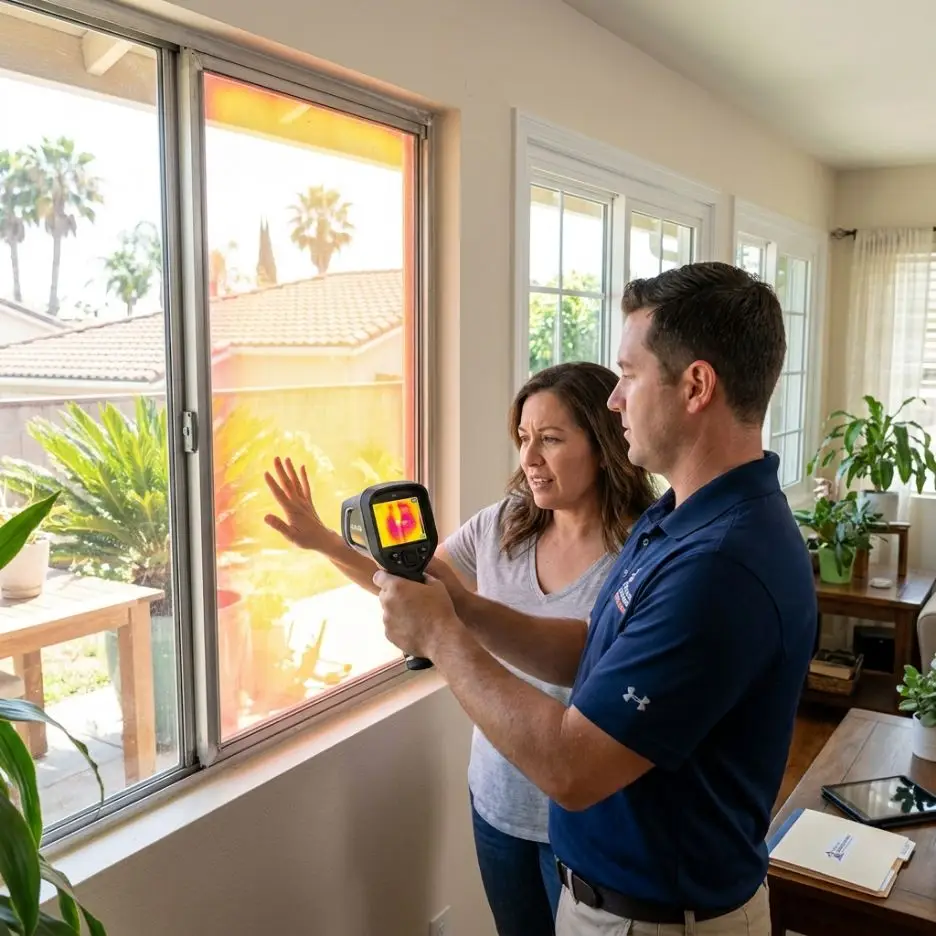
The result is measurable: modern windows reject 60-75% of solar heat compared to standard windows. That’s not a marketing claim. It’s a physics specification you can verify with an infrared thermometer. When we place a thermal camera on your home, the difference becomes visible.
We’ve installed thousands of vinyl replacement windows across Southern California, and the pattern is consistent. Homeowners report more even temperatures throughout their homes. AC cycles become shorter and less frequent. Window surfaces stay noticeably cooler to the touch.
Our Custom Vinyl Window Solutions for Southern California Homes
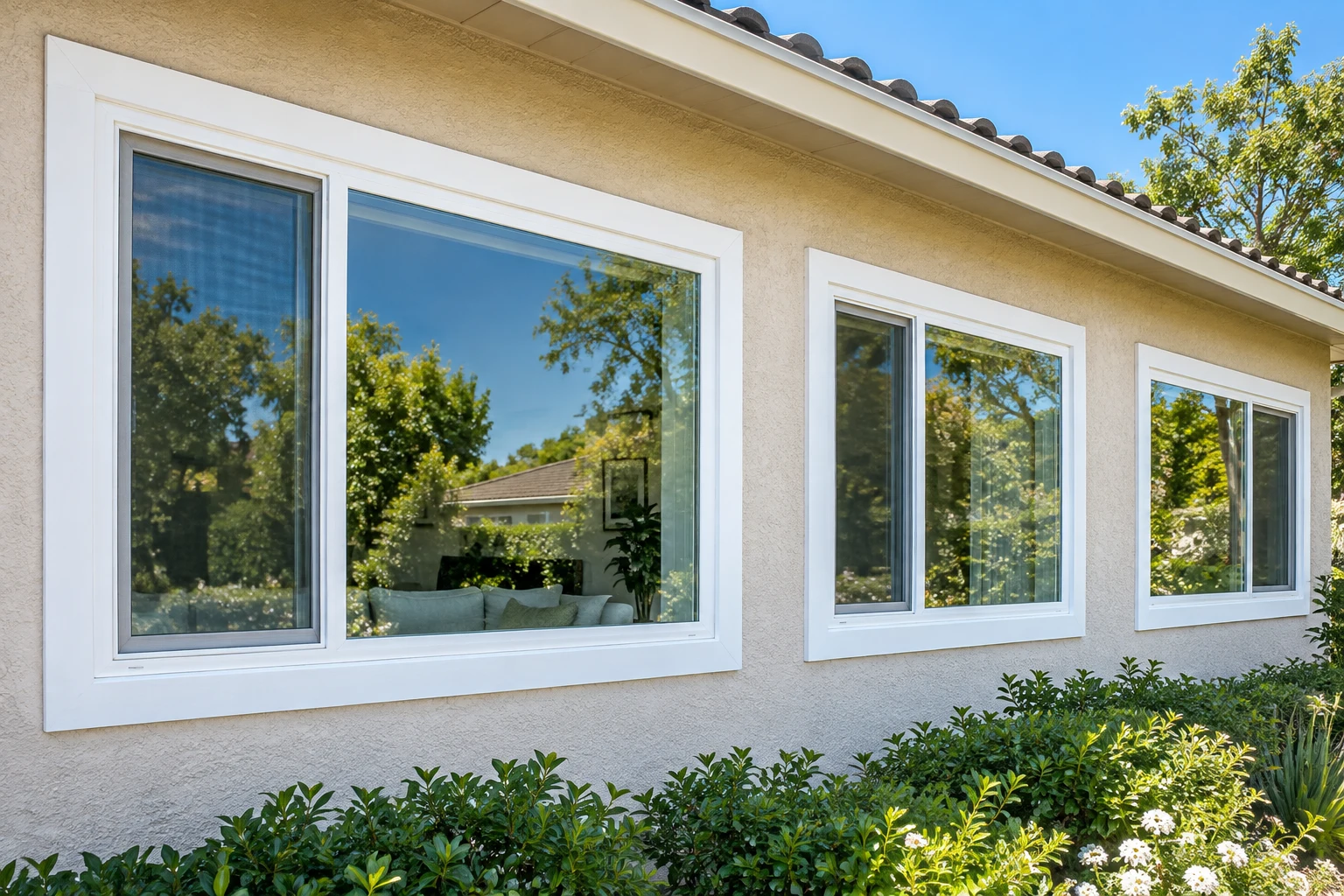
We design vinyl replacement windows specifically for Southern California’s climate and sun exposure patterns. Our energy-efficient window upgrades account for the intense summer heat, coastal salt spray conditions, and year-round UV exposure that homeowners face from Los Angeles to the Inland Empire.
Our vinyl frames don’t conduct heat like aluminum does. The multi-chamber design provides structural strength while minimizing thermal transmission. We customize each installation based on your home’s orientation, existing window sizes, and your specific comfort goals. A west-facing bedroom receives different specifications than a north-facing kitchen.
We also handle both retrofit installations (new windows in existing frames) and full-frame replacements. Retrofit works well when existing frames are sound. Full-frame replacement is necessary when frame damage has occurred or when you’re replacing unusually sized or shaped windows. Our in-home assessment determines which approach makes sense for your situation.
The Real Difference Between Standard and High-Performance Windows
Standard replacement windows meet minimum building codes. High-performance windows exceed those standards intentionally to address Southern California’s specific heat challenges. The difference shows up in specifications like U-factor (how much heat passes through) and Solar Heat Gain Coefficient (SHGC, how much solar radiation enters).
Standard dual-pane windows typically have U-factors around 0.30-0.35 and SHGC values of 0.25-0.30. High-performance windows drop to 0.20-0.25 U-factor and 0.15-0.20 SHGC. Those numbers represent real cooling reductions. In practical terms, high-performance windows mean your AC compressor runs 10-15 minutes less per hour on hot days.
We recommend high-performance options for homes with significant southern or western exposure. For other orientations, standard energy-efficient windows provide excellent value without premium costs. The choice depends on your home’s specifics, which is why we assess each property individually rather than applying one solution everywhere.
Why Professional Installation Matters for Window Performance
Proper installation determines whether your windows perform according to specifications. Gaps around frames defeat insulation. Incorrect sealing allows air infiltration and moisture intrusion. Poor flashing creates water entry points. We’ve seen many cases where quality windows performed poorly because installation shortcuts undermined their design.
Our installation process includes measuring interior and exterior dimensions precisely, ensuring proper frame alignment, sealing penetrations completely, and verifying performance with thermal imaging. We test for air leaks after installation. This level of care ensures your windows perform exactly as designed.
Installation quality also affects longevity. Windows properly sealed and flashed last decades without degradation. Poorly installed windows develop problems within years. The installation is really half the performance equation.
How We Assess Your Home’s Specific Window Needs
We start with an in-home visit to evaluate your current windows, home orientation, insulation condition, and your specific concerns. We listen to where you feel heat, where your AC runs most, and what comfort improvements matter most to you. This conversation informs everything that follows.
Then we measure. We use thermal imaging to see where heat is actually entering your home. We identify your home’s thermal load accurately rather than guessing. You see the heat problem directly. This clarity helps you understand why upgrades matter and what to expect from improvements.
Based on these findings, we recommend specific window specifications for different areas of your home. A south-facing living room might get different glass coatings than a north-facing bedroom. We explain the reasoning for each recommendation so you understand the choices, not just the prices.
The Long-Term Savings You’ll See with New Windows
Most Southern California homeowners see cooling cost reductions of 12-20% after window replacement. In hot climates or homes with poor existing windows, reductions reach 25-30%. These savings begin immediately and compound annually as energy costs typically increase.
Financing may be available through third-party lenders for qualified applicants. Availability, APR, fees, down payment, and repayment terms depend on the lender and approval. Review the complete loan terms before accepting.
We’ve also observed that homeowners recovering from heat issues often increase living space usage. Rooms previously too hot to occupy comfortably become livable. This indirect benefit doesn’t show on energy bills, but it improves daily quality of life significantly.
The payback period typically ranges 8-12 years depending on your current window condition and energy costs. After that period, you’re essentially running your cooling system more efficiently at no additional investment. When replacement windows also address frame rot, air leaks, or aesthetic upgrades, the value calculation becomes even stronger.
Getting Started: Your Free In-Home Window Consultation
We offer free in-home consultations throughout Southern California. No pressure, no obligation. We show up, assess your home honestly, and explain what we find using thermal imaging so you see the problem directly. You decide whether window replacement makes sense for your situation.
Schedule your consultation by visiting our website or calling to arrange a time that works for your schedule. We serve Los Angeles, Orange, Riverside, San Bernardino, and Ventura counties, and we’re familiar with the specific heat and cooling challenges homes face across the region.
During the consultation, bring any questions about performance, costs, or timelines. We’ll walk through options clearly and let the data from your home guide the conversation. You’ll leave understanding exactly what’s happening in your home and what realistic improvements look like.
Your window glass feels hot because it’s doing what unprotected glass does. That’s fixable. Let’s show you how.
Get a free estimate for your home. No pressure—just clear answers and straightforward pricing. Call (310) 729-3013 or visit: https://teamallstarconstruction.com/contact/
Frequently Asked Questions (FAQ)
Why does my window glass feel hot to the touch on sunny days?
Your windows are allowing thermal energy to pass directly through the glass and into your home. Standard single-pane or older dual-pane windows lack the advanced coatings and gas fills that modern energy-efficient windows use to reflect heat. When we assess your windows, we’re looking at how much solar heat is actually penetrating your home rather than being blocked at the glass surface.
How much will I save on cooling costs if we replace my windows?
Our customers typically see 15-25% reductions in cooling costs, though your specific savings depend on your current window condition, home orientation, and local climate patterns. We perform a detailed in-home evaluation to calculate realistic savings based on your exact situation rather than providing generic estimates. These savings compound year after year, which is why investing in quality vinyl replacement windows pays for itself within 7-10 years for most Southern California homeowners.
What makes your vinyl replacement windows different from standard options?
We customize each window to your home’s specific frame dimensions and thermal needs rather than forcing standard sizes into your openings. Our vinyl windows use low-emissivity coatings and insulated frames that actually stop heat transfer at the glass, and we handle the entire installation process to ensure proper sealing and performance. The combination of custom manufacturing plus professional installation is what prevents the hot glass problem you’re experiencing now.
- Categories: Window Heat & Home Comfort Problems, Window Testing & Performance Guides
- Tags: fix hot windows, heat transfer windows, hot window glass causes, solar heat gain windows, why glass gets hot, window heat problem, window heat solutions, window insulation issues
Southern California Window Replacement Guide
Single Pane vs Dual Pane: Which Fits Your Home?
Replacement Windows Los Angeles Homeowners Choose
Retrofit Windows vs Full Frame: Which Fits?
A Guide to Full Window Replacement at Home
Vinyl vs Aluminum Windows for Southern California
Best Windows for Hot Climates in Southern California
A Homeowner’s Guide to Energy Efficient Windows
How to Reduce Window Heat at Home
About Total Home Windows
Total Home Windows is a Southern California-based window replacement company focused on helping homeowners improve energy efficiency, indoor comfort, and long-term home value through high-performance window installations.
Serving Los Angeles County, Orange County, Riverside County, San Bernardino County, and Ventura County, the company specializes in both vinyl retrofit (insert) and full-frame window replacement. Their work is tailored to the unique demands of California homes, including intense UV exposure, coastal conditions, and heat retention issues common in older properties.
Total Home Windows combines practical installation experience with a strong focus on energy performance—helping homeowners reduce cooling costs, improve insulation, and solve common problems like rooms that stay hot even with air conditioning. Their approach prioritizes clear recommendations, transparent pricing, and solutions that make sense for each home.
The content published by Total Home Windows is built on real installation knowledge, field-tested performance insights, and current best practices in window technology, including Low-E glass, argon-filled units, and energy-efficient design strategies. Their goal is to help homeowners make informed decisions without overpaying or choosing the wrong type of window system.
Ways to Reach Us
If you’re considering window replacement, we’re here to answer questions and provide clear, professional guidance based on your home and goals.
- teamallstarconstruction@gmail.com
- 301 E.9th St Suite 415 Redlands, CA 92374