Prices and performance figures in this guide are planning examples, not a project quote or a promise of savings. Your estimate and results depend on the products, installation scope, existing home, climate, and energy use.
Why Your Current Windows Are Costing You Money
Your air conditioning is working overtime, but your home still feels hot. The problem isn’t always your AC unit. Heat is entering your home through your windows faster than your cooling system can handle it.
Older windows, single-pane glass, and poor seals let thermal energy pass right through. During a Southern California summer, this means your AC runs constantly while you pay for cooling that escapes through inefficient glass. We’ve measured this in hundreds of homes across Los Angeles, Orange, San Bernardino, Riverside, and Ventura counties, and the pattern is consistent: families spend hundreds of dollars extra each year because their windows don’t slow heat transfer.
The real cost isn’t just in your electric bill. It’s also in comfort. Hot spots near windows, uneven cooling, and that feeling that no amount of AC helps. That happens because thermal performance matters.
Understanding Window Thermal Performance Ratings Explained
Window thermal performance ratings are a standardized way to measure how well a window resists heat flow. They’re not opinions or marketing claims. They’re measurable numbers that tell you exactly how much thermal energy will pass through a window under specific conditions.
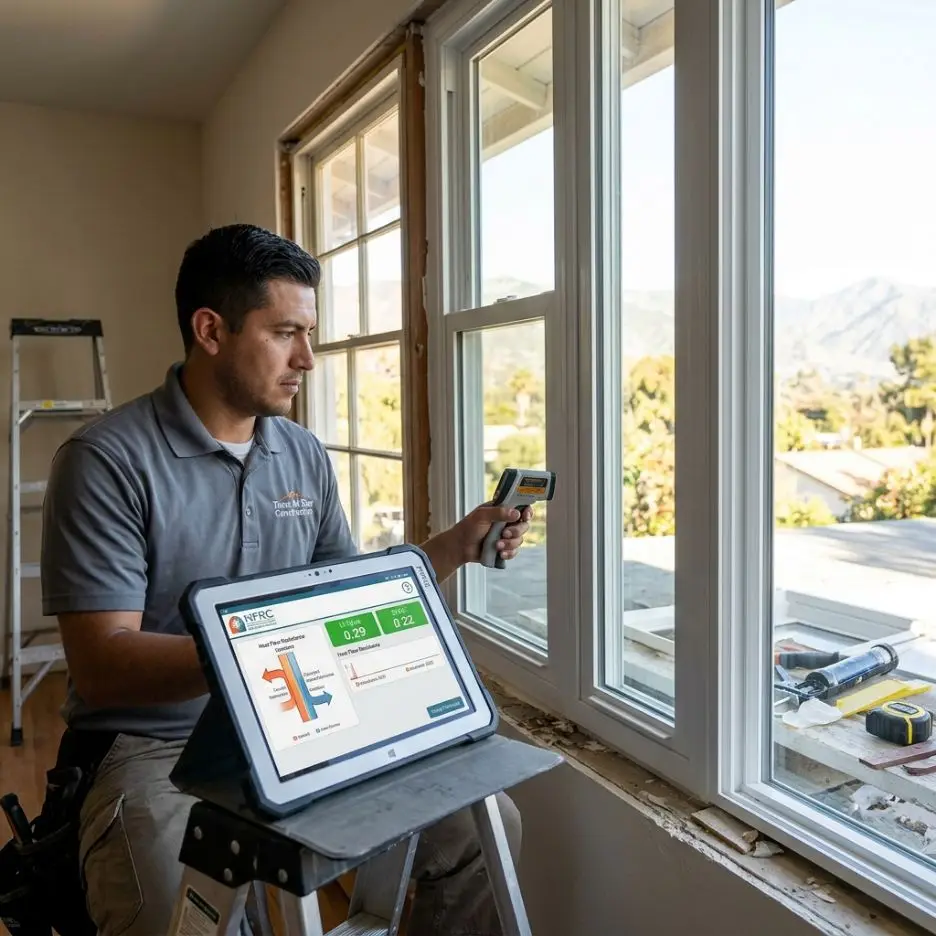
These ratings exist because the National Fenestration Rating Council (NFRC) tests windows in laboratories and assigns numbers. Every thermal rating you see on a quality window has been tested the same way, which means you can compare windows directly without guessing.
Understanding these ratings takes the guesswork out of choosing replacement windows. Instead of hearing “high-quality” or “energy efficient,” you see actual performance data. This is how we help homeowners make decisions based on facts, not marketing.
What U-Values and Solar Heat Gain Coefficients Actually Mean
Two numbers drive window thermal performance: U-value and Solar Heat Gain Coefficient (SHGC). Both matter for Southern California homes, and understanding the difference is critical.
U-value measures how much heat flows through a window from the warm side to the cool side. Lower numbers are better. A U-value of 0.30 means less heat passes through than a window with a U-value of 0.45. In Southern California, where you’re fighting heat from outside to inside, lower U-values reduce the cooling load on your home.
SHGC measures how much solar radiation (the sun’s heat) enters through the window. Again, lower is better when you’re trying to keep heat out. An SHGC of 0.25 blocks more of the sun’s heat than an SHGC of 0.50. During summer months when the sun is intense, this difference directly impacts how much your AC has to work.
Here’s the practical connection: A double-pane vinyl window with a U-value of 0.32 and SHGC of 0.28 will keep your home significantly cooler than an older single-pane window with a U-value of 0.85 and SHGC of 0.80. The difference compounds across every window in your home.
How Climate Zone Ratings Apply to Southern California
The NFRC divides North America into climate zones, and Southern California spans multiple zones depending on location and elevation. Coastal areas like Santa Monica and Newport Beach are in different zones than inland areas like San Bernardino or Riverside. Even within Los Angeles County, Malibu and Downtown LA have different thermal demands.
Why does this matter? Because the ideal window rating for your home depends on your specific location. Homes near the coast benefit from different performance priorities than homes in the desert regions of Barstow or Indio.
We assess your home’s climate zone as part of our consultation. This isn’t generic advice. It’s specific to where you live. A window that’s perfect for a home in Thousand Oaks might not be the best choice for a home in Palm Springs, where solar heat gain is more aggressive. Understanding your zone ensures you’re not paying for performance you don’t need and not under-specifying in areas where heat control matters most.
The Real Impact of Thermal Performance on Your Energy Bills
The difference between a poor-performing window and a high-performance window isn’t small. We’ve measured real energy savings in homes throughout Southern California, and the numbers are consistent.
Consider a typical Southern California home with 20 windows averaging 15 square feet each (300 square feet of total window area). If those windows have poor thermal ratings, heat gain through windows alone can add 5,000-8,000 BTU per hour during peak summer conditions. Your AC has to cool that incoming heat, running longer and consuming more electricity.
When homeowners upgrade to windows with better U-values and lower SHGC ratings, we see energy bill reductions of 10-20% during cooling season, sometimes higher in homes with extensive glass exposure or older original windows. The exact savings depend on your current window condition, your home’s orientation, and your usage patterns, but the direction is always the same: better thermal performance equals lower cooling costs.
Beyond dollars, there’s comfort. Better thermal performance means more even temperature distribution, fewer hot spots, and your AC system cycling less frequently. That’s not just cost savings. That’s livability.
Our Custom-Fit Vinyl Window Solutions for Maximum Thermal Efficiency
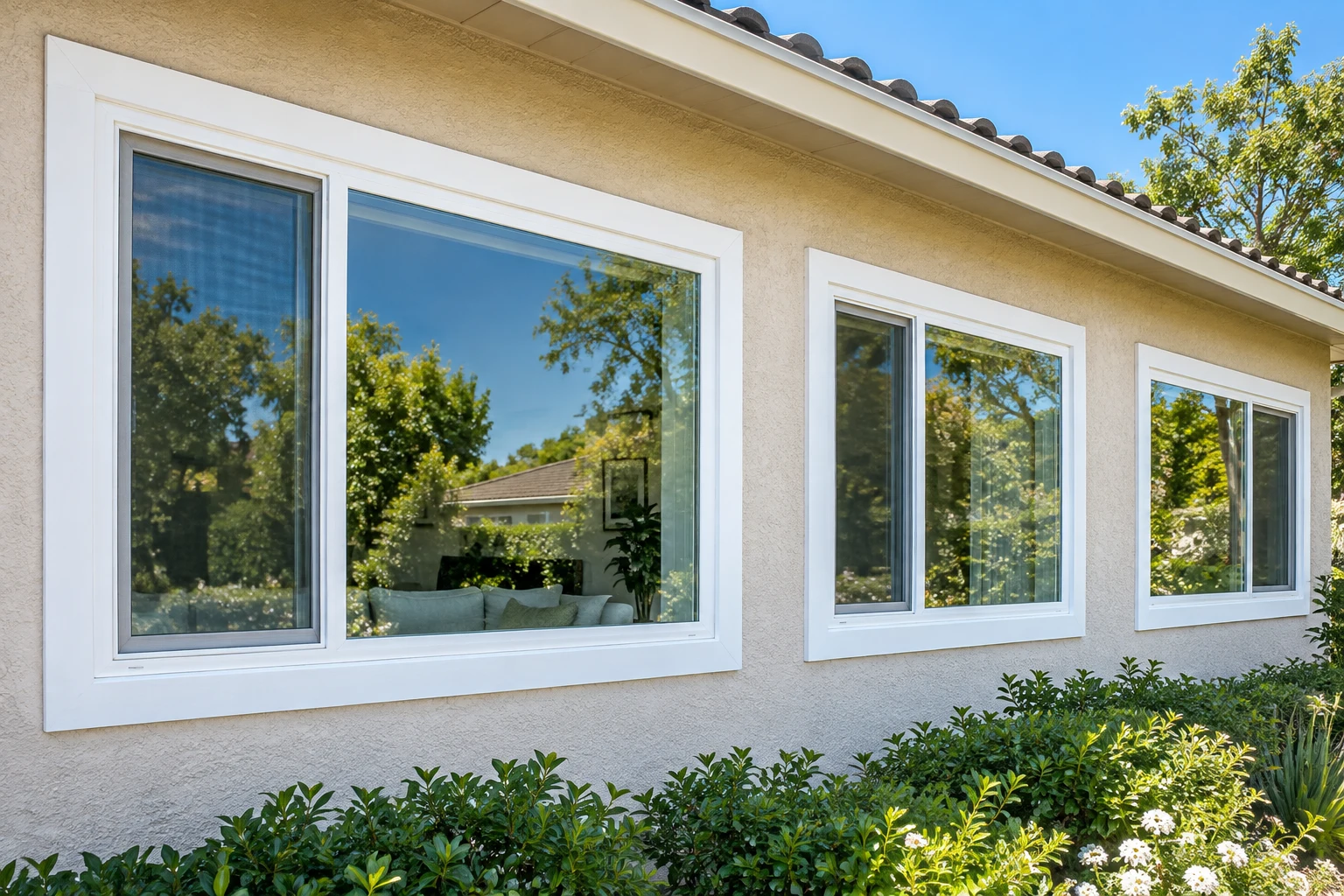
We manufacture and install vinyl windows engineered specifically for Southern California’s thermal challenges. Our vinyl windows use multi-chamber frames and advanced glazing options to deliver U-values between 0.28-0.35 and SHGC ratings between 0.22-0.32, depending on the configuration you choose.
Why vinyl? Because vinyl doesn’t conduct heat the way metal does. A vinyl frame resists thermal transfer, which is why vinyl windows consistently outperform aluminum frames in energy efficiency testing. We can customize the glazing, coating, and gas fill between panes to match your specific home’s needs and location within Southern California.
We don’t sell one-size-fits-all windows. We build solutions. If your home is in Rancho Cucamonga with intense sun exposure, we might recommend a lower SHGC than a home in Ventura with more marine influence. If your home has specific architectural requirements, we custom-fit the frames. This customization is what separates a generic window replacement from a solution that actually improves your home’s thermal performance.
When you upgrade your windows, you’re choosing performance specifications matched to your actual climate and comfort needs.
Professional In-Home Consultation to Assess Your Window Performance Needs
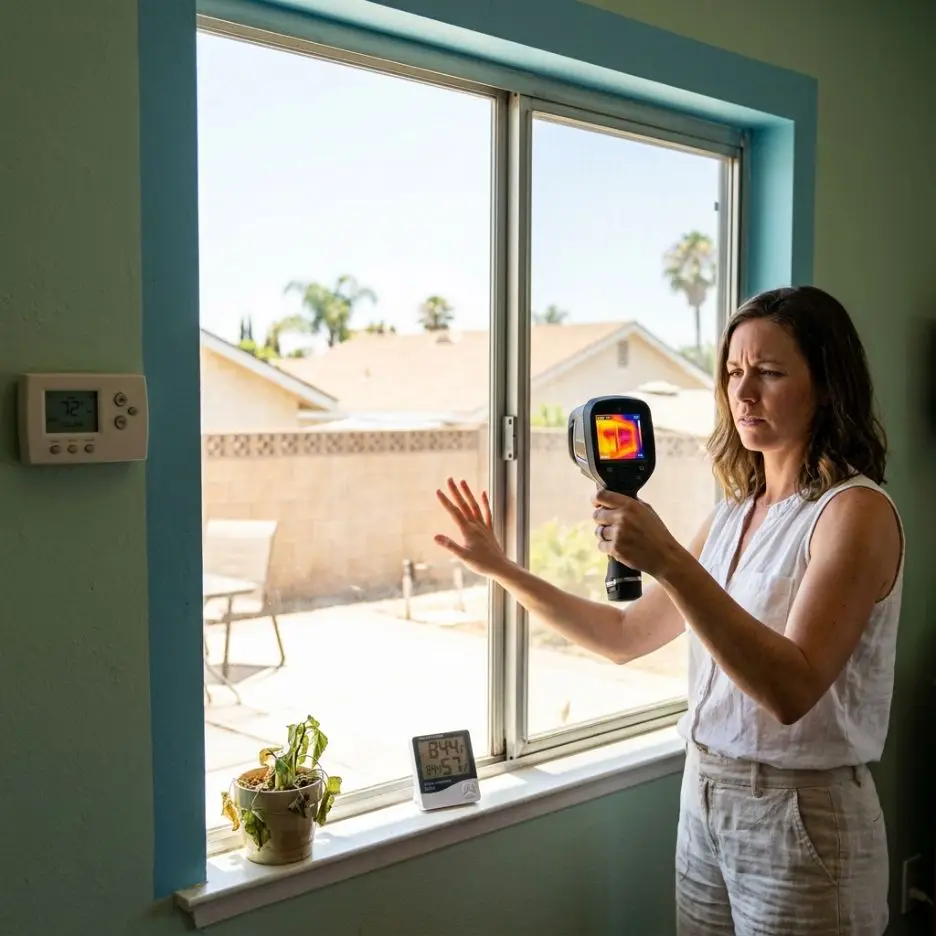
We don’t estimate thermal performance from your address or photos. We come to your home, measure what’s happening, and show you where heat is entering.
During a consultation, we assess your current windows’ condition, measure the temperature differential between inside and outside surfaces, identify air leakage points, and evaluate your home’s solar exposure. We show you exactly what the thermal problems are using tools and data, not guesses. You’ll see the heat patterns, understand which windows are the biggest culprits, and know specifically what performance improvements matter most for your situation.
This diagnostic approach means you’re making decisions based on evidence from your home, not generic industry averages. We walk you through the data, explain what it means, and recommend solutions that address your actual thermal performance gaps.
Installation Quality That Maximizes Thermal Performance Results
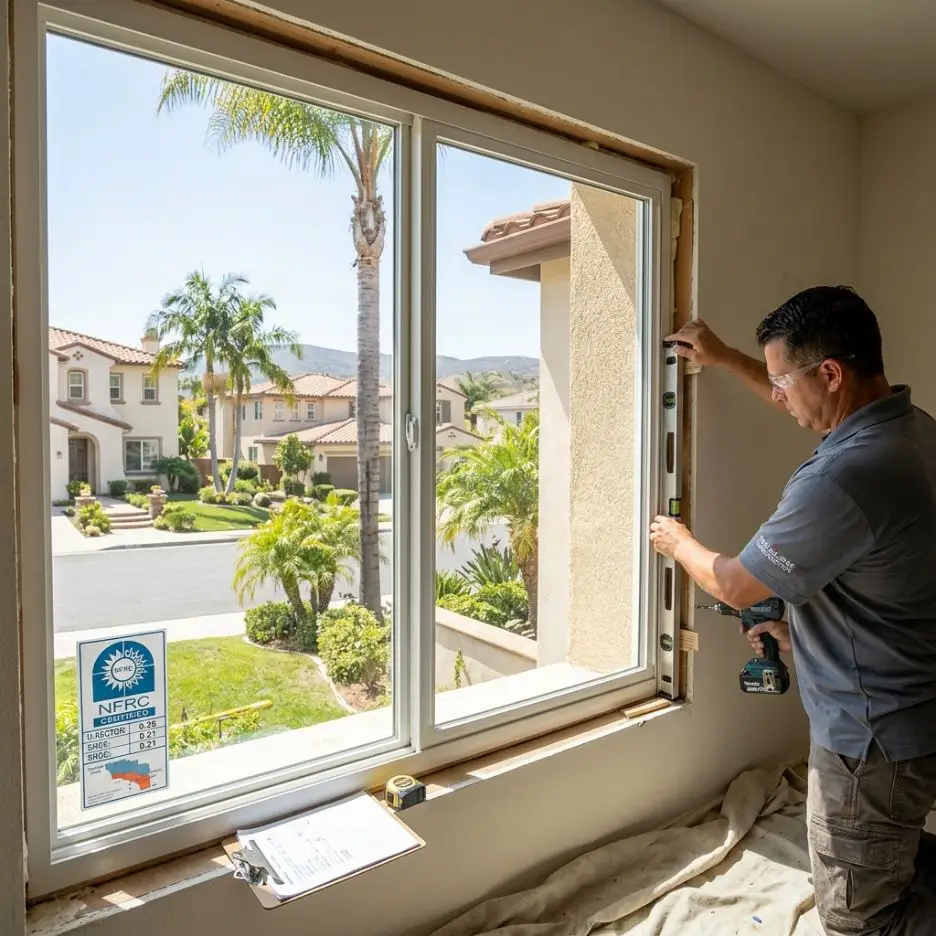
A window’s thermal rating only matters if it’s installed correctly. Poor installation creates air leaks that undermine the window’s rated performance.
Our installation process ensures that windows are sealed properly, frames are insulated, and air gaps are minimized. We use proper flashing, high-quality sealants, and installation techniques that preserve the window’s thermal integrity. A window rated at 0.30 U-value can perform much worse if installed with gaps and incomplete sealing.
This is where professional installation separates real results from disappointed homeowners. We treat installation as part of the thermal performance specification, not an afterthought.
Choosing Between Retrofit and Full Frame Replacement for Your Home
You have two paths: retrofit installation (new window inserted into existing frame) or full frame replacement (entire window including frame removed and reinstalled).
Retrofit windows work well when your existing frame is solid and properly sized. They’re faster and less invasive. Full frame replacement gives us access to the entire opening, allowing us to address frame insulation, eliminate hidden air leaks, and ensure perfect fit and sealing.
For older homes in areas like Pasadena, Beverly Hills, or Long Beach with original frames and potential structural issues, full frame replacement usually delivers better thermal performance because we’re not compromising around a damaged frame. For newer homes with solid frames, retrofit often provides excellent results with less disruption.
During your consultation, we’ll assess which approach gives you better thermal performance for your situation and budget.
Long-Term Energy Savings and Home Comfort Improvements
Upgrading windows isn’t an expense that ends at installation. The savings continue every month on your energy bills, and the comfort improvements are immediate and sustained.
Over 10-15 years, the energy cost reductions from better thermal performance can total thousands of dollars. A home that saves $100-200 per cooling season accumulates substantial value. Add that to improved comfort, reduced strain on your AC system (which may extend its lifespan), and the peace of mind of knowing your home’s thermal envelope is optimized.
Many homeowners also see secondary benefits: reduced outside noise (better seals and glazing), improved condensation resistance, and easier window operation with modern hardware.
Your next step is simple. Schedule a professional in-home consultation so we can measure your home’s thermal performance gaps and show you exactly what’s happening. We’ll explain the ratings, recommend solutions matched to your location in Southern California, and help you understand the real energy savings you can expect.
We serve homes throughout Los Angeles, Orange, San Bernardino, Riverside, and Ventura counties. Contact us to learn what better window thermal performance can do for your home’s comfort and energy costs. No pressure, just clear answers about what’s actually happening in your home.
Get a free estimate for your home. No pressure—just clear answers and straightforward pricing. Call (310) 729-3013 or visit: https://teamallstarconstruction.com/contact/
Frequently Asked Questions (FAQ)
What do U-values and Solar Heat Gain Coefficients actually mean for my Southern California home?
U-values measure how much heat passes through your windows, with lower numbers meaning better insulation. Solar Heat Gain Coefficient (SHGC) measures how much solar heat enters your home through the glass, which matters significantly in Southern California’s intense sun. We focus on windows with lower U-values and moderate SHGC ratings because our climate demands protection from heat gain while maintaining reasonable insulation during cooler months.
How much can I actually save on energy bills by upgrading to windows with better thermal performance ratings?
The savings depend on your current windows and local climate zone, but we typically see homeowners reduce cooling costs by 15-30% after upgrading to high-performance vinyl windows. Older, single-pane windows lose tremendous energy, so the improvement is often noticeable within the first billing cycle. We recommend scheduling an in-home consultation where we assess your specific situation and show you realistic projections based on your home’s orientation and existing window condition.
Should we retrofit our current windows or do full frame replacement?
Retrofit installation works well when your existing frames are structurally sound and properly sealed, while full frame replacement gives us the opportunity to address frame damage, improve weatherproofing, and maximize the thermal benefits of new windows. We evaluate both options during our consultation and recommend whichever approach will deliver you the best long-term performance and energy savings for your particular home.
- Categories: Uncategorized
Southern California Window Replacement Guide
Single Pane vs Dual Pane: Which Fits Your Home?
Replacement Windows Los Angeles Homeowners Choose
Retrofit Windows vs Full Frame: Which Fits?
A Guide to Full Window Replacement at Home
Vinyl vs Aluminum Windows for Southern California
Best Windows for Hot Climates in Southern California
A Homeowner’s Guide to Energy Efficient Windows
How to Reduce Window Heat at Home
About Total Home Windows
Total Home Windows is a Southern California-based window replacement company focused on helping homeowners improve energy efficiency, indoor comfort, and long-term home value through high-performance window installations.
Serving Los Angeles County, Orange County, Riverside County, San Bernardino County, and Ventura County, the company specializes in both vinyl retrofit (insert) and full-frame window replacement. Their work is tailored to the unique demands of California homes, including intense UV exposure, coastal conditions, and heat retention issues common in older properties.
Total Home Windows combines practical installation experience with a strong focus on energy performance—helping homeowners reduce cooling costs, improve insulation, and solve common problems like rooms that stay hot even with air conditioning. Their approach prioritizes clear recommendations, transparent pricing, and solutions that make sense for each home.
The content published by Total Home Windows is built on real installation knowledge, field-tested performance insights, and current best practices in window technology, including Low-E glass, argon-filled units, and energy-efficient design strategies. Their goal is to help homeowners make informed decisions without overpaying or choosing the wrong type of window system.
Ways to Reach Us
If you’re considering window replacement, we’re here to answer questions and provide clear, professional guidance based on your home and goals.
- teamallstarconstruction@gmail.com
- 301 E.9th St Suite 415 Redlands, CA 92374