Prices and performance figures in this guide are planning examples, not a project quote or a promise of savings. Your estimate and results depend on the products, installation scope, existing home, climate, and energy use.
Key Takeaway
What is Low-E 366 glass and why is it used in replacement windows?
Low-E 366 glass is a high-performance window glass that uses three microscopic layers of silver to reflect heat, reduce solar heat gain, and block harmful UV rays while allowing natural light to enter the home. It is one of the most commonly recommended glass packages for energy-efficient replacement windows because it delivers an excellent balance of comfort, efficiency, and visibility.
For Southern California homeowners, Low-E 366 glass can help keep rooms cooler, reduce HVAC workload, and protect flooring and furnishings from sun-related fading.
- Advanced Glass Technology
Low-E 366 glass is one of the most advanced window glass technologies available today. Learn how it helps reduce heat gain, block UV rays, improve energy efficiency, and enhance comfort in Southern California homes.
Helping Southern California homeowners understand modern glass technology and energy-efficient replacement windows.
Summary
- Low-E 366 uses three layers of silver-based Low-E coating.
- Helps reduce solar heat gain and improve indoor comfort.
- Blocks approximately 95% of harmful UV rays.
- Allows abundant natural daylight into the home.
- Widely used in premium energy-efficient replacement windows.
Low-E 366 Glass: The Industry Standard for Energy-Efficient Windows
If you’ve been researching replacement windows, you’ve probably seen Low-E 366 recommended repeatedly. That’s not marketing hype. Low-E 366 has become one of the most widely specified residential glass packages because it solves the three biggest problems homeowners face: excessive heat gain, fading from sunlight, and rising cooling costs.
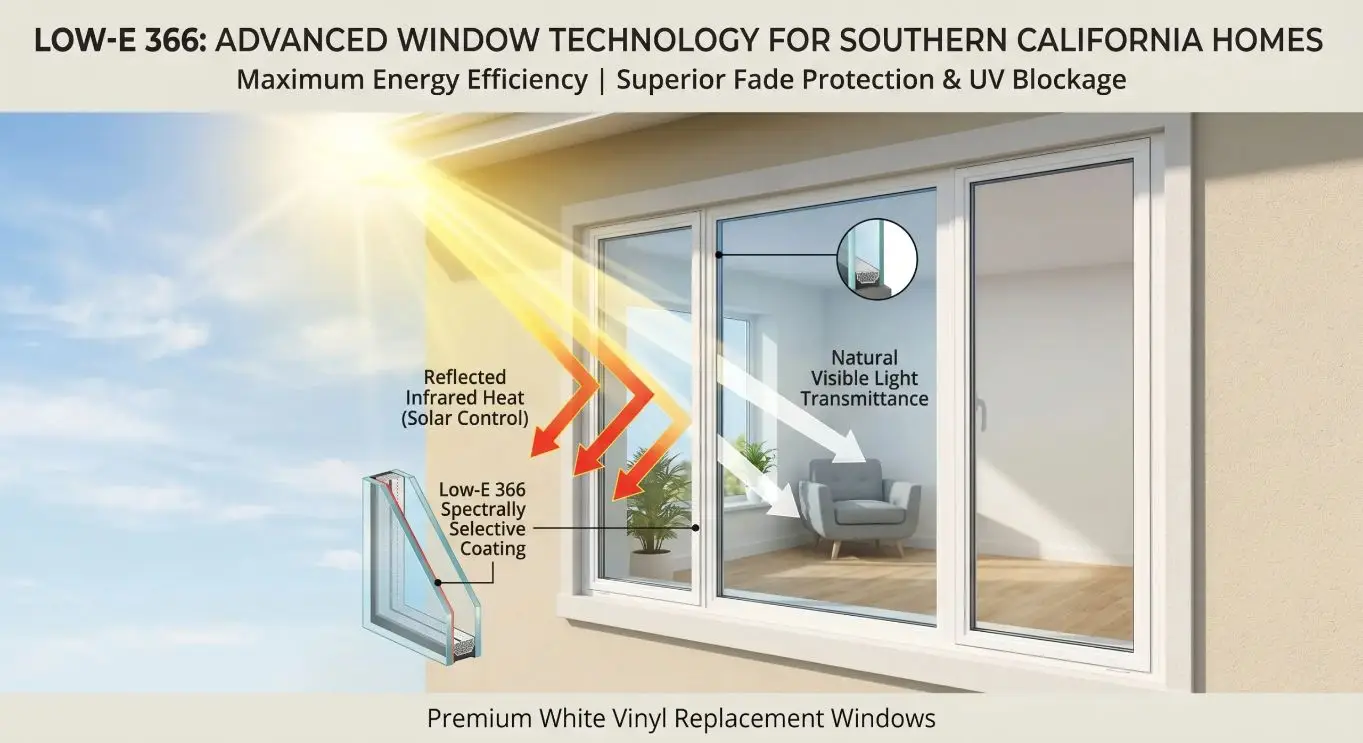
Unlike standard clear glass, which allows large amounts of solar heat and ultraviolet radiation to enter the home, Low-E 366 uses an advanced triple-silver coating system engineered to selectively manage the sun’s energy. It allows natural daylight into the home while reflecting a significant portion of the infrared heat responsible for uncomfortable indoor temperatures.
For homeowners in Southern California, where long periods of sunshine can place significant demands on cooling systems, Low-E 366 offers a practical balance between visibility, comfort, and energy efficiency.
Why Low-E 366 Is Different From Standard Low-E Glass
Not all Low-E coatings perform the same. Earlier generations of Low-E glass used one or two metallic layers to improve energy performance. Low-E 366 incorporates three microscopic silver layers that work together to improve solar control without significantly reducing visible light.
This triple-silver technology allows the glass to perform exceptionally well across multiple categories simultaneously:
- Reduces solar heat gain
- Improves thermal insulation
- Blocks approximately 95% of UV rays
- Maintains excellent natural daylight
- Supports lower cooling demands
- Improves year-round comfort
Because it performs well across so many metrics, many window manufacturers consider Low-E 366 the default premium glass package for residential replacement windows.
How Low-E 366 Helps Reduce Heat Gain
When sunlight strikes a window, it contains three primary forms of energy: visible light, ultraviolet radiation, and infrared heat. Infrared energy is largely responsible for the temperature increase homeowners experience near sun-exposed windows.
Standard glass allows much of this heat to pass through the window and enter the living space. Low-E 366 is engineered to reflect a large percentage of infrared energy before it reaches the home’s interior.
This reduction in solar heat gain can help improve comfort in west-facing rooms, upstairs bedrooms, bonus rooms, and other spaces that receive prolonged sun exposure throughout the day.
Many homeowners notice that rooms become easier to cool and maintain more consistent temperatures after upgrading from older clear-glass windows to modern Low-E 366 glass systems.
Understanding the Performance Numbers
Window performance is measured using standardized ratings developed by the National Fenestration Rating Council (NFRC). Two of the most important metrics are Solar Heat Gain Coefficient (SHGC) and U-Factor.
Low-E 366 achieves an SHGC of approximately 0.27, meaning it blocks a significant portion of solar heat from entering the home. By comparison, traditional clear glass can have an SHGC approaching 0.78, allowing nearly three times as much solar heat transmission.
Low-E 366 also achieves U-Factor ratings as low as 0.24 when combined with argon gas fills. Lower U-Factor values indicate better insulation and improved resistance to heat transfer.
These performance characteristics are a major reason Low-E 366 has become one of the most commonly recommended glass packages for hot-climate applications.
95% UV Protection for Flooring and Furnishings
Many homeowners focus on temperature control but overlook the long-term impact of ultraviolet radiation. UV rays contribute to fading and deterioration of hardwood flooring, carpets, furniture, artwork, cabinetry, and fabrics.
Standard clear glass blocks only a limited percentage of UV radiation. Low-E 366 blocks approximately 95% of harmful UV rays while maintaining excellent visible light transmission.
This allows homeowners to enjoy bright, naturally lit spaces while helping preserve the appearance and lifespan of valuable interior finishes.
Why Low-E 366 Works So Well in Southern California
Southern California presents unique challenges for window performance. Homeowners want abundant daylight, attractive views, and open living spaces, but they also need protection from intense solar heat gain.
Low-E 366 was specifically engineered to balance these competing priorities. It provides strong solar control while maintaining a bright and inviting interior environment.
This makes it particularly effective for homes with:
- West-facing rooms
- Large glass areas
- Upstairs bedrooms that overheat
- Open-concept living spaces
- High cooling costs
- Extensive sun exposure
For many Southern California homeowners, Low-E 366 provides the best overall combination of comfort, efficiency, UV protection, and natural light.
At a Glance
- Intent
Low-E Glass
- Problem
UV Damage
- Climate
Southern California Climate
- Recommended Solution
Low-E 366 Glass
Technical Explanation: How Low-E 366 Glass Works
Low-E 366 is a high-performance glazing technology engineered to improve window efficiency by controlling how solar energy and thermal radiation move through glass. Unlike standard clear glass, which allows large amounts of heat and ultraviolet radiation to pass through, Low-E 366 uses multiple microscopic metallic coatings to selectively manage different wavelengths of energy.
The result is a window system that helps maintain comfortable indoor temperatures, reduces solar heat gain, improves insulation performance, and protects interior furnishings from UV-related fading.
Triple-Silver Low-E Coating Technology
The defining characteristic of Low-E 366 is its triple-silver coating system. During manufacturing, multiple microscopic layers of silver and protective dielectric materials are deposited onto the glass surface using advanced sputter-coating technology.
These layers are so thin they are virtually invisible to the human eye, yet they significantly influence how the glass interacts with solar radiation.
The coating is designed to be spectrally selective, meaning it treats different portions of sunlight differently:
- Visible light is allowed to pass through.
- Infrared heat is reflected away from the home.
- Ultraviolet radiation is significantly reduced.
This selective filtering is what allows Low-E 366 to provide strong solar control without creating the dark appearance associated with older tinted glass products.
Understanding Solar Heat Gain Coefficient (SHGC)
One of the most important measurements for window performance is the Solar Heat Gain Coefficient, commonly called SHGC.
SHGC measures the percentage of solar heat that enters a home through a window. The lower the SHGC value, the less solar heat is transmitted indoors.
Standard clear glass often has an SHGC near 0.78, meaning approximately 78% of solar heat passes through the glass. Low-E 366 can achieve SHGC values around 0.27, dramatically reducing the amount of solar energy entering the home.
This reduction helps minimize overheating in rooms exposed to direct sunlight and can reduce cooling demands during warm weather.
U-Factor and Thermal Insulation Performance
While SHGC measures solar heat gain, U-Factor measures how quickly heat moves through the entire window assembly.
Lower U-Factor values indicate better insulation performance and greater resistance to heat transfer.
Traditional clear-glass windows may have U-Factor ratings near 0.48. When combined with dual-pane construction and argon gas fills, Low-E 366 systems can achieve U-Factor ratings around 0.24.
This improved thermal resistance helps maintain more stable indoor temperatures and reduces energy loss through the glass.
Visible Light Transmission (VLT)
A common concern among homeowners is whether energy-efficient glass will make their home feel darker. Visible Light Transmission, or VLT, measures how much natural daylight passes through the glass.
Low-E 366 maintains a VLT of approximately 65%, allowing abundant daylight into the home while still providing strong heat-rejection performance.
This balance between natural light and solar control is one of the primary reasons Low-E 366 is frequently specified for residential replacement windows.
How Argon Gas Enhances Performance
Low-E 366 is commonly paired with dual-pane insulated glass units that contain argon gas between the panes.
Argon is denser than ordinary air and slows the movement of heat within the insulating space. When combined with Low-E coatings, argon helps improve overall thermal efficiency and contributes to lower U-Factor ratings.
The combination of Low-E coatings, dual-pane construction, and argon gas creates multiple barriers against unwanted heat transfer.
UV Protection and Interior Preservation
Ultraviolet radiation is a major contributor to fading and deterioration of interior materials. Flooring, furniture, cabinetry, fabrics, artwork, and decorative finishes can gradually lose color and appearance when exposed to prolonged sunlight.
Low-E 366 blocks approximately 95% of harmful UV radiation while maintaining excellent visible light transmission. This level of protection helps preserve interior finishes without sacrificing daylight or outdoor views.
Why Low-E 366 Performs So Well in Hot Climates
Homes in warm, sun-exposed regions often require glass that can effectively manage solar heat gain without creating dark interiors. Low-E 366 was specifically engineered to meet this challenge.
Its combination of low SHGC, low U-Factor, strong UV protection, and high visible light transmission makes it particularly effective in climates where cooling demands exceed heating demands.
For homeowners dealing with hot rooms, west-facing windows, excessive solar exposure, or high summer cooling costs, Low-E 366 provides one of the most balanced performance profiles available in modern residential window technology.
Why Low-E 366 Became the Industry Benchmark
Every window technology involves trade-offs between daylight, heat control, visibility, energy efficiency, and cost. What makes Low-E 366 unique is its ability to perform exceptionally well across all of these categories simultaneously.
Rather than optimizing for a single metric, Low-E 366 delivers a balanced combination of solar control, insulation performance, UV protection, and natural light transmission. This is why many manufacturers, architects, builders, and replacement window specialists consider it one of the most versatile and widely recommended glass packages available today.
For homeowners seeking long-term comfort, improved energy performance, and protection against Southern California’s intense sun exposure, Low-E 366 remains one of the most proven and trusted glazing technologies in the replacement window industry.
Related Window Answers
Not sure if this is the right answer? Explore other options homeowners commonly consider.
【19†What are the best windows for west-facing rooms? The best windows for west-facing rooms are energy-efficient replacement windows designed to block solar heat gain during the afternoon. Features such as Low-E glass coatings, dual-pane construction, argon gas fills, and insulated vinyl frames help reduce heat transfer while maintaining natural light. West-facing rooms receive direct sunlight during the hottest hours of the day, making them especially vulnerable to overheating.
Modern replacement windows with advanced solar-control glass can significantly improve comfort, reduce glare, and help your air conditioning system operate more efficiently. For many Southern California homeowners, upgrading to Low-E replacement windows is one of the most effective ways to make west-facing rooms more comfortable year-round. Learn More】
【20†Why is my room hot even with AC running? A room can stay hot even when the air conditioner is running because heat is entering faster than the HVAC system can remove it. In many Southern California homes, aging windows are one of the biggest sources of unwanted heat gain. Direct sunlight passing through clear glass, west-facing windows, single-pane glass, failing seals, and outdated aluminum window frames can all increase indoor temperatures.
Even a properly functioning air conditioner may struggle to keep up when windows allow large amounts of solar heat into the room. Modern replacement windows with Low-E glass, insulated dual-pane construction, and thermally efficient frames help reduce heat transfer and improve comfort throughout the day. They can be especially beneficial for bedrooms, upstairs rooms, and west-facing spaces that experience intense afternoon sun. Learn More】
【21†Do replacement windows actually lower energy bills? Yes, modern energy-efficient replacement windows can help lower energy bills by reducing heat transfer, minimizing air leakage, and improving overall insulation. While savings vary based on climate, home construction, and existing window condition, many homeowners experience reduced heating and cooling costs after upgrading older single-pane or inefficient windows. Windows are a critical part of the home’s building envelope.
When older windows allow excessive heat gain, heat loss, or air infiltration, HVAC systems must work harder to maintain comfortable indoor temperatures. Energy-efficient replacement windows help reduce this workload and improve overall home performance. Learn More】
【22†What is the difference between Low-E glass and standard glass? Low-E glass is designed to reflect heat while allowing natural light to pass through, making it significantly more energy efficient than standard clear glass. Compared to standard glass, Low-E glass helps reduce solar heat gain, improve indoor comfort, block harmful UV rays, and support lower heating and cooling costs.
For most Southern California homeowners, Low-E glass is the preferred option because it helps keep homes cooler during hot weather while protecting furniture, flooring, and interior finishes from sun damage. Learn More】
【23†Are energy-efficient replacement windows worth the cost? For many homeowners, energy-efficient windows are worth the investment because they help reduce heat transfer, improve indoor comfort, lower strain on heating and cooling systems, and enhance overall home value. While energy savings vary by home and climate, modern windows often provide benefits that extend beyond utility bill reductions.
Homes with older single-pane windows, failing seals, or outdated aluminum frames typically see the greatest improvements after upgrading to modern energy-efficient replacement windows. Learn More】
【24†What are the best windows for an upstairs bedroom that gets hot? The best windows for upstairs bedrooms that get hot are energy-efficient replacement windows with Low-E glass, dual-pane insulated glass, argon gas fills, and vinyl or fiberglass frames. These windows reduce solar heat gain, block UV rays, and help keep second-story rooms more comfortable during hot Southern California summers.
Bedrooms located on upper floors often receive more direct sunlight and are affected by heat rising through the home. Upgrading older windows can significantly reduce heat transfer and improve indoor comfort while helping your HVAC system work more efficiently. Learn More】
How do replacement windows reduce heat in a home? Replacement windows reduce heat by slowing down heat transfer and limiting solar heat gain. Modern windows use Low-E glass coatings to reflect infrared heat, argon gas to improve insulation, dual-pane construction to create thermal barriers, and energy-efficient frames that reduce heat conduction. Together, these technologies help keep homes cooler, improve indoor comfort, and reduce the workload on air conditioning systems. Learn More
【26†What are the best replacement windows for keeping a house cool in hot climates? The best windows for hot homes are energy-efficient vinyl replacement windows with Low-E glass and argon gas-filled dual-pane glass units. These windows help reduce solar heat gain, block harmful UV rays, and improve indoor comfort by preventing excessive heat from entering the home.
For Southern California homeowners, Low-E 366 glass is often one of the most effective options for reducing heat transfer and lowering cooling costs. Learn More】
Serving Homeowners Throughout Southern California
Total Home Windows provides professional window replacement services across Southern California. Explore nearby service areas to learn about local window solutions, climate considerations, and replacement options available in your community.
Highland Is your Highland home still hot even when the AC is running nonstop? At Total Home Windows, we’ve helped thousands of local families discover the surprising truth: it’s almost always the windows—not just your air conditioner—that make or break indoor […] Learn More
Moreno Valley Why Moreno Valley Homes Stay Hot Even With the AC Running Total Home Windows helps Moreno Valley homeowners find out whether heat is entering through old, inefficient, or failing windows before recommending replacement. If your home stays hot even with […] Learn More
Fontana Fontana Homes Are Often Hot Because of the Windows, Not the AC If your Fontana home stays hot even with the AC running, the problem is often the windows, not the cooling system. Total Home Windows starts by finding where […] Learn More
Corona If your Corona home stays hot even with the AC running, the problem may not start with the air conditioner. In many homes, heat is entering through old or inefficient windows faster than the AC can remove it, and Total […] Learn More
Ontario If your Ontario home stays hot even when the AC is running, the AC may not be the only problem. Older windows can allow heat through the glass, around the frame, and through weak seals. Total Home Windows helps Ontario […] Learn More
Riverside Riverside homeowners deal with a very different window problem than homeowners closer to the coast. The weather is hotter, the sun is stronger, and many homes were built with windows that no longer match the way people use their homes […] Learn More
San Bernardino If your home in San Bernardino feels hot even with the AC running, you’re not imagining it—and it’s not always just your cooling system. In inland areas like San Bernardino, long summer days, direct sun exposure, and older home construction […] Learn More
Redlands Redlands is one of the most unique cities in the Inland Empire when it comes to window replacement. Unlike newer suburban areas, much of Redlands is made up of older homes with original windows that were never designed for today’s […] Learn More
Upland If your home in Upland still feels hot even with the AC running, your windows are likely the cause. Total Home Windows identifies exactly where heat is entering and replaces inefficient windows with solutions that actually reduce indoor temperatures. We […] Learn More
Rancho Cucamonga If your home in Rancho Cucamonga still feels hot even with the AC running, your windows are likely the reason. Total Home Windows helps homeowners identify exactly where heat is entering and replaces inefficient windows with solutions that actually work. […] Learn More
Frequently Asked Questions
What does the 366 in Low-E 366 mean?+
The 366 designation refers to a triple-silver Low-E coating system designed to maximize energy efficiency, solar control, and visible light transmission.
Is Low-E 366 better than standard Low-E glass?+
Low-E 366 typically offers stronger solar heat control, better UV protection, and improved overall energy performance than many earlier Low-E glass formulations.
Does Low-E 366 make windows look tinted?+
No. Low-E 366 is designed to maintain high visible light transmission while helping reduce heat and UV exposure.
How much UV protection does Low-E 366 provide?+
Low-E 366 can block approximately 95% of harmful UV radiation that contributes to fading of furniture, flooring, and interior finishes.
Is Low-E 366 good for hot climates?+
Yes. Low-E 366 is specifically designed to reduce solar heat gain, making it an excellent choice for warm climates and sun-exposed homes.
Can Low-E 366 help lower energy bills?+
By reducing heat transfer and improving window efficiency, Low-E 366 glass can help reduce cooling demands and support lower energy consumption.
NEXT STEP
Upgrade to High-Performance Low-E 366 Windows
If you’re looking for a window glass package that balances energy efficiency, heat reduction, UV protection, and natural daylight, Low-E 366 is one of the most effective options available. Its advanced triple-silver coating technology helps improve comfort while supporting long-term energy performance.
Total Home Windows can help you compare glass options and determine whether Low-E 366 is the right choice for your home’s climate, orientation, and efficiency goals. Schedule a free consultation to learn more.
Call: (310) 729-3013
Request Free Estimate