
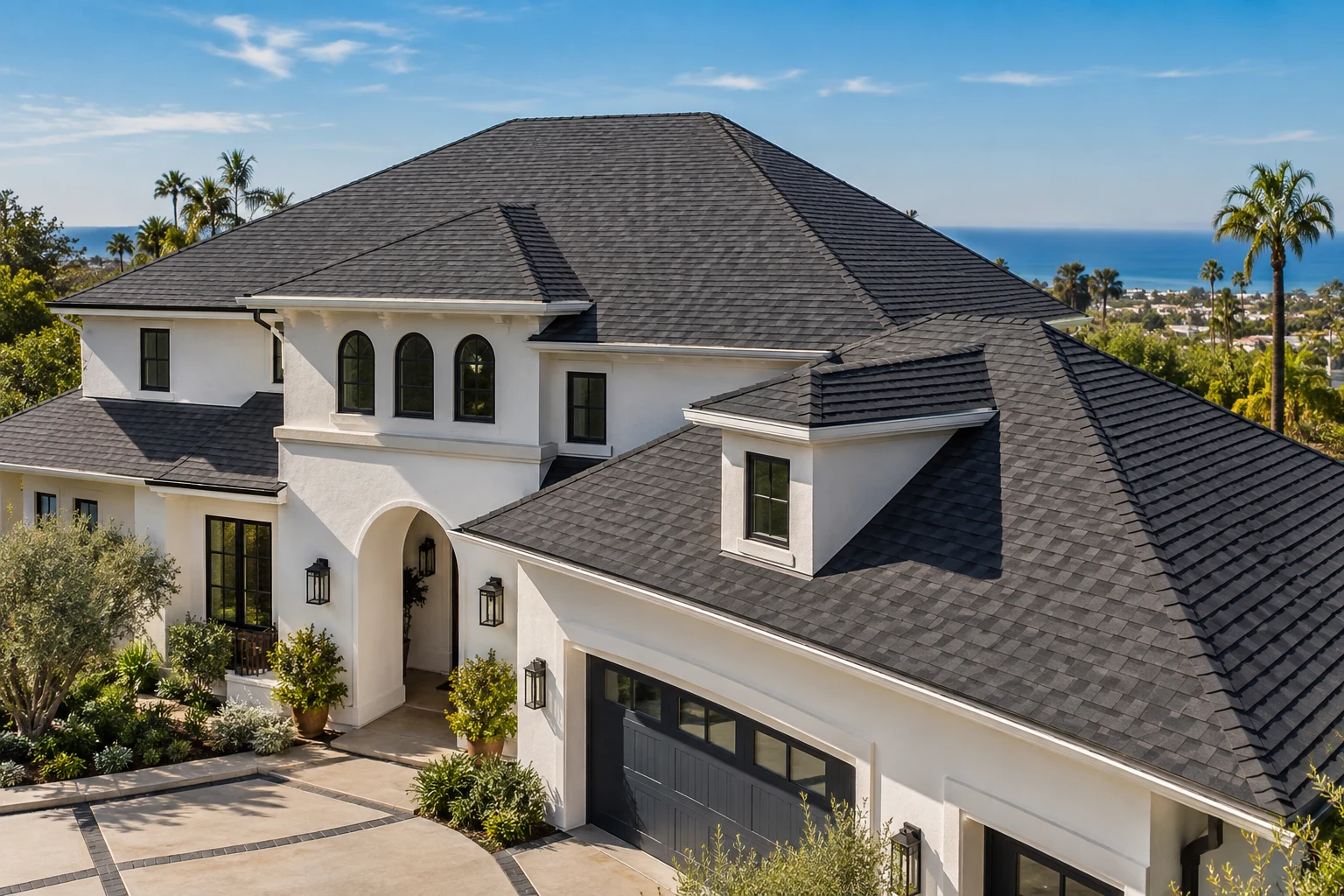
In many Ontario homes, reroofing is only worth it if the existing roof system is still structurally sound and the problem is limited to the outer roofing layer. At All Star Roof Replacement, we look beyond shingles or tile and evaluate the full system before saying whether reroofing makes sense or whether a full replacement is the smarter long-term solution.
For most homeowners here, the real issue is not whether reroofing costs less today. The real issue is whether it actually solves the reason the roof is failing in the first place. In Ontario, that matters because roofs wear out from heat, UV exposure, age, and hidden system breakdown just as much as they do from visible leaks.
If you are comparing options, it helps to start with the broader local picture on our Ontario roof replacement service area page, where we break down how roofing conditions in this part of Southern California affect replacement decisions.
What Reroofing Really Means
Reroofing usually means installing a new roof covering over an existing one instead of removing the old roof down to the deck. Some homeowners use the term loosely, but in practice, it usually means trying to extend roof life without fully rebuilding the roofing system underneath.
The direct answer is simple: reroofing can be worth it only when the existing roof system underneath is still in good condition. If the underlayment has deteriorated, the decking has soft spots, the ventilation is poor, or the roof has a pattern of repeated leaks, covering it over does not fix the real problem.
That distinction matters in Ontario because many homes are now in the age range where roofing systems are reaching the end of their service life. A roof may look worn on the surface, but the actual failure may be happening underneath.
Many homeowners don’t realize that the visible roofing material is only one layer of the system. The roof also depends on underlayment, flashing, decking, intake and exhaust ventilation, and installation quality. If those parts are failing, reroofing may only hide the symptoms for a while.
Why This Question Comes Up So Often in Ontario
Ontario has a tough climate for residential roofs. This is inland Southern California, not a milder coastal zone. Homes here deal with long periods of high heat, strong sun exposure, and repeated expansion and contraction from hot days and cooler nights.
The short answer is that Ontario roofs age faster when heat and UV wear down the full roofing system over time. That is why homeowners here often ask whether reroofing is enough or whether the roof has already moved into replacement territory.
In homes across Ontario, we often see roofs from the 1990s and early 2000s that are now reaching the point where recurring repairs stop making financial sense. This is especially common in neighborhoods with aging shingle roofs and tile roofs where the exterior still looks decent from the street, but the underlayment below is already wearing out.
A common issue during inspections is finding that the roof surface tells only part of the story. A tile roof may still have many usable tiles, but the waterproofing layer underneath may be brittle, dried out, or failing from years of trapped heat. On shingle roofs, granule loss, curling, brittleness, and dark heat stress are often signs that the system is aging out, not just cosmetically weathering.
That is why this question comes up so much in Ontario. The climate does not just create obvious storm damage. It causes slow, system-wide deterioration that many homeowners do not fully see until leaks, hot rooms, or repeated patch jobs start showing up.
Why Ontario Roofs Fail From More Than Just Rain
A lot of homeowners think roof failure starts with water. In Ontario, heat is often the bigger driver.
The direct answer is this: in Ontario, many roofs fail because the system has been cooked over time, not because of one major weather event. Heat and UV exposure break materials down gradually until leaks and energy loss become noticeable.
Asphalt-based products dry out faster under intense sun. Protective granules wear away. Sealants get brittle. Flashing details become less reliable. Underlayment under tile can fatigue from years of elevated temperatures below the surface. Even when the roof is not actively leaking every season, the system may already be well into decline.
In homes across Ontario, we often see the effects of thermal stress before homeowners connect them to the roof. Bedrooms stay warmer than the rest of the house. Cooling bills rise. Indoor temperatures feel uneven. The attic holds too much heat. Those are often signs that the roof system is no longer performing the way it should.
That is one reason the answer cannot be based on materials alone. Every roof is different. Two homes with the same age roof can have very different conditions depending on attic ventilation, roof slope, sun exposure, past repairs, and how well the original installation was done.
Why Surface Issues Often Mean Deeper System Failure
A roof leak or visible wear does not always mean the problem is small. In many cases, surface damage is just the symptom that finally became visible.
The direct answer is that surface issues often point to failure deeper in the roofing system. If the hidden layers are compromised, reroofing the top alone may not solve the issue for very long.
For example, a stain on a ceiling does not always mean water entered directly above that spot. Water can move along underlayment, around penetrations, down framing, and through weak transitions before it appears inside. By the time you see the stain, the roof may have been failing quietly for quite a while.
Many homeowners don’t realize how often repeated repairs mask a larger system problem. If the same roof has needed patching multiple times, or if leaks show up in more than one area over time, that pattern matters. It usually means the roof is no longer failing in one isolated location. It is losing overall reliability.
This is also where previous installation quality matters. A roof can have decent materials and still fail early if flashing details were weak, ventilation was not balanced, the underlayment was not suited for the climate, or transitions were not done correctly. In Ontario’s heat, those weaknesses show up faster.
If you are trying to decide whether your home is dealing with isolated damage or system failure, our page on roof repair or replacement in Ontario goes deeper into how that decision should be made.
What Happens If You Ignore the Problem
Roofing issues usually become more expensive with time. That does not mean every older roof needs immediate replacement, but it does mean that delays rarely improve the situation once system failure has started.
The direct answer is straightforward: waiting usually increases the total scope of work. What starts as worn underlayment, loose flashing, or isolated leaks can lead to damaged decking, insulation issues, interior repairs, and more extensive replacement needs later.
Ontario’s dry months can make this easy to overlook. Homeowners sometimes assume that if the roof is not actively dripping, it still has plenty of life left. But heat deterioration keeps moving whether or not rain is falling. UV exposure does not pause just because there is no current leak.
A common issue during inspections is hearing that the problem was “small for a while” or that a repair “held for the last season.” Then once the roof is opened, we find brittle underlayment, rotted edges, failed penetrations, or deck sections that needed attention long before the leak became regular.
That is why reroofing needs to be judged carefully. If you put a new outer layer over a roof system that is already declining underneath, you may spend money now and still end up paying for a larger correction sooner than expected.
How the Roof Affects Energy Efficiency in Ontario
Your roof is not only there to keep water out. It also affects how your house handles heat every day.
The direct answer is that an aging roof can increase indoor heat buildup and make your cooling system work harder. In Ontario, where summer temperatures and sun exposure are serious factors, roof condition has a direct effect on comfort and energy use.
Older roofing systems often lose reflective performance, ventilation efficiency, and overall thermal control. If the roof is trapping heat in the attic or allowing excess radiant heat into the structure, the home may feel harder to cool even before there is a visible leak.
In homes across Ontario, we often see homeowners focus first on air conditioning when the roof is part of the reason the house feels hot. A roof that is worn out, poorly vented, or built on aging underlayment can contribute to uneven temperatures and higher utility bills.
For homeowners looking into performance as well as protection, our page on energy-efficient roofing in Ontario explains how replacement choices can improve heat control in this climate.
When Reroofing Might Make Sense
There are situations where reroofing may still be worth considering. If the roof has one existing layer, the deck is sound, the system has no widespread leak history, and the hidden components are still in acceptable condition, reroofing may be a workable option on some homes.
But the answer stays conditional. Reroofing is worth it only when it is built on a system that can actually support it.
That means the decision should follow a real inspection, not a guess from the driveway. At All Star Roof Replacement, we use satellite measurements along with visual inspection to evaluate the roof as a system and explain clearly what we find before recommending replacement. We do not guess, and we do not assume the visible layer tells the whole story.
Many homeowners don’t realize that two houses on the same Ontario street can need completely different solutions. One may be a valid reroofing candidate. Another may need a full tear-off because the underlayment, decking, or ventilation has already reached the point where covering over it would only delay the real fix.
Why a Full System Evaluation Comes First
The biggest mistake in roofing is making the decision based only on what you can see from the ground. Shingles, tile, or visible wear do not tell the whole story.
The direct answer is this: reroofing is only worth it after the full roofing system is evaluated. Without that, there is no reliable way to know whether you are extending roof life or covering over system failure.
At All Star Roof Replacement, that evaluation includes the roof’s age, leak history, previous repairs, visible wear patterns, ventilation setup, and signs of hidden issues with the underlayment or decking. That is especially important in Ontario, where heat-related breakdown often starts below the visible surface.
For homeowners here, clarity matters more than a quick opinion. The roof affects weather protection, indoor comfort, and energy efficiency at the same time. If the system is still healthy enough for reroofing, that should be shown clearly. If it is not, that should also be shown clearly.
The next part is understanding how to tell whether your Ontario roof is still a realistic reroofing candidate or whether the signs point more strongly toward full replacement, including what inspectors look for and which warning signs usually mean the system underneath has already aged out.
How to Tell if Your Ontario Roof Is Still a Real Reroofing Candidate
The direct answer is this: if the roof has hidden wear below the surface, repeated leak history, or signs of system-wide aging, reroofing is usually not worth it in Ontario. A roof is only a good reroofing candidate when the deck, underlayment, ventilation, and overall structure are still in dependable condition.
That sounds simple, but this is where a lot of homeowners get stuck. From the ground, one roof may look like it just needs fresh material. Once inspected more closely, it may already have brittle underlayment, weak flashing details, heat-related cracking, or deck areas that should not be covered over.
In homes across Ontario, we often see roofs that look acceptable from the street but tell a different story once the age, leak history, and heat exposure are considered together. That is especially common with tile roofs where the outer tile may still be usable, but the waterproofing layer underneath has already aged out.
On shingle roofs, common signs that reroofing may not be the right move include widespread granule loss, curling edges, brittleness, uneven roof planes, and a pattern of patchwork repairs. On tile roofs, warning signs often include slipped tiles, aging paper or underlayment below, leak patterns around valleys and penetrations, or underlayment that has been baked by years of Inland Empire heat.
At All Star Roof Replacement, this is why we do not make the call based only on what the top layer looks like. We use satellite measurements and visual inspection to evaluate the full roofing system so the recommendation matches the roof’s actual condition, not just its appearance.
Why Overlay Reroofing Often Creates Bigger Problems in Ontario
The direct answer is straightforward: in Ontario, overlay reroofing often adds cost without solving system failure. It can trap heat, hide damage, and make future replacement more expensive and more complicated.
For some homeowners, reroofing sounds attractive because it seems faster and less invasive than a full tear-off. But in Southern California inland climates, that shortcut often works against the roof. A second layer can hold more heat in the roofing assembly, and heat is already one of the main reasons roofs in Ontario wear out in the first place.
When extra heat gets trapped, materials tend to age faster. That matters on asphalt systems especially, where elevated temperatures can accelerate drying, brittleness, and loss of flexibility. If the roof already has ventilation issues, an overlay does nothing to correct them.
It also limits what can actually be inspected. If damaged decking, deteriorated underlayment, or old flashing details are buried below the existing roof, covering over them does not make them dependable again. It just delays when they will need to be addressed.
A common issue during inspections is finding roofs that had previous work done to save money in the short term, but the hidden layers kept declining. Later, the homeowner ends up paying for tear-off anyway, and the project scope can be larger because more time passed before the real problem was corrected.
This is one reason delaying increases cost. Not always immediately, but often over time. If hidden deterioration continues, the eventual replacement may include more wood repair, more interior repair, or more corrective work than if the system had been addressed earlier.
What Full Replacement Solves That Reroofing Usually Does Not
The direct answer is that full replacement gives you the chance to correct the actual roofing system, not just improve the surface. That includes the deck condition, underlayment, flashing, ventilation, and material installation.
For homeowners in Ontario, that matters because the most expensive roofing problems are often not visible at first. If the underlayment is worn out, if attic ventilation is not balanced, or if flashing transitions were poorly installed on the previous roof, those are system issues. Reroofing the top layer alone usually does not fix them.
A proper full replacement allows the roof to be opened, inspected, and rebuilt where needed. That creates clarity. If the deck is solid, that can be confirmed. If some sections need replacement, that can be handled before the new system goes on. If ventilation needs to be improved to support better heat performance, that can be addressed as part of the project.
In Ontario homes, this often makes the most difference in long-term value. Not because replacement is automatically the answer for every roof, but because replacement gives the opportunity to fix what is actually causing poor performance.
That is also why installation quality matters as much as material choice. Even a strong roofing product can underperform if the flashing, edge details, underlayment layout, or ventilation setup are not done correctly. Poor installation leads to long-term issues, and Ontario’s climate exposes those issues faster than milder areas do.
If you want to understand what a full project typically involves, our page on the roof replacement process in Ontario explains the steps from inspection through tear-off, dry-in, installation, and final review.
Ontario Roof Types and Why the Answer Depends on the System
The direct answer is this: whether reroofing is worth it depends heavily on the type of roof system your home has. Shingle and tile roofs fail differently, and the right decision has to match that system.
On many Ontario shingle roofs, the outer material and the waterproofing performance tend to age out closer together. Once the shingles are badly worn and the roof has a history of leaks or repairs, reroofing is often a short-term answer at best. If the roof is already in the 15- to 25-year range and showing widespread wear, full replacement usually gives better long-term clarity.
Tile roofs are different. The tile itself may last much longer than the layer below it. In those cases, the right answer is often not a simple overlay and not always brand-new tile either. Sometimes the real need is removing the tiles, replacing the underlayment and related components, and reinstalling suitable existing tile if the tiles remain serviceable.
That is why homeowners should be careful with blanket advice. Every roof is different. A tile roof that still looks good from the street may still need major system work below. A shingle roof with only localized damage on a younger system may still have life left if the underlying components are sound.
For a broader look at how these systems perform in this climate, our page comparing tile vs. shingle roofing in Ontario breaks down the practical differences that affect lifespan, heat handling, and replacement decisions.
How Title 24 and Heat Performance Affect the Value of Reroofing
The direct answer is that code compliance and energy performance matter more than many homeowners expect. In Ontario, reroofing only makes sense if the result still supports a code-compliant, heat-managing roofing system for the home.
Because Ontario sits in a high-heat inland climate, roofing decisions are not just about keeping rain out. They also affect attic temperatures, indoor comfort, and cooling demand. That is one reason California cool-roof requirements come up on many replacement projects.
If a homeowner is already spending money on the roof, it makes sense to look at whether the work will actually improve performance. A full replacement creates a better opportunity to address ventilation, reflective material options, and system details that help the house handle heat more effectively.
In homes across Ontario, we often see homeowners initially asking about leaks, then realizing the roof is also part of why the house feels hotter than it should. Hot second-story rooms, uneven temperatures, and heavy AC usage often connect back to the roofing system, not just insulation or equipment alone.
If heat control is part of your concern, it may help to review how a cool roof in Ontario fits into local replacement decisions and why material choice works best when paired with proper installation and ventilation.
What Pricing Really Says About Whether Reroofing Is Worth It
The direct answer is simple: reroofing is not worth it just because it looks cheaper up front. The real question is whether it avoids replacement for a meaningful amount of time or just postpones necessary system work.
That is why pricing has to be looked at in context. There is no honest fixed number that tells you whether reroofing is the better value on your home. The cost difference depends on roof size, access, pitch, number of layers, material type, code requirements, disposal, ventilation updates, and whether damage is found when the roof is opened.
In Ontario, homes with older tile systems can vary widely depending on whether existing tiles can be reused and whether the work is mainly underlayment-focused or calls for broader correction. Shingle projects vary based on complexity, decking condition, and whether the current roof has already been layered or repaired multiple times.
What matters is total value over time. If reroofing saves money today but leaves old system failure in place, that lower upfront cost may not be the lower total cost. If full replacement solves recurring issues and restores reliable performance, it often makes better financial sense even if the initial project is larger.
For a closer look at what drives real project costs, our page on roof replacement cost in Ontario explains why prices vary so much from one home to the next.
Decision Clarity: When Replacement Usually Makes More Sense Than Repair or Reroofing
The direct answer is this: replacement usually makes more sense when the roof has reached system failure, not just surface wear. If the roof is older, leaking repeatedly, overheating the home, or showing signs of hidden deterioration, replacing the system is often the more practical decision.
Here is the simplest way to think about it. A good roofing decision solves the actual problem, fits the roof’s current condition, and does not depend on wishful thinking about what may be hidden underneath.
Replacement usually makes more sense when:
- The roof is roughly 15 to 30+ years old and showing widespread wear
- Leaks have happened in more than one area or repairs keep coming back
- The roof has ventilation problems or contributes to major heat buildup
- The underlayment or decking may be failing below the visible surface
- Previous installation quality appears inconsistent or patch-heavy
- The roof has already reached the point where another layer would only cover over older problems
Waiting usually creates more scope when:
- Minor leak paths continue to affect wood or insulation
- Heat keeps breaking materials down even during dry months
- Deck damage spreads before tear-off reveals it
- Interior staining or ceiling damage starts after the roofing issue was already developing
A good decision does not mean choosing the biggest project automatically. It means choosing the option that matches the actual condition of the roof. At All Star Roof Replacement, that starts with evaluating the whole system, showing what is going on clearly, and explaining whether your Ontario home still has a realistic reroofing path or whether full replacement is the smarter long-term move.
If you are still trying to sort out the threshold between temporary fixes and a larger solution, our page on signs you need a new roof in Ontario can help connect the warning signs to what they usually mean in real homes.
Frequently Asked Questions
Is reroofing ever worth it in Ontario, California?
Yes, but only in limited situations. If the roof system underneath is still in solid condition and the issue is truly limited to the outer layer, reroofing may be worth considering.
In many Ontario homes, though, the roof is aging from heat, UV exposure, underlayment wear, and previous installation issues. That is why All Star Roof Replacement evaluates the full system before saying reroofing makes sense.
How do I know if I need roof repair, reroofing, or full replacement?
The clearest answer comes from the roof’s age, leak history, and underlying condition. If the roof is relatively young and the issue is isolated, repair may still make sense. If the roof is older and problems are recurring, replacement is often the better long-term choice.
In Ontario, many roofs that seem repairable on the surface are actually dealing with deeper system decline. If you want more context around that decision, our page about roof repair or replacement in Ontario explains the difference in practical terms.
How long does a roof usually last in Ontario?
It depends on the system, the installation quality, and how the roof handles inland heat. Many shingle roofs in Ontario age out sooner than homeowners expect because UV and thermal stress wear them down over time.
Tile roofs can last much longer on the surface, but the underlayment below often reaches the replacement stage earlier. Our page on roof lifespan in Ontario goes deeper into what affects that timeline.
Is a full replacement always more expensive than reroofing?
Up front, full replacement is often a larger project, but that does not automatically make reroofing the better value. If reroofing leaves hidden damage, old underlayment, or ventilation problems in place, the total long-term cost may end up being higher.
That is why pricing should be judged by what the project actually solves, not just the first number on the estimate. Every roof is different, and final cost depends on condition as much as size.
How long does a roof replacement take in Ontario?
Most residential roof replacements take a few working days once the project begins, but the exact timeline depends on roof size, complexity, weather, material type, and whether repairs to decking or other components are needed after tear-off.
Permitting, scheduling, and any HOA requirements can also affect the full timeline. For a clearer breakdown, see our page on the roof replacement timeline in Ontario.
What roofing material is usually best for Ontario homes?
There is no one best material for every house. The right choice depends on the roof design, budget, heat exposure, and whether the home currently has shingle or tile.
In Ontario’s climate, material performance under heat matters, but installation quality matters just as much. Our page on the best roofing materials for Ontario homes explains which systems tend to perform well here and why.
Should I get an inspection before deciding on reroofing?
Yes. The direct answer is that you should not decide based on appearance alone. Without a proper inspection, there is no reliable way to know whether the roof still has a sound system below the visible layer.
At All Star Roof Replacement, we evaluate more than the surface. We look at the roof as a system so the recommendation is based on actual conditions, not guesswork. If you want to understand what inspections generally involve, visit our page on roof inspection cost in Ontario.
Talk to All Star Roof Replacement About Whether Reroofing Is Actually Worth It for Your Home
If you are trying to figure out whether your Ontario roof is a true reroofing candidate or whether hidden system problems make full replacement the better move, All Star Roof Replacement can help you get a clear answer. We evaluate the full roof system, identify issues below the surface, and explain what the roof actually needs without guesswork.
You can call (310) 729-3013, email teamallstarconstruction@gmail.com, or use the All Star Roof Replacement contact page to request an estimate or ask questions about your roof in Ontario.
Licensed • Insured • Owens Corning Preferred Contractor • CA License #1009760