
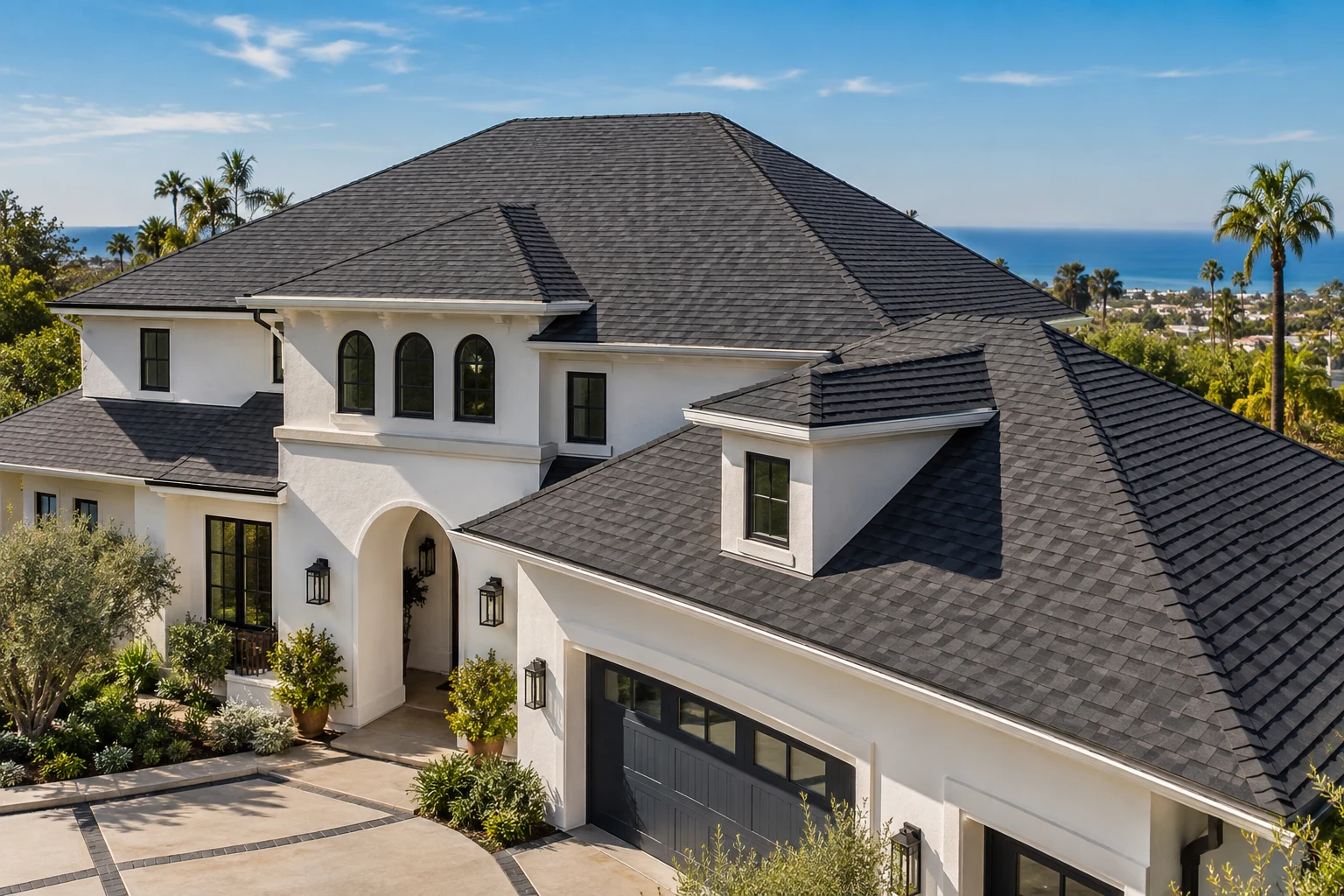
If your home in Ontario feels harder to cool every summer, the roof may be part of the problem. All Star Roof Replacement helps homeowners reduce heat by looking at the full roofing system, because in Inland Southern California, excess attic heat usually comes from aging materials, worn underlayment, poor ventilation, or a combination of all three.
In Ontario, heat reduction is not just about choosing a lighter color roof. It usually means identifying whether the current roof system is absorbing too much heat, trapping hot air, or breaking down underneath after years of sun and thermal stress.
For a broader look at local roof conditions, our Ontario roof replacement page explains how age, heat exposure, and full-system wear often come together on homes in this area.
Why this problem happens in Ontario
Ontario roofs deal with a different kind of wear than roofs closer to the coast. Inland heat, stronger UV exposure, and long hot summers create repeated expansion and contraction across the whole roof system. That stress affects shingles, tile underlayment, flashing, sealants, fasteners, and ventilation performance over time.
That matters because the roof is not only there to keep water out. It also plays a major role in how much heat enters the attic and how hard your cooling system has to work.
A direct answer: in Ontario, roofs run hotter because of inland sun, high summer temperatures, and aging roof systems that no longer manage heat efficiently. When the system wears out, the house below usually feels it first through higher cooling demand and uneven indoor temperatures.
In homes across Ontario, we often see roofs that still look acceptable from the street but are already underperforming. The surface may be faded or weathered, while the underlayment below has become brittle from years of heat.
Many homeowners don’t realize that by the time comfort problems show up indoors, the issue often goes beyond the visible roofing material. A hotter home can be an early sign that the roof system is aging out as a whole.
Heat problems usually start below the surface
A roof is a system, not just a layer of shingles or tile. The outer material matters, but so do the underlayment, roof deck, flashing details, attic airflow, and the quality of the original installation.
When one of those parts starts failing, heat builds faster and the entire assembly becomes less efficient. That is one reason repeated small repairs often do not solve the homeowner’s real problem.
A direct answer: if you want to reduce heat with roofing in Ontario, the right approach is to evaluate the whole roofing system, not just the top layer. Surface wear is often the symptom, not the root cause.
All Star Roof Replacement approaches this by using satellite measurements and visual inspection to understand the actual roof layout and condition. We look for hidden issues like deteriorated underlayment, weakened decking, poor ventilation balance, and signs of previous installation problems.
We do not guess. We show what the roof actually needs before recommending replacement.
A common issue during inspections is a roof that has had multiple leak repairs or isolated fixes, but the deeper layers have continued to break down. The homeowner may be focused on one hot room or one ceiling stain, while the real issue is that the full roofing system is no longer performing the way it should.
Why older Ontario roofs trap more heat
Ontario has a large number of homes built during major growth periods in the 1980s, 1990s, and early 2000s. That means a lot of roofs in the area are now in the 15 to 30-plus-year range, which is exactly when heat-related deterioration becomes harder to ignore.
Older roof systems tend to lose performance in ways that are not always obvious from the ground. On shingle roofs, UV exposure can wear down the protective granules and dry out the asphalt. On tile roofs, the tile itself may still look serviceable while the underlayment underneath is already near the end of its useful life.
A direct answer: many Ontario homes feel hotter because the roof system has aged past its best performance years, even if the visible surface has not completely failed yet. In this climate, the hidden layers often tell the real story.
In homes across Ontario, we often see a pattern where the homeowner notices rising summer bills first, then hotter upstairs rooms, then recurring leaks or visible roof wear later. That sequence is common because energy performance often drops before major water intrusion becomes obvious.
Many homeowners don’t realize that a tile roof can still have a serious roofing problem even when most of the tiles are intact. In Southern California, the waterproofing layer under the tile is often the real point of failure once the roof has spent years under inland heat.
If you are trying to compare age and expected performance, our page on roof lifespan in Ontario explains how long different roofing systems typically last in this climate.
Ventilation has a major effect on roof heat
Ventilation is one of the most overlooked parts of a roof replacement discussion. In Ontario, attic temperatures can build fast during long summer afternoons. If the roof system cannot move that heat out properly, the attic becomes a hot pocket sitting directly over the living space.
That trapped heat pushes downward into the house and also adds stress to roofing materials from underneath. Over time, that can shorten roof life and make cooling the home more expensive.
A direct answer: reducing roof heat is not only about reflective materials. It also depends on whether the roof system has proper intake and exhaust ventilation working together.
A common issue during inspections is mismatched ventilation. We may find older vents that are not doing enough, blocked intake, or a roof design that was never balanced properly in the first place. In those cases, changing surface material alone usually will not solve the homeowner’s comfort problem.
This is why All Star Roof Replacement evaluates ventilation as part of the full system. If a homeowner says the upstairs stays warm, the AC runs too long, or some rooms never cool evenly, we want to know whether the roof is trapping heat before we talk about replacement options.
What heat stress leads to over time
Heat-related roof problems usually do not stay isolated. They tend to spread slowly through the system and become more expensive the longer they are ignored.
As a roof in Ontario keeps absorbing extreme sun year after year, materials can become brittle, flashing details can weaken, and underlayment can lose flexibility and protection. If there are already installation issues or age-related weak points, heat accelerates the decline.
A direct answer: delaying action on a heat-stressed roof often increases total cost because the problem moves from reduced efficiency to broader system failure. What starts as a comfort issue can turn into decking damage, recurring leaks, and a larger replacement scope later.
In homes across Ontario, we often see homeowners wait because they are unsure whether they have a roofing issue or an insulation issue or an HVAC issue. Sometimes those systems overlap, but when the roof is older and the house keeps getting harder to cool, the roof should be part of the first conversation.
Many homeowners don’t realize that the roof affects both protection and energy efficiency at the same time. When the roofing system breaks down, you often pay for it in two ways: interior risk and higher cooling demand.
Signs your roof may be adding heat to the house
Some warning signs are obvious, and some build gradually enough that homeowners get used to them. The key is looking at the pattern, not just one symptom by itself.
A direct answer: if your roof is older, your home is harder to cool, and you have had repeated roof-related issues, there is a good chance the roofing system is contributing to the heat problem.
- The home feels hotter than it did a few years ago
- Upstairs rooms stay warmer than the rest of the house
- Cooling bills keep climbing in summer
- The roof is around 15 to 30+ years old
- You have had repeated repairs or recurring leak spots
- Shingles look worn, curled, faded, or are losing granules
- Tile has shifted, slipped, or the roof has developed unexplained leak patterns
- Indoor temperatures feel uneven from room to room
A common issue during inspections is the homeowner focusing on one visible symptom, like cracked tile or worn shingles, when the bigger pattern points to system failure. Heat, leaks, and roof age often show up together for a reason.
If you are seeing those warning signs, our page on signs you need a new roof in Ontario goes deeper into what to watch for before the problem gets more expensive.
Why repair alone often does not solve the heat problem
Repairs still have a place when damage is isolated and the rest of the roof is in good condition. But on many Ontario homes, the heat issue is tied to age, underlayment failure, or broader system wear. In those cases, patching one area does not restore the roof’s overall performance.
This is especially true on older tile roofs. The tiles may be reusable in some cases, but if the underlayment below has reached the end of its life, the roof still needs system-level replacement work to perform correctly again.
A direct answer: if the roof is aging, overheating, and needing repeated fixes, the real solution is usually replacement of the failing system, not more surface repair.
That is why All Star Roof Replacement focuses on full roof replacement rather than patch-based roofing work. Most homeowners who are trying to reduce heat are already past the point where another repair changes the bigger outcome.
If you are weighing that decision, our page on roof repair or replacement in Ontario explains when repairs still make sense and when replacement becomes the smarter long-term move.
Early direction: what actually helps reduce heat
The first step is not picking a product from a brochure. The first step is finding out why the current roof is holding heat in the first place.
For some Ontario homes, the best answer may involve a reflective cool-roof compliant shingle system. For others, especially tile homes, it may mean removing and resetting the tile over new high-performance underlayment if the tile is still in serviceable condition. In both cases, ventilation, decking condition, and installation quality matter just as much as the visible finish.
A direct answer: the best way to reduce heat with roofing is to replace the worn-out roof system correctly, with materials and ventilation suited to Ontario’s inland climate. The solution depends on how your current roof is built and what is failing underneath.
Every roof is different. Roof shape, slope, attic design, material type, age, and sun exposure all change what the right replacement looks like. That is why All Star Roof Replacement explains findings clearly before making recommendations instead of assuming every house needs the same answer.
If you want to learn more about reflective systems and code-driven options, our pages on cool roof roofing in Ontario and energy-efficient roofing in Ontario explain how heat reduction fits into a full replacement plan.
The main point is simple: roofing problems worsen over time, and heat is often one of the first signs. If your home is running hotter, your cooling bills are climbing, and your roof is showing its age, those issues are often connected to the same failing system.
What kinds of roofing changes actually reduce heat in Ontario homes
A direct answer: the roofing changes that reduce heat most effectively in Ontario are the ones that address the whole system at once, including the roof covering, underlayment, ventilation, and any damaged decking. If the roof is only changed at the surface level, the home may still hold too much heat.
In Ontario, a heat-reducing roof replacement usually starts with identifying why the current roof is running hot. On one house, the issue may be a worn shingle system that no longer reflects heat well. On another, it may be an older tile roof where the tiles still look decent but the underlayment below has aged out from years of inland heat.
That difference matters because every roof is different. The right replacement approach depends on the roof type, the slope, attic design, sun exposure, age, and whether previous work was installed correctly in the first place.
For some homeowners, the best fit is a compliant reflective shingle system that is designed for Southern California heat. For others, especially on tile homes, the smarter path may be to remove and reset existing tile over new underlayment if the tile is still in reusable condition. If you are comparing those options, our page on tile vs shingle roofing in Ontario explains how each system performs in this climate.
In homes across Ontario, we often see homeowners assume they need a different roofing material when the bigger issue is that the waterproofing layer and ventilation setup are no longer doing their job. That is one reason All Star Roof Replacement evaluates the entire system before making a recommendation.
Why underlayment matters as much as the visible roof
A direct answer: on many Ontario roofs, especially tile roofs, underlayment condition has a major effect on performance. If the underlayment is brittle, aged, or failing, the roof system can trap heat, lose efficiency, and become vulnerable to leaks even when the outer material still looks acceptable.
Homeowners often focus on what they can see from the yard. That makes sense, but in Southern California, the hidden layers are often where the real problem starts. Under tile, the tile is not the primary waterproofing layer. The underlayment is. Once that layer dries out after years of heat, the roof system is already declining whether the tiles have broken or not.
On older shingle roofs, the same principle applies in a different way. Once shingles age, lose granules, and dry out under heavy sun, the heat stress usually reaches deeper layers too. If moisture has entered around flashing, penetrations, or old repair areas, the decking may also need attention.
A common issue during inspections is finding a roof that has had several visible repairs while the underlayment underneath has continued to deteriorate. The house may feel hotter, and the homeowner may think the problem is just insulation or AC performance. Sometimes those systems play a role, but the roof itself may already be underperforming as a full assembly.
This is why All Star Roof Replacement does not treat roof replacement like a product swap. We inspect for hidden issues, explain what is happening below the surface, and base recommendations on the roof’s actual condition rather than guesswork.
How ventilation changes indoor comfort after roof replacement
A direct answer: proper ventilation helps reduce attic heat buildup, which can improve indoor comfort and reduce strain on the cooling system. Without balanced ventilation, even a newer roof may still run hotter than it should.
Ventilation is one of the biggest reasons two roofs with similar materials can perform very differently. If hot air builds up in the attic and cannot escape effectively, that heat sits over the living space for hours. Rooms below, especially upstairs bedrooms and west-facing areas, often feel the difference first.
Good roof replacement planning looks at intake and exhaust together. The goal is not just adding vents randomly. It is making sure the roof system can pull in cooler air where appropriate and release trapped heat where it is supposed to exit.
In homes across Ontario, we often see ventilation setups that are incomplete, outdated, blocked, or never properly balanced to begin with. That is especially common on older homes or roofs that have been redone without a full system review. The homeowner may replace roofing material and still wonder why certain rooms stay warm.
If you want a more detailed look at how these upgrades fit into local code and performance needs, our page on the roof replacement process in Ontario explains how inspection, tear-off, deck review, ventilation, and installation work together during a full replacement.
Why installation quality matters just as much as the material choice
A direct answer: a heat-reducing roof only performs as well as it is installed. Even good materials can underperform if ventilation is wrong, flashing is poorly detailed, or the system underneath is left compromised.
This is one of the most important things homeowners should understand. Roofing brochures can make it sound like the product itself does all the work. In reality, installation quality is what allows the material to perform the way it is supposed to.
A poorly installed roof can hold heat, leak early, and wear out faster even if the homeowner paid for upgraded materials. Missed flashing details, shortcuts at penetrations, weak ventilation design, or failure to address damaged decking can all affect long-term comfort and roof life.
That is also why overlays are a poor answer in this climate. Installing a new layer over an old roof can trap more heat, hide existing damage, and limit the value of the replacement. If you are considering whether that shortcut is worth it, our page on whether reroofing is worth it in Ontario explains why full tear-off is usually the better long-term choice for aging roofs.
Not all contractors are equal when it comes to heat-related roof problems. The difference is often whether the roof is treated as a complete system or just a visible surface. All Star Roof Replacement focuses on the system itself because poor installation leads to long-term issues, especially under Ontario heat.
What homeowners should expect when comparing replacement options
A direct answer: most Ontario homeowners choosing a heat-reducing roof replacement are comparing systems based on performance, lifespan, installation scope, and budget, not just appearance. The best choice is the one that matches the condition of the home and the way the current roof is failing.
Shingle systems are often the more budget-conscious path and can perform well when installed as a complete reflective, properly ventilated system. Tile systems can offer strong long-term performance in Southern California, but on many homes the real decision is whether the existing tile can be lifted and reset over new underlayment or whether broader replacement is needed.
That is why pricing has to stay contextual. Final cost depends on the roof size, complexity, tear-off requirements, decking condition, ventilation corrections, material choice, and whether hidden damage is uncovered during removal. For homeowners trying to understand those variables, our page on roof replacement cost in Ontario explains what usually affects the final number.
A common issue during inspections is a homeowner comparing quotes that are not based on the same scope of work. One estimate may include ventilation corrections, underlayment upgrades, and deck repairs as needed, while another may look cheaper because those items are not clearly addressed. Lower numbers do not always mean the same work is being done.
That is one reason All Star Roof Replacement explains findings clearly before recommending replacement. Homeowners deserve to understand what is included, what might change once the roof is opened up, and why one system may make more sense for their house than another.
Decision clarity: when replacement makes more sense than repair for heat problems
A direct answer: replacement usually makes more sense than repair when the roof is older, has repeated issues, and the heat problem appears connected to full-system wear rather than one isolated defect. If the roof is failing underneath, more repairs usually do not change the bigger outcome.
Repairs still make sense in limited situations. If a newer roof has isolated damage from a specific event and the rest of the system is sound, targeted work may be enough. But that is not what most Ontario homeowners are dealing with when the house has become progressively hotter over time.
Replacement is usually the better decision when:
- The roof is roughly 15 to 30+ years old
- You have had multiple repairs over the years
- The home is harder to cool than it used to be
- There are signs of underlayment or flashing failure
- Leak issues keep returning in different areas
- The roof material still looks passable, but performance has dropped
What happens if you delay? Usually the problem gets broader. Heat-stressed roofing materials keep aging, weak points continue spreading, and hidden wood damage may develop or worsen. Delaying increases cost because what could have been a more straightforward replacement can turn into a larger project once more of the system breaks down.
A good decision usually looks like this: you understand the current condition of the roof, you know whether the issue is isolated or systemic, and you choose replacement when the roof has clearly moved past the point where repairs provide lasting value. If you are still in that evaluation stage, our page on roof inspection cost in Ontario helps explain what homeowners are paying for when they want real clarity before moving forward.
FAQs
How much does a heat-reducing roof replacement cost in Ontario?
A direct answer: the cost depends on the roof system, not just the material on top. Factors like roof size, slope, tile versus shingle, tear-off complexity, decking repairs, ventilation upgrades, and code-related requirements all affect the final price.
In general, homeowners should expect pricing to vary widely based on the actual condition of the roof. A simple replacement on a straightforward home will not cost the same as a tile project with underlayment failure and wood repairs. That is why a real inspection matters more than a rough online number.
How long does roof replacement usually take?
A direct answer: most residential roof replacements take a few working days once construction starts, but the full process includes inspection, scheduling, permits, material coordination, and final sign-off. Complexity can extend the timeline.
Weather, roof shape, HOA requirements, and repairs discovered during tear-off can all affect how long the project takes. If you want a fuller breakdown of what to expect, our page on roof replacement timelines in Ontario explains the process step by step.
Can a new roof really help lower indoor heat?
A direct answer: yes, if the current roof is part of the problem and the replacement addresses the full system. That means the roofing material, underlayment, ventilation, and installation quality all need to work together.
A new roof will not fix every comfort issue in a house, but on many older Ontario homes, it can make a noticeable difference when the old roof has been absorbing excess heat or trapping hot air in the attic for years.
How do I know if I need replacement instead of another repair?
A direct answer: if the roof is older, has had recurring leaks or repeated repairs, and the house keeps getting hotter, replacement is often the more practical option. Repairs are usually best for isolated damage on a roof that is otherwise still in good condition.
When the underlying system is worn out, patching visible trouble spots does not restore the roof’s overall performance. If the same problems keep coming back, that is usually a sign the issue is deeper than one damaged area.
What roofing material is best for reducing heat in Ontario?
A direct answer: there is no single best material for every house. The right choice depends on your roof design, existing system, budget, ventilation setup, and how the current roof is failing.
Reflective shingle systems and properly built tile systems can both work well in Ontario when they are installed correctly as part of a full replacement. If you want a broader material comparison, our page on best roofing materials for Ontario goes deeper into the tradeoffs.
How long should a roof last in Ontario’s climate?
A direct answer: lifespan depends on the system type, installation quality, sun exposure, and ventilation. Inland heat tends to shorten life when compared with milder climates, especially if the roof was poorly installed or has limited airflow.
Many shingle roofs in this area age out sooner than homeowners expect, and many tile roofs need underlayment replacement before the tile itself is finished. Age alone does not decide everything, but it is a strong part of the picture.
What should happen during a roof evaluation for heat problems?
A direct answer: the evaluation should look at more than surface appearance. A proper review should consider the roof covering, underlayment condition, decking concerns, flashing details, ventilation, roof age, and signs of previous installation problems.
That is the value of working with All Star Roof Replacement. We use satellite measurements and visual inspection to understand the roof layout, identify hidden issues, and explain clearly whether the home is dealing with isolated damage or broader system failure.
Talk to All Star Roof Replacement about reducing roof heat in Ontario
If your Ontario home is harder to cool, the roof may be doing less than it should. All Star Roof Replacement helps homeowners understand whether the issue is aging materials, failing underlayment, poor ventilation, installation problems, or a combination of those factors.
If you want clear answers before making a decision, contact All Star Roof Replacement at (310) 729-3013, email teamallstarconstruction@gmail.com, or reach out through our contact page. We will help you understand what the roof actually needs.
Licensed • Insured • Owens Corning Preferred Contractor • CA License #1009760