
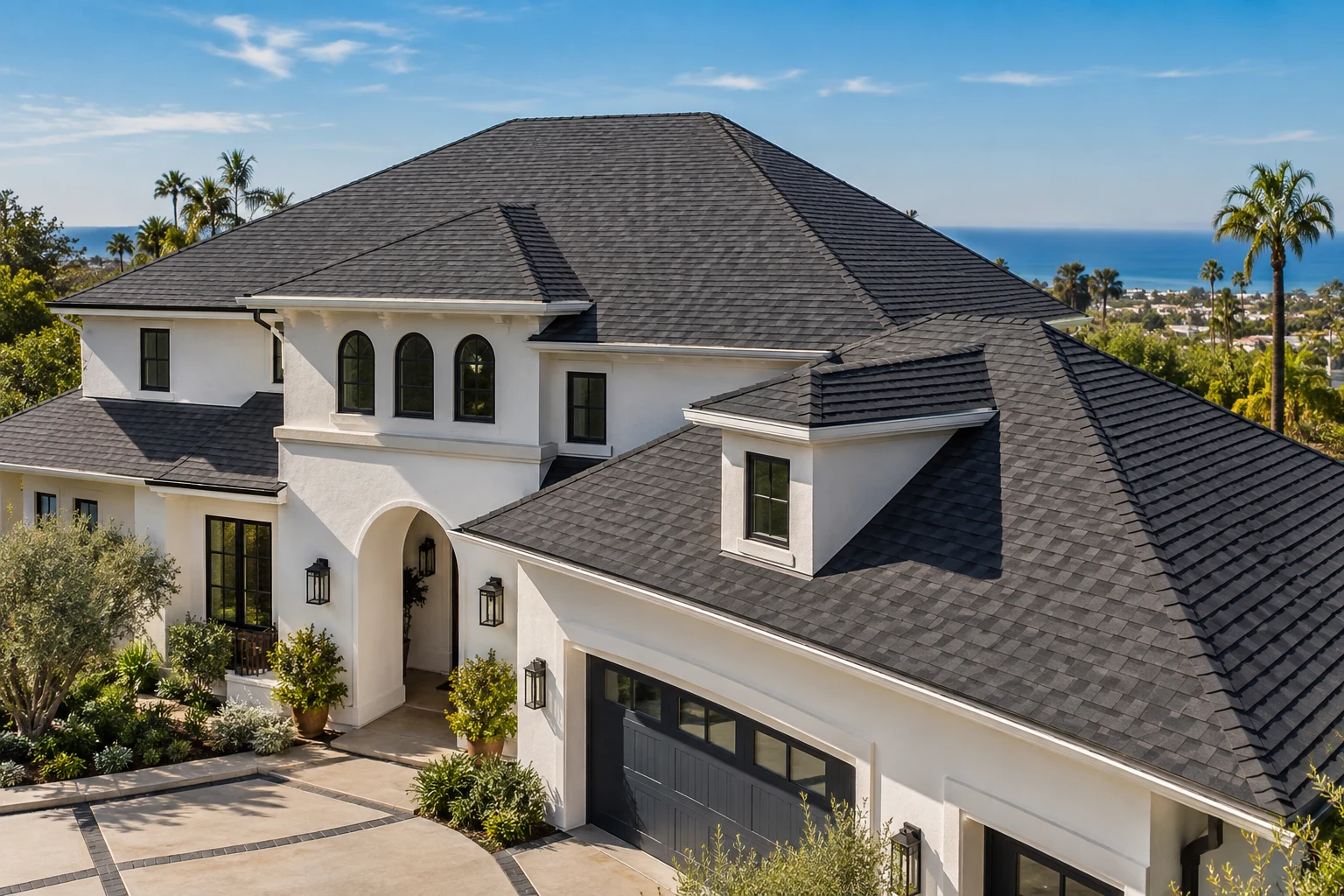
All Star Roof Replacement replaces residential roofs in Ontario by looking at the full roofing system, not just the outer layer you can see from the yard. If your roof is older, leaking more than once, holding heat, or showing signs of wear in different areas, the issue is usually deeper than a few damaged shingles or tiles.
For homeowners trying to figure out who handles roof replacement locally, the better question is who can tell whether the roof system is still dependable or already failing underneath. On the Ontario roof replacement page, All Star Roof Replacement breaks down how Inland Empire heat, strong UV exposure, aging neighborhoods, and energy-efficiency requirements affect roof replacement decisions in this area.
The direct answer is simple: in Ontario, roof replacement should be handled by a contractor who checks underlayment, decking, flashing, ventilation, and overall system condition before recommending the work. A roof replacement is not just changing materials on top. It is replacing the full system when the system itself is wearing out.
Why Roof Replacement Becomes Necessary in Ontario
Ontario roofs deal with a different kind of stress than homes closer to the coast. Here, heat is a major factor. Long stretches of high temperatures, intense sun, dry conditions, and expansion during hot days followed by cooler nights wear roofing systems down year after year.
That is why roof failure in Ontario often starts before homeowners see obvious damage. The top layer may still look acceptable from the street, but the waterproofing below it may already be brittle, dried out, or losing performance. On many homes, especially those built in the 1990s and early 2000s, that aging is happening right now.
The direct answer is that Ontario’s inland climate speeds up roof deterioration. UV breaks materials down, heat dries out critical components, and constant thermal movement weakens the system over time.
In homes across Ontario, we often see roofs between 15 and 30 years old that are no longer failing in just one spot. Instead, the wear is spread across the roof system. That can show up as repeated leaks, cracked or slipping tiles, shingle granule loss, worn flashings, or rooms that stay hotter than the rest of the house.
Many homeowners don’t realize that a roof can be aging out even when the visible surface still looks fairly normal. This is especially common on tile roofs in Southern California. The tile may still have life left, while the underlayment underneath is already near the end of its reliable service life.
The direct answer is that visible roof material and actual roof condition are not always the same thing. In Ontario, a roof can appear solid from outside and still have system-level failure underneath.
Why Ontario Homes See System Failure Instead of Just Surface Damage
Most homeowners first notice a roof problem through one symptom. Maybe it is a stain on the ceiling. Maybe it is a loose tile after wind, a shingle issue near a valley, or a small leak during a winter storm. What matters is that the symptom usually points to more than itself.
All Star Roof Replacement approaches replacement by checking the full assembly. That includes the roof covering, underlayment, flashing, roof deck, ventilation, and the way water is supposed to move off the home. Without that full-system inspection, it is easy to mistake broader failure for a simple repair issue.
The direct answer is that many roof problems are not surface-level. The visible problem is often just where the failing system finally became noticeable.
A common issue during inspections is underlayment breakdown beneath older tile roofs. In Ontario, tile is common across large residential areas, especially in newer subdivisions and homes built during the city’s expansion years. Homeowners naturally focus on the tile because that is what they see, but the tile is not the actual waterproofing layer. Once the underlayment has dried out from years of heat, the roof can start leaking even when most of the tile still looks fine.
With shingle roofs, the pattern is different but the result is similar. We often see granule loss, curling edges, brittle shingle tabs, weakened seal strips, and overheating in sections that take the hardest afternoon sun. Those are signs the roof is not just aging cosmetically. Its ability to protect the home is dropping.
The direct answer is that repeated surface issues usually mean the whole roof needs to be evaluated. If problems keep showing up in different places, the system may be near the end of its useful life.
Why Delaying Roof Replacement Usually Increases the Scope
Most homeowners do not ignore roof problems on purpose. They are trying to make a practical decision. If the leak stopped, if a repair was already done, or if the roof made it through the last rain, it is easy to think there is more time.
Sometimes there is. But once a roof has broader aging or hidden failure, waiting usually means more of the system will need attention later. Worn underlayment does not improve. A weak flashing detail does not stabilize on its own. Decking exposed to recurring moisture does not get stronger with time.
The direct answer is that roof problems usually worsen over time, and delays often increase total cost. What might begin as localized wear can spread into decking replacement, more extensive tear-off work, and interior damage if the roof keeps leaking.
In homes across Ontario, we often see homeowners spend money on several isolated fixes before finding out the roof has system-wide wear. Repairs have a place when the damage is truly limited and the surrounding roof is still in good condition. But when leaks return or the roof is aging across multiple sections, patching symptoms tends to get more expensive than dealing with the cause.
Many homeowners don’t realize that roof decline also affects energy efficiency before obvious water damage shows up. In Ontario, where summer heat puts real strain on homes, an aging roof can contribute to high attic temperatures, uneven indoor comfort, and increased cooling demand.
The direct answer is that a failing roof is not only a water problem. It can also be a heat-performance problem that affects comfort and utility costs.
Why This Matters More in Ontario Than in Cooler Areas
Ontario is not dealing with a mild coastal pattern. It is part of the Inland Empire, where roofs absorb prolonged heat and stronger UV exposure. That changes how systems age.
On cooler coastal homes, moisture may be the dominant long-term concern. In Ontario, heat does a lot of the damage first. Materials expand, contract, dry out, and fatigue faster. Sealants can crack. Flashing details can loosen. Underlayment beneath tile can become brittle long before the roof looks bad from the street.
The direct answer is that Ontario roofs often fail from heat-driven aging before homeowners expect them to. That is why replacement decisions here need to be based on system condition, not appearance alone.
The city’s housing stock also plays a role. A large number of Ontario homes were built during development cycles that now put many roofs into the replacement window. Some are older shingle roofs reaching the end of service life. Others are tile roofs where the outer material may still be usable, but the components underneath are not.
A common issue during inspections is homeowners assuming a tile roof does not need replacement because the tiles themselves are durable. In reality, the decision often comes down to what is happening below the tile. If the underlayment, flashings, and ventilation details are worn out, the roof system still needs major work.
If you are trying to sort out whether your roof has reached that stage, this page on roof repair or replacement in Ontario explains how to tell when a repair is still reasonable and when replacement makes more sense.
What Roof Replacement Actually Means
A roof replacement should not be treated like a simple material swap. The real job is to remove the failing roof system, inspect what is underneath, correct hidden issues, and rebuild the roof so it performs the way it is supposed to.
That means the installer should be looking at more than shingles or tile color. The roof deck may need repair in sections. The underlayment may need full replacement. Flashings around valleys, walls, chimneys, and penetrations need to be checked. Ventilation may need correction so the new roof can handle Ontario heat better than the old one did.
The direct answer is that roof replacement is a system rebuild, not a cosmetic update. Material matters, but installation quality and what is happening underneath matter just as much.
All Star Roof Replacement uses satellite measurements along with visual inspection to understand roof size, layout, slope changes, and likely problem areas before making a recommendation. Then the findings are explained clearly, so the homeowner understands what is driving the scope of work.
We do not guess at what the roof might need. We show what is actually there and what is affecting performance.
Many homeowners don’t realize that previous installation quality can shorten roof life as much as age can. If a roof was installed with poor flashing details, weak ventilation planning, shortcuts around penetrations, or incomplete tear-off work, the symptoms often show up years later as repeat leaks and uneven wear.
The direct answer is that the right roof replacement installer does not just measure and quote. They identify why the existing roof is failing and what needs to be corrected in the new system.
What Ontario Homeowners Should Watch For
Every roof is different, so the replacement decision should come from condition, not from age alone. Still, there are patterns that show up again and again on homes in Ontario.
- Your roof is 15 to 30+ years old and showing wear in multiple areas.
- Leaks have happened more than once or repairs have not held long.
- Tiles are slipping, rattling, or cracking and the roof has broader age-related wear.
- Shingles are losing granules, curling, or becoming brittle from heat and UV exposure.
- Cooling costs are rising or parts of the home stay hotter than they used to.
- You suspect poor previous installation because the roof has had recurring problem areas.
- You do not know the condition of the underlayment or decking on an older roof.
The direct answer is that if multiple signs are happening at the same time, the issue is usually larger than one repair. That is when a full roof replacement inspection becomes the practical next step.
For homeowners comparing options, roof type also affects what replacement looks like. Ontario has a mix of shingle and tile roofs, and the right approach depends on the current system, the structure, and the long-term goal for the home. This overview of tile vs shingle roof options in Ontario helps explain those differences in a local context.
Why the Roof Affects More Than Leak Protection
A worn-out roof does more than increase the chance of water getting in. It also affects how the house handles heat. That matters in Ontario, where long hot seasons can make roof performance part of the home’s overall comfort problem.
When roofing materials age, ventilation is unbalanced, or the system traps excessive heat, attic temperatures can climb higher than they should. That extra heat moves down into the living space and makes the air conditioning work harder. Some homeowners notice it as one room always being warmer. Others notice it through steadily rising summer energy bills.
The direct answer is that the roof affects both protection and energy efficiency. If the roof system is worn out, it can cost you in comfort as well as reliability.
This is also why local code and material selection matter. In Southern California, roof replacement often has to account for energy-efficiency standards and reflective roofing requirements depending on the scope. For homeowners trying to understand how that affects their options, this page on cool roof requirements in Ontario explains why those upgrades are part of many replacement projects.
When the roof is replaced correctly, the goal is not only to stop leaks. The goal is to restore the full system so the home is better protected, better ventilated, and better equipped to handle Ontario heat over the long term.
What the Right Roof Replacement Company Actually Does
The direct answer is that the right company does more than tear off old roofing and install new material. All Star Roof Replacement replaces roofs in Ontario by evaluating the full system first, then rebuilding the roof based on what the home actually needs.
That matters because a roof replacement is not just about what goes on top. It includes the condition of the deck, the underlayment, the flashing at roof transitions, the ventilation pattern, and how the roof handles Ontario heat over time. If any of those parts are overlooked, the new roof can end up inheriting the same problems as the old one.
In homes across Ontario, we often see roofs that were treated as simple material jobs years ago. The shingles or tiles may have been changed, but the weak points underneath were left alone. Later, the homeowner ends up dealing with repeat leaks around valleys, wall lines, vents, or patio transitions and wonders why a “newer” roof is still causing trouble.
A common issue during inspections is finding that the visible problem is not the main problem. A stain on a ceiling may trace back to a failed flashing detail, deteriorated underlayment, or wood damage that spread beyond the first leak location. That is why All Star Roof Replacement uses satellite measurements and visual inspection together, so the recommendation is based on the roof’s real condition and layout, not guesswork.
If you are comparing companies and trying to understand what a qualified replacement contractor should actually be looking for, this page about choosing a roof replacement installer in Ontario explains the difference between a surface quote and a true system evaluation.
Why Installation Quality Matters as Much as Material
The direct answer is that good materials alone do not create a dependable roof. In Ontario, installation quality matters just as much because the climate exposes every weak detail faster.
Southern California inland heat is hard on roofing systems. Long summers, strong UV, and repeated expansion and contraction will expose shortcuts. If flashing is installed poorly, if ventilation is off, if the tear-off is incomplete, or if the underlayment is not right for the roof type, those issues usually show up long before homeowners expected trouble.
This is one reason not all contractors are equal. Two homes can use similar materials and still get very different long-term performance depending on how the system was installed. The underlayment laps, flashing integration, edge details, penetrations, and ventilation setup all influence whether the roof stays reliable or starts developing recurring problem areas.
Tile roofs are a good example. Many Ontario homeowners assume tile itself is the main lifespan factor. In reality, a tile roof often depends more on the condition of the underlayment beneath it and the quality of the flashing and drainage details. The tile may still look solid from the street while the real waterproofing layer underneath is already worn out.
With shingle roofs, the same principle applies in a different way. If shingles are installed over compromised decking, poor ventilation, or an aging layer that should have been removed fully, the system may look finished but still not perform the way it should. That is why All Star Roof Replacement treats replacement as a system correction, not a cosmetic update.
For homeowners weighing long-term performance in this climate, this local guide to best roofing materials for Ontario homes helps explain why the right material still has to be matched with the right installation approach.
How Roof Replacement Pricing Really Works in Ontario
The direct answer is that roof replacement pricing depends on the roof system, not just square footage. Size matters, but condition, layout, material, code requirements, and hidden repairs all affect the final number.
In Ontario, homeowners often want a simple price before anyone looks at the roof. That is understandable, but roof replacement is one of those jobs where broad ranges are more honest than fixed numbers up front. A straightforward shingle roof on a smaller home may cost far less than a larger tile roof with complex slopes, poor access, and decking repairs uncovered during tear-off.
Several factors usually drive the scope:
- Roof size and geometry including valleys, pitch changes, and penetrations
- Material type such as architectural shingles, cool roof shingles, or tile system work
- Tear-off complexity including multiple layers or heavy tile removal
- Decking condition if damaged or deteriorated wood needs replacement
- Ventilation upgrades to help the new roof perform properly in Ontario heat
- Flashing and transition details around walls, chimneys, skylights, and roof penetrations
- Energy code requirements that may apply to the replacement scope
Many homeowners don’t realize that the “hidden” cost on a roof is often not hidden at all. It is simply something no one can confirm until the old roof comes off. If wood has been affected by recurring moisture, or if earlier installation work was done poorly, those conditions have to be corrected before the new system goes on.
That is also why a very low quote can be misleading. If the estimate does not account for system issues, it may only look cheaper because critical work has not been addressed yet. Delaying increases cost in a similar way. When the roof keeps aging and taking on more heat stress or moisture intrusion, the amount of corrective work later often grows.
If you want a clearer breakdown of what affects price locally, this page on roof replacement cost in Ontario explains the variables homeowners should expect to see.
What the Roof Replacement Process Looks Like
The direct answer is that roof replacement usually follows a clear sequence: inspection, measurements, scope review, tear-off, deck inspection, system installation, and final cleanup. The exact timeline depends on roof size, complexity, weather, and what is found once the old roof is removed.
For homeowners, uncertainty is often the hardest part. They want to know what will happen, how disruptive it will be, and whether the house will be protected during the work. A properly managed replacement should answer those questions before the job starts.
In general, the process includes:
- Initial evaluation of the roof’s age, visible wear, leak history, and likely hidden issues
- Satellite measurement and visual inspection to understand the roof layout and replacement scope
- Recommendation review so the homeowner understands whether replacement is being driven by age, leaks, heat wear, poor installation, or system failure
- Tear-off of the old roof system down to the deck where needed
- Deck inspection and repair if any damaged wood is found
- Installation of underlayment, flashings, ventilation components, and finish material
- Final cleanup and walkthrough so the completed system is reviewed clearly
In homes across Ontario, we often see homeowners feel more comfortable once they understand that the important part of replacement is not just the final material installation. It is the step where the old roof comes off and the actual system condition becomes visible. That is when hidden problems can be corrected instead of buried.
If you want a more detailed local overview, this page on the roof replacement process in Ontario explains what to expect before, during, and after the project. For timing questions, the local roof replacement timeline in Ontario page is also useful for planning around the work.
Decision Clarity: When Replacement Makes More Sense Than Repair
The direct answer is that replacement usually makes more sense when the roof has broad aging, repeated leaks, heat-related deterioration, or evidence that failure is happening in more than one area. Repair makes sense when the problem is isolated and the rest of the roof system still has dependable life left.
This is where homeowners in Ontario often feel stuck. The roof may not look completely worn out from the ground, but leaks keep returning, the home feels hotter, or the repairs are happening in different areas over time. That pattern usually tells you the issue is larger than one damaged spot.
A good decision usually looks like this:
- Choose repair if the roof is relatively younger, the problem is limited to one area, and the surrounding system is still in solid condition.
- Choose replacement if the roof is older, problems are spreading, leaks have happened more than once, or the underlayment and flashings are likely near the end of service life.
What happens if you delay? Sometimes not much right away. But once a roof is failing at the system level, waiting usually means the scope gets larger. More wood may need replacement. Interior staining can turn into ceiling or insulation work. Ventilation problems continue to trap heat. And money spent on repeated patching may not reduce the replacement you end up needing anyway.
A common issue during inspections is that homeowners are deciding based on the most visible section of the roof, while the real wear is spread across multiple elevations. That is especially true with older tile roofs in Ontario, where underlayment failure does not always show clearly until leaks begin. If that sounds familiar, this page on signs you need a new roof in Ontario can help you compare what you are seeing at home with common local patterns.
For many homeowners, the best next step is not committing to replacement on the spot. It is getting enough clarity to stop guessing. If the roof is 15 to 30+ years old, has already had multiple repairs, or seems to be contributing to comfort problems, it makes sense to have the whole system evaluated.
FAQs
How much does roof replacement cost in Ontario?
The direct answer is that cost varies based on roof size, material, complexity, and what is found underneath the old roof. A simpler project may look very different from a larger roof with tile, multiple slopes, ventilation corrections, or decking replacement.
That is why pricing should be based on actual inspection findings, not a flat guess. In Ontario, the difference between a surface-level estimate and a true system-based estimate can be significant because hidden conditions often affect the scope.
How long does a roof replacement usually take?
The direct answer is that many residential roof replacements take a few days of on-site work, but the total timeline depends on permitting, scheduling, roof complexity, and material type. Some homes move quickly, while others need more time because of layout or corrective work found during tear-off.
What matters most is that the job is sequenced correctly. A properly managed project should include clear preparation, protection of the home, system installation, and cleanup rather than rushing through critical details.
How do I know if I need replacement instead of another repair?
The direct answer is that replacement is usually the better option when leaks keep returning, wear shows up in multiple areas, or the roof is old enough that the underlying system is likely failing. If the problem is truly isolated and the rest of the roof is still sound, repair may still make sense.
Ontario roofs often age from heat and underlayment deterioration before the damage looks dramatic from the street. That is why the decision should come from a full-system inspection, not just the most visible symptom.
How long should a roof last in Ontario’s climate?
The direct answer is that lifespan depends on material, ventilation, installation quality, and sun exposure. Inland Southern California heat generally shortens the service life of roofing systems compared with milder climates.
Shingle roofs and tile roofs also age differently. With tile, the outer material may outlast the underlayment beneath it by many years, which is why system condition matters more than appearance alone. For more local context, this page on roof lifespan in Ontario explains typical aging patterns.
What roofing material works best for homes in Ontario?
The direct answer is that the best material depends on the home, the roof structure, the budget, and the performance goals. In Ontario, material choice should account for heat, UV exposure, ventilation needs, and energy-efficiency requirements.
Some homeowners do well with modern reflective shingle systems, while others may benefit from tile-based systems depending on the roof design. The best choice is the one that fits the home and is installed correctly as a complete system.
Do I need a cool roof in Ontario?
The direct answer is that many roof replacement projects in Ontario need to account for California energy-efficiency requirements, including cool roof standards depending on the scope. This is a normal part of planning a compliant replacement in Southern California.
Cool roof requirements are not just about code. They also relate to how the home handles heat. If you want to understand how those standards affect local projects, this page on energy-efficient roofing in Ontario provides more detail.
Should I get the roof inspected before deciding?
The direct answer is yes. If you are unsure whether the roof needs repair or full replacement, the best first step is a proper inspection of the full system.
That inspection should look at more than surface wear. It should help determine whether the real issue is isolated damage or broader failure involving underlayment, flashing, decking, and ventilation. If you want to understand what homeowners typically look at before booking that visit, this page on roof inspection cost in Ontario may help.
Talk With All Star Roof Replacement About Your Roof in Ontario
If your roof is getting older, leaking more than once, trapping heat, or leaving you unsure whether repair is still worth it, All Star Roof Replacement can help you understand what the roof system is actually doing. The goal is not pressure. The goal is clarity about whether the roof still has dependable life left or whether replacement now would prevent a larger and more expensive problem later.
To speak with All Star Roof Replacement, call (310) 729-3013, email teamallstarconstruction@gmail.com, or use the contact page to request an estimate.
Licensed • Insured • Owens Corning Preferred Contractor • CA License #1009760